



First Female Appointed Archbishop of Canterbury, Steps into a Troubled Church of England, Beset by Division & Shame
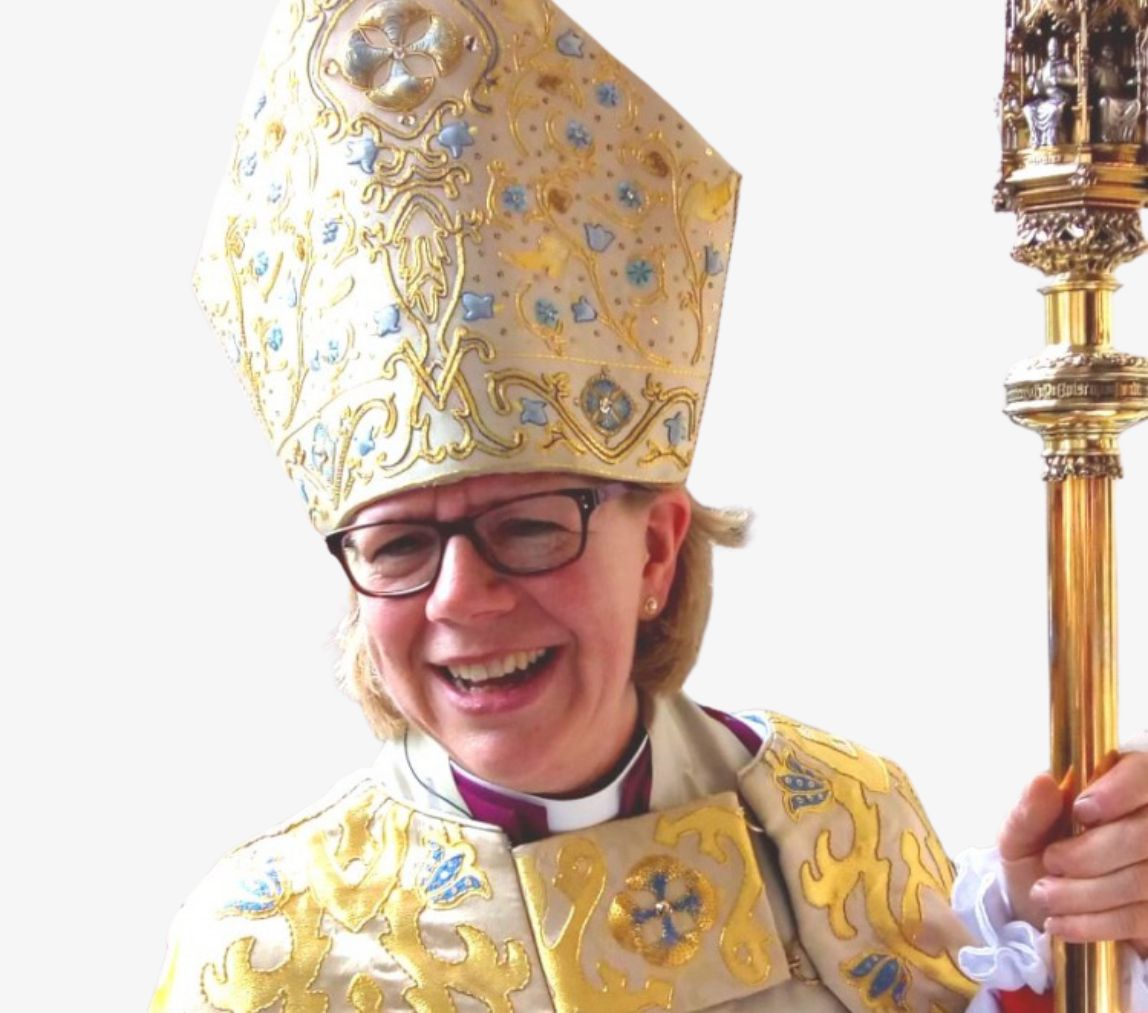

The Church of England, Anglican, has appointed its first female head. Take a read of the divisions after the appointment, calls for accountability for the Church’s involvement in atrocities, and the future for the Africans in that communion.
Dame Sarah Mullally
In a historic move, the Church of England/(Anglican) has appointed a woman to be the Archbishop of Canterbury. Sixty-three-year-old Dame Sarah Mullally former United Kingdom (UK) National Health Service (NHS) midwife and NHS Chief Nurse, appointed as the first female Bishop of London in 2018, has now been appointed the 106th Archbishop of Canterbury. The first ever woman to hold such a position of leadership in the Church of England. Mullally is now the Spiritual leader of the Global Anglican Communion, boasting of eighty-five (85) million members. And two-thirds of the membership, that is, fifty-seven (57) million members of them are in the mother continent - Africa.
Trouble in Church
The Anglican or Church of England is in trouble because of a number of factors. According to statistics, the Anglican Church is experiencing a decline in the number of its membership, especially in its Western provinces.
"The COVID-19 pandemic saw a significant decline in church attendance, marking a radical discontinuity even with previous downward trends", an Anglican Church of Canada statistics officer revealed (Goodhew, 2024).
Adding more complications to the church is the issue regarding gay and lesbian members of the Church of England. Also, the position of the Church in handling same- sex marriages and the ordination of homosexual clergy in the Church continues to be a source of cultural and theological division within the Church of England between its Western provinces and Asian & African provinces.
Anglican Realignment
Due to these cultural and theological divisions, a more conservative wing (mostly Asian & African provinces have broken away from the "Mother Church", that is, the Church of Canterbury - the global leader of Anglican. This breaking away is described as Anglican Realignment. Breakaway groups like Global Anglican Future Conference (GAFCON), the Anglican Church in North America (ACNA) have emerged, which are more conservative against the more liberal leaning Western Church of England. All these have promoted division and controversy within the Church of England.
Shameful Cover-Ups
A crisis of trust and integrity has hit the Church. This mistrust has its genesis in the Church’s failure to deal with or address issues of abuse within its walls. For decades, allegations of abuse, child abuse and institutional cover-ups have plagued the Church of England. Justin Welby, the then Archbishop of Canterbury, had to resign in 2024 over how the church handled the allegations of serial sexual abuse by John Smyth. John Smyth, in his sado- sexual activities, is accused of having groomed and savagely beaten as many as 130 boys and young men in three countries across five decades spanning from the 1970s to the 1980s. In 1984, Smyth was sent by the Church of England to Zimbabwe. Again, in Zimbabwe, though never convicted, Smyth was charged with the manslaughter of a 16-year-old Zimbabwean boy," by the name Guide Nyachuru in December 1992, an incident Smyth later called an “unfortunate incident.” An Independent Review Report led by Keith Makin, published in 2024 (Independent Church Review,7 September 2024), described by one of Smyth's victims, Bishop of Guildford Andrew Watson, saying:
"I want to express my deep sadness at all that has happened, and my admiration for those who have doggedly persevered in having the truth told. The report won’t make for easy reading for anyone involved: but it’s my hope and prayer that it might bring at least some measure of relief to Smyth’s victims – British and African, known and unknown"
While some 30 boys and young men are known to have been directly physically and psychologically abused in the UK, and around 85 boys and young men physically abused in African countries, including South Africa and Zimbabwe, the total "likely runs much higher ", the report said. John Smyth has been described as the "most prolific serial abuser to be associated with the Church of England". According to the Makin Report published in 2024, the Church of England "knew of the abuse and failed to prevent further abuse".
"The Church knew about the abuses that John Smyth was doing. They should have stopped him. Had they stopped him, I think my brother [Guide Nyachuru] would still be alive," Edith Nyachuru, sister to Guide Nyachuru, in an interview with the BBC, November 2024.
Smyth, who left the UK for Zimbabwe in 1984, was accused of beating boys and young men and forcing them to strip naked. Smyth died in Cape Town in 2018, with a UK police investigation against him still ongoing.
Strong and Mixed Reaction to Mullally Appointment
Dame Sarah Mullally, in response to her appointment as Archbishop of Canterbury, said she intended to be a "shepherd". According to the Telegraph, Mullally expressed a commitment to service, a desire to "listen deeply" to people and God, and a focus on bringing people together for hope and healing. Mullally acknowledged the Church of England's past failures in safeguarding (in line with the shameful cover-up of physical and sexual abuse within church walls), stating that the Church of England/ Anglican had left "a legacy of deep harm and mistrust."
Low-Key Congratulations from the Vatican
The Vatican offered muted congratulations (showing little enthusiasm or interest) in Mullally's appointment. And it's not surprising because these two churches, the Catholic & Anglican, theologically differ on the role of women in their respective churches. Cardinal Kurt Koch of the Vatican department in promoting Christian Unity said the Catholic and Anglican churches "have grown greatly in mutual understanding and affection", despite "occasional tensions between them."
Thrilling Development
The Archbishop of Cape Town, South Africa, Archbishop Thabo Makgoba, had this to say on the appointment of Dame Sarah Mullally: "The historic appointment of the first woman is a thrilling development." This church of Southern Africa called the appointment "historic," further stating that, "we heartily welcome the announcement."
And Bishop Emily Onyango, ordained as a Bishop in Kenya, described the news that Dame Sarah Mullally is now to be ordained as the Spiritual Leader of Global Anglican church as a "new dawn."
Telling BBC Focus, Onyango hit on GAFCON'S view of being against ordination of women as “neither theologically nor biblically sound, but more patriarchal which is not very useful to the church." Bishop Onyango heaped praises on Dame Sarah Mullally, describing her as,
"a humble person who listens, which is what the church needs. When you have a hardline stance and don't listen to people, then there are a lot of problems." Bishop Onyango places her at odds with the Archbishop of her county, Kenya, who happens to be part of GAFCON's leadership opposed to the appointment of Mullally. A divided church, indeed!
Sadness and Dismay
The more conservative wing of the Church of England was not at all amused by the appointment of Dame Sarah Mullally to be the Archbishop of Canterbury and to be the Spiritual leader of the Global Anglican Church. Responding to the appointment of Dame Sarah Mullally as Archbishop of Canterbury, Gafcon said,
"Today’s announcement (Mullally next Archbishop of Canterbury) will cause sadness and dismay among Anglicans worldwide ".
GAFCON (Global Anglican Future Conference) views the appointment of Dame Sarah Mullally as the first female Archbishop of Canterbury with sorrow and opposition, stating it abandons global Anglicans by choosing a leader who supports same-sex couple blessings and a female episcopate, which GAFCON believes violates biblical teaching. The group contends this appointment signals Canterbury's loss of authority to lead the Global Anglican Communion and asserts that the responsibility for guiding the Communion now rests with GAFCON. GAFCON leaders also called on Mullally to repent and return to orthodox teachings.
Rejected
GAFCON declared that the Archbishop of Canterbury can "no longer function as a credible leader of Anglicans" and by appointing Mullally, the "Mother Church" that is, the "Church of Canterbury" has relinquished its authority to lead" the Anglican Global Communion. The Global Anglican Future Conference (GAFCON) went on to warn that it has expressed “sorrow” at the announcement warning that her appointment “abandons global Anglicans” and will “further divide an already split communion.
Chairman of GAFCON, Archbishop Laurent Mbanda, said the Archbishop of Canterbury can “no longer function as a credible leader of Anglicans, let alone a focus of unity." The chairman cited its 2023 Kigali Commitment in which it declared it would “no longer recognise the Archbishop of Canterbury as an Instrument of Communion".
"Since the newly appointed Archbishop of Canterbury has failed to guard the faith and is complicit in introducing practices and beliefs that violate both the ‘plain and canonical sense’ of Scripture and ‘the Church’s historic and consensual’ interpretation of it… she cannot provide leadership to the Anglican Communion”, GAFCON emphasized.
What's Next For GAFCON?
Given all this commotion, rejection, confusion and drama playing around since the announcement of Mullally as the next Spiritual leader of Global Anglican Communion...where do the more conservative wing of the Church of England go from here?
Gafcon said the “reset” of the Anglican Communion is now in its hands, announcing that it will host a Global Bishops’ assembly in Abuja, Nigeria, in March 2026. By the way, Nigeria is the largest Anglican province on the African continent and accounts for over 41% of Anglicans in Sub-Saharan Africa. Studies have shown that it likely has the most active members within the Anglican Communion.
Heading for a Showdown
Bishop Sarah is going to be “enthroned” on one hand as Archbishop of Canterbury in March 2026 and become the Spiritual leader of Global Anglican Communion, including African and Asian provinces. On the other hand, GAFCON is planning a Global Bishops meeting in Nigeria in the same month of March 2026 to dethrone her from being the leader of Global Anglicans. Indeed, the Church of England at the moment is in trouble and one cannot be further away from truth when they point out that this church is now a divided church.
Theological Differences Between Mother Church and African, Asian Anglican Churches
Canterbury, considered "The Mother Church" for it was the first Anglican church is considered, more so, by GAFCON that it has moved in a more liberal direction very fast and very far from certain theological underpinnings. ideologies, which the more conservative wing of Anglican in Asia and African provinces still embraces. By the way two two-thirds of Anglican members, an estimated 57 million, are in Africa. In other words, one third, 28 million members of the Anglican who live in the West are ideologically and theologically divided from the two-thirds majority, mostly in Africa and Asia - indeed, a divided church.
Source of Division
Where is this division coming from? Basically, the source of tension and division within the Church emanates from three fundamental issues.
a) blessing of same- sex marriages
b) ordination of women in the church
c) ordination of homosexual clergy.
Blessing of Same-Sex Unions
In 2002, the Diocese of New Westminster in the Anglican Church of Canada permitted the blessing of same- sex unions. In 2023, the Church of England announced that it would authorize "prayers of Thanksgiving, dedication and for God's blessing for same-sex couples GAFCON is objected to Dame Sarah Mullally support of same- sex couples accusing Mullally of promoting; "unbiblical and revisionist teachings regarding marriage and sexual morality." Mullally on her part described the blessing of same- sex marriages as a "moment of hope."
Ordination of Women
The more liberal wing of the Church of England, since 1994, has allowed women to be ordained. And, in 2014, the first female Bishop was ordained in the Church. The same Dame Sarah Mullally, now appointed Archbishop of Canterbury, was appointed Bishop of London in 2018. However, like the Catholic church, the more conservative wing of the Church of England disagrees with the ordination of women within the Church. Dr Laurent Mbanda, the Methodist Archbishop of Rwanda and chairman of GAFCON's leadership council, argued that: "the majority of the Anglican Communion still believes that the Bible requires a male-only episcopacy."
Divided Churches
The issue of same sex marriages and homosexual clergy has not only hit the Anglican church alone. Many other churches are experiencing schism over the same issue. The Methodist Church has a diverse stance on homosexuality. In 2024, the UMC voted to lift bans on same-sex marriage and the ordination of LGBTQ+ clergy, removing the language that stated "the practice of homosexuality is incompatible with Christian teaching ". However, the church is now more inclusive, although some conservative congregations have split from the UMC over these changes. The changes led some conservative congregations to leave the UMC to form a new denomination, the Global Methodist Church (GMC). Maintaining its traditional stance against homosexuality. The Evangelical Methodist Church (EMC), is another Methodist group which has maintained a traditional stance on marriage and sexuality. Other Methodist branches have different stances; for example, the Free Methodist Church (FMC) of the United States of America (USA) has a pastoral letter affirming the dignity and worth of all people, but still maintains a traditional view on marriage and sexuality. The Methodist Church in Ireland has apologized to the LGBTQ+ community for past actions and has begun a process of discussing the issue further. Hence, one needs to remember that there is no single Methodist stance, and different denominations hold varying views. Indeed, a divided church.
The relationship between the Baptist church and homosexuality is complex, with a majority of denominations holding a traditional view that considers homosexual acts sinful and incompatible with biblical teachings, while still advocating for respectful and compassionate treatment. In contrast, a growing minority of Baptist churches, often organized under groups like the Association of Welcoming and Affirming Baptists (AWAB), fully affirm and include LGBTQ+ individuals in all aspects of church life and church policy. Many churches practice a “welcoming but not affirming approach" to gays and lesbian individuals into the community.
Presbyterian denominations hold diverse views on homosexuality, ranging from full acceptance to traditional condemnation, as there is no single governing body for all Presbyterians. The Presbyterian Church (U.S.A.) has moved toward full inclusion, ordaining LGBTQ+ individuals and performing same-sex marriages. In contrast, other denominations like the Orthodox Presbyterian Church and the Free Presbyterian Church of Scotland maintain more conservative stances, viewing homosexual behavior as sinful.
Lutheran churches hold diverse views on homosexuality, ranging from full acceptance and same-sex marriage to a more traditional stance. Denominations like Evangelical Lutheran Church (ELC) in America view homosexual behavior as sinful and contrary to scripture, in others, such as the Lutheran Church—Missouri Synod and Lutheran Church of Australia. There is no single global Lutheran body, leading to this wide spectrum of stances on issues like same-sex marriage and the ordination of LGBTQ+ clergy. Other denominations like the Evangelical Lutheran Church in America (ELCA) welcomes LGBTQ+ individuals to participate fully in church life. Many congregations and ministers perform same-sex marriages, and the church opens its professional ministry to gay pastors in committed relationships. Scandinavian Lutheran churches: Many churches in countries like Denmark and Sweden have approved same-sex marriage and allow for same-sex unions.
The Catholic Church has no official policy regarding transgender individuals in the Catechism of the Catholic Church, though doctrinal teachings clearly equate birth anatomy with gender. The Catechism of the Catholic Church - a text containing dogmas and teachings of Catholic Church names "homosexual acts as intrinsically immoral and contrary to the natural law and such tendencies are objectively disordered." Though the Catholic Church does not consider "homosexual orientation " sinful in and of itself, it does have a very negative attitude towards it. The Catholic Church does not celebrate or recognize same- sex marriages, yet the Catholic laity have been increasingly vocal in their support.
In an interview with the Associated Press, January 25, 2023, Pope Francis had this to say: "being homosexual is not a crime. It is not a crime".
Pope Francis defined as, "unjust laws that criminalize homosexuality or homosexual activity and urged church members, including bishops, to show tenderness as God does with each of his children"
Pope Francis added that "And I would tell whoever wants to criminalize homosexuality that they are wrong."
What's Next for the African Church? Move Towards Spiritual & Intellectual Sovereignty
The African church should break free from so-called "Western Mother or Parent Churches". Spiritual sovereignty is the aim and a must. Amidst this schism, all this drama, commotion, confusion, Africa or the African church should be bold enough to assert itself, stand for what it believes is right for its survival, its congregants and its context. In short, Africans should not beg to be listened to, but move forward and assert themselves in their quest for spiritual and intellectual sovereignty.
The Church in Africa plays a crucial role in spiritual and moral guidance. The church instils values like love, patience and mercy and guides communities through religious teachings. The church should act as a role model and ensure communities live and are led ethically with compassion. But to be more relevant and effective, the African church should assert its autonomy. The African church should be moving away from colonial religious structures, allowing Africans to take control of their spiritual leadership and direction. This independence is key to Africa's spiritual sovereignty. The African church should fight for spiritual sovereignty, self-definition and Africanization. The African church should blend Christian beliefs with African traditional religions, and strive to provide a sense of self-governance and identity through autonomy away from so-called "Western Mother or Parent churches" by focusing on African culture. It's high time the African church asserts African identity, becomes a church which is “African-centred,” addressing African spiritual needs in a way that is in alignment with African worldviews. To do so, the African church should integrate African values, beliefs, and cultural practices into its theology and rituals. This is surely the best response to the neglect of African spiritual realities by mainline churches, which are often immersed in a Western worldview.
Conclusion
Dame Sarah Mullally is taking the reins of a church beset by shame and division. Shame for the cover-up of the boy's physical and sexual abuse within the Church walls and for doing nothing to stop such abuse. A Church increasingly torn apart between liberals who are accepting and accommodating of blessing same sex marriages as well as ordaining homosexual clergy, against conservatives who will have none of that (blessing same sex couples as well as ordaining homosexual clergy) in the Church. Of course, this phenomenon is not limited to Anglican churches per se; it extends to many more mainline Pentecostal churches of this world. This is the church Mullally is taking over. A church struggling to stay relevant in an increasingly secular nation and world. A church trying to bridge an ever-widening gap between its more conservative and its more liberal wings. A church trying to reclaim trust after exposure of shocking child abuse and shameful cover-up of abuse scandals by the same institution. Dame Sarah Mullally is stepping into a declining (especially in the West), troubled, shamed and divided Church. Is she going to bring hope and healing? Is she going to bring unity to the ever theologically and culturally widening division between the pro-liberal Western church and the more conservative African and Asian provinces of the Church of England (Anglican)? Mullally seems willing to keep the Global Anglican Communion together but GAFCON has always called for erring church leaders (including Dame Sarah Mullally, who GAFCON considers is part and parcel of erring Anglican church leaders) to repent and return to the Bible's teaching. But until they do so, for now GAFCON has maintained, cannot and will not walk with erring church leaders in their apostasy. For the African church, this seems the ripe time to break free from Western mother or parent churches and ascertain its own spiritual and intellectual sovereignty.
F. Madondo (African Teacher)[email protected]
REFERENCES
Goodhew D, (2024). The Collapse Of The Anglican Church of Canada, The TLC's Online Journal, http://[email protected]
Makin Report or John Smyth review, An Independent review of church handling of John Smyth case, First Published 7 November 2024, Available www.churchofengland.org
Lutheran Church—Missouri Synod and Lutheran Church of Australia. https://www.lcms.org/social-issues/sexuality, https://files.lcms.org/file/preview/P7Bb3KC42tQZJOa4EOH1jiUMQd5PWe9k