



From Lumumba to Today: Congo's Struggle for Dignity and Decolonization
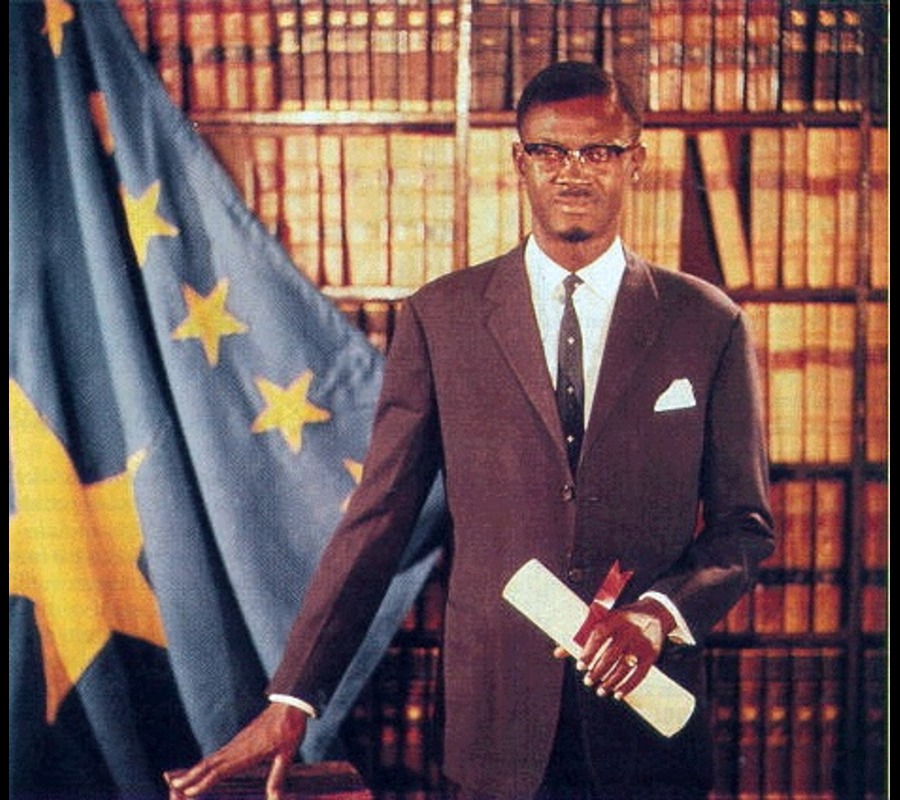
Nzowo highlights Patrice Lumumba's struggles for the freedom and dignity of Congolese and all African peoples and the tasks for the remaining works of the revolution Lumumba represents.
I was born in Kinshasa, capital of the Democratic Republic of the Congo (DRC), long after our first Prime Minister, Patrice Émery Lumumba, was assassinated. Yet his shadow defines my
generation. His courage haunts our conscience. His words—delivered with fire, conviction, and
unwavering dignity—still echo in a country suffocating under the weight of unfinished liberation.
Lumumba was not killed because he failed. He was killed because he believed in a free Congo,
in a sovereign Africa, and in a future where the riches of our land would nourish our people—not
just foreign corporations and complicit elites. His murder was not a singular tragedy—it was a
geopolitical warning. The West declared: independence without submission will be punished.
That warning became a blueprint.
Congo's modern history is not simply a history of war. It is a history of betrayal. Since 1960, every era has been marked by leaders who have traded popular sovereignty for personal power.
Mobutu Sese Seko, installed and backed by the CIA and Belgium, looted the state for over three
decades. He was the first to master the role of postcolonial middleman—appeasing foreign
interests while repressing his own people.
Laurent-Désiré Kabila, backed by Rwanda and Uganda, arrived in 1997, with promises of revolution. But the revolutionary rhetoric quickly gave way to the familiar logic of patronage. His son, Joseph Kabila, governed in shadows: managing opaque mining deals, suppressing dissent, and delaying elections until international pressure forced him out.
Today, under Félix Tshisekedi, the betrayal continues. In 2021, the U.S. State Department
praised his “openness to battery supply chain partnerships.” That was not a celebration of
Congolese progress. It was a nod to cobalt access—raw materials over human rights.
Like his predecessors, Tshisekedi inherited a familiar role: protect foreign access, suppress
internal resistance and manage the optics. Optics designed to obscure the truth—that a few
committed citizens are not only dreaming of a free Congo but organizing to make it real. Félix
Tshisekedi is not a liberator. He is a caretaker of western extractivism in the DRC.
GENOCOST: The Price of Betrayal
Since 1996, more than six million Congolese have died due to war, displacement, and systemic
violence. This is not collateral damage. This is what many Congolese activists call GENOCOST:
genocide for economic gain.
The United Nations has confirmed that the war in Congo became a “self-financing system” of
plunder. Rwanda and Uganda exported billions in Congolese minerals—coltan, gold, tin—often
in collaboration with multinational firms. And this exploitation has not only been enabled by
foreign powers. It has been ratified by Congolese officials. Contracts are signed in silence.
Soldiers guard the mines. Ministers look away.
This is not history. It is happening now.
● On August 30, 2023, in Goma, at least 150 civilians were gunned down by the
Congolese Republican Guard during a peaceful protest. Their crime? Demanding
protection from Rwanda-backed rebels.
● In early 2025, over 3,000 civilians were killed during clashes between M23 militants
and government forces—many caught in bombings, crossfire, or deliberately targeted.
● In Goma’s prison, more than 100 women, many of them political detainees, were
raped and burned alive during a coordinated attack. It was not an accident. It was
terror by design.
These atrocities are not anomalies. They are consistent with a system that values minerals over
lives.
The Illusion of Development
The betrayal of Congo does not only come through warlords or presidents. It comes in suits and
with business cards. It comes stamped with logos and sealed in diplomatic pouches. It wears
the face of humanitarianism.
In May 2025, a damning report by the Center for Research in Public Finance and Local
Development (CREFDL) revealed that the United Nations Development Programme (UNDP)
received over $70 million USD from the Congolese government to deliver infrastructure in
Kasai Central. The result? Zero percent delivery. Not a single clinic, road, or school was built.
The report identified layers of bureaucratic dysfunction: convoluted approval chains, no local
ownership, and no accountability.[1] It wasn’t just inefficiency. It was a neocolonial development
theatre — a performance staged to secure funding and maintain control, not to empower
communities. Decolonization demands we stop mistaking this for help.
The Right to Resist
Frantz Fanon taught us: the colonized are not born violent. They become violent in response to
the violence of the colonial order. In Congo, this violence is structural, slow, and suffocating. It is
the silence around mass graves. It is the contracts signed without consent. It is the bullets fired
into peaceful protestors. It is the apathy of the international community.
To speak out in Congo is to risk your life. Journalists have disappeared. Activists are being
jailed. Women who resist are threatened, raped, and silenced. And yet—we resist.
From Goma to Kinshasa, from the diaspora to the front lines, a generation is rising. We are not
asking for charity. We are demanding justice. Real solidarity does not mean sending aid
packages. It means naming the systems that perpetuate suffering. It means holding Rwanda,
Uganda, and their Western backers accountable. It means listening to Congolese voices and
amplifying their demands for dignity.
Lumumba’s Unfinished Revolution
Patrice Lumumba once wrote in his final letter: “The day will come when history will speak... Africa will write its own history and in both North and South, it will be a history of glory and dignity.” That day has not yet come. But we are preparing the ground. To honor Lumumba is not to recite his speeches. It is to finish his work. To challenge not only the old colonizers, but the new middlemen. To break with the systems that consume our land, our lives, and our future. To declare—once and for all—that decolonization is not a metaphor. It is a project. A political program. A lived struggle.
On June 30, 1960, Lumumba stood before Belgium’s king and declared:
“Our wounds are still too fresh and too painful to be driven from our memory... We have known sarcasm and insults, endured suffering and torture... We are proud of the struggle that led us to this moment.”
He reminded the world that Congolese freedom was not granted—it was fought for. And it must
be fought for still.
To my Pan-African comrades and Friends of the Congo across the world: Lumumba’s struggle
was never confined to Kinshasa. He stood for every African nation dreaming of dignity. For
every youth demanding truth; For every people resisting subjugation under new names; If you
carry his name, carry his mission.
Let Us Build That Future
The path to liberation will not be paved by elections alone. It will not come through summits in
Geneva or soundbites in Brussels. It will rise from below—from students, workers, survivors,
and diaspora—rising together to say: enough.
If the West truly believes in democracy, it must stop arming dictators, funding military proxies,
and extracting our minerals without accountability. It must invest not in contracts—but in people.
A free Congo, rooted in justice, would not only uplift Africa. It would reshape the world.
Let us build that future. Together.
Gaëtan-Dauphin Nzowo is a Civil Engineering Associate and a member of the board of directors of “Understanding Racism” Foundation, and National Society of Black Engineers (NSBE) Portland, USA. He is an activist and organizer of Friends of Congo, building roads and justice.
Endnote
[1] See page 8 of the report. The Report is available here https://www.crefdl-asbl.org/index.php/documents-crefdl/rapport-d-etudes/send/14-rapport-d-etudes/56-rapport-de-monitoring-citoyen-de-l-execution-du-pdl-145-territoires-dans-4-provinces-de-la-rdc-annexes.
It can also be found here https://www.crefdl-asbl.org/index.php/documents-crefdl/rapport-d-etudes