



This latest report from the International Crisis Group, analyses the underlying causes and offers a new approach to unlock the negotiation stalemate. Power-sharing agreements signed in Maputo in August 2009 and Addis Ababa in November offered opportunities to promote a consensual transition. But though he signed, de facto President Andry Rajoelina and his entourage have blocked implementation of the accords, so were hit by African Union (AU) personal sanctions on 17 March.
Madagascar's history is marked by a struggle for political control. By 1700, France and England had attempted to establish settlements, while the rulers of the island's many kingdoms fought among themselves for dominance. Madagascar gained independence in 1960, but since then it has been plagued by assassinations, military coups and disputed elections.

Solidarity from churches in Germany has made it possible for South African shackdwellers movement Abahlali baseMjondolo to elect a delegation to attend the World Urban Forum in Rio de Janeiro, the theme of which is ‘the right to the city’. In a preparatory meeting for the forum, Abahlali notes that 'if there is a "right to the city", it is a very difficult right to actually get. And it is we, the poor who struggle for it, who are paying the price for this right… For the right to the city to be real what will have to count will be people and not money.’
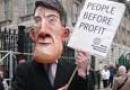
Asymmetric negotiations on Economic Partnership Agreements (EPAs) between African countries and the European Union, with the power balance in favour of the latter, have created a sense of helplessness among ‘concerned citizens, government circles and indigenous business interests’ that stand to lose out if comprehensive EPA is signed. But all is not lost, says Yash Tandon – there’s ‘still plenty of scope and space to save the situation’.
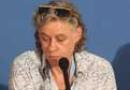
Sir Bob Geldof may not wish to believe recent BBC reports alleging the misuse of famine relief funds in Ethopia in 1984, but, writes Alemayehu G. Mariam, he needs to ‘face the truth’ that ‘aid is stolen and diverted for…corrupt purposes in Africa everyday’. The famine that needs to be cured, argues Mariam, is the ‘famine of democracy, justice, accountability, transparency, rule of law and human rights.’

As much as those who identify themselves as social progressives would like to believe otherwise, writes Dale McKinley, ‘the reality is that South Africa is a bastion of social conservatism'. One of the most glaring contradictions of South Africa’s post-apartheid ‘transition’, says McKinley, ‘is that the widely acknowledged – and regularly celebrated – social progressiveness of the country’s constitution is, in large part, at fundamental odds with the beliefs and views of the majority of South Africans themselves'.

There’s an assumption that despite multiple deprivations, Nigerians can ‘take solace in the knowledge’ that they have democracy, writes Moses Ochonu. But the kind of democracy practised by Abuja has delivered neither improved standards of living nor abstract benefits such as press freedom or human rights, instead providing the perfect cover for ‘massive corruption’, says Ochonu. It is ‘not what Nigerians signed up for in 1999; if we do not act urgently, it will consume us all,’ Ochonu warns.

Ann Njogu delivered her acceptance speech at the International Women of Courage (IWOC) awards held in Washington DC on 8 March 2010. Her speech was a portrait of the struggles and achievements, injustice and poverty in Kenya. Amongst others, she dedicated her award ‘to all the human rights defenders in Kenya’, stating that ‘They are the true champions and heroes of our struggle for change. They continue to put their lives in harm's way because they are convinced that a different and better Kenya is possible. A different and better Africa is possible and a different and better world is possible.’

Mphutlane wa Bofelo mourns a South Africa in which critical thinking, thoughtful strategy and creative minds are marginalised. What is reified instead, he argues, is thoughtless action, the dismissal of theory and analysis and ‘the racist, sexist, violent-peddling hate-talk of Julius Malema’. Wa Bofelo holds that the lionisation of rash and unthinking youths in the past has led to a culture of crime and violence, disrespect for life and intolerance for dissent in South Africa. The media and academia, he states, have played a large role in this: They have always placed spectacle well above cautious and calculated action. Wa Bofelo believes that the youth of South Africa is not ‘the lost generation’, but ‘the generation in search of role models’. He concludes that ‘glorifying mediocrity, recklessness, violence and idiocy today is investing in the doom and damnation of the future… Malema’s is [as such] a serious act of injustice against the youth and posterity.’
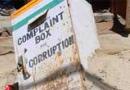
While the data within the World Bank's latest 'Africa Development Indicators' report is certainly rich in highlighting the poor standard of living endured by many in Africa, its focus on the 'quiet corruption' of absentee public officials belies the damaging historical effects of its own structural adjustment programmes (SAPs), writes Stephen Marks.
Efforts to portray Nigeria's Acting President Goodluck Jonathan as a positive alternative to Umaru Yar'Adua are strongly misplaced, writes Kola Ibrahim. While the current power tussle and political crisis have granted a range of players the opportunity to 'loot the nation blind', Ibrahim contends, the inclination of labour movement leaders to cuddle up to Jonathan in a mutually profitable alliance is deeply treacherous to the working people they purport to represent.
walk with me to the statue of Kimathi
be distracted not by sounds of sirens
or the hurrying hues of city humanity.
walk with me to the statue of Kimathi
then lift your eyes like begging hands
to the rifle he clenches like his destiny
then perhaps you will learn not to ask
why i ask to die with fists full of stone
after i take to the jungle of concrete
to resist those who muzzle my mouth
then you pump gas above the street
before pumping bullets into my youth.

Oludolapo Onajin asks why Nigerians continue to suffer and smile. He argues that Nigeria, with its own great minds, should not ‘be under the yoke of a ruling class illiterate in resourcefulness’. He asserts that while Nigerians are paying for their politicians’ education, healthcare, services and lavish lifestyles, these politicians are denying them decent standards of living and access to services. Onajin concludes that Nigerians need to break away from their current accepting and placid attitude and must ‘rewrite their futures’ themselves.

Jestina Mukoko, the Director of the Zimbabwe Peace Project, has been honoured by US Secretary of State Hillary Clinton at the annual International Women of Courage Award ceremony. The Secretary of State said: “We are honoring women from around the world who have endured isolation and intimidation, violence and imprisonment.”
Some 5,000 West African farmers are reaping the rewards from a United Nations scheme aimed at helping them export produce to the growing organic food market in the industrialized world. The $2.4 million UN Food and Agricultural Organization (FAO) project has helped farmers in Burkina Faso, Cameroon, Ghana, Senegal and Sierra Leone to meet the necessary certification and adapt to the required methods to grow and sell organic products, according to a FAO news release.
The United Nations is gathering supplies for some 130,000 people in southern Africa on alert for potential evacuation from flood-risk zones following weeks of torrential rains in northern Mozambique and neighbouring Angola, Namibia, Zambia and Zimbabwe. Normal to above normal rains have swollen rivers, forcing authorities to discharge water from the Kariba Dam in Zimbabwe and the Cahora Bassa Dam in Mozambique, the Office for the Coordination of Humanitarian Affairs (OCHA) reported.
Foremost environmental rights advocacy organization in Nigeria, Environmental Rights Action (ERA), has accused the Anglo-Dutch oil and gas major, Shell, of not being a good corporate citizen in the country. ERA claimed in a statement that the warning by Shell that Nigeria’s declining oil output will be aggravated if the Petroleum Industry Bill (PIB) is passed into law was an attempt to frustrate the move by the country to bring sanity into the sector and recover some level of sovereignty in relation to the resource.
South African President Jacob Zuma is expected in Zimbabwe next week amid reports that Prime Minister Morgan Tsvangirai's MDC has written to his office saying they want a deadlock to be declared.
The African Union (AU) has demanded an urgent election timetable, leading to the return to constitutional order in Niger following the ousting of President Mamadou Tandja in a coup on 18 February in the West African nation.