



The Significance of South Korea’s Presidential Election
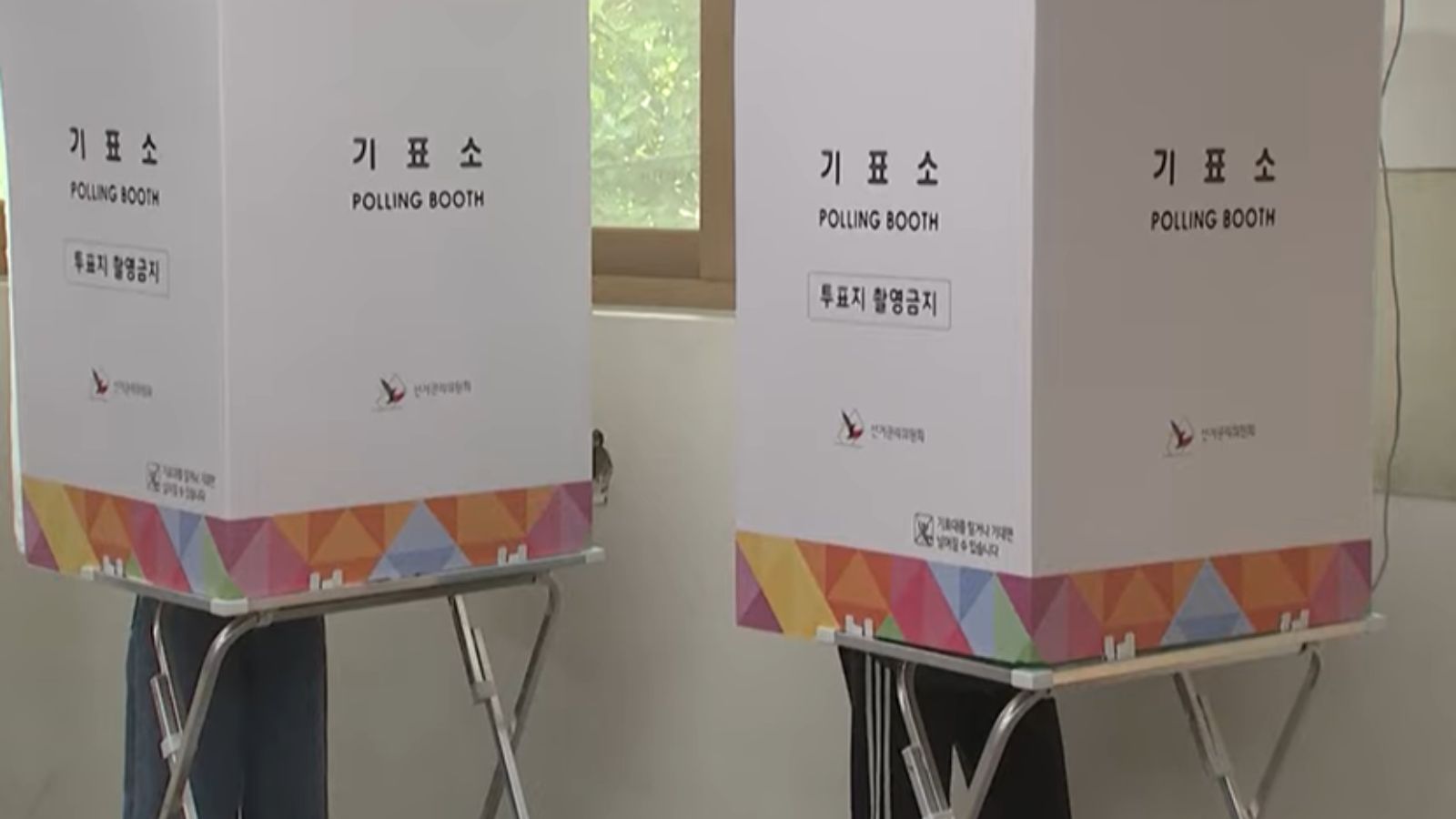
Song discusses the importance of the recent elections in South Korea, relating it to the power of the people in their pursuit of a more democratic South Korea.
On June 3rd, the Democratic Party of Korea’s Lee Jae-myung won with 49 per cent of the vote against the 41 per cent for the People Power Party’s Kim Moon-soo. In addition to being a part of impeached President Yoon Suk-yeol’s party, Kim also represented the far-right faction that supported and defended Yoon’s declaration of martial law. Thus, his defeat marked an important step towards dismantling the far-right movement threatening Korean democracy. Amidst the global right-wing populism and rising regional tensions, Lee Jae-myung’s election is a refreshing breeze for democratization and peace.
While many[1] voted for Lee to deny the martial law elements a return to power and as a precondition for bringing them to justice, democratizing society can’t be achieved through the Democratic Party of Korea (DPK) or the Lee Administration alone. This is because like the conservative People Power Party (PPP), the DPK has not been able to offer alternatives (such as redistribution and democratization) to break Korean society from a corporate-centered growth model amidst economic stagnation.
The last 7 months (and 9 years) have shown us that democracy depends on the public’s willingness to fight for it in the streets. This democratic consciousness deepened through the 122 days that Koreans took to the streets to remove Yoon from office. Ordinary people—in particular young women[2]—and movements—such as unions, farmers, feminists, the disabled, and the LGBTQ+ communities—guarded and pushed along the democratization struggle.
That first night, on Dec. 3rd, when martial law was declared, people rushed to the National Assembly to demand and to guard the assembly members’ vote revoking martial law. The following week, when the impeachment motion against Yoon failed to achieve quorum, people came out to the National Assembly to pressure moderates in the People Power Party (PPP) to vote for impeachment. When the Corruption Investigation Office gave up[3] after its timid arrest attempt (for Yoon’s refusal to be investigated), people camped through a blizzard in front of Yoon’s house and successfully called for his arrest. When the Constitutional Court was delaying its ruling, people marched to its office for multiple weekends until the court unanimously ruled to uphold the impeachment. Lee Jae-myung’s victory in the June 3rd snap elections was the culmination of a broader struggle to block, dismantle, and uproot the martial law elements.
Only this broader struggle can continue democratization during the Lee Administration. After all, this is not the first time that the Democratic Party of Korea took power following a presidential impeachment. After the 2016-2017 candlelight protests removed President Park Geun-hye from power, the Democratic Party took power under the Moon Jae-in administration. Yet, this administration failed to carry out the mandate for reforms given to it by the candlelight revolution. As a result, its approval ratings went from the all-time high of 83%[4] down to 43%[5] by the end of his term, paving the way for Yoon Suk-yeol’s election.
The candlelight protests failed to produce a progressive government that could make Korean society more just, equitable, and democratic: ultimately, South Korea could not break out of the Cold War framework that restricted elections to a contest between conservatives. In fact, in the recent campaign, Lee portrayed himself not as a progressive alternative but as a “center conservative.”[6] His campaign emphasized economic growth and explicitly rejected redistribution policies as premature. And while economic recovery is necessary after the social upheaval from Yoon’s martial law declaration, the Lee Administration’s constant emphasis on growth makes it vulnerable to business friendly policies that increase profits while doing little to directly address social needs or inequality. Furthermore, despite Lee’s victory, with 41% of the vote, the conservative movement remains a formidable force in South Korea. Overcoming South Korea’s conservative movements requires inspiring people to engage with progressive policies that improve people’s lives and the planet.
Secondly, Lee’s victory creates openings for shifting South Korea away from Yoon’s ideologically defined pro-US stance and towards a more pragmatic approach of stabilizing inter-Korean relations while balancing its relationship with the United States and with China. Lee’s call for rebalancing South Korea’s relations with the US and with China is a welcome change from Yoon’s ideological and reckless drive to become a “global pivotal state”[7] for the United States. Upon taking office, Lee implemented small steps to improve inter-Korean relations: he shut down the propaganda loudspeakers and cracked down on propaganda leaflet drops into North Korea. These small actions ease tensions and build goodwill that can pave the path towards larger inter-Korean breakthroughs. Recently, he also decided not to attend the NATO Summit,[8] ostensibly to deal with Korea’s urgent domestic affairs and due to instability in the Middle East. This has the added benefit of sidestepping commitments that would further militarize and escalate tensions in the region, especially with China.[9] Nonetheless, there are limits to Lee’s foreign policy. South Korea’s foreign policy falls within a narrow anti-Communist and pro-US Cold War framework that keeps it beholden to the US and prevents it from pursuing an independent inter-Korean policy. The legacy of the Cold War still shapes the consciousness of a large section of society (especially among those over 60)[10]. South Korea’s dependence on the United States is also structural. Not only does the United States have nearly 30,000 soldiers stationed in South Korea, but it also possesses wartime operational control over the South Korean military. Despite spending over 10 times more on the military, its air superiority, and its advanced weaponry, South Korea’s structural reliance on the United States for security gives the latter great leverage when it comes to South Korean security and foreign policy matters.
To break free from the Gordian knot of DPK and PPP domination, we need to go beyond redistributing power between the executive and legislative and towards redistributing power to people so that they can improve their lives and society beyond elections and protest. One strategic demand—even attempted by the Moon Administration[11]—would give people the power to propose bills to the National Assembly. This would erode the duopoly on legislation held by the liberal Democratic Party of Korea and the conservative People Power Party and create spaces for political engagement and debate. If the level of a democracy is determined by the consciousness and willingness of it’s public to defend and improve it, then deepening public consciousness around democracy involves being able to practice and debate it.
The push for this reform can only come from left/progressive parties coming together to pull the Lee Administration to the left. The first step was taken during the election with the creation of the Democratic Labor Party (DLP). While it only received 1% of the vote, the DLP highlighted specific progressive demands during the presidential elections. And, contrary to its low number of votes, many expressed their support and appreciation for the DLP’s political platform and efforts by donating for the campaign costs: in a winner-takes-all system with no run-off election, even those that want to vote for a third progressive party refrain from doing so lest it result in a conservative victory. More importantly, the DLP was able to bring together, at a time of fragmentation in the left, the Worker, Green, and Justice Party, and social movement organizations. The next step will be contesting for district and city seats during the 2026 local elections. Until then, organizers need to create democratic spaces and engage the public on the street and in the media to push Korean democratization forward.
Dae-Han Song is a part of the International Strategy Center and the No Cold War Collective. He is also an associate at the Korea Policy Institute.
Endnotes
[1] 27% of those that voted for Lee chose fighting martial law as their reason for doing so. https://www.wikitree.co.kr/articles/1055659
[2] https://www.thenation.com/article/world/south-korea-feminist-movement-light-stick-revolution-yoon-suk-yeol/
[5] https://www.statista.com/statistics/1287259/south-korea-approval-rating-of-president-moon-jae-in/
[8] https://koreajoongangdaily.joins.com/news/2025-06-22/national/diplomacy/President-Lee-Jae-Myung-to-skip-NATO-summit-as-Middle-East-tensions-escalate-/2335743
[9] https://peoplesdispatch.org/2025/06/17/south-koreas-president-lee-shouldnt-attend-nato-amidst-crises-peace-is-pragmatic/
[10] https://biz.chosun.com/en/en-policy/2025/06/03/UNOUZLKHPZB4FO44Z6F5CEQXMU/#:~:text=In%20their%2060s%2C%20Kim,34.0%25%20of%20the%20votes.
[11] https://constitutionnet.org/news/presidential-proposal-constitutional-revision-south-korea-unlikely-be-passed-significant-step#:~:text=First%2C%20to%20strengthen%20the%20sovereign%20power%20of%20the%20people%2C%20it%20introduces%20recall%20of%20legislators%20and%20provides%20for%20popular%20legislative%20initiatives.