



The Norwegian People’s Aid (NPA) commissioned investigations on the 'land grab' in South Sudan which culminated into a 48-page dossier dubbed 'The New Frontier'. The dossier reveals that in the period 2007 to 2010 'foreign interests sought or acquired a total of 2.64 million hectares of land (6.52 million acres) in the agriculture, forestry and biofuel sectors alone'. According to the report’s author David Kuol Mading: 'That is a larger land area than the entire country of Rwanda,' said the report’s author, David Kuol Mading.
A tribunal in Nigeria has rejected an attempt by the opposition to declare President Goodluck Jonathan's victory in April's election fraudulent. The result triggered violence in northern strongholds of defeated opposition candidate Muhammadu Buhari after he rejected the result. But the judge said Mr Jonathan won the election lawfully. Mr Jonathan, a southerner, obtained 59 per cent of the vote, while Mr Buhari got 32 per cent.
Several major new dams are being constructed on the Niger River. The new dams not only raise ecological concerns, but are also provoking difficult negotiations over equitably sharing the resources of a river basin that extends over two million square kilometres. 'There are nine countries in the Niger basin, but their interests are divergent. There are certain countries - such as Mali and Niger - which don't want any dams constructed upstream,' said Bi Tozan N'Guessan, an expert at the Côte d'Ivoire Water Ministry.
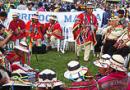
The World People's Conference on Climate Change and the Rights of Mother Earth took place in April 2010 in the Bolivian city of Cochabamba after the 15th United Nations Conference of Parties (COP15) climate meetings in Copenhagen during December 2009. The event was attended by around 30,000 people from over 100 countries and issued the The Peoples Agreement, an extract of which is reproduced below.
Botswana should decriminalise homosexuality and prostitution to prevent the spread of HIV, ex-President Festus Mogae has told the BBC. Mogae, who heads the Botswana government-backed Aids Council, said it was difficult to promote safe sex when the two practices were illegal. A government spokesman on HIV/Aids told the BBC homosexuality and prostitution would remain illlegal until the government concluded wide-ranging consultations to see whether there was a need to change the law.
The first international farmers’ conference, whose objective is to strengthen the fight against land grabs in Africa and other parts of the world, will be held in Sélingué from 17 to 19 November 2011, and will bring together almost 200 farmers affected by land grabs as well as numerous other participants, including researchers, political figures, and NGOs resisting the unprecedented land-grab offensive by large businesses and hedge funds, among others, that compromises the ability of people to feed themselves.
Hundreds of SPLM-North fighters were killed in clashes with the Sudanese army in South Kordofan state, local governor Ahmed Haroun said. 'Several hundred members of the movement were killed this day in an assault on the city of Teludi that was repelled by the armed forces,' the governor of South Kordofan, an oil-producing state and scene of frequent clashes, said. An army spokesman, Sawarmi Khaled Saad, said 'this morning more than 700 rebel fighters together with 12 officers tried to attack Teludi (east of the provincial capital Kadugli) to occupy it'.
Education is priority number one in Tanzania: the education budget has grown, primary school enrolment is close to universal, and secondary school enrolment is expanding fast. But, writes Rakesh Rajani, head of Twaweza, a ten-year initiative to promote citizen agency and improved service delivery in East Africa, millions of children are not learning. 'According to the large-scale and independent Uwezo Survey, 7 out of every 10 children in Grade 3 cannot read Swahili at their level, 8 out of 10 cannot do math and 9 out of 10 cannot read English. Even after seven years, when they have completed primary schooling, half the children cannot read Grade 2-level English.' So, after 50-odd years of advice and studies and reforms and programmes, why have the experts not managed to deliver a system where children are learning?
Finance Minister Maria Kiwanuka has said 'tougher times were still ahead' for Uganda. Her statement comes on the back of rising inflation which currently stands at 30.5 per cent up from 28.3 per cent in September. The high inflation trend has reduced real incomes and increased the costs of living and doing businesses in Uganda.
The adoption of international guidelines to regulate so-called land grabs has been pushed to next year after negotiators failed to agree on conditions for large-scale land investments and enforcement. The guidelines, in the making for several years, were sparked by fears that a 'land rush' is leading to hunger, conflict and human rights abuses. More and more investors have flocked to the developing world over the past decade, snapping up huge tracts of farmland. Investment has intensified since the 2008 food and fuel price crisis. Once in place, the United Nations’s Committee on World Food Security guidelines are meant to protect people, mainly in poor countries such as Sierra Leone, from 'land grabbing'.
The International Labour Organisation has warned that a jobs crisis caused by the slowdown in the global economy threatens a wave of widespread social unrest engulfing both rich and poor countries. 'We have reached the moment of truth,' said Raymond Torres, director of the ILO International Institute for Labour Studies to mark the publication of the organisation's World of Work report. In a new 'social unrest' index, the ILO said there was growing unhappiness over the lack of jobs and anger over perceptions that the burden of the crisis is not being shared fairly. It noted that in over 45 of the 118 countries examined, the risk of social unrest is rising, with particular signs of tension in the EU, the Arab region and to a lesser extent Asia.
Swaziland’s economic crisis has forced the government to put on ice the agricultural input scheme that has made the survival of many subsistence farmers and their families less precarious on communal Swazi Nation Land, where 70 per cent of the 1.1 million population live. 'There is no seed subsidizing now. We used to do it, and we are talking about reviving the programme,' Xoxile Nxumalo, of the agriculture ministry, told IRIN. Under the Swazi Agricultural Development Programme, seeds were sold at a discount or provided free of charge to subsistence farmers working on communal land.
The aftermath of elections in Tunisia
Samir Amin
The people of Tunisia had a participatory and democratic election as they wanted. However, defining this achievement as ‘a revolution’ would be an error, according to Samir Amin. He argues that fundamental issues need to be addressed in order for sustainable democracy to reign in Tunisia. [=http://www.pambazuka.org/fr/category/features/77537
******
Tunisia: What to say? What to do?
Freddy Mathieu
From five core observations made about the elections in Tunisia, Freddy Mathieu draws a conclusion. ‘The victory of Ennahdha marks the close of a chapter; however a lot remains to be desired. Its consolidation does not solve the important issues that led the Tunisian citizens through the revolutionary whirlwind. Instead, this consolidation makes the issues more pronounced. [=http://www.pambazuka.org/fr/category/features/77536
******
Ennahda: The success story returns
Jeunesse du jasmin
The historical persecution of Muslims under Bourguiba’s regime has led to Islamists’ current establishment in Tunisia. This alone cannot explain their surprising breakthrough. Some pressing factors have led to the results. The obvious one is the deeply rooted inequalities in this country in which the social divisions have crossed over into religious rifts
[=http://www.pambazuka.org/fr/category/features/77534
******
After the USA, China is doing its shopping in Europe
Jean- Paul Pougala
Europe is no longer that exemplary power that used to tower over other countries. This illusion has been maintained by baffled leaders who cannot get over it. The last Brussels summit showed once again the meaning of ‘When China awakens’.
Jean- Paul Pougala rejoices for Africans that, after 500 years, there is a new hunter on the international scene to contain the traditional predators’.
[=htttp://www.pambazuka.org/fr/category/features/77530
******
Gaddafi: The glory of the defeated
Joseph Eroumé
Lumumba backtracked towards death, Sankara challenged it, Gaddafi did not flee from it. Faced with this trilogy of destiny, Joseph Enuma proclaims: ‘Better die than give up, when one defends a just and noble cause: His own people’. For him, the murder the Libyan leader, like what happened to Ivory Coast, puts Africans in the lead to face their responsibilities and build a defense against the West and its interests.
[=http://www.pambazuka.org/fr/category/features/77531
******
Rwanda-France: Can we just forget?
Bertold du Ryon
After 17 years, France bore the burden of its responsibilities in the 1994 Rwandan genocide, despite the denials. And last September when President Kagame went on an official visit to Paris he made a declaration in very certain terms that time had come to look towards ‘the future’ and not to be ‘enslaved by the past’. Thus, according to Bertold du Ryon, there comes a point in time where political and economical interests start forsaking history.
[=http://www.pambazuka.org/fr/category/features/77533
The African Development Bank (ADB) has proposed Egypt with a loan valued at US$1.4 billion dollars. US$550 million of the US $1.4 billion loan has already been allocated to the Steam Power Station of the Suez for the purposes of an electrical production project. The project is one of 12 projects that will be discussed by Karebuka during his three-day visit with Egyptian officials. The loan offer comes at a time in which the post-revolutionary Egyptian economy is strife with turmoil.
The team drafting the constitution, the Constitution Select Committee (Copac) has said that the final phase of the drafting process will start next month. Copac co-chairperson Munyaradzi Paul Mangwana said that the document would be put to a referendum early next year, paving the way for harmonised elections.
A website has been launched to promote transparency in the Democratic Republic of Congo's mining sector, which is plagued by conflict and corruption. The Carter Center said it helped launch congomines.org to give people more information about the mining sector, including contracts and payments. Hundreds of mining documents and maps will be published on the site, it said.
At a recent conference on statelessness and gender discrimination organised by Refugees International (RI) at the US Institute of Peace (USIP), international human rights advocates urged countries around the world to take action on issues of statelessness, a legally invisible status that United Nations High Commissioner for Refugees (UNHCR), Antonia Guterres, said is 'probably the most forgotten global human rights problem in today's international agenda'. According to RI, about 12 million people worldwide lack effective citizenship, a status that deprives them of rights such as legal representation, identity documents, and access to public schools. And in many countries, discrimination against women in nationality laws aggravate or actively create statelessness.
'The car is ready,' exclaimed Mr Paul Isaac Musasizi, the project manager of the Vehicle Design Mission at Makerere University, which has produced Uganda’s first electric car. The Kiira EV was tested for road and drive performance, ability to climb steep areas and ability to pick up speed, among other parameters. The making of Kiira EV started in August 2009 with a handful of students at the College of Engineering Art and Design, formerly the Faculty of Technology.
Bribing public officials when doing business abroad is a regular occurrence, and companies from Russia and China, which invested US$120 billion overseas in 2010, are seen as most likely to pay bribes abroad, according to Transparency International’s 2011 Bribe Payers Index. The index, which involves a survey of 3,000 business executives from developed and developing countries, also shows that companies from the Netherlands and Switzerland are seen as least likely to bribe.
Mountains of hazardous waste grow by about 40 million tons every year. This waste, mostly from Europe and North America, is burned in developing countries like Ghana in a hazardous effort to recover valuable metals. A children's school in Accra, Ghana's capital, was recently found to be contaminated by lead, cadmium and other health-threatening pollutants at levels over 50 times higher than risk-free levels. The school is located directly beside an informal electronic waste salvage site.