




The arrest of six policemen for last week’s murder of protestor Andries Tatane is ‘a quick ploy to take attention away from the systemic factors that inform police brutality’, says Mphutlane wa Bofelo. Shouldn’t the country’s police force protect the interests of communities rather than criminalising service delivery protests?
The re-establishment of local councils in Sierra Leone in 2004 was intended to give people a greater voice in their government, reversing long years of marginalisation for rural districts in particular. But nearly seven years later, it has still not been fully implemented. A local NGO, Campaign for the Voiceless, is working to strengthen the performance of this most accessible tier of government. The campaign is working on a project intended to improve social accountability in local government.
A two day ministerial meeting of the 5th session of the AU Conference of Ministers of Health (CAMH5) started in Windhoek Namibia on 21 April under the theme 'The impact of climate change on health and development in Africa', with the expectation that they will formulate a clear response to climate change in order to protect human health and ensure that it is placed at the centre of the climate debate. The meeting is concerned that Africa is already experiencing the effects of climate change, which are likely to be more severe than originally anticipated. The Ministers are also concerned that the rising frequency of extreme climate events renders African countries vulnerable to increasing prevalence of and mortality from infectious diseases that have several negative consequences such as decreasing economic productivity, increasing medical costs, and further pressurizing already tenuous health care systems.
Some people in rural Zambia are more interested in the education of their children than talk about the failed constitution-making process. 56-year-old John Siamwinde, from Chakanda Village, east of the capital Lusaka, says he has heard almost nothing about the constitution. 'I have heard about the elections coming up later in the year, but I don't know anything about the failed constitution. What we need here are schools and health facilities for our children and ourselves. Look at this school, surely our children deserve better!' he says as he points at a grass thatched shelter which is used as a school for children.
Anna Paskal of Canada's the People's Food Policy writes of her organisation's work and its solidarity with other people around the world working towards food sovereignty.
With many sectors of Algerian society profoundly disaffected with the record of Abdelaziz Bouteflika’s government and their prospects, the time for the authorities to effect genuine political reform is running out, writes Lakhdar Ghettas.
‘In reality, the targets of the uprising are the so-called leaders in the North – the political, military and business elite – as well the traditional institutions that have held the region back and truncated any attempt to educate the people and free them from the yolk of illiteracy and poverty.’ Dibussi Tande puts Nigeria’s post-election violence in context, with views from the African blogosphere.

NATO’s involvement in Libya is a simple case of egotistical self-interest and attempts at control on the part of the Western powers, writes Jenn Jagire: ‘One thing is clear: Libya did not attack any of these countries for this mighty alliance to bring out its entire arsenal against this small country and its traumatised people.’
 © Abahlali.org
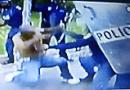
 © Abahlali.orgIf decisive action is not taken to persuade South Africa’s police that their job is to facilitate rather than repress the right to protest, we may have to add more names to those of Solomon Madonsela, murdered by the police in Ermelo in February, and Andries Tatane, murdered by the police in Ficksburg last week, writes Richard Pithouse.


As part of a Global Information Network panel on 23 March 2011 at the Left Forum in the US, Pambazuka's editor-in-chief Firoze Manji .
Early April saw the launch of the new World Bank Group strategy for engagement in the palm oil sector, which failed to resolve civil society concerns over several issues, including the rights of indigenous peoples and how performance standards will be applied across supply chains. The strategy outlines the conditions and standards under which the Bank will invest in the controversial palm oil sector, and brings to an end the moratorium on investments in palm oil announced by Bank president Robert Zoellick in September 2009. The original suspension followed years of pressure from civil society and indigenous peoples groups over the negative social and environmental impacts of palm oil plantations.
Negotiations for a new economic partnership agreement (EPA) between SADC members and the European Union appear to have been shelved with no fixed date for resumption of the protracted trade negotiations. The SADC and EU negotiating teams last met in November 2010 in Mozambique. Instead, the Southern Africa bloc seems more concerned with talks on coalescing SADC, the East African Community and the Common Market for Eastern and Southern Africa into what has become known as the trilateral free trade area (T-FTA).
Tunisian activists were unanimous in calling for the abolition of the Constitutional Democratic Rally (RCD). However, last week's decision to bar representatives of the former ruling party from political life altogether is raising doubts among some activists and politicians. The High Commission for the Realisation of Revolutionary Goals on 11 April prohibited senior RCD members from participating in July's constituent assembly elections.

Just as we must condemn homophobia and support ‘the rights of consenting individuals to privacy in their sexual relations’, we must also grant far greater attention to the sexual abuse of children, argues Patricia Daley.
The United Nations has appealed for a ceasefire in the Libyan city of Misrata, saying at least 20 children had been killed in attacks by besieging government forces on rebel-held parts of the city. Libya's third city, where hundreds are believed to have been killed by shelling and sniper fire by Muammar Gaddafi's forces, is the main focus of efforts to protect civilians caught up in the Libyan leader's bid to put down an armed rebellion.
Uganda's opposition leader has vowed to continue protests against spiralling fuel and food prices after being charged with riotous behaviour. Kizza Besigye, whose right hand is heavily bandaged after he was hit by a rubber bullet last week as police quelled his first protest, was arrested on Monday after a scuffle with security forces. Appearing in a court in Kampala, the capital, the leader of the Forum for Democratic Change (FDC) remained defiant, saying he saw nothing wrong with the 'walk to work' protest, which is highlighting the plight of people who cannot afford fares for public transport.
The Democratic Republic of Congo is rebuilding its power grid as part of the war-torn country's reconstruction. Originally built to power copper mines, the grid reaches just 6 per cent of the nation's people and bypasses some of its biggest cities. Rather than improve its citizens' access to electricity, the government plans to provide electricity from the rehabilitated power grid and new dam projects for mining and exports to South Africa and other countries. The rehabilitation's slow pace, ballooning costs and emphasis on energy exports raise serious concerns that it will only perpetuate Congo's great energy divide, says this page on the website of International Rivers.
Zimbabwe’s current Inclusive Government, more commonly referred to as a Government of National Unity (GNU), was established pursuant to an Interparty Political Agreement, itself more commonly referred to as the Global Political Agreement (GPA), states this legal analysis from the Research and Advocacy Unit Zimbabwe. 'Rather than simply containing clauses which are subject to legal interpretation and enforcement, the larger part of the agreement comprises rhetoric and ideological bombast designed to facilitate political posturing and little else,' the authors state.