



Where is U-Ndugu?: A Reflection in the Aftermath of the October 29 Elections Violence in Tanzania
Where is U-Ndugu? A burning question surrounding the inhumane, anti-cultural and anti-spiritual treatments of the living and the dead in Tanzania’s 2025 elections.
On October 29, 2025, Tanzanians went to the polls to elect their leaders, including the president, members of parliament and councilors, for a five-year term. However, this process, unlike previous elections, left the country with questions, cries, scars and sadness. It claimed the lives of young Tanzanians, men and women, children, and destroyed property. The elections brought a cloud full of gunshots and smoke, something unusual to Tanzanians. Cities such as Dar es Salaam, Mwanza, Arusha, Mbeya, and Songwe were all full of blood in every corner. Now, Where’s our U-Ndugu?
Tanzanians are known across Global Africa and the World for their strong sense of unity, love, care and community. This ethos is expressed in a Tanzanian Swahili term ‘Ndugu/Undugu’. Ndugu/Undugu in English means a fellow sibling, relatives, shared ancestry, shared histories, shared earth, and shared community experiences.[1] In Tanzania, the term is more than being relative; it encompasses love for each other, respect, support, care, forgiveness, embracing one’s weakness rather than victimization. The term Ndugu/Undugu denotes the Ubuntu philosophy and tradition that ‘I am because We Are’. The Tanzanians consider every person, every human being, as Ndugu, in the sense that no one exists outside other than Ndugu. Life is meaningless outside other than Ndugu. Sote ni Ndugu (We are All Relatives) in Unity. This tradition has kept Tanzania united and celebrates our 120 ethnic diversities as all Watanzania/Mtanzania.
The term beyond Tanzanian refers to care for humanity at all levels. This is expressed in the first and second Tanganyika African National Union (TANU) creed that ‘all human beings are equal, and that every individual has a right to dignity and respect’.[2] These two creeds mean brotherhood with all humanity and equality of human beings, not in the material world, but in their humanity. These ideologies and experiences are well stated in the Tanzanian constitution. Its preamble states that ‘We, the people of the United Republic of Tanzania, have firmly and solemnly resolved to build in our country a society founded on the principles of freedom, justice, fraternity, and concord.[3] These cardinals have been part of life in the country. I have personally seen them throughout my life in Tanzania. I could not starve because I had nothing to eat, but because I had no Ndugu beside me. The ideals of Ndugu/Undugu are more communal and immaterial.
The question now, in relation to the October 29 electoral violence and after, is: where are these Undugu values?
While it is a political tradition for Tanzanians to go to the polls every five years to elect leaders, the October 29, 2025, election disrupted the country's image and the Tanzanian community's experience. The elections were marred by violence, emanating from the government’s response to young people’s peaceful demonstrations. The People of Tanzania demonstrated to express their dissatisfaction surrounding the election processes, including the arbitrary arrest, forced disappearance, banning of opposition parties to freely participate in elections, kidnapping of people without explanations, etc. The news report indicated that the government’s response to these demands was to shoot the protesters indiscriminately.
Some disturbing pictures and videos clouded the social media and news houses, internet and electricity were shut down, curfew was enforced, the Tanzanian police forces responded with teargas, and live ammunition was fired toward peaceful protesters. What is the difference between the colonial police and the Tanzanian police force and government? Where is our Undugu?
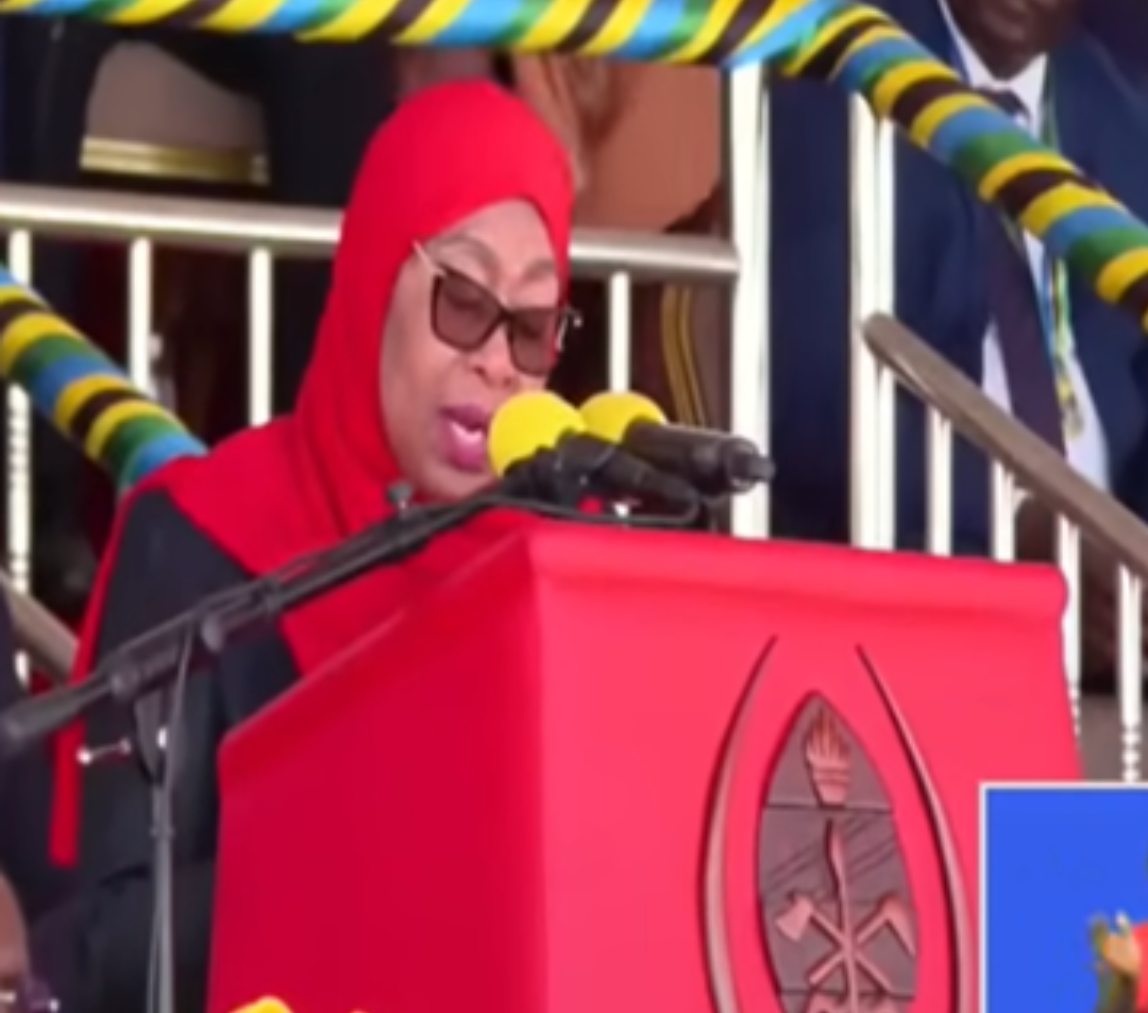
While this was not enough, after this violence, the responses from government officers, supporters of Chama Cha Mapinduzi (CCM), and the president altogether tore apart the heart of the country. This sent the community a message of sadness and cries to families, friends, and the community that lost their loved ones and property. Instead of healing people’s bleeding hearts, the government claimed that violence was instigated by people from outside Tanzania, although we don’t know which country.[4] Furthermore, the authorities in Tanzania pledged to identify and punish all people who participated in those demonstrations.
Is this how the party and government should respond to people who are crying for the loss of their loved ones? This reminds me that the party's responsibility is to speak for the people, ‘(Chama Kazi Yake ni Kuwasemea Watu)’[5]. This means the people are the owners of the party, and the party must do good and speak for the people, regardless of their differences. Moreover, all of this reflects the concept of Undugu. But why do our CCM and government leaders today fail to remember all this brotherhood ethos?
Furthermore, the news comes from Tanzania and East African communities that some families could not even identify the whereabouts of the bodies of their loved ones. It was reported in various news reports that a secret crowd burial was performed in some cities.[6] It was further reported that some hospitals did not allow people to take their loved ones’ bodies. Neither the Party nor the Government has put up a statement about these cruel and non-African behaviors.
More important is the tradition and respect for the loved ones to be buried by their relatives. This helps to heal them and, more importantly, connect the dead with the living. This connection keeps communities and families together. Now the people with power in the country have denied Tanzanians these spiritual rights. Do they know how much damage is done to the Undugu tradition in the country and beyond?
Will party members still be confident to refer to each other as NDUGU? Will they be able to salute or address the meeting and public rallies with the ‘Ndugu Watanzania, Ndugu Wananchi Salute?
Sadly enough, the blame game is increasingly heard from the government leaders, that the ‘protesters were not Tanzanians’, ‘they were people outside the country mobilizing for demonstration for personal gains’, ‘it’s opposition political parties that mobilized for demonstration’, etc. These are often heard every day after October 29. Since when has humanity been protected or preserved under the blame game rubric? How will people in the community who lost their sons, daughters, uncles, mothers, fathers, and grandparents feel about this blame game? Where is Undugu in this blame game?
In this situation, the ruling party, the Chama Cha Mapinduzi, needs to self-reflect on its values, principles and, more importantly, its ideology. CCM needs to remember that the party did not grow out of bourgeois behavior in which human lives do not count over profit. The party emerged and has lived on the hands of the peasants of Tanzania in villages and towns, the working people in farms, mines, industries, and street vendors. It is a mass party, not an elite party. CCM should not celebrate being in power; it must work to realize its responsibility to the people, ensure people-centered development, and keep the centrality of the people in every work. Second, the government, since regaining power against the people’s will and loss of Tanzanians’ blood, should find a way to regain, negotiate and seek legitimacy and acceptability. Use of force cannot solve the problem; instead, it accelerates the problem. It will lead to further bloodshed in the country, encourage death tendencies, and the destruction of our Tanzanian society. The government cannot claim to have won against its own people through guns and bullets. That makes the government colonial, dictatorial, and not a people’s government.
The government must seek proper ways of legitimation, including engaging in fresh elections of the people’s representatives, adopting a new constitution that celebrates diversity and transfers power to the people, adopting pro-people electoral rules and procedures, and protecting people’s rights. These can be done through the Ujamaa, Undugu, and Ubuntu principles of discussion, consensus, accountability, and reconciliation, not competition. Leaders must accept being Tanzanians rather than being the directors and managers who seek to increase profits under the rhetoric of development.
I still believe in Undugu and Ndugu.
Ndg. Eliud Atugonza. Kabamanya, is a Tanzanian, student and researcher committed to understanding social economic and political life of the country and Global Africa. Eliud is also a student in Political Science at Clark Atlanta University with concentration on African Politics, Political Economy, Political Theory, and Comparative Politics.
Endnotes
[1] Ikaweba Bunting, ‘Developmentalism, Tanzania, and the Arusha Declaration: Perspective of an Observing Participant’ in Anywhere But Here; Black Intellectuals in the Atlantic World and Beyond, by Kendahl Radcliffe, Jennifer Scott, and Anja Werner, (Mississippi, University Press of Mississippi, 2015), pp 85
[2] Julius Nyerere, ‘Arusha Declaration’ (Marxists Internet Archive), 5 February 1967. Available at https://www.marxists.org/subject/africa/nyerere/1967/arusha-declaration.htm. (Accessed on November 7, 2025).
[3] United Republic of Tanzania. Constitution of the United Republic of Tanzania. 1977 (R.E. 2005). Accessed on November 7, 2025. Available at https://www.nao.go.tz/uploads/Constitution_of_the_United_Republic_of_Tanzania_en.pdf
[4] Citizen TV Kenya. “Samia Suluhu First Address Being Sworn in as Tanzania's President.” Citizen TV Kenya. 03 November 2025. https://www.youtube.com/watch?v=0hZ7SSwzvYo&t=37s (Accessed November 07, 2025).
[5]Julius Nyerere. Man and Development. London. (Oxford University Pr, 1974)., pp 16.
[6] Grand Pinnacle Tribute. “Tanzania Opposition Alleges Secret Burials After Elections. Grand Pinnacle Tribute. 5 November 2025. https://evrimagaci.org/gpt/tanzania-opposition-alleges-secret-burials-after-election-515232?srsltid=AfmBOoqKM95Vy44l63uxsrrpuaMLhsBW293AbDFvGn7uSDUOWr2WOA2J (Accessed November 07, 2025).