



Breaking the Adjustment Cycle in Africa: Senegal under IMF Debt Restructuring and Independent Parliamentary Oversight (Part II)
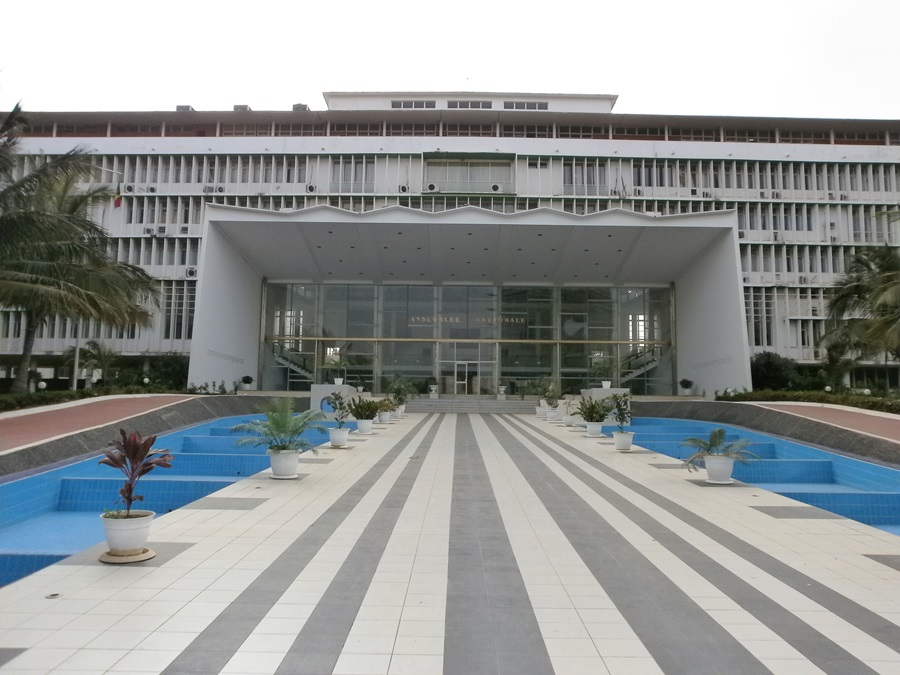

In this second part of a two part policy note, Yassine Fall further examines the practicality of debt restructuring, structural adjustment policies, and Senegal’s relations with the IMF. The analysis proposes a collective front for debt justice and challenges Senegal to be guided by the sovereign mandate that delivered the electoral victory of 2024.
The Grammar of Restructuring: Logic and Limits of the Orthodox Framework
The Logic of Accounting Sustainability and Conditionality as a Credibility Signal
The orthodox framework underpinning IMF programmes rests on an architecture that warrants careful examination. The IMF defines debt sustainability as a country's capacity to service its debt without major future adjustment or restructuring, under a set of assumptions about growth, primary deficit, and real interest rates. IMF doctrine requires that adopted policies be "economically and politically feasible" — a prudential clause that implicitly acknowledges the risk of self-defeating austerity, but which leaves to the Fund, and not the debtor country, the final arbitration of what is deemed feasible. This constitutes a first structural point of friction, documented in the very exchanges between Dakar and Washington in 2025–2026.
Three empirical observations deserve attention. First, Senegalese growth remains driven by a sluggish non-oil sector — 2.2% in 2025, before a partial rebound to 4.7% in the first quarter of 2026 — which undermines the fiscal revenue assumptions of the restructuring programme. Second, rising domestic debt at rates of 6–6.3% increases debt service to a degree that fiscal discipline alone cannot offset in the medium term. Third, the very timing of the process — programme suspension in 2024, exploratory mission in late 2025, staff-level agreement in early September 2026, Board approval still pending — illustrates the cost, in uncertainty, of a prolonged negotiation within the existing institutional framework.
"Restructuring" as a Political Frame: What the Semantic Shift Entails
The terminology used by the IMF is not neutral. Where one previously spoke of debt relief or cancellation — formulations advanced notably by the Jubilee 2000 movement — the Bretton Woods institutions now favor the term 'restructuring'. This lexical choice presupposes that debt is a technical datum to be managed, not a historical power relationship to be transformed. It is precisely this semantic framework that the Déclaration Politique Générale (DPG)’s use of the term "structural adjustment" on 8 September 2026 reproduces — inverting the vocabulary of rupture that brought Patriotes Africains du Sénégal pour le Travail, l’Éthique et la Fraternité (PASTEF) to power.
Restructuring always takes place within the framework of an IMF programme — with fiscal adjustment conditionalities that precede and condition any debt treatment. This sequence — adjustment first, possible debt treatment later — is precisely what heterodox critics contest. It transfers the immediate cost of the crisis onto the population, while creditors and international financial institutions continue to collect their service. Reframing the negotiation around shared responsibility rather than the debtor's sole fiscal discipline is an analytical and political prerequisite for any sovereign exit trajectory.
The international debt regime, as currently constituted, creates structural incentives conducive to invisible indebtedness. No lender is legally required to verify that the borrowing government has proper democratic authorization. There is no international standard requiring prior parliamentary approval for public guarantees. There are no legal consequences for creditors who facilitate concealment. The odious debt doctrine — which would relieve populations of the obligation to repay debt contracted without their consent and against their interests — has never been codified into binding international law.
Critique of IMF Orthodoxy: Seven Analytical Breaks
Monetary Sovereignty: The Contribution of Ndongo Samba Sylla
The most systematic intervention against IMF prescriptions in Senegal in 2026 came from economist Ndongo Samba Sylla at the international debt conference held in Dakar. His central argument is theoretical: IMF programmes ignore the fundamental distinction between debt contracted in national currency and debt contracted in foreign currency. A state that borrows in its own currency retains real financial sovereignty — its central bank can act as lender of last resort, and the risk of outright default is structurally limited, as illustrated by Japan, indebted at over 230% of GDP in yen without ever having defaulted. Senegal, by contrast, borrows in dollars and euros, without control over the currencies it must repay, exposing it permanently to a dual risk of refinancing and insolvency.
Sylla draws from this a concrete proposal: the creation of a national currency outside the CFA franc — or at a minimum with West African Economic and Monetary Union (WAEMU) consensus — would allow the country's external deficit (estimated at approximately 4,500 billion CFA francs) to be captured as public revenue rather than as a currency outflow, making fiscal austerity largely unnecessary. He describes certain large infrastructure investments financed in foreign currency (BRT, light rail) as "Ponzi projects" — a currency mismatch which, by his calculations, brings Senegal's external debt service to $9.5 billion for the period 2024–2026 alone. He consequently advocates a citizens' debt audit and an internal IMF inquiry into the period 2011–2023. The PRES "Jubbanti Koom" was influenced by this line of argument; the DPG of 8 September 2026 moves away from it.
IMF Surveillance Failure: Sylla and Peter Doyle
Ndongo Samba Sylla and British economist Peter Doyle — a former IMF official — jointly challenged the very quality of the Fund's surveillance of Senegal. According to their recalculations, the country's real public debt at end-2023 stood at 18,558 billion CFA francs, or 99% of GDP, compared to the 74% initially reported. A divergence of 25 percentage points of GDP, maintained over several consecutive years, is not an accidental omission. It is, at minimum, a systemic failure in the exercise of a conventional responsibility. At maximum, it is a form of institutional connivance with authorities that were falsifying their declarations.
From Failure to Accountability: The Fund Must Answer First
Sylla and Doyle's argument on surveillance failure must be pressed to its logical conclusion. Article IV of the Fund's Articles of Agreement confers on it a mission of continuous bilateral surveillance of the economic and financial policies of each member state. The principle of responsibility of international organizations — codified by the International Law Commission in the Articles on the Responsibility of International Organizations (ARIO, 2011) — recognizes that an organization may incur responsibility when its organs contribute, by act or omission, to harm caused to a member state.
The Greek precedent is instructive: the IMF's Independent Evaluation Office (IEO) acknowledged, in its 2016 assessment of the institution's role in the euro area crisis, that Fund teams had underestimated the recessionary effects of conditionalities imposed on Greece. Senegal must demand that a similar IEO review be conducted for the period 2011–2023 — and that no new governance conditionality be presented as a unilateral obligation of Senegal without formal recognition of the Fund's shared responsibility in supervising the data that distorted the entire previous financing framework.
Jeffrey Sachs: Conditionality, Sovereign Credit Ratings, and Debt Relief Precedents
Jeffrey Sachs — whose remarks were publicly taken up by then-Prime Minister Ousmane Sonko — summarizes the critique of IMF political economy in a single formula: the institution's aim is not the development of debtor countries, but their maintenance in a disciplined poverty. Sachs situates his critique in the continuity of historical precedents of massive debt relief — Germany in 1953, Indonesia in 1969, Poland, Egypt — to argue that a genuine restart of several over-indebted African economies requires a deep reduction in their debt stock, combined with structural domestic reforms, rather than perpetual rescheduling accompanied by repeated adjustment programmes.
It is this approach that the Senegalese Parliament must actively champion: if outright cancellation is not sought, the alternative is not a one-off restructuring but a plea for a twenty-to-thirty-year moratorium on debt service — allowing time to build an endogenous growth trajectory. The DPG's implicit acceptance of perpetual rescheduling within the G20 Common Framework forecloses precisely this option.
Odious Debt: Accountability Rather Than Technical Management
The odious debt doctrine offers a directly relevant framework for the Senegalese case: the concealed borrowings between 2019 and 2024, representing approximately a quarter of GDP, were neither declared, debated, nor authorized under the transparency conditions that the democratic legitimacy of a sovereign commitment requires. The doctrine poses three minimum democratic questions that any audit process should institutionalize: Was the debt legal — contracted in compliance with applicable constitutional and legislative procedures? Was it legitimate — approved by the people's representatives and oriented towards the general interest? Did it serve the people — did it generate employment, public services, and productive infrastructure effectively benefiting the population?
These three questions are not radical: they are democratic minimums. The Senegalese Parliament, jointly with civil society, must without delay create the institutional conditions for a citizens' debt audit structured around these three axes. The DPG's technocratic framing of the debt question as a management problem to be normalized with the IMF, rather than a legitimacy dispute to be adjudicated, forecloses precisely this accountability dimension.
Formal Sovereignty Against Substantive Sovereignty: The Core Contradiction
A more fundamental critique, to which Sylla and Sachs converge by different paths, bears on the very architecture of the negotiation. Formal sovereignty denotes the legal authority of a government to sign an agreement — it is rarely called into question. Substantive sovereignty denotes the real capacity to make meaningful choices regarding development strategy, industrial policy, resource governance, and social priorities. Conditionality systematically erodes the second without formally touching the first: it excludes the industrial policy instruments that every currently wealthy country freely used during its own development process — tariff protection, strategic public enterprises, capital flow controls, targeted sectoral subsidies.
This is the contradiction that the parliamentary debate of 8 September 2026 has brought to the surface. The DPG presents itself as sovereign — the Prime Minister is Senegalese, the National Assembly is sovereign, the document invokes Sénégal 2050 and long-term development objectives. But its concrete choices — fiscal austerity under IMF conditionality, debt reprofiling via the G20 Common Framework, subordination of sovereign development instruments to creditor credibility — are choices that reduce the space of real sovereign decision-making to the range acceptable to external creditors. The gap between the formal and the substantive is the political substance of the sovereignty crisis that the September 2026 agreement has crystallized.
Argentina and African Countries before the IMF: The Double Standard Demonstrated
The comparison between the treatment accorded by the IMF to Argentina and that reserved for African countries in debt distress constitutes one of the most eloquent indicators of the structural asymmetries of the international financial system. In 2018, Argentina received the largest credit line ever granted in the Fund's history: $57 billion under the Macri government's stand-by arrangement. When that programme failed, the institution did something unprecedented in 2022: it restructured its own claim, rescheduling the repayment of its own loans — something it has never conceded to any African country.
These asymmetries are explained by four structural factors: geopolitical discrimination; the exposure of Western private creditors; the allocation of Special Drawing Rights in 2021 ($650 billion total, with only $33 billion — less than 5% — going to sub-Saharan Africa); and a historical and structural dimension documented by economists Ndongo Samba Sylla and Léonce Ndikumana, accounting for the fact that formerly colonized countries systematically face harsher conditionalities and longer delays in their negotiations with Bretton Woods institutions. The lesson for Senegal is unambiguous: the IMF's supposedly inviolable principles are political conventions, not technical constraints. They apply differently depending on the geopolitical position of the debtor country.
Alternatives to Restructuring: A Sovereign Agenda
A Seven-Point Sovereign Response
The following axes do not amount to a rejection of multilateral financing, but to a renegotiation of the terms under which such financing is inscribed — and a reassertion of the sovereignty mandate on which the 2024 elections were won.
-
Independent debt audit and accountability
-
Suspend disputed debt service during the audit
-
Protect productive and social investment through differentiated fiscal policy
-
Protect hydrocarbon revenues from being pledged against external debt
-
Renegotiate the G20 Common Framework around binding timelines and fair arbitration
-
Build an African/South-South debtors' coalition and strengthen the Borrowers' Platform
-
Establish parliamentary authorization, transparency and reversibility requirements for future borrowing and conditionality
The Borrowers' Platform: Institutionalizing the Common Front for Debt Justice
In July 1987, Thomas Sankara addressed the Organization of African Unity with a structural argument on indebtedness: creditors coordinate, borrowers do not. The Borrowers' Platform, established in 2026, is the first institutional answer to that call. What it becomes depends on the willingness of member states to use it with the urgency the situation demands.
The Senegalese experience — a Court of Auditors audit revealing what years of official reports and IMF reviews had concealed — connects to a longer activist history. In the late 1990s, the African coalition that helped build the Jubilee 2000 movement created the political conditions for the HIPC initiative. That initiative brought real relief — but with conditionalities that constrained the development choices that relief was supposed to make possible. The argument on cancellation had been won. The fight for genuine sovereignty over what follows has never stopped. It is now concentrated in the parliamentary chamber that Ousmane Sonko chairs — the institutional home of the 2024 mandate that the September 2026 IMF agreement now tests.
The Platform must fulfil at least three structural functions: close the information and capacity asymmetry between creditors and debtors; develop common positions on conditionality provisions incompatible with developmental sovereignty; and give collective expression to the principle affirmed in UN General Assembly Resolution 1803 (1962) — that peoples retain inalienable authority over their natural wealth, to be governed in accordance with national development objectives and the well-being of their populations. A common front for debt justice is not only a question of bargaining power. It is a question of the right of peoples to govern their own economic futures.
Conclusion: The Sovereignty Mandate Must Remain the Reference Point
The staff-level agreement of 1 September 2026 and the DPG of 8 September 2026 mark a turning point in Senegalese economic governance. They signal a return to the logic and institutional architecture of structural adjustment, despite the 2024 electoral mandate's explicit rejection of that policy trajectory. The historical record of structural adjustment in Senegal, across Africa, and throughout the developing world provides an indispensable basis for assessing the measures now being advanced.
The IMF in its attempts to change the political relations in Senegal is entrenching poverty, and eroding the livelihoods, dignity and sovereignty of the peoples in the country. The technical lexicon of debt sustainability presents a structural point of friction in the exchanges between Dakar and Washington. At stake is not merely the final arbitration of politically and economically feasible debt-relief measures, but also the terms on which debt relief, cancellation, and restructuring are conceived. The language of restructuring obscures the structural and historical foundations of indebtedness. It considers the funds borrowed without examining past and present conditions that necessitated the borrowing, and how conditionalities create a debt cycle for debtor countries. While international financial institutions continue to benefit from interest payments and service charges, populations in debtor nations bear the immediate costs of debt crises through adjustments they did not vote for.
Any pathway towards sovereign recovery must therefore reframe debt negotiations around shared responsibility rather than place the burden of adjustment solely on debtor states. The international debt regime perpetuates indebtedness without adequately scrutinising the democratic legitimacy of borrowing decisions. It also fails to hold accountable creditors who facilitate or overlook the concealment of public debts, while denying citizens of borrowing countries meaningful avenues to contest the legitimacy of repayment obligations.
Critiques by Ndongo Samba Sylla and Peter Doyle challenge the adequacy of IMF surveillance in Senegal and raise questions about the Fund's responsibilities regarding the financial and economic policies of its member states. An Independent Evaluation Office (IEO) review covering 2011–2023 could help establish the extent of shared responsibility for Senegal's debt crisis. African governments and peoples must therefore approach every engagement with the IMF critically, recalling the warning articulated by Sachs and Sonko: that the Fund's emphasis on fiscal discipline can entrench poverty rather than advance the development of debtor states.
Against this backdrop, the Senegalese Parliament must actively pursue alternatives to the prevailing debt-management framework, including debt cancellation and a moratorium on debt servicing for two decades or more. Technocratic approaches and perpetual rescheduling under the G20 Common Framework risk foreclosing these alternatives while evading fundamental democratic questions about the legality, legitimacy, and benefits of Senegal's debt. Substantive sovereign choices are consequently narrowed to those acceptable to external creditors. Meanwhile, the IMF's supposedly inviolable principles operate as political conventions, applied selectively to debtor countries according to their geopolitical position.
The Borrowers Platform offers a collective space for debtor countries to coordinate their efforts towards debt justice. It could also provide an institutional basis for realising the South–South coalition that Thomas Sankara called for more than three decades ago.
The Senegalese people deserve better than a variant of structural adjustment. They voted for a rupture. Parliament must honour that mandate. Through the proposed seven-point response, Senegal could reassert the sovereign mandate that underpinned the 2024 electoral victory.
Yassine Fall is a diplomat, an Economist and Former Minister of Foreign Affairs and Minister of Justice of Senegal.
Selected Bibliography
Primary Sources and Official Documents
International Monetary Fund, Staff-Level Agreement on Extended Credit Facility, 1 September 2026.
Déclaration de politique générale, Ahmadou Al Aminou Lô, Assemblée nationale du Sénégal, 8 septembre 2026.
Déclaration de politique générale, Ousmane Sonko, 27 décembre 2024.
Plan de Redressement Économique et Social (PRES) "Jubbanti Koom", Primature du Sénégal, août 2025.
Rapport de la Cour des Comptes du Sénégal sur la dette dissimulée, 2024–2025.
UN General Assembly Resolution 1803 (XVII), Permanent Sovereignty over Natural Resources, 1962.
IMF Independent Evaluation Office, The IMF and the Crises in Greece, Ireland and Portugal, 2016.
Academic and Policy Sources
Fall, Yassine. Breaking the Adjustment Cycle in Africa: Senegal under IMF Debt Restructuring and Independent Parliamentary Oversight (Part I). Pambazuka News, September 17, 2026. https://www.pambazuka.org/index.php/Senegal-under-IMF-Part1
Cornia, G.A., Jolly, R., and Stewart, F. (eds.), Adjustment with a Human Face. UNICEF/Oxford, 1987.
Chang, Ha-Joon, Kicking Away the Ladder: Development Strategy in Historical Perspective. Anthem Press, 2002.
Rodrik, Dani, One Economics, Many Recipes: Globalization, Institutions, and Economic Growth. Princeton UP, 2007.
Sachs, Jeffrey D., "It Can Be Done", 2025–2026.
Stiglitz, Joseph, Globalisation and Its Discontents. Norton, 2002.
Sylla, Ndongo Samba, Statements at the International Debt Conference, Dakar, May 2026. Reported by DakarActu and SenePlus.
Sylla, Ndongo Samba and Peter Doyle, column on IMF surveillance failure and debt recalculation. L'AS, March 2025.
Ndikumana, Léonce and James Boyce, Africa's Odious Debts: How Foreign Loans and Capital Flight Bled a Continent. Zed Books, 2011.
Amin, Samir, Delinking: Towards a Polycentric World. Zed Books, 1990.
International Law Commission, Articles on the Responsibility of International Organizations (ARIO), 2011.
Fall, Yassine, "Towards a Common Front for Debt Justice." Closing address, International Conference on Senegal's Debt Crisis, Dakar, 13 May 2026. IDEAS-Africa Network (IDAN).
FDL Policy Note 31, "A Strategic Compass for Navigating Senegal's Debt Crisis", January 2026.
Tricontinental: Institute for Social Research, "Senegal on the Edge of Collapse", 2026.
Gallagher, Kevin, The China Triangle: Latin America's China Boom and the Fate of the Washington Consensus. Oxford UP, 2016.