



Naming Empire, Naming God: Towards A Decolonial Theology of Land
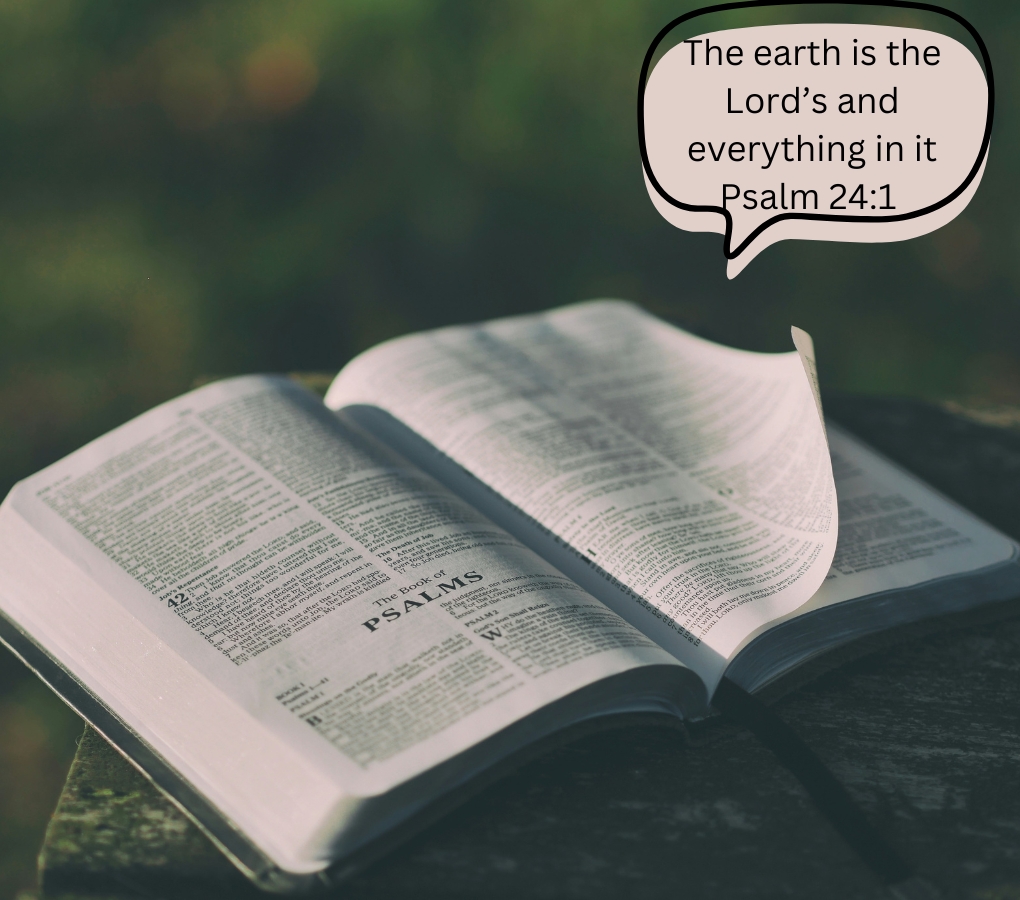
Colonial naming baptised conquest. The task before us is to imagine another baptism, one rooted in justice, memory and restoration.
European colonialism not only seized foreign lands but also reordered the world through language, theology, and power. One of its enduring yet underexamined tools was the naming of “discovered” places after Christian saints. Across Africa and wider Global Africa, landscapes were renamed as if holiness could be declared by conquest. Consider São Tomé, named by Portuguese colonisers for St. Thomas; São Paulo; and San Francisco. These are not neutral acts of devotion. They are inscriptions of power, moments where theology was mobilised to authorise possession.
Naming was never merely symbolic. It was legal, economic, and spiritual. It marked territories for extraction, labour for exploitation, and cultures for erasure. This logic was underpinned by frameworks such as the Doctrine of Discovery, which granted European Christian powers the right to claim lands inhabited by non-Christians. Within this worldview, renaming was a ritual of domination, asserting that land became meaningful only when inserted into a European Christian cosmology.
What this process displaced were entire worlds of meaning. Indigenous names are not arbitrary labels; they encode ecological knowledge, spiritual relationships, and communal histories. To rename land is to rupture these connections. It dislocates people from their environment and reorients them toward an imposed order.
Take São Tomé. Its name reflects a European liturgical calendar, marking the island’s discovery on St Thomas’s feast day. Yet this naming obscures the island’s transformation from devastation of indigenous communities to a plantation economy built on enslaved African labour. The saint’s name becomes a veneer that masks histories of violence and extraction. Theology, in this sense, did not merely accompany the empire; it legitimised it.
The history is not past. Across Africa and the wider Global Africa, the same structures that renamed land also reorganised it for global capitalism. Land was commodified, labour was exploited, and cultures were marginalised. Today, many economies remain tied to extractive models rooted in this colonial order.
Decolonial Theology and Recovery of Spirituality
Decolonial theology must move beyond symbolic critique into material engagement. It must ask how inherited religious frameworks continue to shape perceptions of land, value, and belonging. It must challenge the idea that holiness can be imposed, rather than recognised in the life of a people.
At the same time, decolonial work is not about critique; it is about recovery. Across Africa and the wider Global Africa, Indigenous understandings of land persist. These traditions understand land not as property but as a relationship. Rivers, forests, and mountains are part of a living network that includes ancestors, communities, and the divine. Their names reflect this relational worldview, often encoding environmental knowledge essential for sustainable living.
For example, the Southern African ethic of Ubuntu understands personhood and community as fundamentally relational: ‘I am because we are.’ Such traditions resist colonial notions of land as commodity and instead frame human life, community, creation, and spirituality as deeply interconnected.
In an era of ecological crisis, this recovery is urgent. The extractive logic inherited from colonialism has proven unsustainable. Indigenous naming traditions offer alternative ways of relating to land, ways grounded in reciprocity rather than domination. To recover these traditions is not to romanticise the past, but to engage resources for survival and justice in the present. The Akan principle of Sankofa, often expressed as ‘go back and retrieve it’, offers an important decolonial resource here. It suggests that communities move forward not by forgetting the past, but by recovering suppressed histories, spiritualities, and ways of relating to land that colonialism sought to erase. Traditions such as Ubuntu and Sankofa do not merely preserve cultural memory; they offer ethical and spiritual resources for ecological survival, communal restoration, and justice within Global Africa today.
Within this context, African churches face a critical choice. They remain among the most influential institutions across the continent and Global Africa, yet colonial histories deeply mark them. The question is not whether the church has a role to play, but what kind of role it will choose to play.
First, there is a responsibility to tell the truth. Churches must confront how Christian language and institutions were used to justify conquest, slavery, and erasure. Silence perpetuates the status quo.
Second, there is a responsibility to align theology with justice. This requires re-examining inherited names, symbols, and practices. In some contexts, it may mean supporting the restoration of Indigenous place names. In others, it may involve creating space for suppressed languages and histories within church life.
Third, there is a responsibility to stand with communities in their struggles. Land rights, environmental degradation, and economic inequality are not peripheral issues; they are central theological concerns. A faith that speaks of holiness must also speak of justice.
The question of renaming remains complex. Should places like São Tomé or San Francisco be renamed? For some, renaming is an act of restoration. For others, it risks simplifying layered histories. Decolonial approaches must resist easy answers. Any process of renaming must emerge from the people most affected, grounded in collective discernment rather than imposed solutions.
At its core, the issue is not only what names we use, but how we understand the relationship between land, language, and the sacred. Colonial theology assumed that holiness could be conferred through naming. Decolonial theology challenges this assumption. It insists that land is not made holy by external designation; it is encountered as holy through just and right relationship.
To redraw the sacred map is part of a broader liberation struggle. The maps we have inherited are products of power. To transform them is to engage in epistemic, cultural, political, and environmental resistance.
If colonial naming baptised conquest, then the task before us is to imagine another baptism, one rooted in justice, memory and restoration. The land does not need to be made holy by imported names. It is already sacred. The earth is the Lord’s and everything in it (Psalm 24:1). The challenge is whether our theologies, institutions, and movements are prepared to recognise and defend that truth.
Ronald A. Nathan is a Pan-African preacher, writer, and cultural commentator exploring the intersection of theology, power, and African liberation. Through his Diary of a Pan-African Preacher, his reflections and public commentary, he interrogates empire, belief systems, and moral imagination in African public life. His work is grounded in Pan-African thought, liberation theology, and a commitment to African self-determination.
Endnotes
1 Said, E (1978). Orientalism. New York: Vintage Books. Said’s argument about the Orient addresses
this broader trend where powerful societies use language, naming and related practices to dominate
others.
2 Dunbar-Ortiz, R. (2014) An Indigenous People’s History of the United States. Boston: Beacon Press.
3 Robert J. Miller, et.al (2010) eds., Discovering Indigenous Lands: The Doctrine of Discovery in the
English Colonies. Oxford: Oxford University Press
4 Garfield, R. (1992) A History of São Tomé Island, 1470–1655: The Key to Guinea. San Francisco:
Mellen Research University Press.
5 Some, M.P. (1999) The Healing Wisdom of Africa: Finding Life’s purpose through nature, ritual and
community. New York: Penguin Publishing.
6 Ramose, M. B. (1999) African Philosophy through Ubuntu. Harare. Mond Books
7 Shiva, V. (1988). Staying Alive: Women, Ecology, and Development. London. Zed Books
8 Opare, G. (2025) ‘Sankofa as Praxis: Ontological Healing, Memory and Decolonial Return’. In
Critical Studies https://doi.org/10.1177/15327086251412926
9 Hastings, A. (1994) The Church in Africa 1450 – 1950. Oxford, Clarendon Press
10 Vellem, V.S. (2015) ‘Black Theology of Liberation and the Economy of Life’, Black Theology,
13(1), pp. 1–15.
11 Wirzba, N. (2003) The Paradise of God: Renewing Religion in an Ecological Age. Oxford: Oxford
University Press.
12 Psalm 24:1. (1989) New Revised Standard Version Bible.