



Africa – Tear Drops, and Joys in the Wings
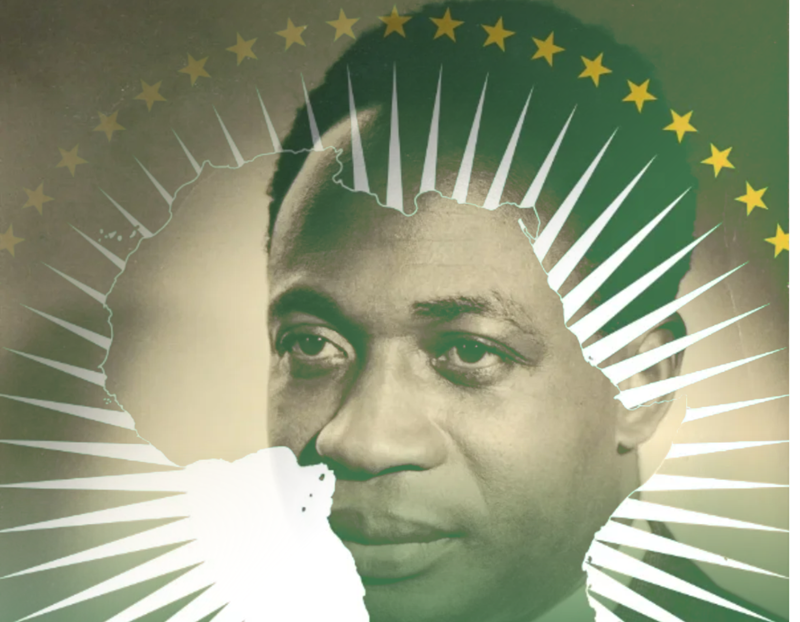

Farooque argues that Africa has many challenges but parts of its leadership and people are awakening to unity for its transformation. It is the people of Africa who can get rid of the exploitation of life and nature, neo-colonialism, civil and inter-state war, imperialist interference and aggression unleashed by external forces and internal collaborators. Political education among the masses of people and political organizing with mature leadership anchoring in Nkrumah’s calls and teachings are urgent initiatives on the continent.
Africa, my Africa. It’s tear drops for years and centuries. It’s the groaning of millions of chained human beings throughout the continent. It’s masters’ lashes. It’s human blood dripping for centuries. It’s thievery and robbery by the “civilized” thugs. There were a few lieutenants and orderlies happy with petty booties from their masters. But, the continent is the suffering millions, not those handful of lickers of masters’ boots. The continent’s name is nothing but bloodied humanity.
Now, it appears, hope hasn’t left the millions suffering on the continent. Joys are in the wings. More than 60 years ago, Kwame Nkrumah pronounced:
Freedom! Hedsole! Sawaba! Uhuru!
Men, women and children throughout the length and breadth of Africa repeat the slogans of African nationalism – the greatest political phenomenon of the latter part of the twentieth century.
Never before in history has such a sweeping fervour for freedom expressed itself in great mass movements which are driving down the bastions of empire. This wind of change blowing through Africa, as I have said before, is no ordinary wind. It is a raging hurricane against which the old order cannot stand.
The great millions of Africa, and of Asia, have grown impatient of being hewers of wood and drawers of water, and are rebelling against the false belief that providence created some to be the menials of others.[1]
Millions of human souls have paid for centuries in Africa; and millions are still paying. But a bright morning is coming. The pace of that shining morning may appear slow, but it's nearing. It’ll reach every doorstep in Africa. Gorky’s Danko appeared in Africa, and was assassinated.[2] Then, Danko appeared again, and again. Danko will continue to appear till humanity on the continent succeeds in freeing itself from all forms of servitude, deprivation and structural pain, and reaches the peaceful place bright with light of dignity, freedom, prosperity and peace.
May 25 is Africa Liberation Day. Not all of the world’s humanity forgets this. Neither do they forget that the continent’s heroes struggled and are still struggling for dignity, rights, peace and prosperity, and for taking hold of their own destiny. Africa Liberation Day emerges from the continent’s peoples’ struggle for rights, and freedom from all ‘masters’ stealing from the continent, exploiting and bloodying the continent, conspiring against and intervening to take control of all its resources. It’s a day to re-vow Africa’s position of a free people building, creating, constructing and dreaming across the continent. May 25, 2026 was the 63rd anniversary of the day, and the theme of this year was Unity, Integration, and Development.
The context of the day, in short, is a vow to stand against slavery and servitude, and build a just environment for all life in the continent, the second largest and most populous continent after Asia.
The context is wider, as one hears Kwame Nkrumah’s voice:
“Africa is a paradox which illustrates and highlights neo-colonialism. Her earth is rich, yet the products that come from above and below her soil continue to enrich, not Africans predominantly, but groups and individuals who operate to Africa’s impoverishment.”[3]
The builder of African unity noted in the first chapter of the book, “Africa’s Resources,” about the continent’s vast natural resources and “immense, untapped wealth.” In Nkrumah’s Africa Must Unite,[4] he cites the continent’s natural resources: iron reserve “twice the size of America’s”, “more than 40 per cent of the world’s potential water power, a greater share than any other continent”, “more arable and pasture land than exists in either the United States of America or the Soviet Union”, “even more than in Asia”, “forest areas are twice as great as those of the United States.”[5]
Nkrumah writes in the same chapter:
“[W]hile Africa remains divided, progress is bound to be slow. Economic development is dependent not only on the availability of natural resources and the size and population of a country, but on economic size, which takes into account both population and income per capita.”
He unequivocally raises the need and urgency, as he writes:
“A continent like Africa, however much it increases its agriculture output, will not benefit unless it is sufficiently politically and economically united to force the developed world to pay it a fair price for its cash crops.”[6]
As an example, he cited Ghana’s and Nigeria’s increase in production of cocoa, and questioned: “What advantage has Nigeria or Ghana gained through this stupendous increase in agricultural productivity?”
The African visionary told in clear tone:
“So long as Africa remains divided it will therefore be the wealthy consumer countries who will dictate the price of African cash crops. Nevertheless, even if Africa could dictate the price of its cash crops this would not by itself provide the balanced economy which is necessary for development. The answer must be industrialization.
“The African continent, however, cannot hope to industrialize effectively in the haphazard, laisser-faire manner of Europe.”[7]
Thus, came the urge and realization of unity of the continent. Roughly at that time, only eight African countries were independent while the rest were under colonial boots.
Nkrumah proposed: Unite. He, as Prime Minister of Ghana, convened the First Conference of Independent States on April 15, 1958 in Accra, Ghana; and the conference was attended by state/government leaders of Egypt, Ethiopia, Liberia, Libya, Morocco, Sudan and Tunisia.[8]
The conference, the first state-level Pan-African convergence, as the conference documents said, took the following stand:
-
Determination to renounce colonial and imperialist rule, and further cooperation for decolonization, peace, and security.
-
Work for elimination of racial discrimination in all its forms.
-
Coordinate further work, and strengthen solidarity with the dependent peoples of Africa.
-
Collectively defend respective independence and territorial integrity.
-
Collectively work for elimination of production and testing of nuclear weapons, and reduce the number of conventional weapons.
-
Respect the UN Charter and the Five Principles of Peaceful Coexistence adopted at the Bandung Conference, Indonesia.[9]
The next conference, according to press reports and the conference documents, was held in Addis Ababa, Ethiopia, in 1960. Cameroon, after gaining independence from France and the UK, joined the conference. The conference was also attended by Algeria’s National Liberation Front, and delegates from Nigeria, Somalia, and Congo. The countries joining this conference declared independence after the conference. In addition to sanctions on apartheid South Africa, this conference raised the issue of the danger of neocolonialism, and decided to establish control over foreign companies and to require Western powers to set exact dates for granting independence to the remaining African countries.
In May 1963, it was finally decided to organize a political organization of African countries. In the same year, on May 25, the Pan-African conference in Addis Ababa was attended by 31 African countries, and the creation of the Organization of African Unity [OAU] was proclaimed.
The then-newly-emerged organization’s promise was to stand and fight against colonialism and oppression.
Egypt’s Gamal Abdel Nasser, Ethiopia’s Haile Selassie, Ghana’s Kwame Nkrumah, Guinea’s Ahmed Sekou Toure, Kenya’s Jomo Kenyatta, Senegal’s Leopold Sedar Senghor and Tanzania’s Julius Nyerere were among the leaders, who played decisive role in organizing the OAU. And, there was the continent’s millions of people’s aspirations that drove these leaders to embark on the journey to a bright future. There was the aspiration of securing sovereignty and unity of all countries.
The OAU decided that one of its main tasks was to promote the decolonization of African countries, including Angola, South Africa, Mozambique, and Southern Rhodesia. The new organization committed to:
[1] support the fight for freedom in these countries, and
[2] close military access to colonial powers.[10]
The OAU adopted a charter that promised to improve the living conditions of OAU member-states. The OAU’s principles included:
[1] strengthen unity and solidarity,
[2] develop comprehensive cooperation between countries of the continent,
[3] protect independence and territorial integrity of the countries of the continent,
[4] eliminate all forms of colonialism,
[5] prevent interference in internal affairs, and settle conflicts in a peaceful way, and
[6] coordinate member-states’ moves and initiatives in the areas of economy, education, health care, science and technology, foreign policy, defense and security, and culture.[11]
In 1973, the AU’s number of members increased to 42. On July 9, 2002, the OAU transformed into AU – African Union, and now, the AU is the world’s largest regional organization by number of member-countries with 55-members in the organization, [including Western Sahara (SADR), which is not recognized by the UN], which has established the African Development Bank [ADB], the African Institute for Economic Development and Planning [IDEP], and the African Continental Free Trade Area (AfCFTA).[12]
So, the promises are there in the continent of 55-countries, which to imperialism is a real challenge if it fails in making a breach in the AU and derailing its activities by putting its lackeys in command of a number of countries. Africa Liberation Day was marked with celebrations across the continent. In countries such as Equatorial Guinea, Gambia, Guinea, Lesotho, Mali, Mauritania, Namibia, Zambia, and Zimbabwe, the day is a national public holiday. It is expected that the number of countries celebrating the day as a national public holiday will increase.
The continent, however, is not without one of the biggest problems in today’s world: Imperialism. The pattern is almost imperialist-universal: imperialist intrigues, organizing non-state armed gangs to foment civil disturbance or to undermine states “disobedient” to imperialism, purchasing local political groups for carrying on political activities from grassroots to higher levels for the purpose of implementing hatched conspiracy and serving imperialist interest, encouraging states to engage with armed conflicts with other states. Imperialist military presence is also there in parts of Africa. However, a few countries, including Niger have pushed back/compelled to go away a part of imperialist military presence, as in this part, imperialism was assisting non-state armed actors.
The economic and trade weapons imperialism uses in other parts of the world is also used in Africa – a market of 1.4 billion people. Food sovereignty is still a far-cry for Africa although the world’s 60 per cent uncultivated arable land is in Africa. External debt takes away significant portions of money that the concerned countries produce. Imperialist control over resources including critical resources is present in the continent.
But, one thing is stark: the poor will go deprived as long as the resources are controlled by the internal and external exploiting classes, in the form of owners of tools of exploitation or in the form of robbers and plunderers. This part acts against the common people whose tear drops and blood wet the continent.
Parts of Africa is still under the yoke of neo-colonialism, which, as Nkrumah writes:
“represents imperialism in its final and perhaps its most dangerous stage. […] The essence of imperialism is that the State which is subject to it is, in theory, independent and has all the outward trappings of international sovereignty. In reality its economic system and thus its political policy is directed from outside.”[13]
The struggle leader of Africa, Nkrumah, tells hard truths, which is very often denied by a section:
“A State in the grip of neo-colonialism is not master of its own destiny. […] The evil of neo-colonialism is that it prevents the formation of those large units which would make impossible ‘limited war’. To give one example, if Africa was united, no major power bloc would attempt to subdue it by limited war because from the very nature of limited war, what can be achieved by it is limited. It is only where small States exist that is possible, by landing a few thousand marines or by financing a mercenary force, to secure a decisive result.”[14]
Africa has experienced this, and there is a possibility of experiencing it again, as competition between capitalists is turning strong and fierce. One part of the imperialist camp is making a slow retreat, and to compensate for that retreat, the other part may take more aggressive positions in areas including Africa.
The continent has problems, critical and grave in nature, externally and internally. Africa Day reminds all concerned with the wellbeing of humanity everywhere, and at the same time, the people of Africa of this fact.
To get rid of this situation – exploitation of life and nature, neo-colonialism, civil and inter-state war, imperialist interference and aggression – it is the people of Africa who are to take initiatives, including political education among the masses of people and organizing people’s political organization with mature leadership, anchoring in Nkrumah’s calls and teachings. There are signs: people and leadership in parts of Africa are getting aware and united, which indicates – joys are in the wings.
Farooque Chowdhury writes from Dhaka, Bangladesh. His most recent book is titled With the Passing Time (NGG Books, Dhaka, 2021). His other books include The Great October Revolution (NGG Books, Dhaka, Bangladesh, 2022) and Micro Credit: Myth Manufactured [ed.] (Shrabon Prokashani, Dhaka, Bangladesh, 2007). His books in Baanglaa are on the history of labor movement and Venezuela.
Endnotes
[1]Nkrumah, Kwame. Africa Must Unite, Frederick A. Praeger, New York, 1963
[2] Maxim Gorky, Danko’s Burning Heart, Raduga Publishers, Moscow, then-USSR, 1983; it is from Gorky's story "Old Woman Izergil"
[3] Neo-Colonialism, the Last Stage of Imperialism, Thomas Nelson and Sons Ltd., London, Edinburgh, Lagos and Nairobi, 1965
[4] Nkrumah, Kwame. Africa Must Unite, Frederick A. Praeger, New York, 1963
[5] Ibid
[6] Nkrumah, Kwame. Africa Must Unite, Frederick A. Praeger, New York, 1963
[7] Ibid
[8] Parliament House. “Conference of Independent African States: Declaration and Resolution.” Parliament House, Accra, Ghana, April 22, 1958. Johnson, Carol A. “Conferences of Independent African States.” International Organization 16, no. 2 (1962): 426–29; http://www.jstor.org/stable/2705394.
[9] Ibid
[11] Ibid
[12] The African Continental Free Trade Area officially commenced in 2021. https://tradeunionsinafcfta.org/on-implementing-the-african-continental-free-trade-area-agreement-in-2021/
[13] Nkrumah, Kwame. Africa Must Unite, Frederick A. Praeger, New York, 1963
[14] Ibid