




With an examination of why the African Union’s own Protocol on Free Movement of Persons remains largely unratified, Elphas argues that this failure is directly linked to the recurring waves of xenophobic violence against fellow Africans, most recently in South Africa. The piece draws on the Durban Declaration and Programme of Action, in the context of African Commission jurisprudence and the recent Gauteng High Court judgment against Operation Dudula, to assert free movement and migrant protection is central to reparative justice.
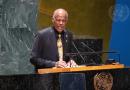
Reparations was one of the central questions at 2001 Durban Conference against racism and related intolerance. The Caribbean has been one of the Global African regions at the forefront of the struggle for reparative justice since the conference. Tennyson clinically examines the evolution, successes, and contradictions in the reparations movements in the Caribbean in the 25 years after the conference.
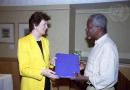
The Durban 400 – 400 Black people from the US – mobilized by the December 12th Movement (D12) and the National Black United Front (NBUF) participated in the 2001 World Conference in Durban, South Africa, and contributed to the conversation on reparations. Brooks draws inspiration from Malcolm X and the leadership of the December 12th Movement to grapple with questions about what happened after WCAR 2001 and what needs to be done after the 25th anniversary.
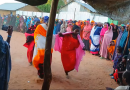
Twenty-five years after Durban, Somalia's Jareerweyne minority is still paying for an unrecognised nineteenth-century slave trade — in its courts, marriages, and prisons. Abukar calls Pan Africanists to look inwards, including Somalia's forgotten slave trade and the need to expand reparative justice to such communities.

The work on reparative justice is occurring in classrooms, in the community, in public squares, across the oceans, following the archives, forging collaborations, facilitating return to Africa, and providing a global research and education base for reparations work. The Centre for African and International Studies, at the University of Cape Coast, is working from Ghana to realise the principles of the Durban Conference and the gains in the reparative struggles in Ghana and other parts of Global Africa.

From the United States to the Dominican Republic to The Bahamas, the violence, collective scapegoating, and mass deportation of Haitians lays bare a particular kind of anti-Blackness. Anti-Haitianism not only denies the humanity of Haitians, but originates in tandem with the West’s fears of independent Black states, which was realized first in the Western Hemisphere after the Haitian revolution.

In this teachable essay, Agozino identifies lessons that can be learned from the methods of work by iconic thinkers of African descent who are misrepresented as advocates of violence. The interpretation is original and affirms that seeking non-violence trumps militarism in Africa today. There is an Africana philosophy of non-violence that we should study and practice more seriously as part of our liberation strategies.
In the spirit of revolutionary solidarity of the University of Dar es Salaam and renewed scholarly activism, UDASA stands with Cuba in this moment of siege.
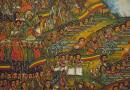
Address on May 23, 2026, delivered at the African Liberation Day celebration in Syracuse, New York, themed Haiti & Cuba: Defending Pan-African Unity Against Imperialism, and organized by the Global Pan African Movement and the Pan African Community of Central New York.
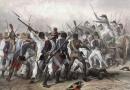
Address on May 24, 2026, delivered at the African Liberation Day celebration in Barbados, themed Haiti & Cuba: Defending Pan-African Unity Against Imperialism, and organized by the Global Pan African Movement in association with the Ministry of Pan African Affairs and Heritage of Barbados.

Address on May 23, 2026, delivered at the African Liberation Day celebration in Cape Coast, Ghana, themed Global Africa, Reparative Justice and International Law, and organized by the Global Pan African Movement and the Centre for African and International Studies, in association with the Central Region African Ascendants Association of Ghana, The Real Ghana Foundation, and PANAFEST Foundation.
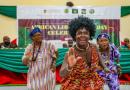
As African Liberation Day 2026 convenes under the banner of Haiti and Cuba, Global Africa must confront the living realities of imperial militarism, ongoing colonialism, and racial capitalism, from the streets of Syracuse to the battlefields of Sudan and Palestine. Drawing on the revolutionary traditions of Nkrumah, Padmore, and Carlos Cooks, Campbell issues an uncompromising charge to educate, organize, and build institutional structures capable of bending the arc of history toward reparative justice and African dignity.
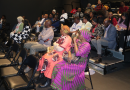
Report on African Liberation Day celebration on May 23, 2026, held in Syracuse, New York, themed Haiti & Cuba: Defending Pan-African Unity Against Imperialism.
A spotlight on Haiti and Cuba's immense contributions to Global African Liberation amid intensifying imperial siege across the Caribbean and Latin America.

Tracing how Achebe, Wainaina, and Sipalla dismantle the racial imagination of the Heart of Darkness across critique, satire, and excavation.
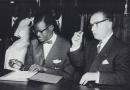
Étienne Davignon and the systems of enslavement and exploitation stand trial in Belgium and in the international arena for the gravest crime against humanity.

Empire must be challenged politically and spiritually. Liberation begins with disbelief in the empire's belief system
A bilingual (English/French) historicity of the cycles of colonialism and domination, and ongoing links weaved by oppressed groups to overturn all forms of oppression.
Transcript of Horace Campbell’s Talk on Fanon’s take on National Liberation, delivered at Dawson College, Montreal, 1991, explores linkages between individual and national liberation, resonating with the required conditions and persisting liberatory necessities across Global Africa 60 years after Fanon.

Shivji rethinks regional integration in the context of Pan African struggles.