



Barbados GPAM Chapter Marks African Liberation Day 2026
A spotlight on Haiti and Cuba's immense contributions to Global African Liberation amid intensifying imperial siege across the Caribbean and Latin America.
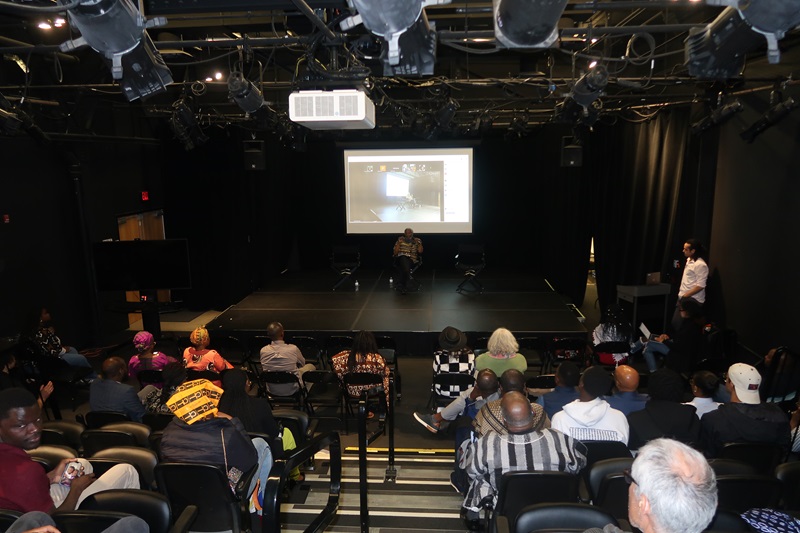
On Sunday May 24, the Barbados chapter of the Global Pan-African Movement (GPAM) organised its annual meeting to mark African Liberation Day (ALD) 2026. The meeting was organised in collaboration with Barbados’s Minister of Pan-African Affairs and Heritage, Trevor Prescod, and attracted the participation of several key Barbadian pan-African activists, young cultural performers and members of the public both online and in person. Amongst the key personages who attended the conference in person were the Cuban Ambassador for Barbados, Yanet Cardenas, the Barbadian Ambassador to CARICOM, David Commission (briefly), and the Venezuelan Ambassador for Barbados Martha Ortega, (who served as one of the formal respondent discussants to the main presentation). As such, the Barbados ALD grounding brought together some of the leading Caribbean personalities involved in the day-to-day advancement and defence of Caribbean independence and principally for ensuring pan-African solidarity in a moment of naked imperial aggression.
Haiti and Cuba in Global Pan-African Liberation
Given the role which Cuba and Haiti have played in global pan-African liberation, and given that the year 2026 has marked the deliberate intensifying of imperialist efforts at overturning the Cuban revolution, and at bringing Haiti and the entire Western Hemisphere under direct US control, the theme of ALD 2026 was meant to bring a spotlight on these questions and to deepen global solidarity in defence of Cuba, Haiti, Venezuela and the besieged Caribbean region at a most difficult time in their historical existence. Thus, the theme of the Barbados ALD was To facilitate the discussion around the issues, long-standing Caribbean trade-unionist and working-class champion David Abdulah was invited to present the main address, followed by reactions and contributions from four discussants – Dr. Patrick Sylvain a Haitian-descended professor at Simmons University, Martha Ortega Venezuelan Ambassador to Barbados, Dr. Jacqueline LaGuardia-Martinez a Cuban professor at the University of the West Indies, and Dr. Tennyson Joseph a St. Lucian currently based at North Carolina Central University, and member of GPAM.
David Abdullah Clarifies the Historical Moment
The highlight of the Barbados ALD was the presentation by David Abdulah. In a wide ranging and profoundly insightful speech, he provided first a historical overview of the contributions of Haiti and Cuba to global pan-African liberation, then focussed on the contemporary reality of ongoing attempts by the US to overturn the Cuban revolution and the accelerate the destruction of the sovereign Haitian state.
The success of the Haitian revolution in being the first historical example of a successful anti-slave and anti-colonial revolt and the impact of that revolution in contributing to anti-slave and anti-colonial revolutions in Venezuela, and the Caribbean formed a central part of the presentation. Relatedly, the role of Cuba, and in particular its revolutionary President Fidel Castro in pursuing a principled internationalism and in exporting revolution to Africa, and in providing support to the working peoples of Latin America and the Caribbean. Abdulah demonstrated persuasively that it was because of these principled historical contributions that Haiti and Cuba have earned the ire of global imperialism and why, under the current Trump administration, an unrelenting effort is being made to destroy Haitian society and to overturn the Cuban revolution.
Referring to a speech by US Secretary of State Marco Rubio to the Munich security conference on February 14, 2026. Abdulah highlighted the way in which current US politics is aimed at asserting a new reality in which the US has removed any pretence at respecting the sovereignty of post-colonial states. Rubio’s lamentation over the decline of Western civilization, a development which he blames on the anti-colonial movements after the second world war, is instructive of the US ideological rationalisation for overturning the independence of Caribbean and Latin American states. The tightening of the embargo to deny Cuba of energy, the formal criminal indictment of 95 year old former Cuban President Raul Castro, the incarceration of Venezuelan President Nicolas Maduro, the bombing of Caribbean fishermen in Caribbean waters and the US attack on Caribbean-Cuba medical brigade arrangements were all identified by Abdulah of the renewed efforts by the US to destroy the Caribbean. In Abdulah’s view the current moment was a very “dangerous” moment for the Caribbean.
However, despite the challenges of the moment, Abdulah was optimistic that a shift in consciousness was occurring in the Caribbean and Latin America. The naked and open attack on Caribbean sovereignty by the US, had resulted in greater numbers of young people understanding imperialism as part of their lived reality. This shift was causing greater awareness, particularly among young people, of the need for suspicion towards and resistance to US designs in the world. To meet the challenges of the moment, Abdulah recommended sustained level of political education and consciousness building, particularly given the relative decline of radical movements when compared to the decade of the 1960s and the 1970s.
On the basis of the awakening of the consciousness of the mass of the working people, Abdulah remained confident in the future, and despite the current challenges, he was optimistic that the Cuban revolution would survive the current threats and would emerge stronger in the future.
The Discussion
There was wide agreement that Abdulah had captured all the important issues involved in understanding the challenges facing Cuba and Haiti in the face of a heightened US imperialism and in highlighting their contribution to global pan-African liberation. Sylvaine reiterated the role of key Haitians in global pan-African activity in Ethiopia and in the formal Pan-African conferences in the 1900s. He also highlighted the role of key intellectuals like Antenor Firmin in contributing to overturn European myths about the inferiority of the black race through his publication of his influential pamphlet “The Equality of the Human Races” in 1885, in response to the European racist Arthur de Gobineau who had written a book on the “inequality of the human races”. Like Abdulah, Sylvain also saw in the current Trump Presidency, both within the USA and globally, an effort to reverse the gains of liberation of blacks. In Sylvain’s view, “they do not care about black bodies”.
Marta Orthega, in her remarks, offered clear statements from the fallen President of the Bolivarian Republic of Venezuela Hugo Chavez, who had always made clear the role of Africa and peoples of African descent in Venezuela’s liberation. She highlighted for example, the role of Haiti’s third President Petion in offering Haiti as a place for convalescence for Simon Bolivar following one of his woundings, and St. Lucian naval captain Jean-Baptiste Bideau who saved the life of Simon Bolivar during one of his military battles. The Venezuelan Ambassador concluded her remarks by giving the assurance that Venezuela remained free and will always continue to struggle for freedom.
For her part Dr. La Guardia-Martinez provided a detailed historical account of the several direct ways in which Cuba contributed to the liberation of Africa – from the role of Che Guevara in the Congo to the role of African troops in the liberation of Angola and the struggle against apartheid in South Africa, and she invited the audience to think about why a small country in the Caribbean played such an outsized global role. She argued that Cuban internationalism was an integral part of the Cuban revolution.
In his summative remarks, Dr. Tennyson Joseph, highlighted the fact that the current effort in the US was aimed at moving from domination to the humiliation of the Caribbean. He offered several examples of this humiliation of the Caribbean including the constant threats by the US to ban visa entry by Caribbean, the indiscriminate bombing of Caribbean citizens in Caribbean waters with no response from state leaders, and the kidnapping of President Maduro. These acts, in his view, were meant to belittle and mock the sovereignty and self-determination of the Caribbean people. Joseph concluded that the evidence suggested that the Caribbean state was no longer the most viable instrument through which resistance to imperialism could be effected. The Caribbean state, in his view, has effectively been “hollowed out” by imperialism. He recommended that what was now required was a broad social movement, a grassroots political alliance of mass-mobilised working people acting above and “under the belly of the state” as the main defence against imperialism.
Cuban Ambassador to Barbados, Yanet Cardenas, from the floor of the meeting provided details about the struggles facing Cuba in the face of the crippling oil squeeze, but she concluded with the firm assurance that Cuba will never bow to imperialism, nor will it abandon the Caribbean.
Tennyson S.D. Joseph is a Caribbean national and a member of the Global Pan-African Movement (GPAM – North America). He is a former Senator in the Parliament of St. Lucia and is currently an Associate Professor of Political Science at North Carolina Central University.