



When the Border Becomes an Algorithm: Rethinking the Durban Declaration, African Mobility and Digital Racism 25 Years after Durban
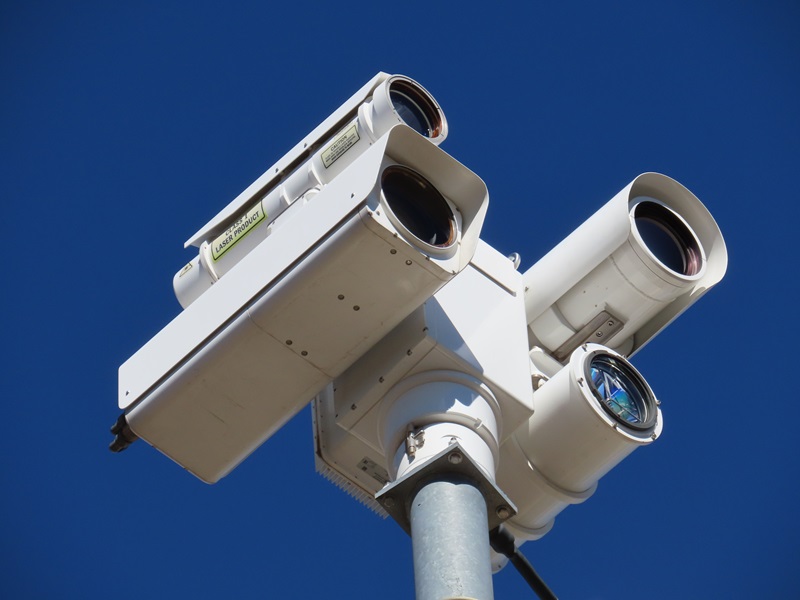

In continuing reflections on the 25th anniversary of the Durban Declaration against racism and discrimination, Nketsiah asks how we should update the declaration in our fight against systemic racism to reflect the technological stage the world has reached. Increasingly faced with algorithms and Artificial Intelligence embedded in governance and control mechanisms, racism and discrimination must be confronted at the technological scale.
The adoption of the Durban Declaration and Programme of Action (DDPA) in 2001 was a significant moment in the international struggle against racism, racial discrimination, xenophobia and related intolerance. The Declaration established a broad framework for confronting racism as an international and structural problem, rather than treating it as a collection of individual acts of prejudice. The United Nations describes the DDPA as a global blueprint for combating racism and recognises its continuing relevance in 2026, the 25th anniversary of its adoption.[1]
The world of 2026, however, is substantially different from the world of 2001. Digital technologies now shape many aspects of social life. Artificial intelligence is increasingly used in public administration, security, identification, financial services, education and migration management. Biometric technologies can identify individuals through fingerprints, facial characteristics and other biological information, and algorithms can process vast quantities of data to classify people according to perceived levels of risk. African travellers frequently encounter these systems when applying for visas and entry abroad, as the examples below illustrate.
These developments carry significant consequences for racial discrimination in the context of migration and international mobility. The traditional understanding of a border is a physical, geographical boundary: a traveller arrives at an airport, presents a passport and interacts with an immigration official. Increasingly, however, the border begins well before the traveller reaches the physical checkpoint. Visa applications, biometric databases, travel histories, identity verification and automated risk assessment all now contribute to decisions about a person’s movement.
The border is therefore becoming increasingly digital and algorithmic — a phenomenon this article describes as the algorithmic border. Consequently, the contemporary struggle against racism must examine not only discriminatory behaviour by individuals and institutions, but also the possibility that historical inequalities are being reproduced through technological systems.
This is particularly important for Africa, where international mobility remains deeply unequal. A person’s nationality can influence the visa procedures they encounter, the scrutiny applied to their application and their ability to move across international borders. The United Nations has recently warned that digital technologies at borders can amplify existing human-rights concerns, and that their discriminatory use can particularly affect racialised groups.[2]
The 25th anniversary of Durban therefore presents an opportunity to ask a new question: if the border becomes an algorithm, how can the Durban Declaration ensure that technology does not become a new mechanism through which racial inequalities are reproduced?
From the Durban Declaration to the Digital Age
The Durban call for racial justice cannot be separated from questions of power. African societies were historically subjected to systems of classification and control designed by colonial authorities. Contemporary digital technologies are not identical to those systems, but history warns that those who control identification and classification hold significant power over the people being classified.
The DDPA adopts a broad understanding of racism, recognising the experiences of Africans, people of African descent, migrants, refugees and other groups affected by discrimination. It also calls for the fair treatment of migrants and protection against xenophobia.[3]
One of its enduring strengths is that it does not confine racial discrimination to individual attitudes, an approach that matters because contemporary discrimination increasingly operates through institutions, procedures and technologies. In 2001, digital technologies were developing rapidly, but artificial intelligence had not yet acquired the influence it holds today. The contemporary digital environment opens new possibilities for discrimination precisely because decisions can now be automated.
A system, for instance, may classify an individual as high risk without the decision-maker personally expressing any racial prejudice. This creates a conceptual problem: if an immigration officer explicitly discriminates against a migrant, the discriminatory act may be relatively easy to identify but what happens when the officer simply follows an algorithm?
This is not merely a hypothetical. Until August 2020, the UK Home Office used a “streaming tool” that assigned Red, Amber or Green risk ratings to visa applicants. The Joint Council for the Welfare of Immigrants (JCWI) and the digital-rights group Foxglove, which challenged the tool in court, argued that it discriminated on the basis of nationality by design, relying on a list of “suspect nationalities” that were automatically given a red rating. Before the case could be heard, the Home Office agreed to discontinue the tool pending a redesign, and stated that nationality would not be taken into account in its replacement.[4] The example matters because, as its challengers argued, the discrimination was built into the classification system itself rather than arising from any individual officer’s expressed prejudice precisely the conceptual problem described above. African applicants are among those who encounter such systems when applying for visas to other countries.
The technology may appear objective, the decision mathematical, the process neutral yet the result can still be unequal. This is why the digitalisation of borders must become part of the post-Durban conversation.
Understanding the Algorithmic Border: The Cycle, Data and Discrimination
The concept of the algorithmic border refers to the use of computational systems, databases, biometrics and artificial intelligence to identify, classify, monitor or assess people in migration and border-control processes. The algorithmic border has three important characteristics. First, it is increasingly invisible. A physical border can be seen as a fence, an immigration desk, a passport checkpoint but an algorithm cannot. A person may therefore be affected by a technological decision without knowing precisely how that decision was reached.
Second, algorithmic systems can turn historical patterns into predictions of future risk. If the historical records on which a system is trained, such as past visa decisions, refusals or enforcement outcomes, contain unequal patterns, the system may reproduce them. The Office of the United Nations High Commissioner for Human Rights notes that datasets can be biased through the under- or over-representation of particular groups and the use of proxies such as country of origin.[5]
Third, algorithmic decisions can acquire an appearance of scientific authority. A human decision-maker can be questioned; a computer-generated risk score tends to appear more objective simply because it was produced computationally, a tendency that might be described as technological authority.
The Durban agenda has long been concerned with racial discrimination and racial profiling. The contemporary challenge is to recognise that profiling can now occur through data where an automated system could assign different risk scores to applicants who provide identical documentation, based on patterns embedded in historical datasets rather than on anything the applicants themselves did. International human-rights guidance increasingly recognises that digital technologies at borders should comply with non-discrimination standards, and that artificial intelligence can reproduce racial and algorithmic bias through risk profiling and automated decision-making.[6]
A central problem is the relationship between past decisions and future predictions. If applicants from a particular nationality have historically experienced higher visa-refusal rates, an algorithm may treat nationality as a predictor of future refusal and assign those applicants a higher risk score. Yet the historical pattern may itself be the product of earlier institutional practices.
Foxglove reported that the Home Office’s streaming tool showed exactly this problem: it suffered from “feedback loop” effects, in which past bias fed into the system and reinforced future bias.[7] The cycle is self-reinforcing: past inequality shapes the data; the data inform the algorithm; the algorithm produces risk classifications; and the resulting decisions generate new data that perpetuate inequality. In this way, technology can make an existing pattern appear natural. The UN’s work on digital border governance similarly warns that algorithms can reproduce discriminatory patterns and that risk assessments can contribute to racialised classifications.[8]
This is one reason why any suggestion that “the algorithm is neutral” is insufficient. The relevant questions remain: what data were used, who produced them, what assumptions were built into the system, which variables influence the decision, what outcomes the system produces, and who can challenge those outcomes?
Algorithms are created by people, who choose the data, select the variables, set the objectives and decide how outputs are used. Technology is therefore embedded in social and political institutions and must be held to the same standards of accountability as any other institution. An institution cannot avoid responsibility by blaming an algorithm: responsibility is shared among programmers, institutions, governments and technology providers.
African Mobility and Biometric Discrimination
African citizens encounter unequal international mobility regimes in which nationality can affect visa requirements, processing procedures and the scrutiny applied to travellers. Digitalisation does not remove these inequalities and may make them less visible. Research on algorithmic border governance has documented concerns that biometric systems and automated visa assessments can reproduce or conceal racialised hierarchies by translating social patterns into statistical risk classifications.[9]
A system can produce discriminatory outcomes without explicitly mentioning race, because nationality, geographical origin and other variables may correlate closely with racial or ethnic identity. The Committee on the Elimination of Racial Discrimination’s General Recommendation No. 36 calls for measures to prevent racial profiling by law-enforcement officials. These principles should also apply where profiling is performed or assisted by algorithms. The concern is not that nationality can never be relevant to migration policy, since states retain legitimate immigration and security responsibilities, but whether technological processes produce discriminatory outcomes without adequate transparency, justification and means of challenge.[10]
Ghana illustrates both the opportunity and the risk. Its 2026 National Artificial Intelligence Strategy aims to position the country as an active participant in AI development rather than merely a consumer of emerging technologies.[11] This creates opportunities in public administration, education, health, agriculture and financial inclusion, but it also brings governance responsibilities concerning data, ethics, privacy and inclusion, particularly where technologies developed elsewhere rely on assumptions and datasets that do not reflect African realities. Buolamwini and Gebru found that the facial-analysis benchmarks then in common use were skewed towards lighter-skinned subjects and that the commercial systems they tested performed worst on darker-skinned women.[12] Technologies must therefore be evaluated across African populations, and systems built to respond to African contexts.
Biometric checks can influence decisions before a traveller reaches a physical checkpoint. Amoore argues that risk profiling and identity verification increasingly occur at this stage, with the biometric record itself coming to function as a form of institutional authority.[13] Yet biometric matches are not equally reliable. In its 2019 evaluation of demographic effects in face recognition, the US National Institute of Standards and Technology (NIST) found that, using higher-quality application photographs, false-positive rates were highest for West and East African and East Asian faces and lowest for Eastern European faces; the West African group included Ghana, Liberia and Nigeria. NIST also stressed that the size of these differences varied considerably between algorithms.[14] Buolamwini and Gebru likewise found error rates of up to 34.7% for darker-skinned women, against a maximum of 0.8% for lighter-skinned men.[15] These studies document unequal error rates rather than how officials respond to them, but they show why a contested match cannot be treated as self-evidently correct.
This raises a question of human agency: if the machine says “match” and the human says “no”, which voice carries greater authority? The question is especially pressing where the consequences include visa refusal, detention, exclusion or deportation. Technology should assist human decision-making, not eliminate an individual’s ability to challenge a decision.
The Digital Durban Framework
The Digital Durban Framework proposed in this article is a conceptual extension of the Durban Declaration and Programme of Action into the age of artificial intelligence. It is named for Durban because it builds on the DDPA’s principles, marks the 25th anniversary of the Declaration and draws inspiration from the 2001 World Conference against Racism held there. The framework consists of six principles.
Principle 1: Transparency
People should know when automated systems significantly influence decisions affecting their migration status or mobility. Governments and institutions should provide sufficient information to explain the general basis of automated decisions.
Principle 2: Non-discrimination
AI and biometric systems used in border governance should be tested for discriminatory effects. The relevant question is not simply whether discriminatory intent was programmed into the system, but whether the system produces discriminatory outcomes.
Such testing requires independent technical capacity, for example within national data-protection authorities, regional bodies or partnerships with African research institutions, which is why capacity-building is integral to Principle 6 below. The audits by Buolamwini and Gebru and the demographic evaluations carried out by NIST, both discussed above, were conducted independently of the vendors whose systems they assessed.
Principle 3: Human Oversight
Comprehensive evidence on fully automated border decisions remains limited, so this principle is precautionary rather than a claim that human oversight is already absent. High-consequence decisions should not be entirely automated. Where decisions concern visa refusal, detention, deportation or other serious consequences, meaningful human review should remain available.
Principle 4: Right to Challenge
Individuals must have an effective mechanism to challenge technological decisions. A person should be able to say, “the machine is wrong,” and there must be a procedure through which that claim can be investigated.
Principle 5: African Participation
African governments, researchers, civil-society organisations and affected communities should participate in the design and governance of technologies that affect African mobility. Africa should not merely be a testing ground or consumer market for technologies developed elsewhere.
Principle 6: Technological Sovereignty
African countries should strengthen their ability to understand, audit, regulate and develop critical digital technologies. Technological sovereignty does not mean technological isolation; it means having sufficient knowledge, institutional capacity and regulatory power to make meaningful choices about technology.
Conclusion and Post-Durban Research Agenda
The Digital Durban Framework points to a focused research agenda. Researchers could investigate whether automated visa systems produce different outcomes according to nationality or geographical origin, and African researchers should participate in assessing the accuracy of biometric technologies across African populations. Further research should examine how AI is changing the experiences of African migrants, where migration data are stored, who controls them and how they are shared internationally, and who bears responsibility when an algorithmic system produces a discriminatory or incorrect outcome. African universities should contribute through interdisciplinary research connecting AI, migration, law, human rights, international relations and African studies.
Twenty-five years after Durban, the mechanisms through which unequal treatment can occur are changing: borders are becoming increasingly digital, identity increasingly data-driven and risk assessment increasingly automated. The central question is no longer only who is discriminating against whom, but also how data, algorithms and technological systems shape who is identified, trusted, monitored, admitted or excluded. The post-Durban agenda must therefore include technological systems, because technology does not operate outside society; it is created within societies with histories of inequality.
For Africa, the issue is broader still. The continent must not merely ask whether AI can make borders more efficient; it must ask whether these technologies make borders fairer, who designs the systems, who owns the data, who controls the algorithms, who benefits and who has the power to challenge them. This article has proposed the Digital Durban Framework as one response, placing transparency, non-discrimination, human oversight, the right to challenge automated decisions, African participation and technological sovereignty at the centre of the post-Durban agenda.
The 25th anniversary of Durban is an opportunity to anticipate the next twenty-five years. The struggle against racism must enter the algorithmic age: if the border becomes an algorithm, racial justice must ensure that the algorithm does not become the new border of inequality. The examples discussed in this article the UK visa-streaming tool and NIST’s evaluation of demographic effects in facial recognition demonstrate why the issue requires both institutional scrutiny and comparative research. The next stage of the research agenda should therefore compare how automated mobility systems operate across Europe, North America, Asia and the Gulf, while examining how Global Africans experience these systems. Such work would help establish whether, where and through what mechanisms algorithmic systems reproduce unequal treatment, and would provide an evidence base for implementing the Digital Durban Framework.
Josephine Aba Nketsiah is the Junior Assistant Registrar at the Centre for African and International Studies (CAIS), University of Cape Coast, Ghana, within the College of Humanities and Legal Studies. She holds an MBA in Human Resource Management from the University of Cape Coast, alongside a Bachelor of Management Studies and an HND in Secretaryship and Management Studies. She is currently enrolled with the Chartered Institute of Administrators and Management Consultants, with graduation in October 2026. She has over a decade of administrative and institutional governance experience across several university directorates and departments. Her research interests include human resource management, human relations and human resource development. Her work at CAIS has inspired a deeper interest in reparative justice and in how historical injustices can be addressed and remedied.
Endnotes
[1]United Nations. (2026a). Durban Declaration and Programme of Action: 25th anniversary.; United Nations. (2026b). High-level meeting to commemorate the 25th anniversary of the adoption of the Durban Declaration and Programme of Action. United Nations General Assembly.; See also the UN's background page on the DDPA: https://www.un.org/en/fight-racism/background/durban-declaration-and-programme-of-action
[2]McGregor, L., & Molnar, P. (2023), Digital border governance: A human rights-based approach (University of Essex and OHCHR); United Nations (2026a). Full details in the References list.
[3]United Nations (2001). Durban Declaration and Programme of Action. World Conference Against Racism, Racial Discrimination, Xenophobia and Related Intolerance.
[4]Foxglove (2020, 4 August). Home Office says it will abandon its racist visa algorithm – after we sued them. https://www.foxglove.org.uk/2020/08/04/home-office-says-it-will-abandon…; Statewatch (2020, 4 August). UK: Threat of legal challenge forces Home Office to abandon “racist visa algorithm”. https://statewatch.org/news/2020/august/uk-threat-of-legal-challenge-forces-home-office-to-abandon-racist-visa-algorithm/
[5]McGregor, L., & Molnar, P. (2023), Digital border governance: A human rights-based approach (University of Essex and OHCHR).
[6]McGregor & Molnar (2023); United Nations (2026a).
[7]Foxglove (2020, 4 August), as cited above.
[8]McGregor & Molnar (2023).
[9]McGregor & Molnar (2023); Amoore (2006).
[10]Committee on the Elimination of Racial Discrimination (2020). General recommendation No. 36 (2020) on preventing and combating racial profiling by law enforcement officials (CERD/C/GC/36). United Nations.
[11]Ministry of Communication, Digital Technology and Innovations, Ghana (2026, April 24). Ghana launches National AI Strategy to drive digital transformation and economic growth. Government of Ghana. https://moc.gov.gh/news/
[12]Buolamwini, J., & Gebru, T. (2018). Gender Shades: Intersectional accuracy disparities in commercial gender classification. Proceedings of Machine Learning Research, 81, 77–91. https://proceedings.mlr.press/v81/buolamwini18a.html
[13]Amoore, L. (2006). Biometric borders: Governing mobilities in the war on terror. Political Geography, 25(3), 336–351. https://doi.org/10.1016/j.polgeo.2006.02.001
[14]Grother, P., Ngan, M., & Hanaoka, K. (2019). Face Recognition Vendor Test (FRVT) Part 3: Demographic Effects (NISTIR 8280). National Institute of Standards and Technology. https://doi.org/10.6028/NIST.IR.8280
[15]Buolamwini & Gebru (2018), as cited above.