



Rwanda and the Question of Sportswashing
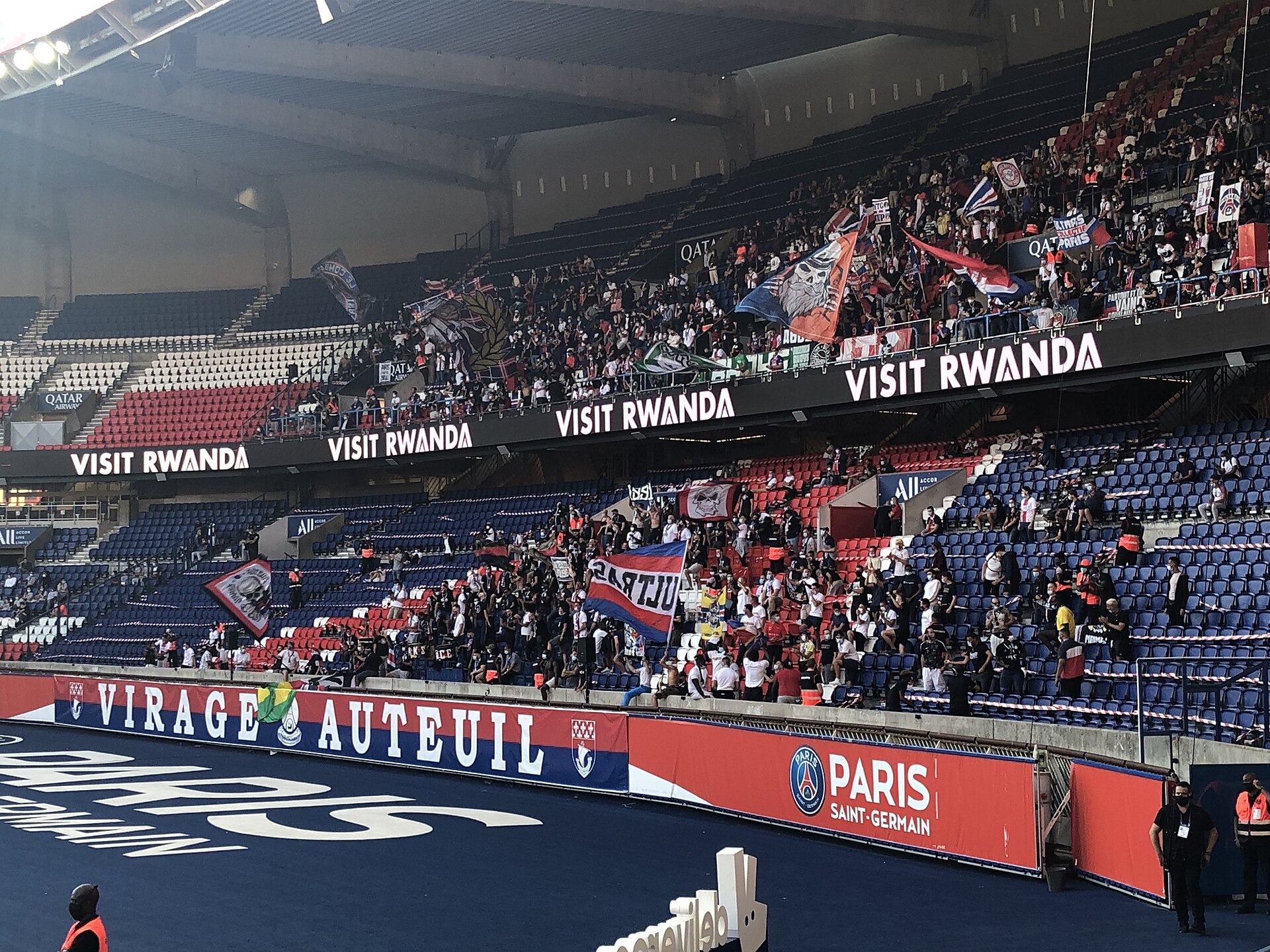

As debate rages on whether the ‘Visit Rwanda’ brand is smart marketing for tourism or state sportswashing against destructive acts, Aston Villa has signed a multi-million-dollar agreement with Visit Rwanda, and Formula 1 just announced its return to Africa through its deal with Rwanda. In the context of Kigali’s internal repression and its direct role in the Democratic Republic of Congo’s eastern conflict, Madondo outlines what sportswashing is and how Visit Rwanda’s campaigns exemplify the phenomenon.
"Visit Rwanda,” is the tourism initiative of the state-run Rwanda Development Board, which also acts as an instrument of Rwanda sport diplomacy and foreign relations. Visit Rwanda as a brand is meant to boost international tourism and economic growth. It is also meant to address the global narrative of Rwanda as a "genocide" country. However, other international observers and political analysts have raised concern that the Visit Rwanda brand is part and parcel of the Kigali administration time favoured policy of sportswashing. Sportswashing is a form of soft power mechanism aimed at using the immense popularity and influence of sport/s to publicly "wash away" poor publicity or tarnished reputation of the offending entity or sportswasher (whether an individual, institution, corporation, state, etc).
Sportswashing can be an act, a process, a practice, a strategy or mechanism to polish an image of the sportswasher (offending entity) in a favourable, positive, publicly acceptable and appropriate image. Therefore, sportswashing can be defined in many ways. According to Purcell, (2023), sportswashing is the "act" of sponsoring sporting event/s or sports team/s in order to distract from bad practices elsewhere.[1] Sportswashing can be defined also as the "practice" of using sports to improve a bad or tarnished reputation by distracting from unethical conduct, or hiding human rights abuses.[2] Investigative journalist Karim Zidan (2022) defines sportswashing as a "calculated strategy" employed by autocratic regimes to launder their global reputations, normalize oppressive policies, and distract from severe human rights abuses by hosting mega-events or sponsoring elite athletes or sporting teams.[3] Amnesty International (2021) defines sportswashing as a “scenario” where countries guilty of human rights abuses invest heavily in sports clubs and events in order to rehabilitate their reputations.[4]
In simple terms, Sportswashing is a distracting and diverting strategy whereby the offending entity presents itself in a positive, favourable picture by associating with a sporting club or event, whilst covering its record of dirty deeds (including human rights abuses, violations, sponsoring wars or acts of terrorism). Sportswashing is used to divert or distract attention from social, economic, political or environmental problems. Hence, it is all about making use of sport to redirect public attention away from unethical conduct.
Sportswashing relies on the massive popularity and emotional loyalty to a sport. When a sportswasher with a controversial or scandalous record associates itself with a globally beloved sport, the sportswasher uses the sport’s positive aura to "wash away" bad publicity. The logic is simple: exploit people’s love of sport to ‘wash’ one's image clean. Sportswashers host major athletic events, purchase prominent teams, or sponsor leagues to generate positive public attention.
Aims of Sportswashing
Sportswashing has a number of aims which include: distracting, minimizing, normalizing, deflecting attention from a controversy, misconduct or scandal. In some cases, reputation laundering, need for economic diversification and soft power and geopolitical considerations are part of the aims of sportswashing.
Distraction: Sportswashing distracts audiences by flooding digital information environments with articles and content about the sportswasher's sports endeavors and less on sportswasher's wrongful acts.
Minimization: Sportswashing minimizes the importance or urgency of the sportswasher's misconduct and rather promotes positive information about both the sportswasher and the sport.
Normalization: Through both audiences’ associations with sports and sportswashing information strategies, fans can begin to view a sportswasher’s misconduct as routine or insignificant, thus normalizing a sportswasher’s unethical or illegal violations
Deflection: Sportswashing allows the sportswasher to exploit the unifying essence of sport to deflect criticism or attention and instead secure global acceptance.
Reputation Laundering: Sportswashing allows the sportswasher to associate with the success, passion, and prestige of a beloved sport or sporting event thereby airbrushing over other controversial or scandalous deeds such as, authoritarianism, acts of terrorism and human rights violations.
Soft Power and Geopolitics: High-profile sports investments allow sportswasher to expand global influence, forge new international alliances, and legitimize their leadership or regime on the global stage.
Economic Diversification: Sometimes sportswashing is tied to broader national economic goals. This is considered true for Gulf states like Saudi Arabia, Qatar, United Arab Emirates (UAE), etc. where sportswashing is directed towards diversification away from oil dependency and boosting tourism through sports and foreign investment.
The logic is simple: an organization, state, corporation, or individual with a controversial or scandalous record associates itself with a globally beloved sport, thus using sport’s positive aura to "wash away" bad publicity.
Sportswashing in Africa: Some Examples
Libya and the "Supercoppa Italiana", 2002
Under the then regime of Muammar Gaddafi, Libya hosted the 2002 Supercoppa Italiana, a major Italian football match between Juventus and Parma that took place on August 25, 2002, at the June 11 Stadium in Tripoli, Libya. According to some like Billebault (2020), it is alleged that this was the Libyan government’s attempt to project an image of normalization, diplomacy, and global engagement, after years of global isolation and alleged human rights violations and accusations of terrorism.[5]
Total Energies & The 2023/24 Africa Cup of Nations (AFCON)
Total Energies sponsorship of AFCON is given as a classic case of a corporate entity involved in sportswashing. Emblazoned over the vibrant chants of African fans in the sun-soaked stadiums of Cote d’Ivoire was Total Energies’ logo shimmering on banners, jerseys, and other merchandise, but underneath, lies a story of environmental pollution and disregard for human rights by Total Energies. Surely, this was a marketing strategy that could only be described as sportswashing by the multinational energy company. All this, distracting from destructive environmental operations associated with Total Energies in Africa.
Rwanda And Sportswashing
16th Tour du Rwanda
From 21-28 September 2024, Rwanda hosted the cycling UCI Road World Championships, which took place from September 21 to 28, 2024. According to journalist Samuel Byansi, stakeholders in the tournament were participating in a carefully choreographed image-laundering operation. Presenting Rwanda as a beautiful, peaceful, developing country unaware of the darker side.[6] A report by Human Rights Watch (URA0013) submitted to the UK parliament, on 28 December, 2023, claims that Rwanda is a country with notable human rights abuses: “including repression of free speech, arbitrary detention, ill-treatment, and torture by Rwandan authorities”.[7] A restricted media space, Reporters Without Borders ranks Rwanda 139th out of 180 countries in the 2026 World Press Freedom Index (with a score of 39.58 points).[8] Many observers like journalist Samuel Byansi argue the cycling show in 2024 was part of the Rwanda sportswashing agenda.
Visit Rwanda Sponsorship Deals
In the past years , the Rwandan government and the Rwandan Development Board (RDB) have been able to secure sponsorship deals with top tier European football clubs.
1. With Arsenal (England) 2018- 2026
This was reportedly an eight year US $10 million annual "Visit- Rwanda" sleeve-sponsorship deal established in 2018.[9] It concluded with the end of the English premier league in 2025/26. However, it needs to be noted that throughout the existence of "Visit Rwanda" sleeve sponsorship deal, Arsenal was under pressure from the Democratic Republic of Congo (DRC), fans and campaign groups like "Gunners for Peace" who were active in protesting and denouncing the sponsorship deal due to Rwanda's malicious activity in the DRC.
2. With Paris Saint Germain (PSG) (France)
Worth approximately between $9 million to US $11.5 million USD annually, the "Visit Rwanda" sponsorship deal with PSG runs up to 2028.[10] The deal includes the "Visit Rwanda" branding at the Parc des Princes stadium during PSG home matches. It is also featured on the women's team sleeves, and on men's training kits. The deal also includes branding on the training kits for PSG academies located in the United States and Canada.
3. With Bayern Munich (Germany)
Originally signed in 2023, the Rwanda Bayern sponsorship deal was a five-year deal worth between $5.15 and $5.82 million USD. Initially the agreement was that Bayern Munich would display "Visit Rwanda" branding on the LED pitch-side hoardings at the Allianz Arena (Bayern Munich home ground) and aid in the set up of a local football.[11] However, the deal encountered severe criticism from Bayern Munich fans and human rights groups over allegations of sportswashing, as well as diplomatic pressure. Resultantly, Bayern Munich was forced to change and alter the nature of the original partnership deal to focus more on soccer development rather than direct tourism marketing.
4. With Atletico Madrid (Spain)
Signed in April 2025, the deal is a three year multi-million-dollar deal. The actual financial amount in the deal remains undisclosed. The deal focuses on the "Visit Rwanda" logo and messaging across Atlético Madrid's training kits, match jerseys, and the Riyadh Air Metropolitano Stadium.
5. With Aston Villa (England)
On the 14th of July 2026, Rwanda signed a three-year deal reportedly worth US$26 million-a-year with Aston Villa, the largest commercial shirt sponsorship in the English club's history.[12] It commences when the 2026/27 English premier league season starts.
The Aston Villa - Visit Rwanda sponsorship t-shirt deal has also drawn severe criticism from Amnesty International who accuse Kigali of using the partnership to "sportswash" its terrible human rights record.
"It's not new that Rwanda is using sportswashing to deflect attention from its terrible human rights record," said Felix Jakens, Amnesty International UK's head of campaigns in an interview with BBC.[13] He added that "Aston Villa should be well aware that Rwanda is seeking to leverage this partnership to create positive PR. The country is prolific in arbitrary detention, torture and the repression of free speech – these are abuses at home. We are seeing bloodshed right before our eyes in the Democratic Republic of Congo, and Rwanda is playing a significant role in fuelling that conflict – both through its support to the M23 rebels and the direct actions of its military in Eastern Congo. Rwanda's sportswashing needs to be called out, and we'd like Aston Villa and the Premier League to play their part in this".[14]
Response from European Clubs’ Fans
Interestingly, it needs to be noted that not all involved with those top tier European football clubs are happy with their clubs association with the "Visit Rwanda" brand. The association with the Visit Rwanda brand has seen some European clubs being the subject of protests. In 2025, the "Gunners For Peace" took part in a campaign against their club’s Visit Rwanda ties. Their reason was that the partnership does not fit the club's "values and standards".[15]
Also in early 2025, PSG supporters created a ‘Stop Visit Rwanda’ petition, which was signed by more than 75,000 people, calling on the club to cut its commercial ties.[16] They said continuing the partnership, "would risk giving the impression (PSG) is closing its eyes to human-rights violations”.[17]
In a home match against Eintracht Frankfurt in February 2025, Bayern fans held up banners protesting their club’s Rwanda deal. One read (in German): “Visit Rwanda — Whoever looks on with indifference is betraying the values of FC Bayern".[18]
Sportswashing, or?
It is no secret that the "Visit Rwanda" brand has faced backlash. Time and again, Kigali has been called out for "sportswashing" – using lucrative sports sponsorships to distract from its human rights abuses and its backing of rebel group M23 in the DRC. Of course, Kigali denies the allegations despite strong evidence presented by international human rights groups and the United Nations (UN):[19] "But at the same time, it's intervening very strongly in neighboring (DR) Congo and creating chaos in that country, and is responsible for thousands of deaths".[20]
Observers and critics alike point to Paul Kagame, Rwandese political leader as a repressive leader, suppressing freedom of speech, and intolerant of dissenting voices. In all this, Kigali has vehemently and consistently argued that the "Visit Rwanda" campaigns are nothing but strictly economic strategies designed to boost the country's tourism sector and generate revenue, rejecting the arguments that they are distracting and diversionary mechanism from Rwanda's supposed political suppression or involvement in the Congo. Dubinsky argues that the Rwandese government is utilizing sports to gain global legitimacy while diverting attention from unjust processes occurring in its own backyard.[21]
Rwanda is perhaps the most successful example of authoritarian image management in the contemporary world” argues Dukalskis.[22] He bases his analysis of the Rwanda's Patriotic Front (RPF)’s strategies of hiring Public Relations (PR) firms that shape the country’s image abroad, its misinformation campaigns, and its attacks against those who challenge its narrative. According to Hartmann, Rwanda is more of an “authoritarian development state,” that is, a political system that combines centrally controlled economic development with authoritarian rule.[23] The authoritarian part is washed away, or Kigali tries to wash it away through its PR campaigns: "These sponsorships…have acted to sanitize Rwanda in the eyes of the world. Rwanda, which is a very poor country, has decided to spend its money supporting these clubs. It has signed deals with the cycling world championships, it's hoping to get Formula 1 to be held in Rwanda and it creates this image of a modern, progressive, clean, safe African country"[24] said author and journalist Michela Wrong in Associated News.[25]
Rwanda's Involvement with the M23 In Eastern Democratic Republic of Congo (DRC)
The United Nations (UN) on 21 February 2025, unanimously adopted UN Resolution 2773, calling for Rwanda to withdraw its forces from the DRC.[26] This was after a group of UN experts uncovered evidence that the Rwandese army is in "de facto control of M23 operations". M23 is one of the major rebel groups involved in the Eastern DRC conflict. Paul Kagame has repeatedly denied any involvement with the M23 rebel group. However, overwhelming evidence of Rwandan support continues to pile up. Richard Moncrief, Director of International Crisis Group project in the Great Lakes Region, noted that President Kagame's tone on Rwanda's involvement with M23 in Eastern DRC, in face of mounting evidence, “has changed to justification for defensive measure [as] it has become harder to deny Rwanda's support for M23”.[27] Rwanda stands accused of pilfering its neighbour’s natural resources amid the proxy war with the DRC.
For the third attempt to prosecute Rwanda through the International Court of Justice (ICJ), on the 26th of June 2026, the DRC filed a case against Rwanda at the ICJ accusing Kigali of breaching conventions on genocide, racial discrimination, women’s rights, and torture through its financing of and participation in violence in eastern Congo since the 1990s.[28] Kinshasa demanded the ICJ order Rwanda to end its activities in Congo, declare it responsible for the conflict, and make Kigali pay reparations to the DRC and civilian victims.
The DRC's Foreign Minister, Therese Kayiwamba Wagner, in 2025 called on European teams to end the "Visit Rwanda" deal.[29] In a letter addressed to all three clubs (Bayern, PSG, and Arsenal), she wrote that "Countless lives have been lost; rape, murder and theft prevail. Your sponsor is directly responsible for this misery. If not for your own consciences, then the clubs should do it (end their sponsorship agreement) for the victims of Rwandan aggression."[30]
DRC's foreign minister further described Visit Rwanda as a "blood-stained sponsorship deal" and questioned the morality of the deals: "It is time Arsenal ended its blood-stained sponsorship deals with this oppressor nation. If not for your own consciences, then the clubs should do it for the victims of Rwandan aggression."[31]
In a response to the letter, the Rwanda Development Board accused DRC of an attempt to "undermine" the sporting partnerships via "misinformation and political pressure", stating the Visit Rwanda initiative "showcases Rwanda's commitment to peace, stability, and inclusive growth."[32] He further added that, "The Government of Rwanda rejects recent attempts by the Democratic Republic of Congo to undermine Rwanda’s international partnerships through misinformation and political pressure."[33]
Conclusion
The "Visit Rwanda" brand is indeed a mixture of both smart marketing and sportswashing. The multimillion-dollar sponsorships deals with the likes of Bayern (Germany), Arsenal (England), PSG (France), Atletico Madrid (Spain) and of late attempts to lure Formula 1 to host the African Grand Prix in Rwanda have boosted not only tourism but also Rwanda’s global visibility. However, time and again, Rwanda has been caught in between the geopolitical struggles of the Great Lakes Region. Rwanda has long-dismissed evidence that it backs rebel groups in the region, but UN experts, African institutions and diplomats, and Western governments are among various parties who say Rwanda is supporting the M23 in DRC's eastern conflict. Fingers have also been pointed at an authoritarian regime in Kigali. Human Rights Groups and International Watchdogs have bashed "Visit Rwanda" brand as a state-sponsored tool to distract from geopolitical controversies and human rights violations. The "Visit Rwanda" brand, though boosting tourism and sports development in Rwanda evidently serves as a sportswashing tool.
Fortune Madondo is a Zimbabwean Pan-Africanist, decolonial thinker and youth organiser. His work is unapologetic: pro-African sovereignty, anti-neocolonialism, pro-justice. He writes to challenge hegemony and champion African self-determination.
Endnotes
[1] Purcell J. 23 March 2023. What is sportswashing and why is it such a big problem? Available at: https://www.greenpeace.org.uk/news/sportswashing-definition-examples/
[2] Irwin A. 2022. What is sportswashing and why should we care about it? https://www.humanrights.unsw.edu.au/students/blogs/what-is-sportswashing
[3] Karim Zidan (Ed). 11 June, 2026. Sportswashing: Defining, Reframing, and Measuring Its Soft Power Impact by Vedant Khadiya & Kristian Coates Ulrichsen. Baker Institute
[4] Amnesty International, 2021, Reality Check 2021: A year to the 2022 World Cup – The state of Migrant Worker’s Rights in Qatar. https://www.amnesty.org/en/documents/mde22/4966/2021/en/
[5] Billebault, A. 20 September, 2020, "Libya: When Muammar Gaddafi played political football". The African Report.
[6] Samuel Baker Byansi. September 20 2025, "Paul Kagame has studied the sportswashing playbook, turning cycling into a tool of soft power for his regime". LeMonde.
[7] Human Rights Watch. 28 December, 2023. Human Rights Watch Submission to the United Kingdom,International Agreements Committee on the UK Government’s Agreement with Rwanda. Report URA0013.
[8] Reporters Without Boundaries, 2026 Report. https://rsf.org/en/country/rwanda
[9] Lorraine McKenna,19 November 2025, Arsenal to end sponsorship deal with Visit Rwanda since 2018. BBC Sport.
[10] Consultancy- me, 9 May 2025, Visit Rwanda Renews Long Term Partnership With PSG. https://www.consultancy-me.com/news/10687/visit-rwanda-renews-long-term…
[12] The Straits Times,15 July 2026, Villa criticized over Visit Rwanda sponsorship deal.
[13] Nick Mashiter, 14 July 2026,Villa warned over sportswashing after Visit Rwanda deal,quoted Felix Jakens, Amnesty International Head of Campaigns, London in an interview with BBC. https://www.bbc.com/sport/football/articles/cm20211g25lo
[14] Ibid
[16] Jacob Tanswell,17 July 2026, New York Times, in Why has Aston Villa’s sponsorship deal with Visit Rwanda caused controversy? NYtimes
[17] Ibid
[18] Ibid
[19] UN, SC/16400,26 June, 2026, "Stay Course towards Durable Peace" in Democratic Republic of the Congo, Special Representative Urges, Warning Violence Continues Despite Ceasefire Accord.
[20] Matt Pearson, 2 April 2025, Bayern Munich and Rwanda: Why is sponsorship controversial? DW News
[21] Dubinsky Itamar, 21 July 2025, (Don’t) Visit Rwanda: Rwanda’s Sportswashing and Its Western Facilitators. African Studies Review. 2025;68(2):315-337. doi:10.1017/asr.2025.10039
[22] Dukalskis Alexander., 2021. Making the World Safe for Dictatorship. Oxford: Oxford University Press.
[23] Hartman Hauke, Sportswashing for Rwanda, June 12, 2025, BTI Transformation.
[24] Ibid
[25] Associated Press, 18 October 2024, quoted Michela Wrong, author of "Do Not Disturb" in an article “Rwanda shrugs off 'sportswashing' criticism in pursuit of a winning development formula.” See here.
[26] UNSC Resolution 2773 (2025) / adopted by the Security Council at its 9865th meeting, on 21 February 2025. UN Digital Library.
[27] Wafula Ian, BBC, 29 January 2025. The evidence that shows Rwanda is backing rebels in DR Congo, Africa security correspondent. BBC.
[28] Emery Makumeno,26 June 2026, DR Congo takes Rwanda to international court over decades of conflict. BBC.
[29] Rob Stevens & Emery Makumeno,2 February 2025, Arsenal, PSG and Bayern urged to end Visit Rwanda deals, BBC World Service.
[30] Sheldon, D. December 28, 2025. Arsenal, Bayern, PSG and Visit Rwanda sponsorship: ‘We would rather wear anything on our sleeves’. The New York Times.
https://www.nytimes.com/athletic/6878062/2025/12/11/arsenal-bayern-psg-visit-rwanda/
[31] ibid
[32] Marc Jones, 20 February, 2025, Rwanda says DRC criticism of Arsenal, Bayern and PSG deals threatens regional peace. Reuters
[33] ibid