



Caged Somalia: Can it be Liberated from a Demonic elite?
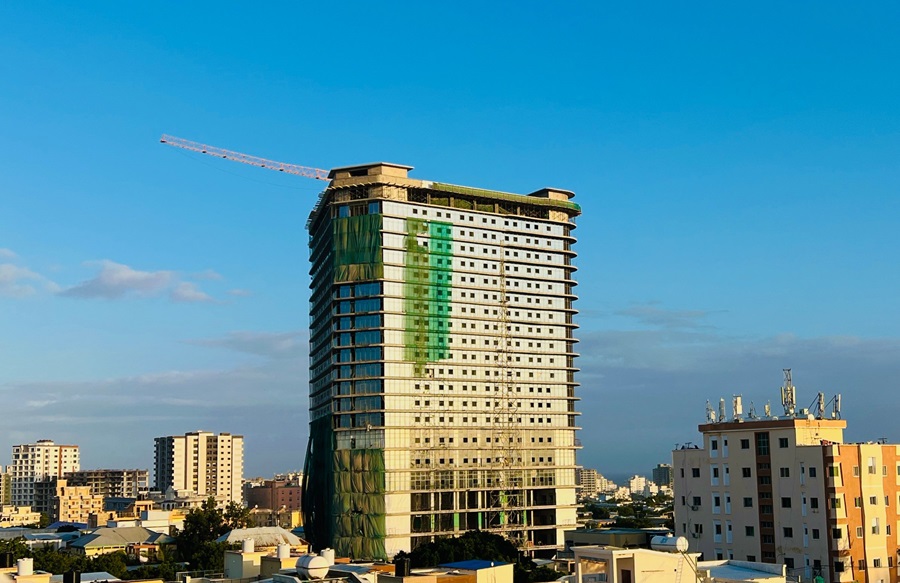
Somalis and their well-wishers are frustrated by the endless turmoil and the population’s wretchedness. Samatar examines why the Somali elite have failed to save their people who share dense cultural commonalities.
Somalis and their well-wishers around the world are deeply frustrated, dismayed, and exhausted by the endless political turmoil and the population’s enduring wretchedness. These catastrophic conditions have persisted for nearly four decades and appear immune to local and international remedies. For many who are deeply concerned about this human tragedy the puzzle is: why the Somali elite have been unable to reach political consensus and save their people who share dense cultural, religious, and linguistic commonalities.
Genealogy of the disaster
European colonization of Africa partially sowed the seeds of the Somali catastrophe in the 1880s. The land of the Somalis was divided among four colonial powers: three European (Britain, Italy, France); and one African (Ethiopia). The Italian colony and the British Protectorate united to become the independent Somali Republic in 1960. France’s Colony became the Republic of Djibouti in 1977, while the Somali territories are still part of Ethiopia and Kenya.
The Somali Republic (or Somalia as it was known) carried the hopes of the Somali people for development and unification, but it was impregnated with a potentially divisive ideology inherited from colonial rule. One of the instruments colonialists used to dominate and divide Africans was the politicization of elements of traditional culture, such as ethnicity and genealogy[1]. Many liberation movements challenged this colonial agenda and championed a civic and inclusive African political schema. But the virus of political tribalism lurked under the surface in the postcolonial order as some African political actors saw it as a strategic vehicle for attaining state power and wealth. In Somalia, such a faction came to power in 1967 after seven years of a democratic and deeply civic order[2]. Once in power, the new team undid all the fundamental democratic practices and formally introduced political tribalism and pervasive corruption into governmental affairs[3].
The Somali public was deeply disgusted with the turn of events and the national army exploited their sentiment by staging a coup. During the first few years of its rule, the junta enacted popular programs, such as the adoption of the Latin script for the Somali language, the superbly celebrated literacy campaign in the early 1970s, and the heroic, exemplary, and effective anti-famine undertaking in 1974/5 among others. These programs restored some pride among Somalis which gave the regime a bit of credibility, but that progressive agenda did not endure[4]. Corruption and political tribalism were massively reintroduced as the regime lost legitimacy after the 1977/78 Ethiopian-Somali war. The political opposition mimicked the regime’s strategy by organizing themselves along tribal lines. The violent political conflict that ensued alienated communities from each other and ultimately led to the failure of the national government and the collapse of the state in 1991[5]. Consequently, the nation fragmented into exclusivist factional fiefdoms.
Statelessness and Social Fragmentation
The civil war not only led to over a million deaths, generated a tidal wave of refugees, but it also critically devastated civic life and communal culture. For fifteen years, 1991-2006, warlords, tribal strong men and deeply sectarian politicians dominated local fiefdoms. All the previously state provided services disappeared during this period. Health, education, security, and infrastructure were gone and privatized in the few places they were reestablished later. Such circumstances led to precipitous declines in literacy and life expectancy. These calamitous developments deeply eroded collective national identity and belonging.
With the concerted effort and goodwill of the government of neighboring Djibouti, most major Somali political actors, faction leaders, and some warlords were invited to a reconciliation conference in 2000. After nearly half a year of wrangling, they agreed to form a national transitional government anchored on a tribal political formula. That insidious framework divided Somalis to 4.5 tribal political groups formalizing the old colonial political scheme, a devious idea the Italian colonial regime had in mind in 1950s[6]. Thereafter, the tribalization of the government went further and much deeper than anytime in Somali history, including during the colonial era. Thereafter, tribal political identity became the grammar of public affairs[7]. For example, the provinces that were created since then are all tribal Bantustans despite the fact that all Somali genealogical groups are found in nearly all the so-called federal regions. For example, the provinces of Jubaland and Galmudug are politically dominated by the so-called Darood and Hawiye political camps in spite of the fact that nearly all Somali groups live there.
The Rot in the Rut: Mistrust
The legacy of state collapse has been the total destruction of civic life, public education, public service, national ethos, etc. Moreover, the dearth of inspiring political, cultural, and religious leaders further deepened the divide within and between communities. Such an environment has tightened the grip of underdevelopment. The fatal consequences of these conditions have been the near total destruction of trust among Somalis[8]. Omnipresent mistrust among Somalis has alienated them from each other. Nearly everyone suspects the motives of others, particularly among the elite. Opportunism among the elite has become a national trait while the destitute majority desperately cling to dear life.
Such mistrust and buccaneering have been exceptionally destructive in politics as there are no abiding loyalties to any civic, religious, and cultural principles. Virtually all politically active Somalis know that two currencies govern politics in all instances: cash rewards in the form of bribes or patron-client relations in political and public service appointments. As a member of the Somali Senate, I have seen the corrosive effects of corruption, political tribalism, and clientelism up-close. For instance, in his effort to unilaterally ‘reform’ the national constitution in order to extend his term in office, the Somali president used the lure of cash bribes and promises of ministerial positions to MPs. I had known about such under-the-table transactions; however, I was shocked when an enraged MP recently told me that he was upset because the president had stopped the $2000 monthly bribe he used to give many MPs. I was astonished that the MP expected those payments to last beyond their ‘shelf-life’. In other instances, some MPs were given new appointments as ministers or other inducements to shore up the sectarian agenda of the president. Similarly, appointments to all public service positions are virtually made using tribal political identity or corrupt ways regardless of competence. One of the starkest examples is the way in which some of the staff in the Somali Senate were appointed, based on tribal identity. Finally, as a Senator, I witnessed the profoundly destructive effects of this approach to public service and the cause of the Somali people.[9]
The Numbing Grip of Collective Alienation
The combination of virtually no investment in public education and communal infrastructure, rampant corruption at every level of society, heightened sense of tribal segregation, and a very long period of statelessness or dysfunctional state dominated by tribalists have created civic political paralysis. Moreover, most Somalis are destitute and their concentrated preoccupation to secure daily sustenance has made them vulnerable to manipulation by warlords, faction leaders, and tribalistic politicians. Tragically, these diabolical conditions are reinforced by the African Union and the International Community who have fully internalized the colonial ideology of political tribalism as the foundation of the Somali political character. Such a combination of forces has made the chains of hopelessness seem almost unbreakable.
The Necessary but Improbable Revolutionary Break
The wellspring of culture, faith, and community has been thoroughly infected and would require deep and thorough surgery. A type of revolutionary shock-therapy to the morass could jumpstart the rehabilitation of Somalis’ denuded social capital. A possible first step could come from the African Union and International Community who have been complicit in the catastrophe. One form this could take is to sanction all the political tribalists and corrupt leaders of the federal and provincial governments, and their associates. Meanwhile, a technocratic, but civic-minded government could be established in Mogadishu to guide, over a three year period, the reconstruction of the foundation of governments at the national level and in the districts, while germinating the seeds of civic life and investing heavily in rebuilding trust among Somalis. In addition, a non-partisan council responsible for rebuilding trust among communities should be part of this undertaking. Such a desperately required intervention is a tall order for the African Union and International Community not known for their high moral standards.
Abdi Ismail Samatar is a member of the Pan African Parliament, a professor of geography at the University of Minnesota, and extra-ordinary professor in the Department of Political Science at the University of Pretoria.
Endnotes
[1] Mafeje, Archie. "The ideology of ‘tribalism’." The journal of modern African studies 9, no. 2 (1971): 253-261. Mamdani, Mahmood. Citizen and subject: Contemporary Africa and the legacy of late colonialism. Princeton University Press, 1996. Samatar, Abdi Ismail. The state and rural transformation in Northern Somalia, 1884-1986. Univ of Wisconsin Press, 1989.
[2]Samatar, Abdi Ismail. Africa's First Democrats: Somalia's Aden A. Osman and Abdirazak H. Hussen. Indiana University Press, 2016.
[3] Lewis, Ioan M. "The politics of the 1969 Somali coup." The Journal of modern African studies 10, no. 3 (1972): 383-408. Somali Republic. August 1968. The First Session of the national Advisory Council Held 20th to 27th. Mogadishu: Ministry of Interior.
[4] Samatar, Abdi Ismail. Framing Somalia: Beyond Africa's Merchants of Misery. Red Sea Press, 2022.
[5] Africa Watch. 1990. Somalia” A Government at War with its own People. New York: Human Rights Watch. Samatar, Abdi Ismail. "Destruction of state and society in Somalia: Beyond the tribal convention." The Journal of Modern African Studies 30, no. 4 (1992): 625-641.
[6] United Nations Trusteeship Council. 1952. Official Records: 12th Session, 1952.
[7] A.I. Samatar and A. Samatar. “The Rise and Demise of Somali Nationalism (Forthcoming).
[8] Samatar, Abdi Ismail, and Ahmed I. Samatar. "Bereft of trust: Reflections on the causes of the Somali catastrophe." Bildhaan: An International Journal of Somali Studies 22, no. 1 (2022): 4.
[9]A. I. Samatar. Fieldnotes 2022-2024, Mogadishu.