



The Externalization of Migration Management and the Coloniality of Border Containment in Africa
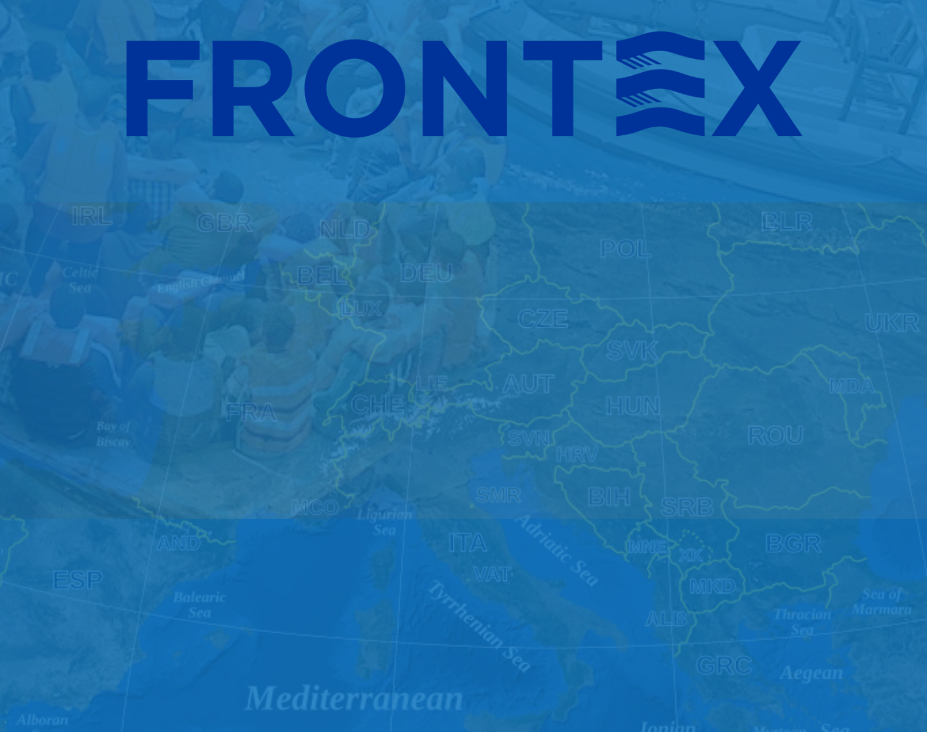
An analysis of the European Union’s systematic externalization of migration management onto African states, showing how externalization constitutes a neocolonial project rooted in a governmentality of unease. Drawing on cases from Libya to Mauritania, it critiques EU aid conditionality and securitization discourse, and advocates for Pan African institutional alternatives centered on human security.
The images are familiar. West African men and women detained in desert camps. Migrants abandoned at the Mauritanian border by security forces acting on European directives. Bodies recovered from the Atlantic off the Canary Islands. Behind each of these human traumas lies an externalization framework of policy, funding, and diplomacy that has, over the past decade, effectively transformed large regions in Africa into buffer zones for European migration anxieties. Externalization and its mechanisms, and its deep roots in colonial power, have material consequences for migration and Africa today.
Externalization refers to the practice by which the European Union (EU) and its member states shift responsibility for migration and asylum governance outward onto non-EU countries of origin, transit, and, increasingly, destination through a web of funding agreements, bilateral compacts, security partnerships, and diplomatic conditionalities.[1] Rather than managing migration flows at or within European borders, this approach seeks to prevent people from reaching Europe in the first place, outsourcing the work of interception, detention, and deportation to states with weaker legal protections and transparency.
These policies did not emerge in a vacuum. They crystallized in the aftermath of the 2015–2016 so-called ‘refugee crisis’ in Europe, which was defined by the political anxiety induced by migration to European capitals, rather than by the actual movement of people. That anxiety has deeper structural roots where there is no desire to face the consequences of unequal development. Walter Rodney’s seminal insight that African countries are becoming “more underdeveloped in comparison with the world’s great powers, because their exploitation by the metropoles is being intensified in new ways” (p. 20)[2] remains painfully current. African countries will not achieve any of the Sustainable Development Goals (SDG) by 2030; in some, the SDGs are in retrenchment.[3] The unmet promises of human security, democratic governance, equitable wealth distribution, universal health coverage, and basic education continue to push millions of Africans to seek better lives elsewhere.[4] European externalization policies respond to these realities by criminalizing their consequences rather than by addressing their causes.
The EU Emergency Trust Fund (EUTF) for Africa, established at the Valletta Summit in November 2015 and worth more than 5 billion Euros, marked a turning point in the EU’s migration agenda. Framed as a development initiative to address the ‘root causes’ of migration, in practice the EUTF became an instrument of containment, and a mechanism through which development aid was reoriented toward security objectives, border reinforcement, and deportation infrastructure across the African continent. The Fund blurred the line between development work aimed at lifting people out of poverty and security projects designed to stop people from moving.[5] The EU’s Migration Partnership Framework, launched in 2016, made this instrumentalization explicit by introducing a conditionality logic such that African governments that cooperate on migration control receive more aid, and those that do not face funding cuts.[6] Thus, EU trade and aid arrangements consistently treat Africa as an extension of European economic and geopolitical interests, while avoiding responsibility for the consequences, so that EU external strategies continue to institutionalize Africa as a continent defined by emigration.[7]
The Continental Architecture of Containment: From Libya to Mauritania
The externalization machinery is vast, and its geographic footprint is expanding across Africa. In 2025, the European Commission proposed the first common EU list of safe countries of origin, which includes Morocco, Tunisia, and Egypt, with potential expansion of the list.[8] This designation legitimates refoulement (forced return) to these states regardless of the conditions migrants face there. In North Africa, the EU has provided sustained support to the Libyan Coast Guard despite documentation of the torture, rape, and indefinite detention that migrants face in Libyan detention facilities.[9] In Tunisia, a Memorandum of Understanding signed in 2023, and in Egypt a strategic partnership concluded in 2024, have institutionalized cooperation with the EU Commission on border enforcement in exchange for economic assistance.[10] These deals were modelled on the same externalization logic replicated across the Mediterranean littoral, and reinforcing Western imposed racial divides between northern and southern Africa that are producing forms of enslavement and marginalization in North Africa, which reproduce the realities of a racialized Africa where darker Africans are subjugated to dehumanization from their fellow Africans.
In West Africa, the reach of externalization has been equally consequential. In March 2024, the European Commission announced a migration partnership with Mauritania worth 210 million Euros, tied to reinforcing border management, counter-smuggling operations, and security.[11] Between 2020 and early 2025, human rights violations committed by Mauritanian military and police forces against migrants and asylum seekers included torture, rape, arbitrary arrest, inhumane detention conditions, extortion, and summary collective expulsions.[12] The perpetrators operate within a securitized system that European money actively sustains. By early 2025, surging mass expulsions from Mauritania, linked to both increased EU funding and pressures to ‘manage’ migration, contributed to political tensions with Mali and Senegal.[13] Further south, in Gambia and Nigeria, Frontex, the EU’s border agency with its own record of human rights violations, has extended its reach into deportation and so-called ‘reintegration’ operations, displacing civil society actors and raising questions about sovereignty and the instrumentalization of local organizations for European objectives.[14]
Development Aid and Select Migrant Exclusion as a (Neo)Colonial Instrument
The use of development financing as leverage for migration control is a policy distortion and a structural feature of a relationship that has deep colonial antecedents. Under the EUTF, African states were placed in a position where their access to development funding was contingent on their willingness to police people exercising the fundamental human right of movement.[15] This relationship represents a form of neo-colonialism; during the colonial era, European powers used military coercion to assert control over African territories and people.[16] In the contemporary era, former colonial powers capitalize on class differences and the structural vulnerabilities of African states which were produced by colonialism, to extract compliance on migration through economic and political conditionalities. The EU’s Neighbourhood, Development and International Cooperation Instrument (NDICI), with an allocated budget of 79.5 billion Euros,[17] continues to securitize development aid.
The brain drain is a less examined dimension of the relationship. Western countries with stronger economies recruit skilled African professionals who were trained in Africa, subsidized by African taxpayers, and whose departure limits continental development. European immigration policies are deliberately structured to welcome the skilled while excluding the poor. These policies consist of a selective permeability that drains African human capital while refusing African people the broader freedom of movement. This extractive process is “slowly and indirectly killing the continent,” with the outflow of medical professionals in particular undermining healthcare systems that were built at enormous public cost.[18] The issue illustrates how the Global North reproduces African underdevelopment while simultaneously blaming that underdevelopment for migration.
There is a further dimension to the knowledge extraction accompanying skilled migration. Migration research models reflect European perspectives, and EU funded research structures prioritize identifying individuals who bypass structural containment. These identifications facilitate a “savage sorting” that privileges high-skilled individuals and vetted refugees, while justifying the detention and removal of everyday migrants.[19] The production of migration knowledge is thus not neutral, but is part of the same architecture of containment.
The language deployed to justify the aid-for-containment system (root causes, key partners, and capacity building) performs particular ideological functions. It presents a fundamentally asymmetric arrangement as one of mutual benefit and naturalizes the equation of African development with European migration reduction. Invoking ‘root causes’ is thus less of an empirical claim and more of a rhetorical device that legitimates the subordination of African development objectives to European security interests.[20] As such, migration is not inherently a problem; what are problematics are migration policies which disregard the rights of migrants, and the political misuse of migration discourse, in which migration is militarized and weaponized to serve state interests while ignoring why people actually move.[21]
The Governmentality of Unease: Securitization and Its Political Utility
Broad political support in Europe for externalization is based on the ideological environment within which it operates. Migration policy in the Global North is not primarily a technical response to demographic movement; it is a product of the governmentality of unease, a mode of political rule in which anxieties about insecurity are systematically redirected away from structural economic causes and onto the figure of the racialized immigrant.[22]
In 2025, U.S. President Donald Trump further exposed this unease when he signed a presidential directive which explicitly allocated refugee slots primarily to Afrikaners (white South Africans), citing persecution and violence against white South African farmers.[23] The South African government has denied these claims of systematic, race-based discrimination. The U.S. policy simultaneously halted foreign aid to South Africa at a time when the administration’s broader policies have blocked thousands of immigrants and refugees from regions experiencing protracted crises. Broader migration policies in the U.S. (as in Europe) pour money into more securitization: American immigration enforcement increasingly reflects the expansion of the military industrial complex, which now includes Immigration and Customs Enforcement (ICE) and numerous detention camps. In 2025, the U.S. Congress appropriated $75 billion in funding for ICE, to be used through 2029.[24]
Trump has also dismissed Haiti, El Salvador, and African nations as ‘shithole countries’ while calling for more immigration to the United States from Norway and Sweden.[25] His contempt reflects a racialized hierarchy of human worth that underpins migration policy on both sides of the Atlantic, in which the movement of white Europeans is naturalized as desirable mobility, while the movement of Africans and other Global South people is constructed as threat, criminality, and burden. The political projects of the Trump administration and the European resurgent far-right depend on the image of a threatening immigrant other, to consolidate state power, deflect attention from neoliberal economic failures, and mobilize a politics of resentment and rage.
Despite substantial evidence to the contrary, reactionary politicians continue to assert strong links between immigration and crime, migration and terrorism, and openness and insecurity. Their claims are political acts. Immigration is made central to political debate not because of what immigrants do, but because the figure of the immigrant calls into question a world neatly divided into nation-states, and because the anxieties of populations living under neoliberal economic pressures require scapegoats.[26] As such, the governmentality of unease is not primarily psychological; it is a structural feature of societies organized according to market principles, competition, privatization, and individualization.[27] Neoliberalism produces insecurity as a matter of course; what varies is onto whom that insecurity is projected.
European and American securitization functions to keep perceived dangers at bay, manage internal populations, and maintain the fiction that welfare and economic stability are threatened by migration rather than by the financialized capitalism that has eroded wages, public services, and social solidarity from within.[28] The same unease that drives American nativism drives European externalization, which are both expressions of a political rationality that uses migration controls to suppress questions of progressive social change and to conceal governments’ inability to solve the structural problems of their own making.
Conclusion: Pan African Sovereignty and an Alternative Vision
The externalization of European migration management to Africa is a deliberate, systematically funded, and institutionally coordinated project that uses the securitization of migration to serve European political and economic interests, while displacing the costs of that system onto African states and African people. It is underwritten by a governmentality of unease that deflects attention from the structural failures of neoliberal capitalism and onto the racialized figure of the migrant. And it reproduces the intensified exploitation of Africa in the service of metropolitan accumulation, the colonial logic that Rodney identified half a century ago,[29] in new institutional forms.
The externalization regime further operates against the vision of a free, integrated, and self-determining Africa. The African Union’s Agenda 2063 imagines a continent where people, goods, and services move freely across borders, which is concretized in the African Continental Free Trade Area and in regional integration frameworks.[30],[31] European externalization policy works in the opposite direction, as it seeks to harden Africa’s borders not against foreign capital and corporate extraction, but against the movement of African people. The same European states that demand African cooperation to prevent Africans from reaching Europe simultaneously insist on their own freedom to move, invest, extract, and operate across the continent. This structural asymmetry traces a line of continuity from colonial era restrictions on African mobility to the contemporary biometric surveillance projects and deportation agreements that Europe funds from Dakar to Djibouti.
Externalization does not just harm individual migrants. It corrodes the sovereignty and regional integration frameworks that Africans have spent more than half a century building. In West Africa, EU conditionalities have undermined ECOWAS’s Protocol on Free Movement of Persons, a significant achievement of regional integration on the continent.[32] Policies made in Brussels affect the daily mobility of ECOWAS citizens who have no voice in their formulation. Niger’s 2015 law criminalizing migration to Libya was passed under EU pressure. It was repealed by Niger’s post-coup government in 2023 in defiance of European interference in domestic governance.[33]
The African Commission on Human and Peoples’ Rights (ACHPR) has issued an explicit resolution which cautions against externalization arrangements and affirms that African states must uphold their human rights obligations in migration partnerships with non-African states.[34] In his 2025 report to the UN General Assembly, Gehad Madi, Special Rapporteur on the human rights of migrants, unequivocally called for an end to externalization arrangements that expose migrants to grave rights violations, and affirmed a foundational principle that states cannot evade their international obligations by outsourcing migration control.[35] Where a state exercises effective power beyond its territory, it retains responsibility for what happens there.
An alternative vision of migration requires the construction of rival political, financial, and institutional frameworks that prioritize African human security. These include structural reform of the Bretton Woods institutions, whose conditionalities have historically reinforced the same developmental distortions that produce migration; expansion of the BRICS development bank as an alternative source of capital for African countries; and deeper investment in Pan African monetary and infrastructure frameworks. This includes progress toward an African Central Bank that would reduce the continent’s financial dependence on institutions whose priorities are shaped by Global North interests. These aspirations are the upstream conditions without which any politics of migration will remain a politics of containment and crisis. As a political project, Pan Africanism demands that the contradictions of the externalization system be named and resisted. African governments that subordinate the mobility rights of African peoples to European funding calculations do not act in the Pan African interest. The ACHPR resolution and Sahelian political shifts represent assertions of the Pan African position.
Constructing Pan African alternatives to the system of externalization requires recognition of what it is and who it serves. It requires individual African states and regional and continental bodies to base migration cooperation on the full respect for human rights, transparent oversight mechanisms, and genuine alignment with African development goals. Finally, it requires a politics that insists that the freedom to move is not a European privilege to be defended against African aspiration, but a universal human right whose restriction demands resistance in every instance.
Danielle Taana Smith is a Professor in the Department of African American Studies and Professor of Sociology (courtesy) in the Maxwell School of Citizenship and Public Affairs at Syracuse University. Her research engages in global policy issues with an overarching goal of improving the social and economic environment for all, especially those at the margins of our society.
Danielle Taana Smith is a Professor in the Department of African American Studies and Professor of Sociology (courtesy) in the Maxwell School of Citizenship and Public Affairs at Syracuse University. Her research engages in global policy issues with an overarching goal of improving the social and economic environment for all, especially those at the margins of our society.
End Notes
[1]Majcher, I. 2025. The EU and the externalisation of migration and asylum: An analysis of potential human rights violations and legal responsibility. Thessaloniki: Heinrich Böll Stiftung.
[2]Rodney, W. 1973. How Europe underdeveloped Africa. Bogle-L’Ouverture Publications.
[3]United Nations. 2023. The Sustainable Development Goals report 2023: Special edition. United Nations.
[4]UNDP. 2022. Human development report 2021/2022: Uncertain times, unsettled lives - shaping our future in a transforming world. United Nations Development Programme.
[5]Oxfam. 2017. An emergency for whom? The EU Emergency Trust Fund for Africa - migratory routes and development aid in Africa. Oxfam International.
[6]European Commission. 2016. Communication on establishing a new partnership framework with third countries under the European Agenda on Migration. COM (2016) 385 final. European Commission
[7]Zoppi, M. 2015. Saying Europe, meaning Eurafrica. Pambazuka News. https://www.pambazuka.org/governance/saying-europe-meaning-eurafrica
[8]European Commission. 2025. Proposal for a regulation of the European Parliament and of the Council amending Regulation (EU) 2024/1348 as regards the establishment of a list of safe countries of origin at Union level. https://eur-lex.europa.eu/resource.html?uri=cellar:ce9d2b1d-1ab3-11f0-b…
[9]Amnesty International. 2021. “No one will look for you”: Forcibly returned from sea to abusive detention in Libya. Amnesty International.
[10]Pacciardi, A. and Berndtsson, J. 2024. European externalization and security outsourcing in North Africa. Externalizing Asylum. https://externalizingasylum.info
[11]European Commission. 2024. The European Commission launches new migration partnership with Mauritania. https://ec.europa.eu/commission/presscorner/detail/lv/ip_24_1335
[12]Human Rights Watch. 2025. “They accused me of trying to go to Europe”: Migration control abuses and EU externalization in Mauritania. Human Rights Watch. https://www.hrw.org/report/2025/08/27/they-accused-me-of-trying-to-go-t…
[13]Ibid
[14]Statewatch. 2024. Frontex’s increasing role in reintegration policy and its effects in West Africa. https://www.statewatch.org
[15]CONCORD. 2018. Partnership or Conditionality? Monitoring the Migration Compacts and EU Trust Fund for Africa. CONCORD Europe.
[16]Rodney, W. 1973. How Europe underdeveloped Africa. Bogle-L’Ouverture Publications.
[17]European Commission. 2021. Global Europe: Neighbourhood, Development and International Cooperation Instrument. https://international-partnerships.ec.europa.eu/funding-and-technical-a…
[18]Sankore, R. 2006. How the brain drain to the West worsens Africa’s public health crisis. Pambazuka News. https://pambazuka.org/food-health/how-brain-drain-west-worsens-africa%E…
[19]Vanyoro, K. 2019. Decolonising migration research and potential pitfalls: Reflections from South Africa. Pambazuka News. https://www.pambazuka.org/education/decolonising-migration-research-and…
[20]Vigneswaran, D., Söderberg, N., Welfens, N. and Bonjour, S. 2024. Capitalizing on a crisis: The European Union Trust Fund for Africa. Journal of Ethnic and Migration Studies, 50(8), 1–20.
[21]Niyiragira, Y. 2017. This is not a war: The need to demilitarize migration. Pambazuka News. https://www.pambazuka.org/human-security/not-war-need-demilitarize-migr…
[22]Bigo, D. 2002. Security and immigration: Toward a critique of the governmentality of unease. Alternatives, 27(1), 63–92.
[23]U.S. White House. 2025. Addressing Egregious Actions of The Republic of South Africa.
https://www.whitehouse.gov/presidential-actions/2025/02/addressing-egre…
[24]Eisen, L. 2026. How ICE’s budget boom is changing immigration detention. Brennan Center for Justice. https://www.brennancenter.org/our-work/research-reports/how-ices-budget…
[25]Fram, A. and Lemire, J. 2018. Trump questions why US would want immigrants from ‘shithole countries’. Associated Press.
[26]Bigo, D. 2002. Security and immigration: Toward a critique of the governmentality of unease. Alternatives, 27(1), 63–92.
[27]Ibid
[28]Huysmans, J. 2006. The politics of insecurity: Fear, migration and asylum in the EU. London: Routledge.
[29]Rodney, W. 1973. How Europe underdeveloped Africa. Bogle-L’Ouverture Publications.
[30]African Union. 2015. Agenda 2063: The Africa we want. African Union Commission.
[31]Agbo, M. 2025. From regionalism to continentalism: Lessons from ECOWAS for the implementation of AfCFTA. Thesis, Master of Arts, Pan African Studies, Syracuse University.
[32]Ibid
[33]Italian Institute for International Political Studies (ISPI). 2024. EU-Africa relations on migration: Current trajectories and future challenges. Italian Institute for International Political Studies.
[34]African Commission on Human and Peoples’ Rights (ACHPR). 2025. Resolution on the obligations of African states in the context of the externalization of migration governance and the extra-regional transfer of migrants to Africa - ACHPR/Res.645 (LXXXV) 2025.
ACHPR
[35]Office of the High Commissioner for Human Rights (OHCHR). 2025. UN expert calls on states to end externalisation arrangements that expose migrants to grave rights violations. United Nations.