



Misogynoir: Unpacking Black Men’s Anti-blackness and Femicide against Black Women
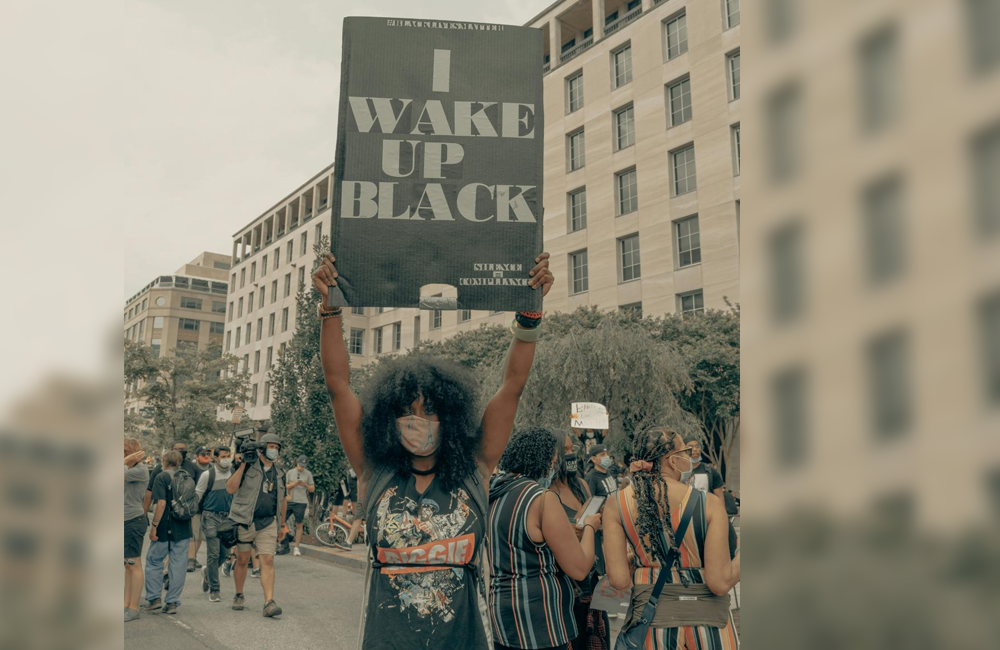
Patricia Daley interrogates Black hate directed towards Black women, the attendant abuses and femicides, and its disservice to the full emancipation of Black people globally.
Following the election of Donald Trump in the USA, it was reported on social media that 24 percent of Black men and seven per cent of Black women voted for him in the 2024 Presidential elections.[1] Several commentators noted white people as making statements, such as ‘they’d rather be destroyed by a white man than saved by a Black woman’. Black men were also reported to have said that ‘they would not vote for a Black woman’. With a significant proportion of the US electorate Christian nationalist and racist, it was to be expected that, as with Hillary Clinton’s presidential candidacy in 2016, they would not accept a female president, and even more so a Black female one in the form of Kamala Harris. Obviously, there are Black misogynists in Global North countries who would not vote for a woman per se. But what is unconscionable is how this bias is directed against women sharing their skin colour and histories of oppression, such that they preferred to side with racist white people and vote for Donald Trump, a white man who has a history of racist actions against Black people, and who, since taking up office in January 2025, has been attempting to rescind the civil rights act and push back the gains made by Black people.
In Black majority countries, even in those where heteropatriarchy dominates, Black female political leaders have existed within modern democratic dispensations, as exemplified by female Presidents in Africa (most recently Netumbo Nandi-Ndaitwah in Namibia, and Samia Suluhu Hassan in Tanzania), and Prime Ministers in the Caribbean, such as the Barbadian Mia Mottley; women who won national elections in patriarchal societies where their class status mattered more than their gender or skin colour. Despite representation at the pinnacle of politics, misogyny and violence against women in Black majority states are often ignored or downplayed. The abuse of Black women is global and demands further interrogation.
Misogynoir in the Global North
Clearly, the gender and racial dynamics in Global North countries operate against Black women and Black women politicians. One prominent example in the UK is the vicious treatment of the British Labour Party Member of Parliament Diane Abbott who has long campaigned for racial equality.[2] The attacks by fellow parliamentarians, mainstream and social media have been relentless. The sociologist Lisa Palmer, in an analysis of the treatment of Abbott by members of her own Labour Party and the mainstream media around the time of the political chaos created by Brexit, notes the importance of the colonial archive in understanding the intersection of race, gender and class in contemporary British society. According to Palmer, ‘the constructions of Black womanhood in British public life are entangled in the messy, racialised, and classed desires of White English nationalism. Such racial desires and appeals expect the erasure of Black women’s voices, bodies and knowledge’. In direct contrast to Abbott, the Conservative party leader Kemi Badenoch’s Black skin colour is used strategically to further anti-Black sentiments. Badenoch has distanced herself from supporting anti-racist issues concerning Black people, an issue I explored in an earlier article in Pambazuka News, Issue 892.
How might we interpret Black people’s anti-blackness, especially in Global North countries? It is not uncommon to hear Black men in the African diaspora say that they would not date or marry Black women. In the UK, it is almost a truism that Black footballers and celebrities are more likely to have white partners than not. Black women, and especially darker skinned Black women, are positioned at the opposite end of the attractiveness scale to white women and, therefore, are not considered to be ideal love interests and trophy wives. Long gone is the 1970s concept of ‘Black is beautiful’, as ‘colourism’ (discrimination according to black skin tone gradations) re-emerges as a factor in Black men and women’s relationships. In the UK, darker skinned Black school girls frequently report receiving derogatory comments from Black boys who express a preference for lighter-skinned Black girls. Black men seeking social status in Global North societies are more likely to choose white or lighter skinned Black women as intimate partners. In contrast, white men whose elevated position in the hierarchy is secure can choose Black women, even darker skinned Black women, without losing status. If we accept that love as an emotion can influence decision-making about intimate partners whether white or Black, then we should also try to understand the role of anti-blackness in affecting one’s choice, especially, but not exclusively, in Global North societies.
Black feminist scholars have written extensively about colonial racialized and gendered hierarchies and their enduring legacies from the era of African peoples’ enslavement and direct colonialism to the present. The term misogynoir was coined by a Black feminist writer Moya Bailey in 2008 to refer to anti-black racism and the misogyny directed at Black women. [3] In 2021, Moya states: ‘For me, naming misogynoir was about noting both an historical anti-Black misogyny and a problematic intraracial gender dynamic that had wider implications in popular culture. Misogynoir can come from Black men, white men and women, and even other Black women.”[4] Bailey points to examples in popular culture, in hip hop music for example, that represent the idealized Black woman as cis-gendered. In television commercials in the UK, despite the increased diversity, darker skinned Black women have tended to be used when womanhood is being depicted in a poor light, such as when the female character is stuffing her face with food, obese, aggressive, masculinized, hypersexual or asexual. Articles about Diane Abbott in the British media are almost invariably accompanied by unflattering photographs.
For Bailey’s co-author Trudy, it was important to discuss the impacts of misogynoir on how Black women have been treated in society more generally, referring to ‘its impact on things such as street harassment, domestic violence, labor, media/pop culture, State violence, and more’. Trudy shows the significance of the connections between interpersonal violence, state/institutional violence, and misogynoir in entertainment and mainstream media.[5] Violence against Black women is pervasive in formerly colonized Black majority countries, as well as in Global North countries. Anti-blackness shapes Black people’s interpersonal relationship in systemic ways, the specifics of which can vary with geography.
Systemic discrimination against Black women, disregard for their lives and well-being, is evidenced by the high levels of maternal mortality in African countries. In an article entitled ‘Mothers should not die giving life’, in Pambazuka News in 2009[6], the then Secretary General of the Pan-African Congress, Tajudeen Abdul Raheem, writing after the death of his sister Asma’u whilst giving birth, wrote, ‘it is not morally or politically right and it cannot be acceptable that mothers die giving life’. Abdul Raheem was alarmed by United Nations data showing that ‘In African [countries below the Sahara], a woman has a one in 16 chance of dying in pregnancy or childbirth, compared to a one in 4,000 risk in a developed country’. But, in ‘developed countries’, such as the USA and the UK, death whilst giving life, disproportionately affects Black women. In 2021, a study showed that Black women in the UK were four times more likely to die in childbirth than white women.[7] In the same year, Black women in the US were almost three times more likely to die giving birth than white women, where lack of access to health insurance and misogynoir affect the quality of maternal support they receive.[8]
Femicide in Black Majority Countries
Institutionalized violence against Black women is one aspect of misogynoir, another is the growing femicide in Black majority countries. According to the United Nations,
Femicide is ‘an intentional killing with a gender-related motivation. It is different from homicide, where the motivation may not be gender-related. It is the most extreme and brutal manifestation of violence against women and girls which occurs on a continuum of multiple and related forms of violence, at home, in workplaces, schools or public spaces, including intimate partner violence, sexual harassment and other forms of sexual violence, harmful practices and trafficking.[9]
Those countries topping the UN-compiled list of ‘intentional homicides, female’ are mostly in Latin America, the Caribbean and Africa. These countries have been reluctant to address violence against women, especially intimate partner violence, which predominantly affects poor and marginalized women. The lack of state interference in violent male expression of authority within the home has led to widespread impunity.
In January 2025, Kenyan women protested against femicide and demanded government action to stop it. According to Africa Data Hub, in Kenya, there were ‘over 930 cases of female murders from January 2016 to December 2024’. They found that ‘in 77 [per cent] of cases, killings were committed by a person known by the victim - an intimate partner, relative or friend’. Seventy-two per cent of ‘femicides take place within the confines of a home’.[10] The worst year so far for femicide in Kenya was 2024 with 174 cases recorded. One high profile case that year, was the killing in western Kenya of the Ugandan olympian athlete Rebecca Chetegei by her Kenyan ex-boyfriend, who set her alight.[11] Also in Kenya, the deaths of Agnes Tirop in 2021 and Damaris Muthee Mutua in 2022 were two other cases of successful women athletes being murdered in domestic violence. Kenyan feminist scholars, such as Grace Musila and Mumbi Kanyogo,[12] have linked the increasing femicide in Kenya to the prevailing hegemonic violent masculinities, and the impoverishing economic policies imposed since the introduction of structural adjustment in the 1980s.
A comparable situation exists in the Caribbean. In 2021, Jamaica ranked fourth in the world for femicide, at a rate of 9.3 women per 100,000 females.[13] That year, Dr Imani Tafari-Ama, drawing on a report by The Economic Commission for Latin America and the Caribbean (ECLAC), about the increasing trend of femicide in the region, documented some of the senseless killing of Jamaican women by their partners, who were security and police officers.[14] Arguing that colonial persistence exists in how security functions against the people in formerly colonized spaces, she states that ‘the impulse to turn the gun on their significant others and themselves suggests that their employment, which legitimises murder, desensitises them to the value of life’.[15] Tafara-Ama also linked the violence against women to Jamaica’s colonial and patriarchal conceptions of gender relations. To her, ‘Jamaica is no stranger to the perspective that dominant masculinity and subordinate femininity is a normative cultural binary’.
Male violence against women tends to intensify in conditions of economic crises, where men are unable to meet societal patriarchal expectations and individual aspirations. Growing differential educational levels between Black men and women have played a part. As Black women outstrip Black men educationally and achieve higher socioeconomic status, this has impacted interpersonal relations, which are then compounded by anti-blackness. For example, high achieving Black women in the US and the UK struggle to find Black male partners with commensurate educational levels.
In the neoliberal era (1980s to the present), views that Black women’s educational success is partly the result of them being viewed as less threatening by white supremacy may have some credibility, but it is also a result of the transformations and geographic distortions in the labour market, whereby heavy industrialized work has been outsourced to the Global East, and the rise of service sector jobs requiring the stereotypically caring qualities that Black women are supposed to possess naturally. With the loss of economic opportunities, Black men, shaped by wider and modern societal norms about ideal masculinity, which is largely derived from toxic white masculinity that came to the fore under slavery, capitalism and colonialism, feel emasculated and disempowered.[16] In the US, the hyper-incarceration of Black men has had a detrimental effect on their overall socio-economic status, and self-actualization. One place in which power is easily acquired and wielded is in the home.
As Moya Bailey comments, criticism of Black women can come from many quarters. Black men tend to criticize Black women’s independence, their ability to raise children single-handedly, their clothing, hairstyles, and their aspirations for a better life that lead them to seek better educational outcomes than men. Periodically, in Africa, attempts to reassert control over women focus on their bodies in the introduction of dress codes, and in the more atrocious rape of young girls in boarding schools or by family members in the home.
In Global North countries and in past apartheid regimes, this form of violence has often been dismissed as ‘Black on Black violence’ – a term used by the media and by politicians in white supremacist space to accuse Black people of being capable of perpetrating the most heinous of crimes, against their own marginalized kin. Despite the bulk of murders/crime in Global North countries being committed by white people against other white people, the term ‘Black on Black violence’ externalizes Black people from normal society. White people alone have long had the state-sanctioned power to exert violence against Black men and women. Black people committing violence against other Black people are considered the result of their own dysfunctionality or immorality.
Dignified Lives in Modern Society: The Space of the Black Church
In which spaces can Black people expect to have dignified (non-violent) lives? Where, especially in Global North countries, can Black men receive an affirmation of their capacity and relevance, and achieve societal recognition? Where can Black women, after being highly educated, be considered competent, love interests, and marriageable?
The space in which Black self-actualization can be achieved are familiar: the sports fields, the music stage, and the Black church. It is in the latter where Black men can acquire and exert power over Black people like themselves using some traits of the dominant masculinity without being threatened by, or being seen to threaten, the wider society. In the book, The Souls of Black Folk, the African American W.E.B. Du Bois wrote about the ‘Negro Church’ in the United States as a ‘social centre,’ which was given limited capacity by the slave system to be the guardian of the ‘inner ethical life’ of the enslaved or the colonized. For Du Bois, the Church stands as a conserver of what is ‘GOOD and RIGHT’. Black church leaders with huge congregations acted as ‘governments of men”, reproducing ‘in microcosm all that great world from which the Negro is cut off by color-prejudice and social condition’.[17] Fearing eternal damnation, Black men became pliant, submissive, and ‘good citizens’ within modern American society.
In the context of the growth in Pentecostalism across Africa since the 1980s and amidst the impoverishment caused by imperialist sponsored wars and structural adjustment programmes, scholars have noted the importance of what they term ‘Prosperity Christianity’ in the lives of people, symbolized by megachurches and their devout followers. David Maxwell, a white scholar of religion in Africa, in a study of Pentecostal churches in Zimbabwe in the 1990s, noticed that men in such churches after being saved tried to live ‘pure lives’, away from the corruption amongst the unbelievers. He contrasted religious philosophy of Pentecostalism with that of liberation theology, and argues that:
‘For many Zimbabweans [Pentecostalism] provides a framework with which to respond to the pressures of modernisation. For others it offers guidelines for material success. For those living on the margins of poverty, Pentecostalism's emphasis on renewing the family and protecting it from alcohol, drugs and sexual promiscuity at least stops them from slipping over the edge. While liberation theology promises to pull people down into violent struggles, of which Zimbabweans have already had enough, Pentecostal practice at least offers them some realizable advance in their livelihoods’.[18]
These are two different visions of the role of the Black Church in western modernity. Du Bois also contrasted the ‘Negro’ Church in the Southern states of the USA with those in the Northern states, and contended that within the South, the teachings of the ‘Negro’ Church of patience, stifling ambition, humility, and the avoidance of frankness, outspokenness, assertiveness was the only way Black men could ‘gain the right to share modern culture’. Consequently, ‘the price of culture is a Lie’.[19]
Within the space of the home, the Black preacher, pastor or religious man, drawing on biblical verses, could exert moral authority over women and their sexuality. Black women’s acquiescence in the home was central to Black men’s acquisition of an empowered masculinity in a space where enslavers, and colonizers, could intrude with impunity. Women are socially conditioned to stay in abusive marriages, where Churches consider divorce illegal or carry stigmatization. Simultaneously, the Black Church can provide a space in which Black women can find refuge, seek reprieve from domestic and societal violence, and gain the respect denied them in the wider society. In effect, the Black Church tends not to challenge prevailing (patriarchal) gender relations; instead, they promote a slightly modified version.
Feminist Transformation of Gender Relations
How then might gender relations amongst Black men and women be addressed, transformed, and femicide prevented? Black feminist scholars have played a critical role in showing the subordination and marginalization of Black women under enslavement, colonialism and modernity – how their roles as lovers, mothers, wives, nurturers, spiritualists, farmers, and leaders have been forcibly suppressed; and how African gender relations were disrupted and transformed into one of subordination and antagonism. Black feminists have called for the recognition of the distinct and intersecting forms of oppression, including from Black men. This has led to some Black men and women being openly hostile to feminism, which they see as a white women’s philosophy that is about the acquisition of power, and which they interpret as anti-men.
Drawing on African American vernacular of what it means to be a ‘grown’ woman, a woman ‘becoming herself’ (rather than who someone else wants her to be), the writer Alice Walker coined the term womanist[20] to refer to the ‘outrageous, audacious, courageous or wilful behaviour’ by Black women. Womanist is often used as an alternative to ‘feminist’. It is used by some Black scholars to express a distinct mobilization for a world in which both Black men and women can survive and thrive together. Within the context of global anti-blackness, in a world dominated by a white supremacist capitalism founded on white hetero-patriarchy, there is a clear need for Black feminist thought about dismantling the material basis of power that gives rise to racism and renders Black women vulnerable to state violence and violence from Black men.
From a decolonial feminist perspective, more research needs to be done to unearth those gender relations that exist in African and Black societies prior to colonial rule and the subordination and subjugation of women in marriage and the home, and the racism that continues to shape Black lives. Such research would further work started by scholars such as Cheik Anta Diop, Ifi Amadiume and Oyeronke Oyewumi.[21]Diop in The Cultural Unity of Black Africa[22] writes of the dominance of matriarchal societies in Africa during antiquity. African societies informed by matriarchal principles focused on collectivism, societal rather individual well-being, solidarity, and ‘in the moral domain … an ideal peace, of justice, of goodness and an optimism which eliminates all notion of guilt or original sin in religious metaphysical institutions.’ Colonialism outlawed matriarchy as a degenerate form of human relations. In assessing the violence that has descended on post-colonial Zimbabwe, Horace Campbell argues, in his book Reclaiming Zimbabwe: The Exhaustion of the Patriarchal Model of Liberation, that the militarist, racialized and patriarchal colonial model of the state that the liberation government retained could not fully emancipate the peoples of Zimbabwe.[23]
Misogynoir, femicide, and colourism are linked to the global expansion of an unequal economic system built on racialized and gendered hierarchies from the colonial period to the present. These forms of violence are the direct outcome of the suppression of Black capacity; of Black people’s existence and ability to find alternative, empowering, and emancipatory ways of living. It is an attempt to nullify and erase Black women’s potential to upend the system of white supremacy. Black women reclaiming their humanity is intricately connected to the liberation of Black people globally. Pan-African and Black radical movements need to place Black women’s concerns at their centre. This is more critical in Global North countries where racial capitalism is more virulent. In relation to Kenya, Kanyogo argues that ‘the anti-government, anti-imperialist coalitions that are forming in this political moment must also work to combat femicide – because to combat femicide is to combat the economic and political conditions that produce it in the first place’.[24] On an interpersonal level, Black women have nurtured Black men. Yet, rather than their elevation and solidarity, they have suffered the most extreme forms of discrimination and violence. Misogynoir is a fatal wedge in Black struggle: by hating on Black women (cis-gendered, trans, and non-confirming), Black men are hating on themselves and subverting the possibilities of full emancipation.
Patricia Daley is a British-Caribbean feminist and Pan-Africanist. She is Professor of the Human Geography of Africa in the School of Geography and the Environment, University of Oxford.
Endnotes
[2] Palmer, L. A. (2019). Diane Abbott, misogynoir and the politics of Black British feminism’s anticolonial imperatives: ‘In Britain too, it’s as if we don’t exist’. The Sociological Review, 68(3), 508-523: p.509. https://doi.org/10.1177/0038026119892404
https://theconversation.com/diane-abbott-and-misogynoir-colourism-anti-…
[3] Moya Bailey & Trudy (2018) On misogynoir: citation, erasure, and plagiarism, Feminist Media Studies, 18:4, 762-768; and Moya Bailey, Misogynoir Transformed: Black Women’s Digital Resistance, New York: New York
University Press, 2021.
[4] Bailey & Trudy, 2018, 762.
[5] Bailey & Trudy, 2018, 763.
[7] Smitha Mundasad, ‘Black women four times more likely to die in childbirth’,
BBC.Co.UK. 11 November 2021. Accessed at: https://www.bbc.co.uk/news/health-59248345
[8] Donna L. Hoyert, ‘Maternal Mortality Rates in the United States’, CDC: National Health Statistics. 2021. https://www.cdc.gov/nchs/data/hestat/maternal-mortality/2021/maternal-m…
[10] Africadatahub, Silencing Women: Tracking and humanizing Femicide Cases in Kenya. 2024: The worst year on record. https://www.africadatahub.org/femicide-kenya
[12] Grace A. Musila (2009) ‘Phallocracies and gynocratic transgressions Gender, State power and Kenyan public life’, African Insights 389 (1); Mumbi Kanyogo, ‘Notes on Solidarity: Femicide is also un-solidarity’, SubStack, 21 November 2024. https://mumbikanyogo.substack.com/p/femicide-is-also-un-solidarity
[15] Tafari-Ama, 202.
[16] Jordanna Malton (2022) A man among other men: The crisis of Black masculinity in racial capitalism (Cornell University Press).
[17] W.E.B. Du Bois (2008) The Souls of Black Folk. Oxford: OUP. Originally published in 1901. P.131.
[18] David Maxwell (1998) ‘Delivered from the spirit of poverty: Pentecostalism, prosperity and Modernity in Zimbabwe’, Journal of African Religion, 28, 3: 350-373., pp. 369-370.
[19] Du Bois, 2008,p.138.
[20] Alice Walker (1983) In Search of My Mothers’ Gardens: A Womanist Prose. London: Orion Books Ltd. P. xi.
[21] Ifi Amadiume (2024) African Possibilities: A Matriarchitarian Perspective for Social Justice. London Zed Books; (2000) Afrikan Matriarchal Foundations: The Igbo Case; and (1997) Re-Inventing Africa: Matriarchy, Religion and Culture. London: Zed Books; Oyèrónkẹ́ Oyěwùmí (1997) The Invention of Women: Making an African Sense of Western Gender Discourses. University of Minnesota Press, and (2015) What Gender is Motherhood: Changing Yoruba Ideals of Power, Procreation, and Identity in the Age of Modernity (Palgrave Macmillan).
[22] Cheikh Anta Diop (1989) The Cultural Unity of Black Africa: The Domains of Matriarchy or Patriarchy in Classical Antiquity. London: Karnak House. (p.177).
[23] Horace G. Campbell (2003) Reclaiming Zimbabwe: The Exhaustion of the Patriarchal Model of Liberation (Africa World Press).
[24]Mumbi Kanyogo, 2024.