



In the Spirit of Malcolm X, Ancestral Leader and Teacher: Solidarity Message to GPAM -ALD Program. May 24, 2025.
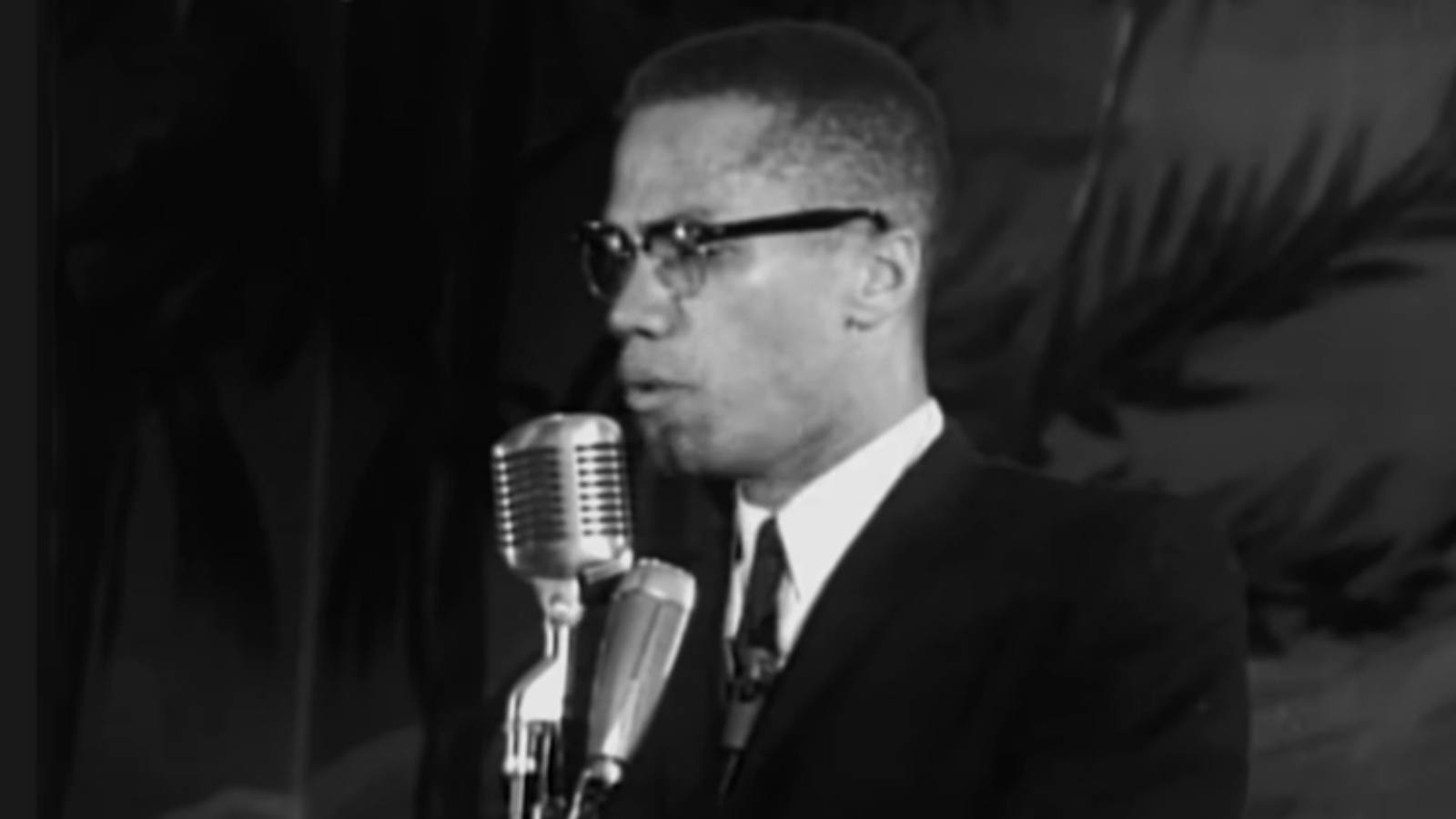
Mealy invokes the spirit of Malcolm X to amplify the call for unity among Global Africa, the connections between Black liberation and the Cuban revolution, and demands for the removal of Cuba from the US list of state sponsors of terrorism.
Greetings to all of my Comrades and Friends of the Global Pan African Movement, the Pan African Community of Central New York and the Africa Initiative of Syracuse University. My deepest apologies for not being able to greet and share these moments with you in person. However, I am honored to have been invited to participate in this program and thus it is with great appreciation that I extend my heartfelt Solidarity.
In the continuing Spirit of our Ancestral leader and teacher Malcolm X (El Hajj Malik El Shabazz), I first want to acknowledge that we are meeting at a momentous time, where there is global recognition of his Centennial birth on May 19th. We are forever indebted and reminded that as African People, no matter where we are physically and demographically landed, these imperatives are ongoing acknowledgments to continue the celebration of African Liberation Day, rooted in the cause of Pan-African unity and freedom. These imperatives are further and vital reminders of our collective journey and responsibilities. Speaking at the founding rally of the OAAU, Malcolm X proclaimed:
“We must unite together in order to go forward together. Africa will not go forward any faster than we will and we will not go forward any faster than Africa will. We have one destiny, and we’ve had one past” (para 26. 1. Establishment).
From every speech that he made, to every prophecy that he proclaimed, to every act that he manifested, it is within that context that I was tasked with contributing to the program’s theme: “US Policies at Home and Abroad: What Malcolm X Taught Us - US and Cuba”, I refer to Malcolm’s 1964 OAAU Charter as the staging reflections for my remarks. The deliberate inclusion of Afro-Latin Americans within the OAAU's definition of "Afro-American," was done to emphasize our shared heritage and experiences.
…...When we say Afro American, we include everyone in the Western Hemisphere of African descent. South America is America. Central America is America. South America has many people in it of African descent. And everyone in South America of African descent is an Afro-American. Everyone in the Caribbean, whether it’s the West Indies or Cuba or Mexico, if they have African blood, they are Afro Americans. If they’re in Canada and they have African blood, they’re Afro Americans. If they’re in Alaska, though they might call themselves Eskimos, if they have African blood, they’re Afro Americans (para. 8).
Malcolm sought to create a global network of Black unity, recognizing the interconnectedness of people of African descent across different continents. He also forged alliances beyond the continent of Africa and the African diaspora, amplifying the possibilities of sustained solidarity. The documented expressions of solidarity are there for us to reference. From Palestine to Haiti and from China to Cuba. These enduring teachings of Malcolm suggested in the discussions are relevant to Cuba, marking more than 60 plus years of hostility which the United States has waged against the sovereign nation were memorialized in a secret memorandum five months before Malcolm met with Fidel at the Hotel Theresa on September 19, 1960.
On April 6, 1960, the US undersecretary of state Lester D. Mallory sent a memorandum to Eisenhower, then president of the United States with suggestions on how to destroy Cuba's economy. This secret memorandum laid bare the genocidal essence of the empire and its plans for intervention over the interests of the people of Cuba with every intent to suffocate the country through deprivation, indirect instruments of economic aggression and eventually in their distorted psyche, provoke social unrest in attempts to destroy the Cuban Revolution. A basic reading of the “Secret Memo,” which was declassified in 1991 with its recommendations laid the foundation for what has been the US policy against Cuba because it explicitly suggested that economic deprivation would be the only way to punish the Cuban population's for supporting “Fidel Castro, leader of the Revolution” (Mallory, 1960).
On September 18, 1960, when then Prime Minister, Fidel Castro and other members of the Cuban Delegation arrived at the 15th United Nations General Assembly and their subsequent move to a ten day stay at Harlem’s Theresa Hotel, the now infamous meeting between Fidel and Malcolm X was not the beginning of the Cuban nations solidarity between African-Americans and the people of Cuba, but rather represented a continuation of a history spanning more than 100-years rooted in the Transatlantic slave trade. That long history of solidarity was born in the enslavement of African people in Cuba and the United States and the fight against it which is central to the latter and factually supports the assertion, as our comrade historian Horace Campbell (2015), reminds:
Since the very beginning of the Cuban Revolutions … There were open and clear linkages between the black liberation movement in the USA and the Cuban leadership. Malcolm solidified those bonds when he met Fidel. The symbolism and importance of the meeting must not be dismissed….The Cuban leadership understood very early from the years of Eisenhower that the Black movement provided a base for the progressive and anti-imperialist forces to neutralize the draconian plans of the intelligence agencies (para.13-14).
Malcolm understood firsthand this affinity towards Fidel and the Cuban Revolution. As a victim of local, federal and Central Intelligence (CIA), he was keenly aware of the state’s surveillance tactics, racism and the hostile repercussions towards both individuals, groups and sovereign nations that stood up and challenged the empire. This gave great insights and context to rationalizing why the Cubans accepted the invitation to move the delegation to Harlem. It would also expose on an international stage the hypocrisy of the US government’s professed sanctity of equality and individual liberties while simultaneously neglecting the civil rights of its own African-American population. Within a context of Cold War bilateralism, Fidel and the delegation moving up to Harlem was best described where Malcolm wrote in his autobiography:
Castro achieved a psychological coup over the U.S. State Department when it confined him to Manhattan, never dreaming that he’d stay uptown in Harlem and make such an impression among the Negroes, p. 6.
While symbolisms can represent enduring lessons, they also engender calls for action during crises under the banner which embraces the true meaning of internationalism and solidarity. The intent of the United States government has always been to destroy the Cuban Revolution. This African Liberation Day we must demand that the Trump Administration remove Cuba from both the List of “Countries Not Cooperating Against Terrorism” and “The State Sponsors of Terrorist List (SSTL). We must demand that the Trump administration cease attacking the Cuba International Medical Brigades under the guise that Cuban doctors and other health personnel are being trafficked. Our African and Caribbean nations who have benefitted and continue to benefit from the incredible health care that Cuba’s trained doctors are providing must vigorously challenge these false assertions as some of our Caribbean colleagues did while confronting Marco Rubio’s visit to the region.
This African Liberation Day, 2025, in fully realizing the significance of the Malcolm X and Fidel encounter sixty-five years ago in Harlem NY, and as members of the global Pan African Movement, let us rekindle, recommit and restrengthen the light of the interrelatedness of African-American and Cuban revolutionary nationalism, which not only sowed the seeds for ideological and political ties that went far beyond progressive US Blacks and others in the African diaspora.
Let us continue in the tradition of supporting this generation to think critically for themselves on questions ranging from: The situation in Haiti, involving the continued external aggression against the Haitian people, but this time with the involvement of Kenyans, and the emergence of anti-French colonial political movements in the Sahel region of the continent, and denouncing the ongoing genocide against Palestinians under the Government of Israel’s Apartheid like occupation of Gaza and the West Bank.
The Liberation Movements in Asian, Africa and Latin American all recognized and saw how powerful the personalities were and recognized Fidel and Malcolm as international leaders. By meeting with Fidel, Malcolm X told White America that Black people were ready to contextualize their struggle as part of the international fight against oppression in which violence and class-based socialist consciousness served as the main instruments to liberation.
Therefore, when we discuss what Malcolm taught us about Cuba, let’s also bring the lessons into the contemporary realm, where we frame the discourse by acknowledging that we are witnessing the melt-down of a globally driven capitalist economy, where the entire geopolitical reality has thrust upon us a situation requiring the strategic reframing of how to wage struggle against a dangerous sphere of right-wing populism, where the reshaping of the US federal government, that we pay for with our tax dollars, is in lock-step with every intent to carry out the extreme expansion of authoritarian presidential powers to serve the greed and wealth accumulation interests of 1% of the citizens.
In this context, our profound connection to Cuba has been intractable where our relationships have fundamentally demonstrated the basic tenets of people-to-people solidarity, which is to respect the rights of nations to determine their own political, economic, social and cultural destinies. We recognize in a profound way that this is the moment to fortify our alliance from a place where we have historically refused to be silent, to be separated or alienated from our histories, a history that was fused in the keen sense of an immediate bond between Malcolm X and Fidel, when they met in 1960 in Harlem NY, then as leaders, and now we as the heirs of Malcolm and Fidel, who both taught us to recognize and understand the oneness of the struggle of the African American people, the people of Asia, Africa, Latin America and especially on this African Liberation Day, from the Global Pan African Movement, we send our profound gratitude and solidarity to Revolutionary Cuba.
Rosemari Mealy, JD, PhD, is an activist-educator. Prof. Mealy has taught at numerous colleges and universities including: The City University of NY ( CUNY), Florida international University (FIU), and invited lecturer in the Universidad de La Habana’s-Facultad Preparatoria de Idiomas. She has been acknowledged for her long history of engaged community activism and contributions to artistic innovation, education, scholarly endeavors, and international human rights struggles. Her participation in international forums with non-governmental organizations (NGO’s), has garnered global recognition and respect for her advocacy in defense of US political prisoners, gender equality and the illegal imposition of US economic and political sanction against sovereign nations including Cuba.
References
Campbell, H. (2024) Cuba at the Crossroads. CounterPunch. Retrieved (n.d.). From https://www.counterpunch.org/2014/12/30/cuba-at-the-crossroads-2/
Hornberger, J.G. (2025). Stop the U.S. Abuse of Cuba. Retrieved April 30, 2025. From https://www.fff.org/2025/04/22/stop-the-u-s-abuse-of-cuba/
Mallory, L. (1960, April 6). Memorandum, "The Decline and Fall of Castro" [Secret].
Retrieved (n.d. From Office of the Historian. Retrieved (n.d.). From https://history.state.gov/historicaldocuments/frus1958-60v06/d499
Mealy, R. (2014). Fidel and Malcolm X-Memories of a Meeting. Black Classic Press. (MD)
Sales, W. W., Jr. (1994). From Civil Rights to Black Liberation: Malcolm X and the Organization of Afro-American Unity. South End Press.
X, M. (1964, June 28). OAAU Founding Rally). Retrieved (n.d.) From https://www.icit-digital.org/articles/malcolm-x-s-speech-at-the-oaau-fo…
X, M., & Haley, A. (1999). The autobiography of Malcolm X. Ballantine Books.