



The Working Classes and War Today: An Article for May Day
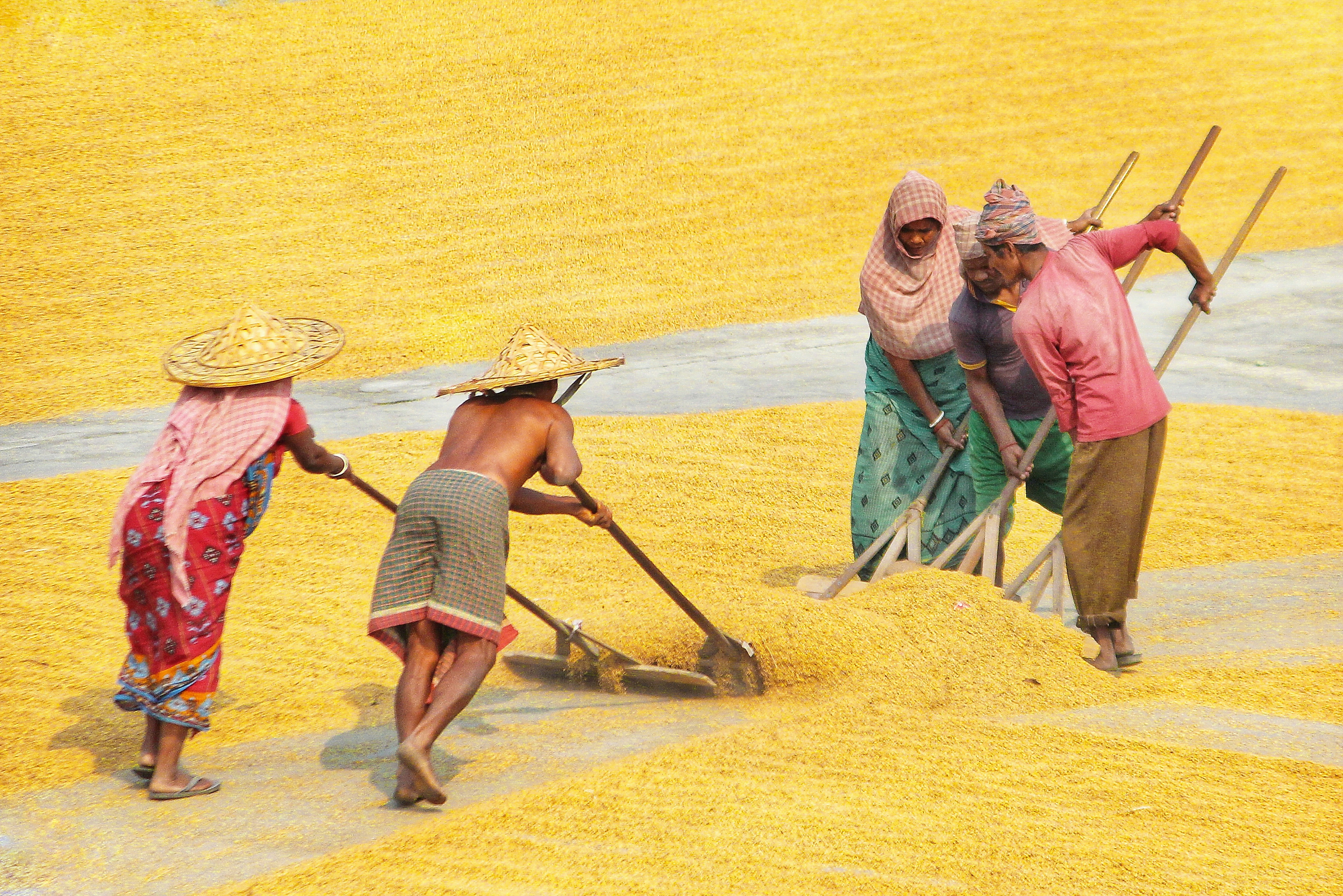
A May Day call to working peoples not to despair but instead organize.
Labor worldwide is facing a hard time: it is faced with the rise of the rightists and ultra-rightists in countries, slaughter of people in and freehand-exploitation of resources from lands by imperialism, an abundance of literature sounding Left but void of revolutionary essence and functional questions, new technology making a lot of labor redundant, absence of revolutionary labor movement and literature, and sold-out souls sounding Left.
The coin has an opposite side that carries elements, factors and forces with promises of revolutionary development. In the lands it dominates, imperialism is finding no easy hand, but budding resistance, half-successful imperialist designs, changing trends on global political theater with the possibility of an atmosphere positive to the labor. The gradual blunting of propaganda and credibility of imperialism and its proxies, the questions currently being raised, although by a small quarter, to search paths to revolutionary resolution of contradictions hostile to the labor, and the exposure of the sold out souls (the proxies in the Left camp) have all presented an opportunity for labor.
So, on this May Day, labor must recollect the proletarian revolutionary Lenin, who writes: “The representatives of the modern labour movement find that they have plenty to protest against but nothing to despair about. Despair is typical of the classes which are perishing, but the class of wage-workers is growing inevitably, developing and becoming strong in every capitalist society … Despair is typical of those who do not understand the causes of evil, see no way out, and are incapable of struggle. The modern industrial proletariat does not belong to the category of such classes.”[1]
So, there’s no reason for the working people to indulge in despair, as the class-conscious part of the working people understand the causes of the evil they encounter – exploitation, exploitative relations in the spheres of production and distribution, and the exploiting classes that own and operate the system. It’s a fact that there has been immense effort in ensuring the working classes in all of the lands do not understand the roots of this exploiting-situation. But with the experience of every day of exploitation, awareness or seeds of awareness develop, as reality is a great master of instruction, especially in regards to political education. The chicanery the exploiting classes and their political system and leaders coddle with would act as another source of political education of the working classes; and this political education is practical, functional and effective that helps throw away illusions about politics of the exploiting classes, help identify the exploiting classes, tear down the veil of sweet-sounding words sections of the exploiting class-politicians propagate and practice. It’s neither an overnight process nor a process to be found in full bloom on a bright morning. Expecting a sudden manna of exploitation-free society for the working classes is either childish or a failure to understand class struggle, role of class struggle in social process and exploited classes’ political struggle at stages of social development.
Conditions of the exploiting classes, of the economic system these classes own, should also be assessed while reviewing conditions of the exploited classes and their struggle.
The condition of the world capitalist system is not as good as it once was. Its problems have increased since NATO’s Ukraine War and the U.S.’ Iran War – the two wars having serious and far-reaching implications in the map of geopolitics, and, possibly, within the imperialist camp.
Ray Dalio, the billionaire and founder of hedge fund Bridgewater Associates, and famed for correctly predicting the 2008 financial crisis, recently said in an interview: The US has slipped into stagflation for the first time in decades, and US monetary policy and Iran War is causal to a sweeping breakdown in the global order.[2]
Ray has warned of a US “debt death spiral” within several years.
Affordability reigns as the dominant financial concern for Americans, according to a Gallup survey[3] released last month. A record 55% of Americans now say their financial situation is deteriorating, the fifth consecutive year of collapsing sentiment, and marking a lower point for Americans’ financial optimism than reported during the 2008 and 2020 recessions.[4]
Jerome Powell, chairperson of the US Federal Reserve, admitted in mid-March: The US is in “a very difficult situation.”[5]
The German economy, considered the biggest in Europe, is not in good shape. Reports suggest: Exports declined for the third straight year in 2025; inflation has picked up; fuel prices rose; jobs are being cut; drop in business volumes; weaker demand leading to fall in new order; costs rose faster; services sector experiences fall; rising energy cost makes heavy industry less- competitive. Sectors of the economy began facing serious problems since beginning of the Ukraine war.[6]
The IMF has warned: The UK is facing one of the largest economic shocks of any country. Increasing energy costs are spiking living costs. “[T]he energy shock from the war would hit the UK the hardest of the world's advanced economies […]”[7]
Other European countries including Italy are also having similar problems.
It's a picture not only of a few economies from two sides of the Atlantic.
The world economy is also facing problems that include increased costs and disrupted supply chains, which is putting pressure on consumers leading to weaker demands. Increased fuel and raw material prices, delay in shipping and deliveries are hurting manufacturers. The travel industry, a spot of major investment and profit, has also been hurt as costs have become more expensive.
A month ago, a CNN report indicated that the Iran war “could leave governments grappling with high energy prices and shortages” as
The International Monetary Fund says the world will suffer an oil shortfall this year – even if the war with Iran were resolved this week – becoming the latest major economic body to warn of severe likely and potential impacts of the conflict.
The fund also warned Wednesday that governments should resist overspending to shield consumers from high energy prices, noting that public finances were ‘already strained’ before the war started and should not be pushed ‘closer to the brink.’[8]
In another report, IMF officials said “heavily indebted governments would have little room to cushion the blow, leaving households and businesses more exposed […] with some countries, including the UK, facing a renewed squeeze on living standards.”[9]
The European Commission has informed the EU’s fossil-fuel import bill has risen sharply.[10]
The IMF has downgraded its global growth outlook.[11]
The result? Nothing, but increased food prices will hit households, especially the impoverished households, the working classes, who work most and get the least.
The World Bank issues further warnings: Slowing economic growth and higher inflation worldwide; piercing increase in commodity prices of 16%; biggest global energy supply shock on record, a jump to 24% with a possibility of averaging $115 per barrel; fertilizer prices may spike 31% that include urea climbing to 60%; chemicals and metals including naphtha, sulphur, copper, aluminum, tin reaching to record peaks.
The reality related to prices, inflation, etc. that is now negatively impacting life around the world is mainly due to the imperialist war in the Gulf region, which, according to the World Bank, has caused “the biggest energy supply shock in history.”
The victims of this hostile reality are going to be people, especially the working classes, as agricultural product prices will surge, which will reduce affordability of food. Even the mainstream cannot deny this fact today. Indermit Gill, chief economist of the World Bank said: “The poorest people, who spend the highest share of their income on food and fuels, will be hit the hardest, as will developing economies already struggling under heavy debt burdens.”[12]
The poor, the working classes are going to pay for the imperialist war, which is concerned only with imperialist interests, which has no positive connection to the working classes and their interests. No imperialist conquest benefits the working classes. Only a very small portion, dubious persons sitting on leadership chairs, of the working classes, that controls the rest of the working classes are bribed from gains that imperialist capital makes, and that is done to confuse, control, demobilize and depoliticize all the working classes.
This year’s May Day is being observed with this global economic and geopolitical background.
On the contrary, what’s the current condition of the working people?
An ILO study finds: “Long hours, stress and harassment are causing hundreds of thousands of early deaths”.[13]
This is the latest estimate by the ILO.
It finds: “More than 840,000 people die each year from health conditions linked to risks such as long working hours, job insecurity, workplace harassment and bullying”. The causes that bring these deaths include cardiovascular diseases and mental disorders. [The number is more than the total population of many cities in advanced capitalist countries.][14]
The study’s other findings include:
-
These [psychological] risks also lead to nearly 45 million disability adjusted life years (DALYs) lost each year. The combined impact of cardiovascular disease and mental disorders associated with psychosocial risk factors is estimated to result in 1.37 per cent of global GDP lost annually. [The poor, who consume least, and not nutritious food, and have to do a lot of physical work, suffer from cardiovascular diseases.] It may sound strange but it is a fact.]
-
[I]t is important to recall that long working hours, a critical psychosocial risk factor associated with increased risk of cardiovascular disease and stroke remain widespread. The ILO estimates that globally 35 percent of workers work more than 48 hours per week.
-
Exposure to bullying and other forms of violence and harassment is another major concern. The ILO estimates that 23 percent of workers globally have experienced at least one form of violence or harassment in their working life, with psychological violence being the most prevalent at 18 percent.
In countries, and in industries, this picture turns more dreadful than the ILO findings. With rising prices of food, working people have to work hard, work longer hours, and cut food consumption. Rest and leisure hours? Those two things sleep in the world of imagination for the impoverished. And, the weakened position of the oppressed in terms of their organization and politics, make the situation even more terrible. With bribed and corrupt labor-leadership, with a depoliticized approach to working people’s rights, the terrible situation worsens further. In innumerable places around the world, the working peoples’ energy to lament the deadly conditions created by the capitalists are taken away by the very capital that engages these non-entities named human beings.
This situation is being altered, and needs to be changed radically. But, that’s not an easy task, not a task of simply giving lip-service and carrying on haphazard work, not a short-term work.
In a letter [written on August 20, 1918] to the American workers, Lenin writes:
“The American people, who set the world an example in waging a revolutionary war against feudal slavery, now find themselves in the latest, capitalist stage of wage-slavery to a handful of multimillionaires, and find themselves playing the role of hired thugs who, for the benefit of wealthy scoundrels […]”[15]
The context Lenin referred to was the Philippines in 1898, and “throttling the Russian Socialist Republic in 1918.”
He pointed out “[t]he results of the four years of [WWI] war” that “revealed the general law of capitalism as applied to war between robbers for the division of spoils: the richest and strongest profited and grabbed most, while the weakest were utterly robbed, tormented, crushed and strangled.” Mentioning “[t]he American multimillionaires” he writes, those multimillionaires
“were, perhaps, richest of all, and geographically the most secure. They have profited more than all the rest. They have converted all, even the richest, countries into their tributaries. They have grabbed hundreds of billions of dollars. And every dollar is sullied with filth: the filth of the secret treaties […] Every dollar is sullied with the filth of ‘profitable’ war contracts, which in every country made the rich richer and the poor poorer. And every dollar is stained with blood — from that ocean of blood […]”
Today, with flames of wars burning lives and lands, fundamentally, no difference is found from the reality Lenin mentioned other than changes in numbers – of deaths and destruction and amount of profit.
Lenin refers to the “historical action” that the Russian proletariat took: referencing seizure of political power by the Soviets. However, he cautions:
Historical action is not the pavement of Nevsky Prospekt, said the great Russian revolutionary Chernyshevsky. A revolutionary would not ‘agree’ to a proletarian revolution only ‘on the condition’ that it proceeds easily and smoothly, […] that there are guarantees against defeats, that the road of the revolution is broad, free and straight, that it will not be necessary during the march to victory to sustain the heaviest casualties, to ‘bide one’s time in a besieged fortress’, or to make one’s way along extremely narrow, impassable, winding and dangerous mountain tracks. Such a person is no revolutionary; he has not freed himself from the pedantry of the bourgeois intellectuals; such a person will be found constantly slipping into the camp of the counter-revolutionary bourgeoisie […][16]
He recalled “the words of one of the most beloved leaders of the American proletariat, Eugene Debs, who wrote in the Appeal to Reason,[17] […] that he, Debs, would rather be shot than vote credits for the present criminal and reactionary war; that he, Debs, knows of only one holy and, from the proletarian standpoint, legitimate war, namely: the war against the capitalists, the war to liberate mankind from wage-slavery.”
The proletarian revolutionary, Lenin, reminds:
“It is not surprising that this world does not come into being ready-made, does not spring forth like Minerva from the head of Jupiter.”
And he bases his conviction on the human spirit:
“In spite of this, we are firmly convinced that we are invincible, because the spirit of mankind will not be broken by the imperialist slaughter. Mankind will vanquish it.”
Today, in a war-environment, a political environment charged with warmongering, rightist rise, hatemongering and sectarianism, an environment of hunger and looming famines in countries, workers all over the world should rise against war, against illogical system and hate-based creed, join hands against war and war-efforts, against profiteers from war. May Day is the day for international solidarity of workers. Joining hands against war is an effective way to express that solidarity, which calls, Toilers of the world, Unite.
Farooque Chowdhury writes from Dhaka, Bangladesh. His most recent book is titled With the Passing Time (NGG Books, Dhaka, 2021, www.nggbooks.wordpress). His other books include The Great October Revolution [NGG Books, Dhaka, Bangladesh, 2022] and Micro Credit: Myth Manufactured [ed.] [Shrabon Prokashani, Dhaka, Bangladesh, 2007].
End Notes
[1] Collected Works, vol. XVI, “L. N. Tolstoy and the modern labour movement”, Progress Publishers, Moscow, erstwhile USSR
[2] CNBC, “Billionaire investor Ray Dalio: We’re in a stagflationary period, April 17, 2026, https://www.cnbc.com/video/2026/04/27/billionaire-investor-ray-dalio-were-in-a-stagflationary-period.html, also Fortune, “Ray Dalio says the U.S. is ‘certainly in a stagflationary period,’ and what the Fed does next could make or break the economy”, https://finance.yahoo.com/economy/policy/articles/ray-dalio-says-u-certainly-190811379.html?fr=sycsrp_catchall, April 29, 2026
[3] Saad, Lydia, “Affordability Still Dominates Americans' Financial Worries”, April 28, 2026, https://news.gallup.com/poll/708905/affordability-dominates-americans-financial-worries.aspx
[4] Ibid
[5] Reuters, “Fed leaves rates unchanged, sticks with single cut in 2026 despite higher inflation”, March 19, 2026, https://www.reutersconnect.com/item/fed-leaves-rates-unchanged-sticks-with-single-cut-in-2026-despite-higher-inflation/dGFnOnJldXRlcnMuY29tLDIwMjY6bmV3c21sX1ZBNTMzMzE4MDMyMDI2UlAx
[6] News Times, “Germany in four charts: Berlin tumbles back toward crisis”, https://newstimes.com.ng/2026/04/germany-in-four-charts-berlin-tumbles-back-toward-crisis/. Many official and other reports including media reports and reports by different organizations/associations since the beginning of the Ukraine War have delivered similar facts.
[7] The News, “IMF warns economic fallout of US–Iran conflict will hit UK hardest”, April 26, 2026, https://www.thenews.com.pk/latest/1400430-imf-warns-economic-fallout-of-us-iran-conflict-will-hit-uk-hardest
[8] CNN, “IMF sees global oil shortfall this year and warns Iran war could tip world into recession”, April 15, 2026, https://edition.cnn.com/2026/04/15/business/imf-global-recession-iran-war-intl-hnk
[9] RT Business News. 2026. UK facing worst economic shock in decades – IMF. RT News. https://www.rt.com/business/636940-uk-energy-shock-imf/
[10] MSN, “The war in Iran is increasing the cost of fuel imports by more than $30 billion, and Europe warns: ‘The consequences could last for months’", https://www.msn.com/en-us/politics/government/the-war-in-iran-is-increasing-the-cost-of-fuel-imports-by-more-than-30-billion-and-europe-warns-the-consequences-could-last-for-months/ar-AA21YWHk
[11] IMF, Global Economy in the Shadow of War, “The global economy faces renewed tests as the war in the Middle East threatens to disrupt growth and disinflation”, April 2026, https://www.imf.org/en/publications/weo/issues/2026/04/14/world-economic-outlook-april-2026
[12] The World Bank Group, “Middle East War to Spark Biggest Energy Price Surge in Four Years”, April 28, 2026, https://www.worldbank.org/en/news/press-release/2026/04/28/commodity-markets-outlook-april-2026-press-release
[13] The psychosocial working environment: Global developments and pathways for action, https://www.ilo.org/publications/psychosocial-working-environment-globa…, April 22, 2026
[14] Ibid
[15] “Letter to American Workers”, Collected Works, vol. 28, Progress Publishers, Moscow, erstwhile USSR, 1965. Following quotes are from the same source. Spellings in the original have not been changed.
[16] Lenin quotes from Chernyshevsky’s review of the book by the American economist H. Ch. Carey, Letters to the President on the Foreign and Domestic Policy of the Union, and its Effects. Chernyshevsky wrote: “The path of history is not paved like Nevsky Prospekt; it runs across fields, either dusty or muddy, and cuts through swamps or forest thickets. Anyone who fears being covered with dust or muddying his boots, should not engage in social activity.”
[17]Appeal to Reason — American socialist newspaper, founded in Girard, Kansas, in 1895. The newspaper propagated socialist ideas and was immensely popular among the workers. During the First World War it pursued an internationalist policy.