



Pambazuka News Special Issue: Moving Beyond Patriarchy, Gender, and Masculinity
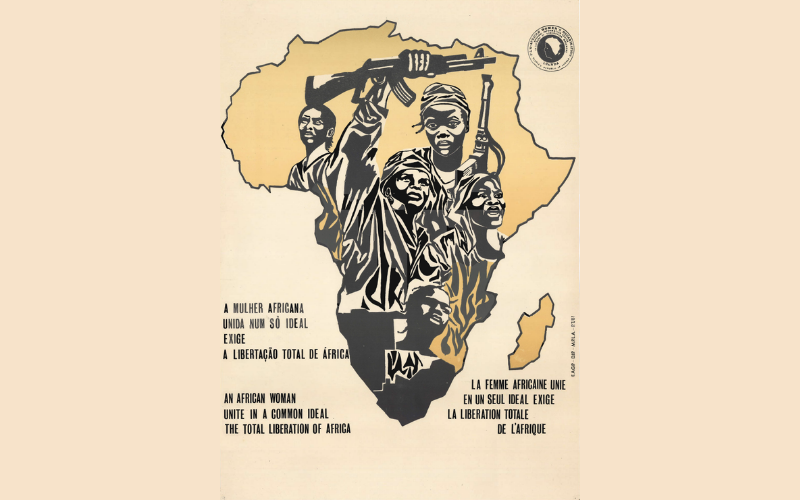
Women’s rights and empowerment has pervaded popular discourse over the last few decades, but have women’s conditions and the ideologies that reproduce them changed? Issue 930 of Pambazuka News seeks to move beyond patriarchy to rethink gender and female-male liberation across Global Africa.
When Pambazuka News released a call for a special issue on Moving Beyond Patriarchy, Gender, and Masculinity, we sought to solicit theoretical work that can move the conversation on gender relations forward. We were also interested in serious conversations on the continued normalization of the oppression of women and girls. From privileged young women who cannot escape sexual violence to domestic labourers facing exploitation and oppression from women and men in households, liberation must mean ending all relations predicated on the domination of one over the other. The structures of exploitation also manifest in institutions, including classrooms and teaching environments where predatory behaviour continues to threaten the career paths, lives, and bodily autonomy of young girls. A lot has changed for women in Global Africa over the last half century, but working women’s dehumanizing conditions and the severe oppression of little girls continue to represent the experiences of those at the bottom of social hierarchies that are used to sustain political and economic systems of domination.
Having witnessed the murder of at least 38,000 noncombatant women and girls in Gaza between October 2023 and 2025 alone, it is clear we still live in a world that treats women as disposable casualties. With increasing militarization in different pockets, violence and domination continue to be inscribed on the bodies of women. In Global Africa, from the kidnapping and holding for ransom of school girls in Nigeria, the specific targeting of women as a weapon of war in ongoing wars (including Sudan), to the sharpened burdens of women in Cuba as they cope with fuel shortages and related crises caused by the United States, women are experiencing different forms of violence enacted by imperial countries, competing forces, and intimate partners. These crises extend across Global Africa from Jamaica to Colombia, and across Africa.
Moving from online petitions to in-person mobilization, in 2025, nationwide demonstrations were held in South Africa as women wore black and mobilized against violence, which costs the lives of 15 women every day. Women demanded that Gender Based Violence (GBV) and femicide be classified a National Disaster, and won, but their efforts demonstrate the persistence of violence against women. The reality is similar across Africa, and the response from women has been consistent over the years. Now in 2026, Ethiopian women have started a similar online campaign (#Tisema) seeking to have violence against women be declared a national crisis. Ethiopian women are not only facing violence and murder from intimate partners, but the justice system consistently fails to protect them. Radical African feminist movements, along with their comrades across the Global South, have long insisted, however, that women’s liberation is inseparable from struggles against racial capitalism and the multiple, interconnected forms of exploitation, domination, and social reproduction through which women’s lives are structured.
This special issue covers some of these topics and extends the conversation to ideologies of domination and related violence towards sexual minorities. The increased mob violence against peoples outside heteronormative frames have resurged amid rising legislations that criminalize the identity, association, and practices of persons in the LGBTQ+ community. Lawless morality police across eastern and western Africa exploit discriminatory enforcement of the law to extort and inflict violence on sexual minorities. Mistus Elordie contribution to the special issue uses Nigeria to examine the implications of the rising anti-LGBTQ+ laws for the lives and safety of persons with non-heterosexual orientations, alongside the use of tradition to justify violence against women.
Patricia McFadden relates such violence to how masculinity claims hetero-sexuality as the hegemonic sexual form, and suggests that the division in the patriarchal structures where some forms are rendered benevolent and others as toxic do not address the violence inherent in both. Men not only need to critically rethink masculinity, but the world needs to end patriarchal systems of privilege that have always been based on violence.
Carolyn Gatonye locates systems of male privilege in Kenyan legislation that on the one hand make women mothers by default, but on the other, denies them benefits and questions their contributions to family settings. Although Kenyan women have had hard won battles reflected in legislation, the legal system continues to present women as default custodian and caregivers of children while offering little to no binding rules for male responsibilities in parenting.
Male privilege extends to scandals as transgressions against custom, tradition, and religious conservatism are overlooked and forgiven. Where a scandal is between a man and a woman, and where the law finds mutual culpability, the woman is still shamed and denied forgiveness. Chishimba Kasanga’s article draws inspiration from Zambia where MP Iris Kaingu, a party in a sex scandal, was pressured by political echelons to be submissive. Her story not only shows the double standard in the politics of respectability, but demonstrates how African peoples are prepared to go beyond regressive ideologies of gender to vote for political leaders dealing with concrete material problems.
As the global economy continues to demand the low-waged and unwaged labor of women, the near slavery conditions of service and the devaluation of care work cement women’s oppressions. Considering the centrality of women’s unwaged and low-waged labor to global capital, Tafahri Munjatta frames the home as the last colony where all oppression converge. In addition to examining the cost women bear in social reproduction, Munjatta identifies the first enclosure as land, and the most enduring enclosure is intimacy, which has reshaped social relations in Africa. When economic crises, pandemic-generated quarantines, and austerity hit nations, the economic shocks are absorbed by women conducting unwaged work. The gendered naturalization and invisible treatment of care and unwaged work, however, means neither women’s centrality to economic stability nor the value of care for healthy human relations is acknowledged.
In the current digital era, the transformation of the relations between men and women are increasingly being threatened by Red Pill ideologies and the manosphere movement where influencers and keyboard warriors are aggressively nurturing and socializing males to uphold draconian patriarchal control over women and girls, and oppose women’s freedom in every form. Phaphule Pretty Botopela analyzes the online communities, magazines, blogs, vlogs, sports and fitness images in the media that monetize a hegemonic masculinity of the so-called alpha male, which begs the question: is it about empowering young men, or is it capitalising on their insecurities, vulnerability, and desire for community?
Samuel Akpobome Oruvwuje, on the other hand, evaluates what happens to boys and men in deteriorating economies that fail to offer waged work but equate masculinity with economic stability. For men positioned within unequal economic and political structures, masculinity becomes a patriarchal tool for advancing one's own privilege. Transforming gender relations, therefore, requires confronting patriarchy, sexism, racism, alongside the structures that produce unemployment, economic exploitation, authoritarianism, and the triple burden of productive, reproductive, and community labour imposed on women.
Situating the freedom of Global African women in Pan African struggles of liberation is a common thread in the thoughts and praxis of Thomas Sankara, Micere Mugo, Ama Ata Aidoo, Tajudeen Abdul-Raheem, and the many women whose activism and scholarship shape womanist and Pan African feminist traditions. Jacinta Kanda combines the Sankarist, womanist and Pan-African feminist traditions for a clarion call to name and expunge harmful cultural practices - exemplified in female genital cutting - that seek to control women, deny their bodily freedoms, and harm their sexuality and health.
Whereas Sani Khamees pays tribute to the male Pan-African feminist, Dr Tajudeen Abdul Raheem, and his contribution towards women liberation, Tajudeen Abdul-Raheem walked in the traditions of Thomas Sankara in championing the cause of women and girls. From the contributions towards the formation of the Pan-African Women’s Liberation Organization, education of the girls, to struggles to advance maternal health, Tajudeen affirms a reality that not all men oppose the fight for gender equity, equality, and healthy lives for mothers, girls, daughters, female colleagues, and female authorities.
In the final analysis, it is not only systems and structures of extraction that benefit from women’s subordinated positions, but it is also men and women who have internalised patriarchy that limit the opportunities for women to achieve their potential. By restricting women to the fire yard and the “other room,” the intellectual, creative, and innovative minds of women and girls are curtailed from flourishing and benefiting society. Similarly, the capacity of boys and men is also truncated through ideologies that denominate their value to the amount of capital accumulated. In a poetic prose, Alexander Opicho, challenges African men to unleash the girl child to prosper in the realms of self-fulfilment and adventurous endeavours in inventions, science, politics, philosophy and every field that the human species ascribes to study. The release will redeem men from viewing women as exploitable assets whose body, dowry and bride price might increase the economic fortune of beneficiaries in the prevailing patriarchal structures.
The task before us is to deepen the struggle and transform the conditions that make women’s oppression possible.
Enjoy the Special Issue!