



Nyerere’s Legacy on Trial: Activism, Terrorism Labels, and Tanzania’s Shrinking Civic Freedoms
.jpg)
Saba Saba Day evokes the traditions upon which the activism and struggles for Tanzania’s independence were built. Rubara critically examines President Suluhu’s labelling of activists in Tanzania as terrorists during the 2026 Saba Saba Day in the attempt to criminalize dissent, avoid accountability, and further restrict civic space in the country.
On 7 July 2026, Tanzania observed Saba Saba Day, the annual commemoration of the 1954 founding of TANU and the traditional date of the Dar es Salaam International Trade Fair. Activists had used social media to call for demonstrations focused on constitutional reforms, accountability for post-election violence, and the release of political prisoners.[1]
The day passed in notable calm, with subdued streets and normal business activity in many places. Yet the trade fair itself reportedly suffered significant losses as many citizens chose to stay home. Days later, President Samia Suluhu Hassan delivered a pointed warning during a political reconciliation event in Zanzibar. She cautioned individuals she described as “activists by name,” declaring that their actions amounted to “acts of terrorism” driven by personal interests rather than patriotism, and she affirmed that the state would not hesitate to use its full authority in defence of the nation.
The events surrounding the quiet Saba Saba Day of 2026 and the President’s subsequent warning did not arise in a vacuum. It followed the disputed October 2025 general elections, which were accompanied by heavy crackdowns, contested death tolls, the arrest of prominent opposition figures, such as Tundu Lissu (in April 2025) on treason charges, and widespread allegations of violence. Against that backdrop, authorities also detained Melkisedeki Kitunzi Kaijage, an assistant lecturer in Political Science and Public Administration at the University of Dodoma (UDOM). Kaijage was taken into police custody on July 8, 2026 after responding to a summons, allegedly for inciting people to demonstrate on Saba Saba Day; the charge was later upgraded to terrorism (threatening to burn public buildings and police residences), a non-bailable offence, after a High Court bail order. Activists had mobilised calls for peaceful action on the symbolically charged Saba Saba anniversary. The government responded with rally bans, large-scale security deployments, and pre-emptive arrests. The resulting quiet day was interpreted differently by various sides: as a victory for stability by supporters of the authorities, and as evidence of fear or successful deterrence by critics.
The President’s Warning and Social Media Reactions
Social media platforms quickly became a lively arena of response. Many activists reacted with a mixture of sarcasm and defiance, effectively accepting the label in a jeering manner while reaffirming their commitment to peaceful advocacy. Pro-government voices, meanwhile, celebrated the quiet day as evidence of public rejection of destabilising elements, often framing the calls for protest as externally orchestrated or motivated by financial incentives.
The quiet Saba Saba Day and the President’s warning equating certain activists with terrorists prompts important questions about terminology and power. What precisely distinguishes activism from terrorism? What are the wider political consequences when the highest office in the land equates the two? And how should one interpret the widespread decision to stay indoors on a national holiday, as a subtle form of protest, as understandable caution born of fear, or perhaps as an interplay of both?
Defining Activism and Terrorism
There are various legal and political definitions of both “activism” and “terrorism,” shaped by national statutes, international conventions, and competing ideological perspectives. For the purposes of this analysis, we adopt the following working definitions grounded in widely recognised distinctions between non-violent advocacy and the deliberate use of violence.
Activism generally describes organised, intentional efforts to promote, impede, or steer social, political, economic, or environmental change. It commonly employs non-violent or legally recognised methods, including public demonstrations, petitions, advocacy campaigns, awareness-raising, civil disobedience, legal challenges, and grassroots mobilisation. The underlying aim is typically persuasion, pressure for reform, or the highlighting of grievances within or against existing structures.
Terrorism, by contrast, entails the deliberate use or threat of violence, intimidation, or the creation of fear, frequently directed against civilians or critical infrastructure, to advance political, ideological, or religious goals. Its purpose is coercion through terror rather than engagement or dialogue. International frameworks stress the violent and indiscriminate nature of such acts as central to the definition.[2]
The core distinctions lie in methods, targets, and intent. Activists generally rely on communication, assembly, and (in most cases) peaceful disruption to influence policy or systems. Terrorists employ physical violence or the credible threat of it to instil widespread dread. While activism often operates in the contested space of rights such as freedom of expression and assembly, terrorism is universally treated as a serious criminal offence. The boundary can become contested when states expand definitions of terrorism to encompass dissent. Escalation of a demonstration into violence may constitute criminal disorder or other offences, but it does not automatically transform the underlying peaceful advocacy into terrorism; activism and terrorism are not points on a single spectrum, because the fundamental line remains the acceptance or rejection of violence and the targeting of civilians.
Nyerere’s Activist Legacy
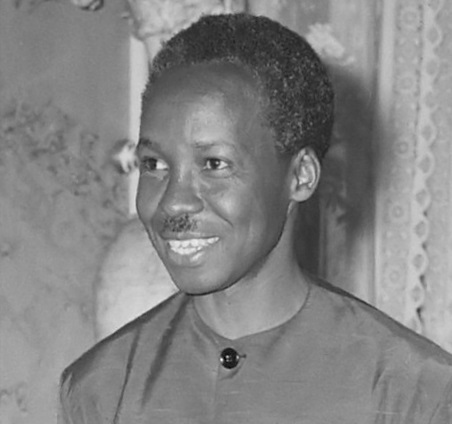
The historical irony in the Tanzanian context is striking. Bishop Benson Bagonza articulated it clearly during a Tanzania Democracy Forum discussion in Zanzibar on 9 July 2026. Referring to the nation’s founding leaders, he observed: “Nyerere was an activist. Was he not an activist? Amani Karume was an activist. Was he not an activist? And these are the fathers of our nation. How do we begin to demonise activism when our nation was built by activists?”
It is important, however, not to conflate liberation fighters with activists. Liberation fighters are concerned with the entirety of the social, economic, political, and environmental domains, often at the national and global level, whereas activists tend to mobilise for selective goals within those domains. Nyerere and Chama Cha Mapinduzi (CCM) as a party used activism as a strategy for liberation, but their goals exceeded party politics and activism towards a Pan-African revolution. The distinction is relevant when considering that CCM in its activism years would never have considered joining a global alliance of conservative centre-right political parties such as the International Democrat Union (IDU), to which CHADEMA is a member.
Tanganyika African National Union (TANU) and Afro-Shirazi Party (ASP), which made up CCM, were backed with a lot of activism elements that relied on rallies, writings, petitions, and political organising to achieve independence from colonial rule. The incumbent CCM, as the direct successor to TANU, now finds itself applying a label to contemporary voices that echoes the very methods through which the modern state came into being. If activism is reframed as terrorism, then Tanzania’s own independence struggle risks being recast in similar terms.
Political, Economic, and Social Implications
Equating activists with terrorists carries substantial political implications. It exerts a chilling effect on open dissent, transforming legitimate calls for accountability or reform into potentially criminal matters. Broad interpretations of terrorism, encompassing the disruption of peace, pressure on government, or the creation of unease in society, can provide justification for heightened surveillance, pre-emptive detentions, and other restrictive measures. Participants at the Democracy Forum, including human rights lawyer Jebra Kambole, expressed pride in the activist identity, noting that limitations on formal political parties have encouraged independent voices and ordinary citizens to step forward. Opposition figures, such as CHADEMA Secretary General John Mnyika, described the President’s remarks as dangerous and warned of serious consequences if they remained unchallenged.
Economically and socially, the strategy carries tangible costs. While the subdued atmosphere on Saba Saba Day was presented by authorities as a success for public order, it coincided with reported losses for businesses, including the major trade fair.[3] A climate of caution or apprehension can suppress everyday economic activity and public engagement over the longer term. By narrowing the avenues for peaceful expression, authorities may inadvertently drive discontent underground or toward more confrontational expressions, potentially creating the very instabilities they seek to prevent. The jeering tone adopted by many activists on social media, treating the “terrorist” designation with defiant humour or irony, illustrates both resilience and an awareness that the label is being deployed strategically. Such responses can sometimes transform an intended stigma into a symbol of resistance.
The Ambiguity of Silence on Saba Saba
The decision by many Tanzanians to remain at home on 7 July lends itself to more than one reading. It may represent a collective, low-risk expression of dissent, a form of passive or “quiet” protest when open gatherings face heavy restrictions and risks. Alternatively, it may reflect widespread apprehension about potential violence, arrests, or state responses amid intensive security deployments and alarming official warnings.
Government narratives have emphasised the day’s peacefulness and the public’s rejection of disruptive calls. Critical voices, including human rights advocates, opposition figures such as CHADEMA leaders, and academic observers, have interpreted the same calm as evidence of successful deterrence through fear. In all likelihood, both dynamics were present, revealing a society in which every day public participation now carries heightened personal calculations of risk, as illustrated above by the arrest and subsequent terrorism charges against Melkisedeki Kitunzi Kaijage, an assistant lecturer in Political Science and Public Administration at the University of Dodoma (UDOM), who was taken into police custody allegedly for inciting people to demonstrate on Saba Saba Day.
Broader Lessons for Tanzania’s Future
This situation reflects broader trends in parts of Africa and elsewhere, where civic space is contracting and expressions of dissent are increasingly framed as threats to national security or stability. Social media serves as both an enabler of rapid mobilisation and a contested arena in which competing narratives, of alleged foreign interference in Tanzania’s domestic politics and protest mobilisation on one side, and of legitimate grievances over governance, living costs, and justice on the other, vie for attention.
Maintaining clear distinctions remains essential. Peaceful activism, drawing on the same traditions of mobilisation and advocacy that contributed to Tanzania’s independence, warrants protection rather than conflation with violence. Constructive dialogue, transparent mechanisms for accountability, and genuine room for criticism ultimately bolster national cohesion and legitimacy more effectively than expansive labelling and restrictive measures.
History demonstrates that societies which marginalise or criminalise their reformers often incur longer-term costs in public trust and institutional strength. The activists who responded to the “terrorist” label with a mixture of acceptance and irreverence may ultimately underscore a deeper point: that the spirit of questioning and advocating for improvement is not easily extinguished by rhetoric alone.
Tanzania’s path forward will depend on preserving the distinction between those who seek to build through engagement and those who would destroy through fear. The conversation about rights, responsibilities, and the meaning of patriotism is one that benefits from being conducted openly, peacefully, and without undue restriction. That, in essence, has long been the hallmark of meaningful activism.
Evans Rubara is a Tanzania-based natural resource management specialist, and sociopolitical analyst. He is available at [email protected] or on X as @PunditParadox.
Endnotes
[1] The Chanzo. June 24, 2026. https://thechanzo.com/2026/06/24/govt-vows-unprecedented-crackdown-for-…
[2] See The United Nations Global Counter-Terrorism Strategy, https://docs.un.org/en/A/RES/60/288; UN Security Council Resolution 1373 (2001); OAU convention on the prevention and combatting of terrorism, 1999. https://au.int/sites/default/files/treaties/37289-treaty-0020_-_oau_convention_on_the_prevention_and_combating_of_terrorism_e.pdf; Protocol to the OAU convention on the prevention and combatting of terrorism, https://au.int/sites/default/files/treaties/37291-treaty-0030_-_protocol_to_the_oau_convention_on_the_prevention_and_combating_of_terrorism_e.pdf
[3] The Chanzo. June 24, 2026. https://thechanzo.com/2026/06/24/govt-vows-unprecedented-crackdown-for-…