



Tajudeen Abdul-Raheem: A Male Feminist Who Fought for Women’s Rights and Emancipation
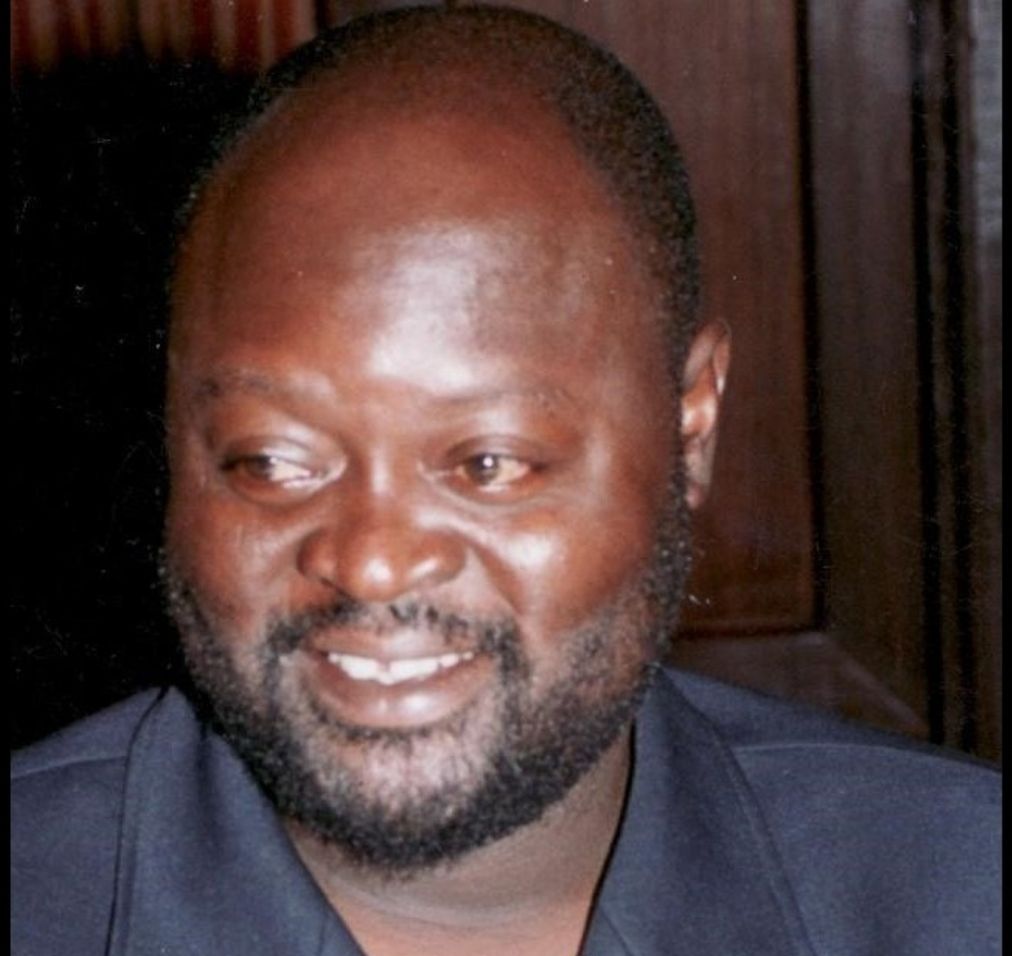
A tribute to Tajudeen Abdul-Raheem on his contributions to women’s rights and liberation, which remain as relevant as ever today.
Tajudeen Abdul-Raheem was born in Funtua, Katsina State, Nigeria, in 1961. He attended Baptist Primary School (now Shehu Primary School), Government Secondary School in Funtua, Bayero University, Kano (BUK), and Oxford University in London, where he earned his PhD. Abdul-Raheem emerged as a prominent Pan-Africanist and international activist recognized for his significant contributions to African affairs. His political engagement began during his studies at Bayero University, Kano, where he graduated with first-class honors in Political Science and received the Nigerian government’s award for best student in Political Science between 1980 and 1982.[1] At BUK, Abdul-Raheem was active in student politics. He joined the Anti-Imperialist Youth Front (AAIF) and participated in student union politics, which were shaped by the influence of radical thinkers both within and outside the university.
For Abdul-Raheem, women’s advancement, equality, and equity were at the heart of his political work. As a well-known feminist Pan-Africanist, he campaigned for women’s emancipation in Africa and beyond. Abdul-Raheem urged women to play active and progressive roles in the liberation movements and emphasized duties that went beyond the traditional roles expected of them at home. International Women’s Day (8 March) provided him with a significant chance to set out his feminist views. He always opposed the cultural and social barriers that limited women’s involvement in politics. In 2006, Abdul-Raheem wrote “Every Day Should Be a Woman’s Day”, saying that “...it is not just a ‘women’s day’, even if that is the way it is usually celebrated. It is about gender awareness and the democratic struggle to make the world a better place for all its inhabitants, both men and women”.[2]
His conception of feminism was unique within Pan-Africanist thought. For Abdul-Raheem, gender equality is at the centre of the liberation programme. His feminism supplemented and challenged the prevailing frameworks by maintaining that true Pan-African liberation could not take place unless women enjoyed full participation and emancipation. Unlike the separatist elements of feminist theory, he promoted cooperation between men and women in tackling patriarchy and structural injustices, proposing a comprehensive approach that combined feminism with wider social justice struggles. In this way, he helped bridge differences between Pan-Africanist and feminist discussions, and his activism provided a model for incorporating gender considerations into continental movements for freedom and equality.
Many feminists widely regarded Abdul-Raheem as an ally, comrade, and mentor in the movements. He remained actively involved, critically examining the contradictions of patriarchy, state oppression, and economic marginalization. By incorporating the search for gender equity and equality into Pan-Africanism, he opposed practices restricting women’s freedoms. His open support of women’s rights distinguished him, as he took on roles usually overlooked by men. In 2009, the year of his death, he wrote “Ending Violence Against Women”, calling for legal reforms and public education. He maintained that change must involve not only altering laws but also tackling deep-rooted norms and practices that cause violence and silence women.[3] He revisited this topic in his weekly writings, noting progress in combating gender-based violence across the continent but stating that real progress requires implementing the spirit of the law. His dedication also involved providing maternal health advice through Pan African Development Education and Advocacy Programme (PADEAP), with outreach programmes to the local community and the hospital carrying on his work relating to maternal mortality even after his death. Following his advocacy, several Pan-African organizations, including the Pan-African movement, adopted policies to address gender-based violence. During the same period, the primary health clinic in Funtua reported an increase in maternal health consultations, attributed by local staff to his campaigns and columns encouraging women to seek care. These outcomes reflected the tangible influence of his work on institutional practices and individual behaviors.
Similarly, in a postcard titled “Mothers Should Not Die Giving Life”, Abdul-Raheem urged that alarming maternal mortality figures in Africa be seen as human cases, not mere statistics, advocating for more support for women.[4] These articles were part of his larger body of work, the popular weekly “Pan-African Postcard” column, later compiled after his death in the book Speaking Truth to Power: Selected Pan-African Postcards. Reviewers note that his deep respect for women’s capabilities, potential, and contribution to Africa’s transformation is a main and recurring theme.
Abdul-Raheem’s dedication to women’s rights was influenced not only by personal experiences but also by the wider historical background in which he was brought up. Since he was born in Nigeria after colonial rule had ended in the 1960s, a time characterized by political instability, the fight for independence and the growth of Pan-Africanism, he saw directly the way in which tradition, social change and new ideas concerning gender equality interacted. Although strong patriarchal traditions were a major feature of Nigerian society then, there was also a growing campaign for social reform and greater female involvement in public life, something which had been encouraged by the educational reforms of the independence period and political activism.
From a young age, Abdul-Raheem was influenced by the women in his community. He maintained close relationships with his mother and several of his aunts, and it was this bond that caused him to promote women’s rights throughout society. Patricia Daley, who was at Oxford University at the same time as Abdul-Raheem, described her own experiences with feminism alongside his. She stated that:
“Abdul-Raheem was partly influenced by women’s rights from a young age, and when we met at Oxford before he became active in the Pan-African movement, he was already in favour of women’s rights. He supported women and he wrote about women dying during childbirth, street traders, and also set up a school in his hometown where girls could study to promote women’s education”.[5]
In addition, in his capacity as General Secretary of the Global Pan-African Congress, Tajudeen worked with women and founded the Pan-African Women’s Liberation Organization (PAWLO), thereby establishing a forum where African women’s contributions could be heard.[6] He created a number of platforms within the Pan-African movement to advance gendered and class struggles around social reproduction, amplify women’s voices, and ensure that their contributions were acknowledged.
Abdul-Raheem played a key role in obtaining the adoption of Resolution 8 of the 7th Pan-African Congress (PAC). The resolution was based on the recommendation which had been made at the women’s pre-congress meeting. The preamble to Resolution 8 on women and Pan-Africanism states that women make up more than half of the Pan-African movement. Because of this, the 7th Pan-African Congress decided to back the women's demands for (i) equal partnership in the Pan-African movement; (ii) the creation of a women's section in the secretariat; (iii) a 50% allocation of the financial and other resources at all international, regional and sub-regional and local levels of the Pan-African Movement and (iv) the organization of a women’s summit in order to ‘evaluate the progress made so far, consolidate networking and, together with their brothers, lay down a new strategy for the future.
He mentored many young women activists worldwide and built relationships across different social classes. Since he understood the importance of access and representation, he affirmed the rights of women to be free from violence and discrimination as well as to have access to better health and education. He also played a key role in negotiating human rights protocols on the African continent, particularly those concerning women’s rights. He supported the development of future African women thinkers and campaigned for women's inclusion in the leadership of the Pan-African Movement, especially at the Kampala secretariat.
Moreover, he promoted women’s philanthropy through the Akina Mama wa Afrika Women Development Fund, a fund whose director, Solome Nakaweesi-Kimbugwe, later said that “the women of Africa will always remember him for holding their hands in the fight for their rights.” In his capacity as Deputy Director for Africa in the United Nations Millennium Development Goals (MDGs) campaign, he promoted initiatives aimed at reducing maternal mortality and promoting the achievement of the other MDG objectives, the very reason for which he was travelling when he died in a car accident in Nairobi on 25 May 2009.
Sani Khamees is a Senior Programme Officer (Research, ICT and Climate Change) at the Centre for Information Technology and Development (CITAD) in Nigeria.
Endnotes
[1] Daley, P (2018). Thomas Sankara and Tajudeen Abdul-raheem: The Untimely Deaths of Two New Generation African Visionaries. In Murrey, A (eds). A Certain Amount of Madness: The life, Politics and Legacies of Thomas Sankara. Pluto Press
[2] Abdul-Raheem, T. (March 9, 2006). Every Day Should be A Woman’s Day. Pambazuka News. https://pambazuka.org/index.php/pan-africanism/everyday-should-be-woman…
[3] Abdul-Raheem, T. (May 12, 2009). Ending Violence Against Women. Pambazuka News. https://pambazuka.org/index.php/ending-violence-against-women
[4] Abdul-Raheem, T. (May 3, 2009). Mother’s Should Not Die Giving Life. Pambazuka News. https://pambazuka.org/index.php/mothers-should-not-die-giving-life
[5] Interview, 25 September 2021
[6] Roy-Campbell, Z. M. (1996). Pan-African women organising for the future: The formation of the Pan African Women's Liberation Organisation and beyond. African Journal of Political Science, 1(1), 45-57.
Further Readings
Abdul-Raheem, T. (1996). Pan-Africanism: Politics, Economy and Social Change in the Twenty-first Century. London: Pluto Press.
Abdul-Raheem, T. (September 28, 2006). Winnie Mandela at 70. Pambazuka News. https://pambazuka.org/index.php/pan-africanism/winnie-mandela-70
Biney, A & Olukoshi A. (eds) (2010). Speaking Truth to Power. Oxford: Pambazuka Press