



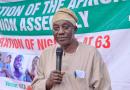
Ozoemena draws from his over two decades acquaintance with and pays tribute to the late Professor Okello Oculi, who passed on July 26, 2025, in Abuja, Nigeria.
Elections are due to be held in Nigeria in April 2007. Emman Ozoemena points out that as the elections get closer, “it is important to note that there is need for key actors to learn how to manage contestations for power in such a way as to ensure that the nation comes out of this season unscathed as one indivisible entity that cares for the poor and excluded in our society.”
For those who can hear very well, the drumbeat signaling the 2007 election is increasing in tempo each passing day. The signs of impending elections, usually characterised by electioneering campaigns and political activities are in the air across the country. For most citizens, the ubiquitous posters of aspirants, media appearances, and visits to communities by vote-seeking politicians are indicators for the approaching elections. Just like the hoofbeats of horses in war times, the harder the noise, the more obvious it is to see that it is yet another election year.
In the midst of all this, some die-hard pessimists and non-tough minded optimists (and if you may merchants of crises) are busy inventing webs and spins that cast doubts over the possibility of elections next year. Some months ago, new fears crept into the nation’s political circles under different euphemisms. They were crafted by professionals who know how to stalk fear in the system.
Just after the third term imbroglio failed the Interim National Government (ING), a hoax surfaced on the nation’s political scene. Like any political currency, speculations trailed this hoax while denials and counter-denials followed. What made it rather curious was that the alleged purveyors of the ING option were men not given to idle talk. Take Dr. Chukwuemeka Ezeife, for instance. He was associated with the ING idea. He is a serious minded fellow, though he later vehemently denied being involved with the ING option. I believe no progressive politician would ever fall for such an inane thought as ING. Then enter Chief Sunny Okogwu, the avid public commentator. He was also reported to have canvassed for the ING idea in media reports. Aside from the two, swarms of voices joined in the debate for desirability or otherwise of ING in Nigeria.
But then, just like a well orchestrated drama, the focus shifted to the imbroglio in the Presidency leading to PTDFgate. This further polarized the polity into three identifiable camps namely ‘President Obasanjo Supporters’, ‘Vice President Atiku Supporters’ and the ‘Obasanjo-Atiku Must Resign Campaigners’. The EFFC Report that followed PTDFgate jolted the political landscape with every politician “taking cover” for his life as Mallam Nuhu Ribadu led an anti-graft commission, releasing damming score cards on public officials whom we elected to keep public trust.
Finally, we have the current impeachment spree that now looms over some states. Chief executives and the lawmakers are slugging it out with the Judiciary waiting in the wings to either remain the unbiased arbiter or be consumed in the ambition of its members to climb to the exalted seat of acting Chief Judge without due process. There is a daily increase in the number of political actors, NGOs and campaign organizations who have reportedly made their positions on the issue public.
But, then we should ask; what is at the heart of the issue? What do the people of Nigeria want? Does the posturing of the political class and/or the power elite represent the heartbeat of the citizens? Are there verifiable indicators that Nigerians are ready for elections in 2007? Are members of the political class laying booby traps to truncate the process? The fear being expressed by many is that if care is not taken, the ghosts responsible for failure of the nation’s electoral process in the past may be back to foist on us once again the “never-ending transition programme”.
It is important for us to ask ourselves where we want to be six months into our journey to democracy. This question is becoming a stark reality given the events of the past weeks, which have stirred up the collective indignation the citizens. What expectations would the 2007 elections deliver for the electorate? The questions are endless. As we review the emerging scenarios in the country, it is important to know that there is no choice facing the country other than for us to make up our minds that it is the process of democracy in action.
A similar situation happened in the United States of America between 1963 and 1973 - “the decade of tensions” in American history, similar to the civil war year during the 19th century. Owing to the unfortunate assassination of President John F. Kennedy in May 1963, Vice President Lyndon Johnson took over as President for the remainder of Kennedy’s term. When the term ended in 1964, Johnson contested as the Democratic Party’s presidential candidate and won the election. The United States Constitution allowed him to run for two terms of four years each in his own right. So though Johnson was eligible to run again in 1968 presidential election, within the ruling party, the Democratic Party there was an intractable internal crises. Some wanted the President to seek re-election, while others thought otherwise. The camps within the party were divided amongst supporters of Johnson and his ardent opponent Senator Eugene McCarthy, who decided to put up strong resistance to the president’s dream for a second term.
As power elites within the party impressed on President Johnson to break his silence on the re-election bid, he responded in an unprecedented way by backing down on his ambition for a second term. Instead, he lined up behind another candidate for the top job, the brother of JFK, Senator Robert Kennedy. With this development, Robert and McCarthy had to slug it out at the Democratic Party’s convention in 1968. But then Robert Kennedy, was assassinated in Los Angles by a young Syrian Immigrant, Sirhan Sirhan while on a victory party after the California primaries. The Johnson camp reached out and produced another candidate, Hubert Humphrey, the vice president at the time.
The Democratic Party lost the 1968 election to Richard Nixon, the Republican Party candidate. Nixon had previously lost the presidential election to President J.F Kennedy in 1959 in a narrow victory. Most historiographers have rightly described this period as the “season of tempest” in American history.
Are there lessons to learn from the American experience in managing an open political field? For those who take time to study democratic movements one thing that stands out is that election years in which an incumbent president is not seeking re-election, are usually tension soaked.
For the purpose of this treatise, we must explain the “Open Field Phenomenon”. This is when an election year involving the incumbent president or president who has served out his or her term and who is therefore barred by the constitution from running in another election. When attempts to amend the 1999 Constitution failed on May 16, the presidency of Nigeria technically speaking became open beginning from May 27 2006. Naturally, this created a scenario where contenders for the Presidential race worked hard selling their programmes and manifestos to Nigerians. The political firmament was filled with new tensions arising from struggles for space by a legion of aspirants. This could be rightly described as politics of succession.
Nigeria is standing at a critical stage in her political development. The outcome of the 2007 elections will impact greatly on the nation’s ability to develop a democratic culture. The army of aspirants at the national and state levels aspiring to run for elections are indicative of renewed interest and faith in the system by the people, and a strong indication that democracy is on course in Nigeria. The incumbent president and 58% of current governors are not candidates for the elections. Fresh hands are taking part in the contest.
Add to this that the number of aspirant state governors have considerably increased from the number in the 1999 and 2003 elections. With the expanded space, do we assume that aspirants now have more platforms to run from, or do we assume that they would want to operate largely from the point of aligning themselves with the winning political party? There is the temptation to ask why most aspirants want to run on tickets of the ruling party. The bandwagon effect of “join the winning party” is a common phenomenon which demands our attention.
We are then posed with the challenge of how to resolve the internal crisis and leadership tussle in the parties. The ruling People’s Democratic Party (PDP) and the opposition parties are all factionalized and crisis-ridden. How this impacts on the polity ahead of 2007 is open to conjecture. Even the newly registered political parties, which their leaders initially were operating as private estates, are not exempt from internal bickering.
There is no doubt that political parties in Nigeria operate poor internal governance mechanisms. The leadership exercise power arbitrarily, excluding members on key decisions. This is one area that requires serious work by the political class and the electorates, if we want democracy to grow in the country. Party leaderships must be accountable to their members if democracy will be deepened in Nigeria. Without mincing words, most parties were built on faulty foundations with no binding principles and ideology. This type of hollow politics concomitantly translates into what we have today, politics driven by desire for power, not issue driven politics that seek to either provide leadership or alternative and credible opposition. If anyone dared conduct a survey on the nation’s political class on the core ideology of governance, chances are that the result would be zero.
What emerges in the media is that most aspirants are yet to come to terms with what constitutes campaign issues, especially around development and the core expectations of the people. It was funny hearing some aspirants to the presidency simply muttering the trite cliché: “If elected I shall continue with Mr. President’s economic reform agenda”. I chuckled listening to a front runner presidential aspirant saying that he intends to be committed to President Obasanjo’s economic reform agenda, as if the Reform Agenda is a magic wand that would sway votes to his side.
As we get closer to the 2007 elections, it is important to note that there is a need for key actors to learn how to manage contestations for power in such a way as to ensure that the nation comes out of this season unscathed, and as one indivisible entity that cares for the poor and excluded in our society. There are several lessons to learn from the US political history of the late 1960s as we approach 2007 elections.
• Emman Ozoemena, a Public Policy Analyst is based in Abuja. He can be reached on [email][email protected]
• Please send comments to [email protected] or comment online at www.pambazuka.org
On the first anniversary of the late John Moru who lost his life in the Bellview plane crash on October 22, 2005 at Lisa, Ogun State, Emman Ozoemena writes that Moru, a social activist and an anti-poverty campaigner, was the Secretary of the Steering Committee of the Nigerian Social Forum and would have been happy to participate in the 2007 World Social Forum in Nairobi, Kenya.
On January 22 this year, the 2006 World Social Forum was held in three different locations, namely Bamako, Mali (Africa), Caracas, Venezuela (South America), and Karachi, Pakistan (Asia) in what its organizers termed ‘polycentric events’. This was the first time the event was organized in three regions of the world so as to focus on the developmental needs of different regions ahead of the World Social Forum slated for early 2007, which is expected to harmonize outputs of three regional forums.
It is pertinent to explain briefly what the World Social Forum is all about. It is a global network of civil society groups seeking to build alternative paradigms for development against the backdrop of the emergent conservative social, political and economic trends being pursued by forces of neo-liberal and colonial powers represented by the Brenttonwood Institutions (the International Monitoring Fund [IMF] and World Bank). Secondly, it was a response to the annual January meeting of world political and business leaders popularly known as World Economic Forum that is held in Davos, an exclusive resort in Switzerland.
Today, civil society groups in Nigeria participate actively at both the World Social Forum and African Social Forum. They have gone a step further to put in motion a process towards a national programme: the Nigerian Social Forum (NSF). There is no doubt that these forums have redefined the role of civil society and social action in development processes. They have continued to engage different levels of governance structures, institutions, citizens and groups on development issues at country, continental and global levels through advocacy and social actions.
The NSF has held two forums in the last two years, in Makurdi 2004 and Lagos 2005 respectively. The quality of the representatives and delegates from various nationalities and organisations attending these forums, and the issues and resolutions reached have created a new paradigm in building a humane and responsive environment where rights of the individuals are respected. Early this year when the Bamako conference opened, my thoughts began to wonder about my brother, friend and colleague, John Moru, the former Secretary of the Steering Committee of the Nigerian Social Forum and Governance Team Leader at ActionAid International Nigeria. John died in the Bellview air mishap on October 22, 2005 at Lisa Village in Ogun State. He was a young and talented Nigerian who had tall dreams for Nigeria, Africa and the world. Though he passed away in his early thirties, he lived light years ahead of his earthly age.
For any one who had the opportunity of meeting him, John was imbued with passion and commitment towards the poor and downtrodden, and committed his energies and talent towards changing the course of the people through his involvement in social action and advocacy. I had wondered what John would have said in Bamako about engaging the government on the changes in the communities across Africa? How would he have used the tools of engagement to impress on the leadership why it should be accountable and responsible to the people that elected them? How would he have advised that grassroots people use God-given resources in the community to improve their lives? And I know my bother John would have loved to have shared so many thoughts with his readers, including a couple of insights on how to proceed on the journey to 2007. But alas, he is no more around to do this.
In retrospect, my thoughts skipped to early September 2004 during the preparations for Nigerian Social Forum 2004, when our paths crossed in the course of my journalistic assignment. I had called the chairperson of the 2004 NSF, Priscilla Achakpa, to ask for an interview with her and the Secretary of the Steering Committee, John Moru at her office in Garki II, Abuja. I had read John’s writings on several occasions as he was a regular contributor to issues of public concerns. In fact, I had looked forward to an opportunity to meet him and maybe discuss some of the issues he had written about in the past that had caught my attention. The first essay I read of John’s was in early 2004 when he raised some poignant points on the desirability of a World Bank promoted macro-economic framework that claims to alleviate poverty through a heavy dose of private sector led economic growth under the guise of privatization. His treatise, in my view, was one of the best I ever read especially as an alternative to the Reform Agenda – the popular propaganda of the day. It was a well-argued analysis that I still keep in my file today.
So invariably, I looked forward to the meeting with NSF team of Pricilla and John. And your bet is as good as mine that the interview session with the team convinced me that the NSF project was one idea whose time has come. I was literally converted by the duo to buy in into the theme of 2004 Forum; “Another Nigeria is Possible!” We spent over two hours discussing issues of development and the challenges facing the Nigerian project, the governance framework, the poor and excluded at the grassroots and other related matters. We also veered into challenges faced by millions of African peoples, and other citizens of the global South. Frankly speaking, I left that day with an impression of having been in contact with a young man who, though he belonged to my generation, seemed to be light years ahead in terms of ideas and vision for a better world.
About a week after our first meeting, asked him if he would be available for another discussion, because we had left many matters unresolved. He obviously obliged me. We met at a joint in town where we explored issues ranging from how civil society groups and the media could build partnerships that will help in moving Nigeria forward, to practical ways of engaging leaders at different levels to respond to the concerns of the person in the street. This was a discussion between two individuals concerned about their community. The second meeting, which lasted for close to two and half hours, was more revealing than the previous one. From then on, John became a close confidant whom I could share issues with any time of the day whenever the need arose.
I had guessed that John had either been trained in the discipline of philosophy or imbibed philosophy as a hobby studied philosophy because of the methodical and analytical approach he employed in his writings. His logic was so well developed that even if you disagreed with his conclusions, you would agree that he had argued his position very well. To our amazement, I discovered that he studied philosophy just like the writer. From then on we shared several sentiments on issues even though our methods or approaches differed slightly at times. There was a kindred spirit between us as ‘professional’ colleagues in some sense. That relationship blossomed as we collaborated in several endeavours such as Civil Society/National Political Reform Conference Engagement Secretariat, Global Call to Action Against Poverty (GCAP), and the CIVICUS Civil Society Index Project, among others.
John thought that every individual must use his or her God given talents and resources in the service of humanity and in actualizing a better world where poverty, disease, hunger and under-development would be a thing of the past. He believed that to achieve a world without poverty is possible if leaders became accountable at all levels. He was passionate about the Nigerian project and all his writings and speeches were devoted towards achieving this dream.
A day before the ill-fated flight of October 22, 2005 in which John and two other colleagues, Messrs Chinwuba Egbe and Justice Egware lost their lives I had gone to his desk at the ActionAid International Office in Abuja to see him. We spent a considerable time discussing the challenges facing the Nigerian State, as well as emerging issues in polity and the likely areas where citizens could reasonably input to achieve change in the nation. He shared his expectations for the upcoming second Nigerian Social Forum that was at the time scheduled for Lagos in November of 2005. He had told me that there was need to mobilize media support for the NSF. We drew up plans and strategies that we were to work on separately over the weekend and exchange notes again on the Monday morning. At the meeting, we reached consensus that the Nigerian people could if they so desired, take their fate in their hands through active participation in development processes.
That night remains indelible in my mind as John’s voice (though quiet) rose in pitch. “My guy, you know what we don’t need to waste time again. Just put pen to paper on these issues we have agreed on and lets meet Monday morning to tidy up the rest of the media plans”, he said. I can still picture the desk he sat on, the body language he employed to illustrate the urgency of the matter, and how, in between, he excused me and reached for his phone to put a call through to Justice Egware, the Coordinator of GCAP Nigeria, to confirm his appointment in Lagos the next day. “My guy, hope we are still travelling tomorrow?” he demanded. The answer from the other end was received with a smile. I asked him, yes, what did Justice say? His answer was, “yes, we are traveling tomorrow!”
And John travelled on that Saturday to Lagos for an anti-poverty campaign by GCAP Nigeria to raise awareness on how all segments of the society could join hands in eradicating poverty in Nigeria and Africa. I remembered that as I stood up to leave that Friday night at about 7:45 pm, he asked me in a strong tone, “I hope we are not leaving matters out of our discussions”. “My response was clear, “I think we have sorted out all matters at least for now”. I stood up to leave, extended my hand, said good night and see you on Monday morning. He responded with a smile.
Today, 365 days later, or if you may, one year after the death of John Moru and others, the Nigerian Social Forum, African Social Forum, and World of Social Forum, and other CSO coalitions in the forefront of providing alternative development paradigms still meet to review the state of development in Nigeria, Africa and the World. The lives of millions of poor and excluded people in our communities, counties, countries and continents are not better. Advocacy is still needed to give voice to the voiceless who toil the streets, hamlets, cocoons, cities and villages in Africa, Asia, and the Americas under debilitating social existential conditions fuelled by the neo-liberal and economic policies of the Brentwood institutions and their apostles in the third world.
While the political and business leaders would be wont to pop champagne in celebrating the rape of “the wretched of the earth” according to Frantz Fanon, civil society and non-state actors should continue to interrogate development processes. This includes increasing incidences of poverty; lack of access to basic health facilities; hunger and myriads of other challenges facing developing nations, especially Africa. It is time to evaluate the Millennium Development Goals (MDGS), debt crisis challenges, the World Trade Organization rounds and the challenge posed by HIV/AIDS to the world.
Last week, millions of people across the major cities took a stand against poverty! It was refreshing to watch world leaders make a fresh commitment to tackle poverty in the world. John, Chinweuba and Justice, all campaigners against poverty who laid down their lives for that course, would have loved to be around in this season to watch how the world have moved from “Make Poverty History!” to “Stand Up, Against Poverty!!” just like the slogan of the 2004 World Social Forum in Mumbai, India, “Another World is Possible”. A world where all children (no matter the circumstances of their birth) have inalienable rights to education; right to access anti-retroviral drugs for persons living with HIV/AIDS; where the rights of women and children and poor and vulnerable groups are protected.
I am sure that John, Justice and Chinwuba would have been happy to participate in the 2007 World Social Forum in Nairobi, Kenya. May the voices of the social crusaders John Moru, Justice Egware, and Chinwuba Egbe continue to rest in peace. I want to tell you, my brother John, and others that “Another world is still possible!”
• Emman Ozoemena, a public policy analyst from Abuja, previously collaborated with late John Moru in the Global Call to Action Against Poverty Nigeria (GCAP) Nigeria. He can be reached on e-mail: [email][email protected]
• Please send comments to [email protected] or comment online at www.pambazuka.org/
Today is the African Day. How many Africans are aware of the significance of the day's event? How many governments organised any public rally to mark the day? Does it really matter to our so-called political leaders and policy makers what citizens in their countries go through each day. They are all busy with how to either maintain themselves in power or install their stooges as successors to an already depressed economy, leaving a legacy of social decay and zero level infrastructures. The story is the same across Africa from Cape to Cairo. Today, the lot of mother Africa and millions of her citizens is deferred dreams and broken promises from the leaders. Last month in Abuja Nigeria, our leaders from across the continent came and made mouth watering promises on how to combat HIV/AIDS, tuberculosis and malaria. But, what happened to the promises made five years ago on the same issue? Can the leopard change the spots on its skin? It is heat-rendering that African youth are caught in this web and now run to Europe for succor, nay second slavery, willingly. Today, lets think about mother Africa and her millions of citizens.