



The Somalia Food Security and Nutrition Analysis Unit (FSNAU) estimates that 2.85 million people - a third of the population - are now in humanitarian crisis and in need of urgent assistance, an increase of 42.5 per cent over the figure in December 2010. 'We are no longer on the verge of a humanitarian disaster; we are in the middle of it now,' Isaq Ahmed, the chairman of the Mubarak Relief and Development Organisation, a local NGO working in the south of the country, told IRIN on June 28. 'It is happening and no one is helping.'
Thousands of Ethiopians in Afar State are facing critical food, water and health gaps almost a month after a volcano erupted in neighbouring Eritrea's Nabro region, officials say. The volcano started erupting on 12 June, spewing ash over hundreds of kilometres, affecting food and water sources as well as air travel in some parts. The eruption also caused an earthquake with a magnitude of 5.7, Eritrea's Information Ministry reported in a communiqué.
Ethiopia is going ahead with the construction of the 5,250MW Renaissance Dam despite fears that it will spark disputes with Egypt over Nile waters. The dam will be one of the world’s 10 biggest with Ethiopia funding itself for the 4.78 billion US dollar cost. This video from Vox Africa reports on the dam.
The Ethiopian government has publicly accused an editor and a columnist of involvement in a terrorism plot, according to news reports and local journalists. Woubshet Taye, deputy editor of the leading Awramba Times newspaper and Reeyot Alemu, columnist for the weekly Feteh, have been held incommunicado under Ethiopia's far-reaching anti-terrorism law since last week. The anti-terrorism law criminalises writing the government deems favorable to groups and causes it labels as 'terrorists', including banned political opposition party Ginbot 7. This is the first use of the law against journalists.
Eritrea has rejected Ethiopian claims it trained the rebels who plotted to carry out bombings during an African Union summit in Addis Ababa in February. Ethiopia routinely accuses Asmara of supporting rebel groups, and declared in April it would support Eritrean guerrillas fighting to overthrow President Isaias Afewerki. Both sides have often traded tough rhetoric since their 1998-2000 border war, which killed around 80,000 people and left the frontier demarcation unresolved.
Ethiopian authorities have been holding a newspaper columnist incommunicado since Tuesday (21 June), local journalists told the Committee to Protect Journalists. Reeyot Alemu, a regular contributor to the independent weekly Feteh, was expected to spend the next four weeks in preventive detention under what appears to be Ethiopia's sweeping anti-terrorism law.

Dawit Kebede, editor-in-chief of Ethiopian newspaper, the Awramba Times, speaks to Ron Singer about the perils of working in the media – from his arrest by the government to his struggle to get a license for a new paper – and his disappointment with US academics’ failure to support Ethiopian democracy.
Ethiopia should build on its long and proud history as a nation rather than allowing itself to be fragmented by ethnic divisions, argues Mammo Muchie, in a reflection on the country’s past and future.

Government officials on a tour of the US failed in their attempts to build diaspora support for Ethiopia’s five-year economic programme, thanks to ‘Zenawi’s tenacious, resolute and dogged opponents’, writes Alemayehu G. Mariam. ‘The diaspora may be divided but not when it comes to Zenawi’s regime.’
Hundreds of Eritrean refugees gathered in the Ethiopian capital on Wednesday (20 April) to call for democratic rule in Eritrea, which thousands have fled in recent years citing rights abuses. Under banners that read 'Yes for democratic change', around 1,600 Eritreans met to decry what they described as repressive rule under President Isaias Afewerki, who has led the country since it won independence from Ethiopia in 1991.
A three-month campaign by Addis Ababa's health bureau hopes to boost adherence to antiretroviral (ARVs) drugs in the Ethiopian capital by improving communication between patients and health service providers. A 2009 study by the HIV/AIDS Prevention and Control Office found that on average, 72.3 per cent of patients on ARVs were still on first-line medication one year after starting treatment. 'The remaining are lost...it could be due to any number of reasons such as death or an unannounced change of location but it is a cause for concern,' said Addis Akalu, head of the disease prevention and control department at the Addis Ababa Health Bureau.
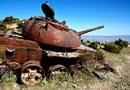
Another war with Eritrea? A water war with Egypt? Alemayehu G. Mariam deconstructs Meles Zenawi's latest war talk.
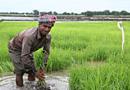
An international company has benefitted from a massive handout of land in the Gambella region of Ethiopia. Alemayehu G. Mariam shows what the devastating consequences of the deal will be for local people.
Ethiopia has little time for critics of its large-scale land-leasing policy, insisting the millions of dollars of foreign investment will create jobs, improve domestic agricultural expertise and reduce both poverty and the country’s chronic food insecurity. The policy, part of a five-year Growth and Transformation Plan, has led to the cheap leasing of thousands of square kilometres. Detractors complain of forcible relocation of local pastoralist populations, poorly paid work on the new farms, environmental degradation and a failure to deliver on promises of better infrastructure.
Community representatives from all corners of Africa spoke out last week about their frustration with the slow pace of international action and the urgent need to use local and indigenous knowledge alongside modern science in how we prevent and adapt to climate change.
It's the deal of the century: £150 a week to lease more than 2,500 sq km (1,000 sq miles) of virgin, fertile land. Bangalore-based food company Karuturi Global says it had not even seen the land when it was offered by the Ethiopian government with tax breaks thrown in. Karuturi snapped it up, and next year the company, one of the world's top 25 agri-businesses, will export palm oil, sugar, rice and other foods from Gambella province – a remote region near the Sudan border – to world markets.
Communities in Ejere and Gonde, central Ethiopia, are storing their best seeds in local seed banks. These communities are taking steps to be independent of seed companies, and exercise full control over seeds that have taken generations to develop. Many of the world’s original wheat and barley varieties were cultivated in Ethiopia, largely by women farmers. In recent decades, Ethiopian farmers have begun to substitute their own varieties for 'modern' varieties developed with a focus on higher yields. With climate change and new fungal diseases such as UG99, farmers in Ethiopia are looking not only for yield but also for genetic diversity and adaptability. These are traits found in abundance in local traditional seed varieties.
Ethiopia is boosting its health worker numbers, building thousands of health centres and working with donors to prioritize the prevention of mother-to-child HIV transmission (PMTCT). Even so, most women still prefer to have their babies at home. An estimated 2.4 per cent of pregnant women in Ethiopia are thought to be HIV-positive - rising to 3.5 per cent in the 15-24 age group. The national average is just over 2 per cent. About 20 per cent of children born to HIV-positive mothers annually are also infected with HIV, according to government statistics.
The Ethiopian region of Gambella is home to Africa’s second-largest mammal migration, with more than a million endangered antelope and other animals moving through its grasslands. But the government has now leased vast tracts to foreign agribusinesses who are planning huge farms on land designated a national park. Unreported, an environmental tragedy is unfolding in a remote corner of Africa, on the borders of the newly-designated state of South Sudan, that could imperil the second-largest mammal migration on the African continent.
Capturing an online exchange between several young Ethiopians, Elyas Mulu Kiros wonders whether the country’s ruling EPRDF (Ethiopian People’s Revolutionary Democratic Front) party needs to be reformed or deformed.