



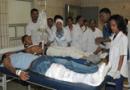
Alemayehu G. Mariam remembers the victims of the June and November 2005 massacres in Addis Ababa, where hundreds of people were killed by police for protesting the result of the general election. The author examines the use of police brutality by the government of Meles Zenawi to silence political opposition. He argues that the culture of impunity must stop and that it is imperative that the world continue to bear witness to the killings. ‘The Ethiopian massacre victims now belong to the whole of humanity,’ Mariam writes, remembering the men and women who died. ‘They must be remembered by all freedom-loving peoples throughout the world, not just Ethiopians.’
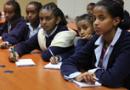
The Ethiopian government has gone back on their decision to ban distance learning programmes. Alemayehu G. Mariam says the lessons that should be learnt include a respect for the rule of law and the need for rational policy-making.

Western donors continue to hand out billions of dollars in ‘humanitarian’ and ‘economic’ aid to Ethiopia’s Zenawi regime each year, turning a blind eye to the fact that their handouts are propping up a repressive dictatorship, writes Al Mariam.
Ethiopians from various cities in the US, Canada, Europe and Australia held a conference on Saturday to discuss and coordinate plans for the upcoming 5th anniversary of the Ethiopian election massacre. The participants discussed and updated each other about the various events that are being organised throughout the month of November in remembrance of the those fellow Ethiopians who were gunned down by the Meles regime while peacefully protesting the election fraud and demanding respect of their vote.
The Ethiopian government is using development aid to suppress political dissent by conditioning access to essential government programs on support for the ruling party, Human Rights Watch has said in a new report. Human Rights Watch urged foreign donors to ensure that their aid is used in an accountable and transparent manner and does not support political repression. The 105-page report, 'Development without Freedom: How Aid Underwrites Repression in Ethiopia,' documents the ways in which the Ethiopian government uses donor-supported resources and aid as a tool to consolidate the power of the ruling Ethiopian People's Revolutionary Democratic Front (EPRDF).
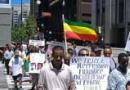
Alemayehu G. Mariam speculates on the possible benefits and drawbacks of remittances to Ethiopia from the Diaspora. Using examples from Latin America and Asia, the author suggests the cash influx to Ethiopia (estimated at over a billion US dollars per year) can either be harnessed for investment, or, more negatively, trigger ‘Dutch Disease’.
An Ethiopian diplomatic source in Jeddah has told Gulf News that Saudi authorities had deported 725 Ethiopians who had been detained at a deportation centre of the Saudi Passport department following a riot that erupted at the facility that led to the escape of many prisoners last Wednesday. Security forces are still continuing a search for several detainees who fled the detention centre.
Ethiopia released the country's most prominent opposition leader from jail on Wednesday, four months after the government's landslide win in elections criticised by Western powers. Birtukan Mideksa, a former judge, is the leader of Ethiopia's biggest opposition party, Unity for Democracy and Justice.
Punjab-based farmers, who are known for feeding the country, now want to try their hands offshore, with a group of progressive farmers all set to acquire 50,000 hectares of farm land on lease in Ethiopia for growing high-value cash crops, including pulses and maize.
Gambela, one of the nine regional states of Ethiopia is fast growing into what the local media has described as “a land grabbing” hub among Indian companies. Gambela’s new tag as a land grabbing hub comes as BHO Agro Plc becomes the third Indian firm to begin operations in the region after two other Indian companies, Karuturi and Ruchi Group, moved into Gambela in 2008 and early 2010, respectively.
A new directive from Ethiopia’s Ministry of Education effectively outlaws distance learning and creates a monopoly for state-controlled universities to administer the disciplines of law and teaching, writes Alemayehu G. Mariam. While the official reason given for the sudden change in policy is concern for educational quality, Mariam hypothesises that it will enable the regime ‘to control two of the most important professions that have the greatest impact on the lives of the people’.
By the end of a five-year 'Growth and Transformation Plan' (GTP)', Ethiopia will end its dependence on foreign food, Prime Minister, Meles Zenawi said. The Horn of African impoverished country has registered more that 10 percent annual growth over the past five years and expects to maintain accelerated rate of the trend in years to come.
The European Investment Bank (EIB) has announced it is no longer considering funding Africa’s tallest dam, in Ethiopia. The hydroelectric dam, called Gibe III, has drawn international criticism because of the devastating effect it is likely to have on the food security of at least eight Ethiopian tribes.

The Obama administration must hold Meles Zenawi to account for gross human rights abuses against his people in Ethiopia, writes Alemayehu G. Mariam. Mariam argues that although the US has instilled a hope for a better future in the vision of the oppressed, without a realignment of US foreign policy and subsequent pressure against the regime in Ethiopia, belief will deteriorate into despair and anti-Americanism in the country. ‘It is time for the US to fish or cut bait in Ethiopia’, writes Mariam.
Although US government has pledged to defend human rights, it hasn’t followed up on this promise in Ethiopia, argues Alemayehu G. Mariam. Despite the detention and torture of hundreds of political prisoners by the Ethiopian government, the United States continues to provide aid to the country, allowing the country’s current dictatorship to maintain its power and deprive citizens of their human rights, Mariam writes. Arguments that 'forceful action' could create ‘instability’ in the country are no justification for the US’s failure to defend the human rights of ordinary Ethiopians, Mariam adds.
In its report to the Human Rights Committee, the government of Ethiopia states that “to promote the operation of charities and societies and to ensure their transparency and accountability, a Proclamation for Registration and Regulation of Charities and Societies has been issued and is effective now.” This proclamation helped Ethiopian authorities strangle the country’s independent human rights organisations.
It seems the concern for the liberation of the oppressed injected into US foreign policy is merely a muted growl from a seemingly ‘toothless and clawless (paper) tiger’, writes Alemayehu G. Mariam. Mariam voices the frustrations of those in Ethiopia who lay witness to the empty human rights rhetoric of US foreign policy makers, and urges the US to back up its big human rights talk with big human rights action in the country so to avoid its descent as a silent witness to the crimes of dictatorship.
If a single hummingbird tries hard enough it has the power to put out a forest fire. As Alemayehu G. Mariam writes, Ethiopian citizens and opposition politicians – the hummingbirds – have become too complacent and uncoordinated to mobilise and end the current dictatorship in Ethiopia. Despite claims that only violence can end the authoritarian rule, Mariam points to the examples of Mahatma Gandhi, Martin Luther King Jr and Nelson Mandela as cases where citizens have united for a cause to peacefully end suppression. He also points to periods of history where ‘hummingbirds’ have prevailed, only to take the same road as the ‘forest fire’ predecessors they’ve succeeded. Mariam calls for the need for a united Ethiopian political opposition and citizenry to bring an end to the current dictatorship.

It was in part Ethiopian opposition leader and activist Birtukan Midekssa’s campaign for women’s rights that led to her imprisonment by the Zenawi government, writes Alemayehu G. Mariam. Highlighting the challenges Ethiopian women continue to face, Mariam looks to Midekssa’s legacy for a vision of a better Ethiopia, in which women’s rights are recognised and in which women play a vital role in the country’s history.
Campaign groups remain concerned about the environmental impacts of Ethiopia’s Gibe 3 dam, following the Industrial and Commercial Bank of China’s approval of a $400 million loan towards its construction. Zhang Ke puts the hydropower project in context.