



The International Criminal Court has issued arrest warrants for Libyan leader Muammar Gaddafi and two of his confidants, citing evidence of crimes against humanity committed against opponents of the Libyan regime. Judge Sanji Mmasenono Monageng announced the decision on behalf of a three-judge panel in The Hague on Monday, saying the warrants were meant to force Gaddafi, his son and his intelligence chief to appear before the court and prevent the possibility of a cover-up.
The African Union panel on Libya met on Sunday in Pretoria on mediation efforts to end the four-month war, after South African President Jacob Zuma’s visit to Tripoli last month failed to reach a deal. The leaders of Mauritania, Uganda and Mali as well as Congo-Brazzaville’s foreign minister met with Zuma as Libyan rebels said they expect to receive an offer from Muammer Gaddafi 'very soon' that could end the four-month war.
A group of Twitter users are calling on the site to prevent NATO (North Atlantic Treaty Organization) from using the service to obtain logistical information for its military campaign in Libya, arguing that Twitter appears ‘to be in violation, not only of the law, but also of its own Terms of Service.’

The reasons for the ongoing bombing of Libya go beyond a thirst for oil and can be found in Gaddafi's long-term 'insubordination' to Western imperialism argues Ismael Hossein-Zadeh.
Reporters Without Borders visited eastern Libya in April to evaluate the situation of the media in Benghazi and the surrounding region and, in particular, to report on the extraordinary vigour of the new media that have been emerging in this part of the country since its liberation from Muammar Gaddafi’s oppressive rule. 'The current media are essentially citizen media consisting of young activists who have played a key role in the war, activists such as Mohamed Al-Nabbous, the creator of the Web TV Libya Al-Hurra, who was killed by a sniper on 19 March,' Reporters Without Borders said.
Nato is using information gleaned from Twitter to help analysts judge which sites could be targeted by commanders for bombing and missile strikes in Libya. Potentially relevant tweets are fed into an intelligence pool then filtered for relevance and authenticity, and are never passed on without proper corroboration. However, without 'boots on the ground' to guide commanders, officials admit that Twitter is now part of the overall 'intelligence picture'.
NATO has acknowledged responsibility for an air strike that killed a number of civilians in Tripoli, the Libyan capital. A statement from the alliance said that a military missile site was the intended target of a raid on Sunday morning but one of the weapons did not strike it and may have caused civilian casualties. At a local hospital, reporters were shown three bodies, including a child, which government officials said were people killed in the air strike. 'Basically, this is another night of murder, terror and horror in Tripoli caused by NATO,' Moussa Ibrahim, a government spokesman, said at the hospital. Five families were living in the building which was hit, he said.
Damning video evidence has emerged, proving for the first time that sniper rifles made in South Africa are being used in Libya’s bloody civil war by forces loyal to embattled dictator Muammar Gaddafi, reports City Press newspaper. The revelations come amid continued refusals by South Africa to divulge the details of conventional arms sales to Libya’s repressive government – which totalled nearly R69 million last year.
A and explanation of the history leading to the Libyan conflict. But you failed mention that it is Canada's warplanes (at the direction of Prime Minister Stephen Harper) who have taken the lead role in the air assaults on the Libyans--to the cheers of many Canadians and to the heartfelt shame of many others like myself.

In NATO’s hands, UN Security Council resolution 1973 has morphed into a clear attempt at regime change in Libya, writes Alexander Cockburn. He stresses: ‘A hundred years down the road the UN–NATO Libyan intervention will be seen as an old-fashioned colonial smash-and-grab affair.’
Rebels and forces of Libyan leader Muammar Gaddafi have fought over Zawiyah, a major oil port just 50km west of Tripoli, and in locations across the North African country. Libya's government said it has stopped opposition fighters from entering Zawiyah but rebels said they were continuing to fight for the town on Sunday, after hours of battles. Mussa Ibrahim, the government spokesman, said that Gaddafi's forces had 'total control' of the area from Ajdabiya in the east to the Tunisian border in the west.

On the ground in Tripoli and western Libya, Cynthia McKinney reports that the current NATO-led war looks nothing like the mainstream media would have us believe: ‘The situation on the ground in Tripoli … could not more different from what is being portrayed by Western news networks and newspapers.’
UK WILPF ‘is extremely troubled by the worsening situation in the Libyan Arab Jamahiriya. In particular we are concerned with NATO’s excessive military aggression and with the UK government’s actions, which are fuelling a civil war in the North African country.’

Despite all pretence at humanitarian rhetoric, the Western invasion of Libya is simply a question of securing oil and energy resources and responding to the challenge to its international hegemony posed by China and India, writes Obi Nwakanma. ‘It is the 19th century all over again,’ Nwakanma stresses, while underlining the threat posed to Nigeria by blindly supporting the invasion.
Six powerful explosions have been heard in the Libyan capital, Tripoli, as warplanes flew over the city. A powerful but distant blast was felt in the centre of the city at around 1900 GMT on Sunday 5 June, followed by stronger explosions a few minutes later, an AFP correspondent said, unable to immediately determine the targets. NATO fighter jets earlier launched intensive air raids on the capital and its eastern suburbs.
The Libyan government says Nato air raids have killed more than 700 civilians since bombing began in March. Spokesman Moussa Ibrahim said more than 4,000 people had been wounded, but gave no evidence to confirm his figures. Nato has denied killing large numbers of civilians, saying its air strikes are to protect Libyans from Colonel Gaddafi's forces.
‘The current Libya invasion by the West is absolute portrayal of their failed impracticable democratic ideologies,’ writes Seth Ofori, in response to an article by Jean-Paul Pougala.

‘[I]t is transparently clear now that NATO has exceeded its mandate, lied about its intentions, is guilty of extra-judicial killings--all in the name of “humanitarian intervention”’, writes Cynthia McKinney from Tripoli.
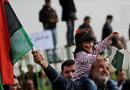
NATO’s (North Atlantic Treaty Organisation) sustained assault on Libya ought to lead to calls for its leaders’ prosecution at the International Criminal Court (ICC), writes Yash Tandon, though ‘we know this will not happen’. A new regime run by ‘the people’, Tandon stresses, will merely see itself at the service of empire, helping to ensure access to oil, shore up Europe against refugees and bolster the region against forces deemed threatening such as Hamas and Iran; the challenge remains for Libyans themselves to sort out their differences and unite.
s the Libyan uprising enters its fourth month, people in the liberated eastern part of the country are playing a waiting game, and for many, patience is running thin. The spontaneous jubilation that marked the early days of the revolution is all but gone. In its place, an unmistakable sense of weariness and uncertainty fills the cool springtime air. Concerns of a civil war or an Islamist takeover do not predominate here; most people laugh these off as overblown Western fears that are not grounded in Libyan realities. Now that the fate of the uprising is almost wholly in the hands of those with the best weapons, foremost on people’s minds is how much longer they must wait for the regime to fall.