



Political Repression in the Lead Up to Cameroon’s October 2025 Presidential Election
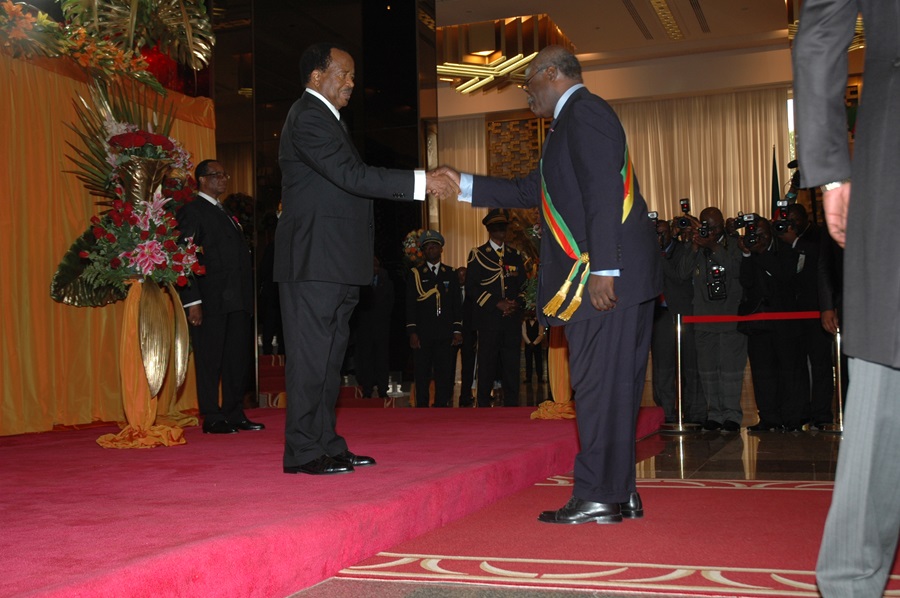

The calculated exclusion of opposition leaders from Cameroon’s upcoming presidential election is a consequence of more than four decades of deliberate authoritarian political architecture.
A 25 August 2025 article in the magazine Jeune Afrique questioned whether Cameroon’s opposition was “the stupidest in Africa” (la plus bête d’Afrique)[1] and featured an image of the opposition party leader, Maurice Kamto, who was recently eliminated from running through an elaborate set of events orchestrated by the ruling party, Cameroon People’s Democratic Movement (CPDM). The article was a combination of clickbait, thin journalism that strategically ignores the full scale of autocratic repression, and gaslighting antagonism—perhaps well-intended, if the journalists were practicing reverse psychology and intended to spark indignity and revive a movement. The angle of the article demonstrates the effectiveness of the Biya entourage to dominate the media landscape, including internationally, but it overlooks the nuances and shifting features of political repression in today’s Cameroon.
Jeune Afrique Media Group is privately owned by the family of the late Béchir Ben Yahmed, a Tunisian journalist and pundit, with a few major Ivoirian investors and prominent businessmen, including Ahmed Cissé and Serge Thiémélé (via Bayani Capital, an offshore entity registered to Mauritius), both of whom are close to President Alassane Ouattara.[2] In Cameroon, the magazine has a reputation as being ‘friendly to dictators’, with the Cameroonian journalist Elie Smith noting, ‘Congo-Brazzaville… Cameroon, Gabon, Chad, Equatorial Guinea, and the Democratic Republic of Congo, have earmarked extravagant budgets for [the] Paris-based, pan-African, French language magazine called Jeune Afrique ’.[3]
Repression
Reading this article, titled Cameroun: ‘l’opposition la plus bête d’Afrique’, is an experience in full-body disorientation.
On 13 July 2025, a post from President Biya’s official account (@PR_Paul_BIYA) read:
“I am a candidate for the 12 October 2025 presidential election. Rest assured that my determination to serve you is commensurate with the serious challenges we face.”[4]
These social media accounts are handled by the Cellule de Communication du Président de la République (which oversees official press releases, photos and online postings), although important posts are likely drafted and approved by members of Biya’s longstanding private public relations teams and consultants from France and the United States, which has included over the years the “discreet” services of Patricia Blame,[5] David Polyansky, Catherine Frazier, Jimmy Soni and others.[6]
In the last four months, the President has not delivered one single speech, public address, or press conference; nor has he participated in even one televised or broadcast debate, meeting with community leaders, or political rally. Indeed, as the presidential election approaches, marked for 12 October 2025, the President has been uncannily absent and disinterested in campaigning for re-election, even in a 43-year presidential tenure that has been systemically marked by perennial absences and strategic reappearances.[7] Biya made a brief public appearance on 20 May 2025 for the Unity Day military parade in Yaoundé, during which the public was prohibited from filming. He was next seen on 15 July 2025 during a reception meeting with José Avelino Bettencourt, a Portuguese-Canadian Prelate of the Catholic Church, who was invited by the Cameroonian government at a moment when Cameroonian Bishops were increasingly critical of the CPDM.[8] While Biya is not interviewed by the media and is never heard speaking in the publicised footage, Bettencourt answered questions outside Unity Palace after the meeting, indicating that “The President is well. He received me well, and I am grateful.”[9] The Biya entourage has a pattern of strategically leveraging the presence of high-profile foreign figures to implicitly and symbolically validate his authority, particularly during moments when his domestic legitimacy is challenged.
Again, last week—on 29 August 2025—Biya is seen in a few staged scenes bidding adieu to the outgoing French Ambassador, Thierry Marchand. Marchand found himself in the peculiar position of needing to affirm the President’s health to the Cameroonian public on the state controlled television station (although he filled the role quite comfortably, watch the interview). An announcement after the meeting was posted on X via President Biya’s account:
“Today, I had an amicable and extensive discussion with Thierry Marchand, outgoing Ambassador of France. Our countries are devoted to fostering a relationship built on trust.”[10]
On the website of the Presidency of the Republic of Cameroon, the audience with the French Ambassador was the first since Biya met with an emissary from Djibouti on 28 November 2024, nine months earlier.[11]
The most astute and respected Cameroonian political commentators—among them Augusta Epanya[12], Achille Mbembe[13], and Luc Perry Wandji[14]--are insistent that there is no election happening in Cameroon or (with more tact and a tone palatable to the political/economic elite) that, if something like an election is happening, it does not involve sincere candidates running, nor democratic and independent selection, nor a determination through the popular will of the people.
Instead, what we have is an elaborately fabricated staging of a presidential selection process—complete with sufficient online, social media, and documented signposting to entertain or outwit an international community overwhelmed with other geopolitical crises and conflicts. In some ways, geopolitically, we are in the perfect storm for the realisation of even more extreme forms of repression in the states of Central Africa: the far right’s resurgence across Europe and the United States has normalised authoritarian postures once seen as unacceptable; the genocide in Gaza and the occupied territories of Palestine, the 3.5 year invasion of and war of attrition in Ukraine, and the 3-year ongoing war in Sudan between the Rapid Support Forces and the Sudanese Armed Forces (with entanglements with Egypt, UAE, Saudi Arabia, and Russia) have absorbed international attention and outrage.
Within this saturated field, the experienced and savvy political teams surrounding the 92-year-old Cameroonian President have so far been able to exploit international geopolitical fatigue and Biya’s strategic invisibility (if we never see him, we cannot critique his weaknesses with the nuanced detail required by the social media generation). The latter is now practically necessary and expedient given Biya’s advancing age, as the world’s oldest serving head of state.
The result is a theatre of democracy or (pseudo-democracy[15]) that convinces few Cameroonians outside of Yaoundé but is tolerated abroad as it maintains a semblance of order—a geopolitical state that Samir Amin referred to as just stable enough for continued capitalist neoimperial (and necropolitical) exploitation.[16] Semblance is the key word here, as the slow, attritional violence of neo-imperial authoritarian capitalism is unquestionably killing Cameroonians and laying waste to the environment,[17] but even more directly, the extended counterinsurgencies in the North against Boko Haram and in the Southwest against the Amba Boys demonstrate that, far from being an upholder of “stability” in the region (as was recently asserted by my colleague Manu Lekunze[18]), the last 15 years of this Presidency has presided over intensely violent ruptures in national unity and the setting up of new permanent (and, for certain members of the elite, enriching) arrangements of conflict.
Resistance
At the core of Jeune Afrique’s critique of resistance in Cameroon is Maurice Kamto (born 15 February 1954), a well-respected lawyer, former permanent faculty member in Law and Political Science at Université de Yaoundé II, and the leader and founder of the opposition party, Mouvement pour la Renaissance du Cameroun (MRC). Kamto came to prominence as the lead strategist in Cameroon’s historic legal victory at the Hague’s International Court of Justice (ICJ) over the Bakassi Peninsula (with the state of Nigeria) as well as the subsequent 2006 Greentree Agreement[19]. Both were legal wins that, as Kamto’s detractors insist, assisted in shoring up approval for Biya’s regime abroad—until 30 November 2011 when Kamto resigned from his post (at the time Delegate to the Minister of Justice), citing his ethical and patriotic disillusionment with what he referred to as the regime’s immobility.[20]
Under Kamto’s leadership, the MRC declared victory in the most recent presidential election in 2018. This was the same presidential election in which the state paid for foreigners to pose as “electoral observers”, requiring Transparency International to issue a statement[21] denying affiliation with the troupe of white experts touring the country and claiming to be electoral eyewitnesses. The state was actually employing small groups of foreigners to pose as independent electoral groups to provide further illusion of democratic process. The US government issued reports citing clear cases of voter intimidation, manipulation, ballot-stuffing, duplicate registration, and absence of transparency in counting/tallying.[22] During that year, the African Union Observer Mission—which did not assert a victorious candidate—remarked that the presidential election was characterised by “operational, security and political challenges” and that the state media gave three times more coverage to the incumbent than opposition candidates.[23]
The tightly controlled 11-member Constitutional Council, on the other hand, declared Biya the winner of the 2018 presidential election. Through Biya’s stewardship, the Council is empowered to declare electoral results, review the constitutionality of laws, and oversee referenda. Importantly, these decisions are final and not subject to appeal (please remember this body—as it will play an essential role in excluding Kamto from the 2025 electoral process- see below). The Constitutional Council was established through the 18 January 1996 Constitution (Article 46-53) and sees 30 per cent of appointments filled through nomination from the sitting president and two other political bodies, both of which remain effectively under CPDM control: the National Assembly (the leaders of which are nominated by the ruling party, with Cavayé Yéguié Djbril continuously occupying seat of President since 1992) and the Senate Presidents (similarly dominated by ruling party, with the President appointing 1/3 of their body and the remaining seats being elected through a CPDM-dominated process at the local level). Given their selection and nomination processes alongside Biya’s 43-year Presidency, Cameroon’s contemporary Constitutional Council is openly an extension of executive power—it would turn out to be the Achille’s heel of any notion of political change in Cameroon at the ballot box.
Kamto, through a series of peaceful marches in mostly urban areas across the country, became the focal point of an energized opposition leading up to and beyond the 2018 election. His subsequent support for street protests was met with mass arrests: in January 2019, more than 200 political activists (along with Kamto) were arrested for participating in the MRC-organised ‘White Marches’. Hundreds of activists, university students, young people, and other fatigued but motivated people were tried in military courts under charges of insurrection, defamation, and terrorism.[24] This moment marks the consolidation of lawfare as one of the regime’s weapons of choice: presenting repression under the mask of legality while exhausting opponents through judicial harassment.[25] (I have recently written about my experience of being arrested for one day and my husband arrested and imprisoned for 65 days as part of this expanded feature of lawfare in authoritarian Cameroon.[26])
Because of his post-election activism, Kamto was detained in Kondengui Central Prison for nine months. He was charged with insurrection, hostility against the fatherland, and public disorder. In line with his established pattern and after sustained international pressure, Biya issued a presidential pardon and Kamto was released on 5 October 2019. This practice of issuing pardons is a favourite of Biya and it fulfils authoritarian needs: (1) demonstrating firstly the capacity of the state to violently crackdown on dissidents and, as such, fostering a culture of fear in the wider society while also (2) symbolically conceding to democratic-leaning or democratic-appearing international bodies (corporations and foreign governments) who need to satisfy internal box-ticking approaches to democratic governance structures.
The elimination of Kamto’s candidacy was affected through a kind of insidious attrition. I disagree with the journalists at Jeune Afrique; the timeline of squashing that movement is more than seven years long and includes lengthy extrajudicial prison sentences by hundreds of activists (for an incomplete list, please see the end of this article), repeated bans on MRC activities, and systematic exclusion from the electoral process. By the 2020 legislative and municipal elections, which the MRC boycotted citing lack of transparency, the CPDM re-established near-total control, confirming that opposition participation was permitted only insofar as it could be managed (including by being directly funded or solicited by the CPDM itself), fragmented, or neutralised.
Kamto’s political silencing is evidence of a slow suffocation of dissent in contemporary Cameroon through judicial theatre, bureaucracy, and selective violence. As a result of a legislative and municipal election boycott on 9 February 2020, Kamto could not present his campaign through his political party the MRC. He obtained a nomination through a sister political party, the African Movement for New Independence and Democracy (MANIDEM). One day after his nomination was announced, on 26 July 2025, the government website directory of political parties, the Ministry of Territorial Administration (MINAT), was supposedly hacked. The listing of the MANIDEM leadership was the only significant change made during the hack; the Minister Paul Atanga Nji ceremoniously denounced the act as an act of sabotage. Through the alleged hack of the government website, a new individual was named as the President of MANIDEM, Dieudonné Yebga. Yebga officially and publicly retired from the party leadership in 2018 and was succeeded by Anicet Ekane. After the hack, however, Ekane was removed from the listed leadership position and Yebga was listed as president.
While the hack was agreed to have occurred, the government did not reveal what changes had been made to what the hackers were after. Suddenly Yebga reemerged as a political player, claiming that he did not support Kamto as the representative presidential candidate for the party.[27] Four days before the hack was publicly announced, on 21 July 2025, he filed a legal petition contesting the “rejection of his candidacy”.[28] On the basis that MANIDEM had put forward duplicate candidates for the presidential election of 2025 (a claim the established leadership of MANIDEM denies, while insisting that Yebga is an outlier who has been ostracised by the party leadership), the Constitutional Council—that institutional body accountable to CPDM and Biya (see above)—eliminated Maurice Kamto from the presidential election of October 2025. People who had gathered to witness the decision were beaten, tear gassed, and arrested. The Office of the UN Human Rights High Commissioner yesterday issued a warning regarding the arbitrary arrest of 53 people merely observing the decision outside the presidential congress.[29] They have observed “irregularities in voter registration” and widespread intimidation and threatening of opposition party members.
The orchestrated exclusion of Maurice Kamto from the presidential election was not the result of a fundamental strategic failure or foolishness, as the Jeune Afrique article supposes. It was rather a predictable consequence of more than four decades of a deliberate architecture of authoritarian rule, as compellingly argued by the Cameroonian journalist Luc Perry Wandji.[30] The Jeune Afrique caricaturist depiction of Kamto and others conceals a dense, spatially diffuse system of repression that has been cultivated over decades, this is the ensemble of coercion, deception, and foreign-backed stability that sustains CPDM rule. The current political condition in Cameroon cannot be understood through individual personalities or “failed” opposition leaders. Cameroon is part of a nested global autocracy, and its current autocratic endurance is shaped not only by domestic tactics of control but by the geopolitical environment in which authoritarian practices are tolerated, financed, and regularised. In a recent conversation with General Valsero and other Cameroonian activists, Wandji summarises the current situation as a “revolutionary imperative”: due to authoritarian and neo-imperialist collusions, it is structurally and institutionally impossible for a singular political party to lead Cameroonian people to emancipation.[31] Revolutionary struggle and dynamic force, he compellingly argues, will be realised only through and with the indignant, dignified, and anti-colonial communities already existing in Cameroonian communities.
Acknowledgements
Political harassment can be an isolating and dividing assault. Thank you to my friends and colleagues at Pambazuka News and elsewhere for supporting me through a period of explicit intimidation and fear. My friends, I thank you for tolerating my temporary withdrawal from our collective projects, even as you continued to encourage me to speak and to remember my voice. Thank you for reminding me to remember that solidarity is stronger than intimidation.
This has been written in dedication to the activists who have spent days, months, and years in Kodengui Central Prison struggling for a liberated Cameroon. What follows is an impartial list of MRC opposition leaders still detained in Kodengui, more than five years after their arrest in 2019 for nonviolent resistance.
BAMOU Jean Evalis
DJONTU Serges
FOSSOUO Zacharie
FOGUÉ Alain
FOUMOUO DJOUMESSE Steve
FOUEYE Xavier
KAMDOUM Carlos
KAMNANG TCHIDA Cyrie
KENNE Jean Fernand
KUATCHE Jean
KOPWA DJENKOU Patrick
LONTSI NGOUFO Vitalis
MBEH Gabriel
MELI MANFO Ghislain
NISSAK Olivier Bibou
POUONSI KAMDEM Emmanuel
SOP TCHEIDJO Jules
TAMOKOUE Charles
TAKAM Louis Bernand
TCHITCHOUA Jean
TEFOBEAU Gérard
WAFO Éric
Amber Murrey is a geographer who has taught at universities in Cameroon, Ethiopia, Egypt, the US, and the UK. She is currently an Associate Professor of Political Geography at the University of Oxford and Editor-in-Chief of African Geographical Review. She is the author of Learning Disobedience (with Patricia Daley) and A Certain Amount of Madness: The Life, Politics, and Legacies of Thomas Sankara.
Endnotes
[2] https://www.lalettre.fr/fr/medias_presse-ecrite/2023/01/19/jeune-afrique--l-ombre-du-pouvoir-ivoirien-derriere-l-arrivee-de-nouveaux-actionnaires,109903957-fac
[3] https://www.cima.ned.org/blog/distorting-news-africa-dictators-tried-shape-media-landscape-liking/
[5] https://www.theafricareport.com/364223/cameroon-meet-patricia-balme-paul-biyas-devoted-spin-doctor/
[11] https://www.prc.cm/en/news/audiences/7471-african-union-commission-elections-djibouti-seeks-cameroon-s-support
[13] Achille Mbembe : « Une élection libre et indépendante n'est pas possible en ce moment au Cameroun » 27 Aug 2025: https://www.youtube.com/watch?v=ohDVqYVrtG4
[16] Amin, Samir (1997) Capitalism in the Age of Globalization: The Management of Contemporary Society. London: Zed Books.
[20] https://actucameroun.com/2023/06/09/voici-la-lettre-de-demission-que-maurice-kamto-a-adresse-a-paul-biya-en-2011/
[21] https://www.transparency.org/en/press/election-observers-in-cameroon-are-not-affiliated-with-ti
[23] file:///Users/ambermurrey-ndewa/Downloads/Preliminary-statement-english%2009-oct-2018%20(1).pdf
[24] https://www.amnesty.org/en/latest/news/2022/01/cameroon-more-than-a-hundred-detainees-from-anglophone/
[27]cameroon-concord.com/politics-2/minat-website-tampering-sparks-kamto-disqualification-fears-ahead-of-2025-elections-what-we-know-so-far
[28] https://droit-et-politique-en-afrique.info/wp-content/uploads/2025/08/REQUETE-YEBGA-DIEUDONNE-26-juillet-2025.pdf