



Patriarchy, Economic Crisis and the Struggle for Gender Justice in Global Africa
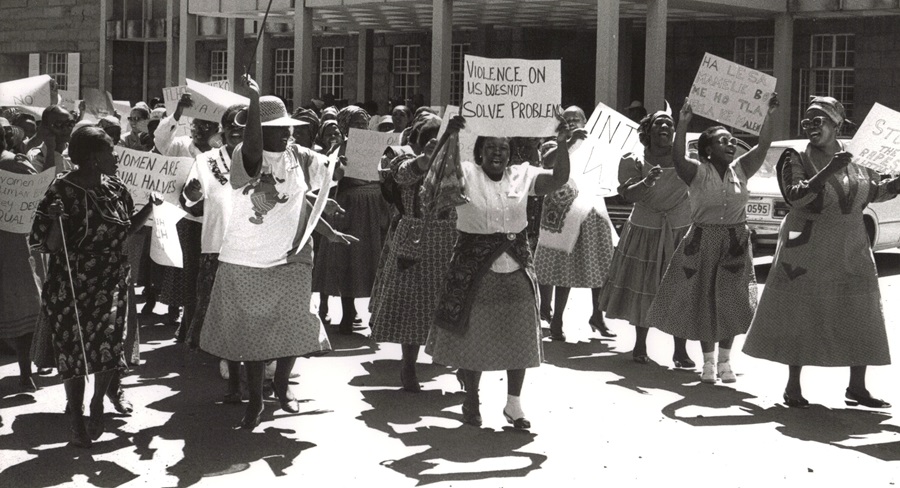

The article examines how men themselves are positioned within unequal economic and political structures while asking who benefits when masculinity becomes a vehicle for restoring patriarchal authority. Ultimately, the struggle over masculinity is also a struggle over power, citizenship, economic justice and women’s liberation.
Across Global Africa, the meaning of being a man is being contested. Economic insecurity, unemployment, political instability, religious conservatism, migration, changing family structures and the growing visibility of women in public life are challenging older expectations of men as providers, protectors and unquestioned household authorities. Yet these pressures have not simply weakened patriarchy. In many settings, they have also encouraged its reassertion.
The question, therefore, is not whether African masculinity is experiencing a “crisis”, but what happens to gendered power when established forms of masculinity become increasingly difficult to sustain. Scholars have cautioned against treating African men as a homogeneous category or assuming that masculinity everywhere follows the same trajectory. Masculinities are multiple, fluid and shaped by class, age, religion, location, history and political circumstances.[1]
This article argues that contemporary economic and political pressures are producing contradictory outcomes. Some men are developing more flexible and egalitarian understandings of gender, while others are responding to uncertainty by reclaiming authority over women, children and household resources. The result is not the disappearance of patriarchy but a struggle over its future.
For generations, the ideal of the African male provider has been central to many constructions of masculinity. A “successful” man is often expected to secure employment or income, establish a household, marry, provide for children and demonstrate authority. These expectations are particularly difficult to fulfil in economies characterised by unemployment, precarious work, declining purchasing power and widening inequality.
The problem is deeper than individual male failure. Economic restructuring has altered the material foundations upon which traditional masculinity was built. Young men may be educated but unable to find stable employment. Others survive through informal work, migration, entrepreneurship or unstable forms of self-employment. Scholars examining African masculinities have linked these economic transformations to difficulties in achieving socially recognised markers of adulthood, including marriage, fatherhood, home ownership and breadwinning.
This creates a profound contradiction. A man may be socially expected to exercise authority while lacking the economic resources traditionally used to justify that authority. When breadwinning becomes difficult, masculinity itself becomes unstable.
Yet economic vulnerability does not automatically produce progressive gender relations. In some circumstances, the loss of economic power can generate attempts to restore authority elsewhere— particularly within the household. Control over women’s mobility, relationships, employment, sexuality or economic decisions can become a substitute for declining material power.
This is why gender justice cannot be separated from economic justice. It is insufficient to tell men to abandon patriarchal behaviour without addressing the economic structures that shape their lives. At the same time, economic hardship cannot become an excuse for maintaining women's subordination.
Struggle over Masculinity
Religion occupies an important and complex position in the struggle over masculinity. African religious institutions can reproduce patriarchal ideas, but they can also provide spaces for alternative understandings of male responsibility, care and social justice.
Research on religion and masculinities in Africa shows how religious ideas can become intertwined with male authority and gender hierarchy. In some contexts, religious conservatism presents male leadership within the family as morally necessary, while women are expected to embody obedience, modesty and domestic responsibility.[2] At the same time, African scholarship cautions against treating religiously informed gender relations as uniform, emphasizing the ways men and women negotiate, reinterpret and sometimes contest religious prescriptions in everyday life.[3]
The political significance of this development lies in the language through which patriarchy is defended. Gender hierarchy may no longer be presented simply as male privilege. It can be described as “tradition”, “family values”, religious obligation or cultural authenticity.
This is particularly important because contemporary gender struggles are often framed as conflicts between “African culture” and feminism. Such arguments deserve closer scrutiny. Africa has never possessed a single gender system. African societies have historically contained diverse arrangements of authority, kinship, inheritance, labour and political participation. Consequently, the claim that patriarchy represents an unchanged and uniquely African tradition is historically and politically problematic. Although some anthropological and feminist accounts have tended to characterize African societies primarily through patriarchal relations, African feminist scholarship has demonstrated that precolonial gender and authority systems were considerably more diverse. Ifi Amadiume’s study of the Nnobi of southeastern Nigeria, for instance, demonstrates that sex and gender did not necessarily coincide and that women could acquire significant economic, political and juridical authority. Her analysis of “male daughters” and “female husbands” illustrates how gendered roles could be institutionally flexible rather than rigidly determined by biological sex.[4] Later scholarship revisiting Amadiume similarly emphasizes the importance of lineage, seniority, kinship and local institutions in understanding African gender systems, rather than assuming a universal patriarchal model.[5]
In Nigeria, for example, Harris's study of Kaduna found that economic instability encouraged some men to reaffirm gender norms centered on breadwinning and control over women and children, while religious institutions could provide both material support and legitimacy for these positions.[6]
But religion need not produce only conservative masculinities. Religious leaders and institutions can also become agents of transformation. The important question is therefore not simply whether religion is “good” or “bad” for gender equality, but which interpretations of religious authority are being mobilised, by whom, and with what consequences for women's citizenship and autonomy.
Political instability and militarisation add another dimension. In societies experiencing conflict or insecurity, masculine ideals can become closely associated with strength, courage, protection and the capacity to exercise force. The male body becomes symbolically connected to the defence of family, community and nation.
Militarisation can, therefore, strengthen a particular model of masculinity: the man as protector and authority figure. This protectionist framing is particularly problematic in conflict settings, where rape and other forms of sexual violence have repeatedly been deployed as tactics of war and instruments of political and social control. The issue, therefore, is not simply that women require protection from violent men or armed actors; it is that gendered systems of power can construct women as bodies to be protected while simultaneously denying them equal political agency, economic autonomy and decision-making power. The United Nations has explicitly recognized conflict-related sexual violence as a peace and security issue and rejected the idea that rape is an inevitable by-product of war.[7]
This relationship between masculinity and militarisation should not be understood narrowly in terms of armed conflict. Militarised thinking can enter everyday political and social life through authoritarian policing, political intimidation, aggressive political rhetoric and the normalisation of force as a means of resolving disputes.
The danger is that insecurity becomes a justification for restricting women's freedoms. When societies are told that “strong men” are necessary to restore order, demands for gender equality can be portrayed as secondary to security. Patriarchy thus acquires a political language of protection.
Yet women are not simply passive victims of these processes. Across the continent, feminist movements, community organisations, journalists, lawyers, trade unionists and human-rights activists continue to challenge gendered violence and exclusion. Their interventions demonstrate that security cannot be defined merely as the protection of territory or political authority. Security must also mean freedom from domination within the home, workplace and community.
Moving Beyond Patriarchy
The changing position of women is perhaps the most important factor unsettling conventional masculinity. Women are increasingly visible in education, professional employment, entrepreneurship, politics, media and civil society, challenging the assumption that African women remain confined to traditional domestic roles. This transformation is nevertheless uneven. Rwanda, for example, has demonstrated the possibility of substantial female political representation, while Nigeria presents a striking contrast: women currently hold only 4.2% of seats in the House of Representatives and 3.7% in the Senate.[8] The figures reveal an important paradox: women's educational, professional and civic participation has expanded significantly, yet access to formal political power remains deeply unequal. The contemporary struggle over gender therefore concerns not simply women's visibility but their conversion of social and economic participation into genuine political authority and decision-making power. These changes challenge the assumption that men should automatically occupy positions of authority.
Women’s economic independence can be particularly disruptive to patriarchal arrangements because it weakens the traditional link between male provision and household power.
This transformation should not be understood as a “war between men and women”. It is a struggle over the distribution of resources, recognition and decision-making power.
The feminist challenge is, therefore, not simply about allowing women to occupy positions previously reserved for men. It also asks whether those positions—and the institutions that created them should themselves be transformed.
African feminist thought is especially important here because it challenges approaches that treat African women merely as subjects of external development projects. Gender justice must emerge from the histories, struggles and intellectual traditions of African women themselves.
At the same time, men must be understood as participants in the transformation of gender relations. Not every man benefits equally from patriarchy. Class, age, ethnicity, disability, geography and economic status shape men's access to power. Some men possess considerable political and economic privilege; others experience unemployment, poverty and social exclusion.
This does not erase male privilege within patriarchal institutions. Rather, it demonstrates why the category “African men” requires careful analysis. Contemporary scholarship increasingly rejects monolithic accounts of African gender relations and instead emphasizes their historical, cultural and institutional diversity. Scholars such as Amadiume (1987), Oyěwùmí (1997), and Magadla, Magoqwana and Motsemme (2021) demonstrate that gender, authority and social roles in African societies have been shaped by lineage, seniority, kinship, political institutions and colonial transformations rather than by a single, unchanging patriarchal order.[9]
The challenge is to move beyond both romanticising traditional masculinity and portraying African men as inherently violent or patriarchal. Such stereotypes reproduce the very essentialism that serious scholarship on masculinities seeks to overcome.
What is needed is a politics of transformative masculinity. This means redefining strength away from domination and towards responsibility; redefining leadership away from control and towards accountability; and redefining fatherhood away from authority alone and towards care.
Economic policy has an important role to play. Decent employment, social protection, affordable education and opportunities for young people can reduce the economic pressures that intensify struggles over masculine identity. But economic policy alone is insufficient. Gender-transformative education, feminist organising and public conversations about masculinity must accompany material reforms.
There are already examples of such possibilities. Initiatives in Senegal demonstrate that gender transformation need not dismiss community and religious authority but can work through these institutions to renegotiate gender norms. Tostan’s Reinforcement of Parental Practices (RPP) programme, for example, engaged fathers alongside religious and traditional leaders in challenging the assumption that childcare was exclusively women’s responsibility. In 2013, Tostan convened Islamic religious leaders from 66 Mandinka communities to connect positive parenting practices with Islamic teachings, while the programme encouraged men to become more actively involved in childcare and children's education.[10] Similarly, the Senegal Urban Reproductive Health Initiative (ISSU) trained Muslim religious leaders to promote family planning through sermons, community dialogues, radio and television. Research found that exposure to these interventions was associated with greater discussion of family planning between men and their partners and with reported modern contraceptive use.[11] These examples suggest that gender transformation can engage established religious and community authorities as potential agents of change rather than treating them solely as obstacles to gender equality.
The objective should not be to create a new model of the “perfect man”. It should be to create social conditions in which men do not have to prove their worth through domination, economic success or control over women.
Masculinities in Global Africa are under pressure, but pressure does not produce a single response. Economic insecurity can undermine traditional male authority while simultaneously encouraging its reassertion. Religious conservatism can reinforce patriarchal structures, yet religious communities can also support more caring and egalitarian masculinities. Militarisation can elevate masculine ideals of strength and protection, while feminist and democratic movements challenge the political systems that depend upon those ideals.
The central struggle is therefore not simply about men becoming “better”. It is about transforming the structures that define power between women and men.
Gender justice requires confronting patriarchy, but it also requires confronting unemployment, inequality, authoritarianism and exclusion. African feminist movements have long demonstrated that women's liberation cannot be separated from wider struggles for economic and political justice.
The future of masculinity in Africa should not be measured by whether men retain or lose authority. It should be measured by whether African societies can build relationships in which authority is replaced by equality, control by mutual responsibility, and domination by shared citizenship.
That is the deeper challenge of masculinities under pressure: not how to restore the old order, but how to imagine a more just one.
Samuel Akpobome Orovwuje is a development consultant, public policy practitioner, author, and Executive Director of the Africa Development Studies Centre (ADSC). Abuja, Nigeria His work focuses on development, governance, leadership, public policy, gender, and Africa’s political economy, with particular interest in decolonial and people-centered approaches to development
Endnotes
[1] Ouzgane, L., & Morrell, R. (Eds.). (2005). African masculinities. Palgrave Macmillan.
[2] Van Klinken, A. S. (2011). Male headship as male agency: an alternative understanding of a ‘patriarchal’African Pentecostal discourse on masculinity. Religion and Gender, 1(1), 104-124.
Harris, C. (2016). Masculinities, new forms of religion and the production of social order in Kaduna City, Nigeria. Journal of Religion in Africa, 46(2–3), 251–287.
[3] Van Klinken, A. S. (2011). Male headship as male agency: an alternative understanding of a ‘patriarchal’African Pentecostal discourse on masculinity. Religion and Gender, 1(1), 104-124.
[4] Amadiume, I. (1987). Male daughters, female husbands. Zed Books.
[5] Magadla, S., Magoqwana, B., & Motsemme, N. (2021). Revisiting Ifi Amadiume's questions on gender, sex and political economy. Journal of Contemporary African Studies, 39(4), 517–533.
[6] Harris, C. (2016). Masculinities, new forms of religion and the production of social order in Kaduna City, Nigeria. Journal of Religion in Africa, 46(2–3), 251–287.
[7] United Nations Security Council Resolution 1820 (2008), S/RES/1820(2008). https://www.un.org/shestandsforpeace/content/united-nations-security-council-resolution-1820-2008-sres18202008.
See also https://www.un.org/shestandsforpeace/sites/www.un.org.shestandsforpeace…
[8] Inter Parliamentary Union (2006). Global data on National Parliaments: Nigeria (House of Representatives & Senate). https://data.ipu.org/parliament/NG/NG-LC01/data-on-women/
[9] Amadiume, I. (1987). Male daughters, female husbands. Zed Books.
Oyěwùmí, O. (1997). The invention of women: Making an African sense of Western gender discourses. University of Minnesota Press.
Nzegwu, N.U. (2012). Family matters: Feminist concepts in African philosophy of culture. SUNY Press.
Magadla, S., Magoqwana, B., & Motsemme, N. (2021). Revisiting Ifi Amadiume's questions on gender, sex and political economy. Journal of Contemporary African Studies, 39(4), 517–533.
[10] Tostan International (2014). Religious leaders in Senegal make Healthy Child Development Priority. https://tostan.org/religious-leaders-senegal-make-healthy-child-develop…
[11] Soura, A. B., et al. (2018). The Senegal Urban Reproductive Health Initiative: A longitudinal programme impact evaluation. Contraception, 97(5), 439–444.
Suggested Readings
Ammann, C., & Staudacher, S. (2021). Masculinities in Africa beyond crisis: Complexity, fluidity and intersectionality. Gender, Place & Culture, 28(6), 759–768.
Kane, G. K., et al. (2018). Men's exposure to family-planning programming and reported discussion with partners: The case of urban Senegal. PLOS ONE, 13(9), https://journals.plos.org/plosone/article?id=10.1371/journal.pone.02040…
Mbah, N. L. (2023). African masculinities. Oxford Bibliographies in African Studies. Oxford University Press.
Silberschmidt, M. (2005). Poverty, male disempowerment and male sexuality: Rethinking men and masculinities in rural and urban East Africa. In L. Ouzgane & R. Morrell (Eds.), African masculinities. Palgrave Macmillan.