



Horace Campbell is a peace and social Justice activist. He is also Professor of African American Studies and Political Science at Syracuse University and Chairperson of the Global Pan African Movement, North American Chapter. He is the author of Global NATO and the Catastrophic Failure in Libya, Monthly Review Press, 2013.

Following a trip to Vietnam, Horace Campbell charts the country’s history of anti-colonial struggle and its war with the US. At a time of ever greater cooperation in the form of the Vietnam–Africa International Forum, Campbell underlines what the African and Vietnamese people can learn from each other about their respective histories of resistance.
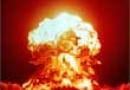
It is 65 years this August since the US dropped atomic bombs on the cities of Hiroshima and Nagasaki, killing hundreds of thousands of unarmed Japanese civilians, writes Horace Campbell. Although US history books say that thousands of servicemen were saved as a result of those two bombings, the reality, says Campbell, was different.
The peace movement in US may no longer be demonstrating on the streets, writes but it isn’t dead, it has simply moved online. Horace Campbell looks at how a new generation of activists is harnessing electronic networks to democratise information and expose attempts by government and corporate interests to control public narrative about war, with reference to 'the game-changing effects of WikiLeaks'.
History and Africa will always remember Basil Davidson, not just for being a Pan-Africanist and prolific revolutionary scholar, but also for being a humanist, writes Horace Campbell.
New initiatives at the United States’ Department of Defense indicate that the militarisation of the social sciences is high on the agenda of its forward strategy for fighting wars, cautions Horace Campbell. With academics being encouraged to produce intelligence on Africa, ‘[i]ndependent and progressive scholars and activists must intensify the peace work so that there is a new social science infrastructure that can work hand in hand with the revolutionary foment that is brewing’ on the continent says Campbell.
Buoyed by the wave of pan-African and anti-racist sentiment resulting from South Africa's World Cup, Horace Campbell stresses that such momentum must be continued in the struggle for a more peaceful and just world.
The memory and legacy of the late Tajudeen Abdul-Raheem is alive in Funtua, Horace Campbell discovers during his first visit to Abdul-Raheem’s homeland. Impressed by the extraordinary work towards providing education through Hauwa Memorial College and the Pan-African Development Education and Advocacy Programme, Campbell calls on Pan-Africanists everywhere to provide support to keep the projects going.
Ghana’s World Cup victory over the United States was also victory for Pan-Africanism, writes Horace Campbell. With Africans around the world rallying in support of the Black Stars and unified in their celebrations of the win, the team gave us a glimpse of a 21st century continent that is ‘united, strong and peaceful’.
Christopher ‘Dudus’ Coke, alleged drug lord and leader of Jamaican gang, the Shower Posse, was arrested on 22 June. Coke’s arrest, writes Horace Campbell, opens up the possibility to ‘reveal the full extent of the corruption of the politics of Jamaica and the Caribbean by their rulers in collaboration with the intelligence, commercial and banking infrastructures of the United States’. Noting that 'political retrogression, gangsterism and violence have now reached the proportions that were similar to the period of enslavement', Campbell says the 'struggle against the cocaine business in the Caribbean is a struggle for a new form of society.'
Reflecting on the anniversary of the Soweto uprising, ‘lovers of liberty everywhere continue to be inspired by the generations of freedom fighters and the youth who sacrificed to change Africa’, writes Horace Campbell. Although the romance with the old liberation forces is coming to an end, says Campbell, ‘there are renewed energies for substantive change all across Africa’, and it ‘is on the cultural front where the explosive energies are most manifest’.
The 13 June 2010 will be the 30th anniversary of the assassination of Guyanese historian and activist Walter Rodney. In attendance at various groundings held in Nigeria to commemorate Rodney's life and work, Horace Campbell discusses the political climate in the country and sense of optimism around political mobilisation.
Israel’s military attack on Gaza-bound humanitarian ships, the Freedom Flotilla, on 30 May, brings questions of piracy and the violation of international laws into sharp focus, writes Horace Campell. But the incident is only the latest example of the Israeli government’s policies to ‘dehumanise the Palestinian people and those in solidarity with them’, observes Campbell, as he calls for ‘peace-loving citizens all over the world’ to join forces with ‘peace-loving Israeli citizens and Palestinians who stand for peaceful coexistence to change the present apartheid leadership in Israel’.
Scholars and activists from all over the world came together on 22–25 May to celebrate Kwame Nkrumah’s contributions to Pan-Africanism at an international centenary colloquium held in Accra, Ghana. Conference attendee Horace Campbell finds himself heartened by the recent resurgence of interest in Pan-Africanism among a younger generation, and inspired by ‘the convergence of the energy of the youth’ with the insights of Nkrumah’s contemporaries.
As revelations of child abuse by priests rock the Catholic Church to its highest levels, Horace Campbell asks if the scandals will prompt sufficient institutional self-examination for a hypocrisy-riddled church to embrace a theology that administers to ‘the needs of the poor’ and oppressed rather than serving as ‘a religion of state power’. The church has allowed itself to be overtaken by the fundamentalist forces of the past four decades, Campbell argues, helping to stoke ‘the fires of intolerance’ and hate rather than encouraging a ‘gospel of sharing and liberation’ to flourish.
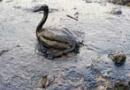
The massive oil spill triggered by the explosion of Deepwater Horizon, an oil rig in the Gulf of Mexico, is raising awareness among US citizens of the lethal side-effects of the petroleum industry, the negative impacts of which have largely been felt in ecosystems and communities abroad, writes Horace Campbell. Moreover, following on the Copenhagen and Cochabamba conferences on climate change, it has ‘created another base for cooperation and coordination among environmental activists in all parts of the world’ to campaign for oil to be left ‘in the ground and beneath the ocean floor’.
Marking International Workers' Day on 1 May, Horace Campbell argues that it is only through re-focusing on workers' rights and representation and genuine democracy for all that African people will be able to fully liberate themselves from the exploitation of international capitalism.
Since the dawn of time, Africans have had a conception of the universe in which there was ‘no separation between spirit and matter’ and it was ‘impossible to develop ideas of domination over nature’, writes Horace Campbell. While this world view was considered ‘backward and primitive’ in comparison with Western materialism and the perceived objectivity of enlightenment approaches, ecological crises and new developments in physics suggest that African theories on ‘the relationship between spirit and matter are not backwardness’ after all.
There is much uncertainty around the 2 March arrest of Agathe Habyarimana, widow of former Rwandan president Juvénal Habyarimana. Following a visit to Rwanda by French President Nicolas Sarkozy, Agathe was arrested and subsequently released on bail, writes Horace Campbell, a turn of events that appears but a part of the murky collusion between Rwanda and France around the militarisation of the eastern DR Congo.
US President Obama has signed into law a historic bill to extend medical care to 94 per cent of US citizens, adding another 32 million people to the healthcare system. But these reforms, heavily influenced by corporate interests, will not help the poor, argues Horace Campbell. In a society that sees health as a privilege rather than a right, the bill is only the start of the fight for universal healthcare, Campbell writes.
Following Muammar al-Gaddafi's suggestion of a break-up of Nigeria in the wake of the crisis around Jos, Horace Campbell unpacks the Libyan leader's claims to operate in the interests of African unity.