



Trump’s Strike on Nigeria Will Not End Well for President Bola Tinubu
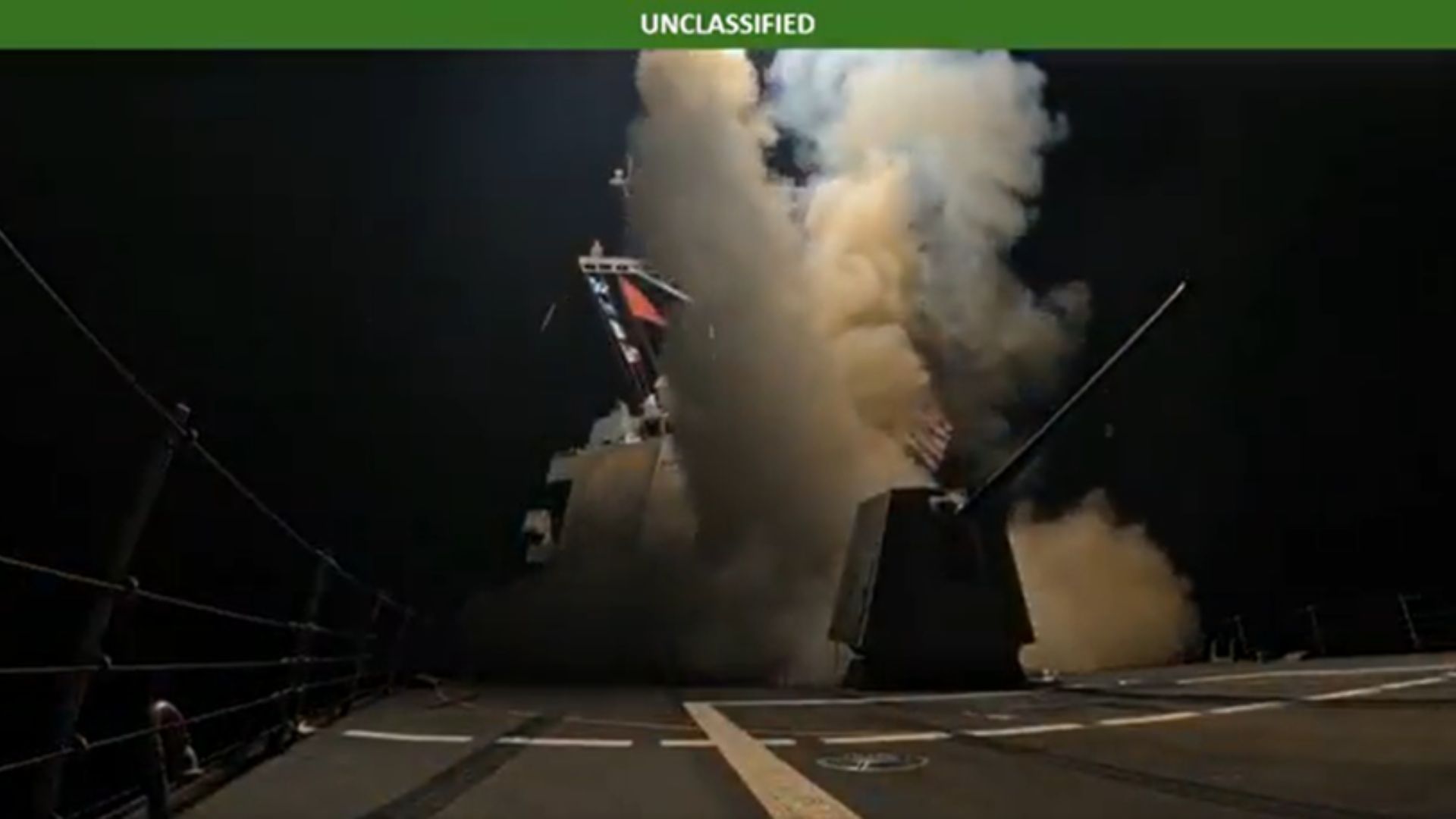
A deep dive into the repercussions of Trump’s military intervention for Nigeria’s president.
There are three reasons why the Christmas Day bombing of Nigeria will not go well for President Tinubu.
Firstly, the Nigerian working peoples are too sophisticated to be taken in by the mantra that there are irredeemable divisions between peoples of different religious faiths.
Secondly, the Nigerian professional strata, including nationalist military personnel will never take kindly to being tools of French or US destruction of Africa. Nigerians grew up learning of the militant stand that Nigeria took in opposing apartheid and how this claimed the life of General Murtala Mohammed.
Thirdly, this destabilization and military adventurism have placed Tinubu in the midst of the military ruptures between France and the United States.
These three factors render the President of Nigeria naked and exposed to any serious organized intervention from the people which could come from a more mature uprising than the #EndSARS campaign of 2020. The End SARS campaign was a self-organized social movement and mass protest against police brutality in Nigeria, centered on demanding the abolition of the Special Anti-Robbery Squad (SARS)—a notorious police unit long associated with extortion, torture, killings, and harassment, especially of young Nigerians. The youths who were at the forefront of that movement are still politically networked and are opposed to imperial domination.
For these three reasons, we argue that Tinubu has weakened the Presidency of Nigeria and his subservience to Trump and US imperialism will not go well for him. These reasons emanate from an understanding of the place of Nigeria in the context of the present insurrectionist situation in Africa, especially with the working peoples of West Africa on the move.
The Announcement in the International Media, “Trump bombs Nigeria”
On November 1, 2025, CNN reported that President Donald Trump had “ordered the Defense Department to prepare for possible military action in Nigeria as he continue[d] to accuse the nation of not doing enough to stem violence against Christians – an accusation Nigeria has repeatedly denied.” On December 25, 2025, Christmas day, Trump followed through on his order. According to the Associated Press:
“President Donald Trump said the United States launched a “powerful and deadly” strike against forces of the Islamic State group in Nigeria, after spending weeks accusing the West African country’s government of failing to rein in the targeting of Christians. In a Christmas evening post on his social media site Thursday, Trump did not provide details or mention the extent of the damage caused by the strikes in the northwestern state of Sokoto. A Defense Department official said the U.S. worked with Nigeria to carry out the strikes and that they’d been approved by Abuja.”
This military operation in Nigeria, occurring with no debate in or authorized by the US Congress, was a diversionary tactic to distract attention from interconnected cries of US capitalism.
Ten days after bombing Nigeria, the United States abducted the President of Venezuela in Caracas and proclaimed that the USA would run Venezuela. It was noted in all corners of the world that the government of the United States was breaking international law by its military action. The accompanying seizure of Venezuelan oil exposed the fundamental weakness of the US economic standing and its reliance on brute force to maintain the dollar as the currency of world trade. Nigeria is the major and most important African peg in this petrodollar system.
Nigerian Capitalists in the Crosshairs of US Imperialism
Nigeria is one of the principal oil producers in Africa. It is a country with the largest population of Africans on the planet. The capitalist class (comprising a coterie of individuals who are extremely rich) hold the levers of political and economic power inside Nigeria and work overtime to divide the working peoples. The divisions of the working people ensure that the consciousness of a significant portion of the population is blunted by the politicization of ethnicity, regionalism and religion. Over the past thirty years, one faction of the capitalist class in Nigeria has deployed religious fundamentalism as a tool to manipulate unemployed and insecure sections of the population, while the vast majority wallow in extreme poverty. The contradiction is that Nigeria has abundant wealth and resources in terms of people and minerals. Given the right conditions and application, this wealth could benefit not just Africa but the entirety of humanity. But this has not happened. Understanding the militant Pan African consciousness of the people of Nigeria, the leaders have sought to represent themselves as nonaligned in international politics.
By December 27, 2024, Nigeria's ruling class had strategically renewed a 15-billion-yuan currency swap agreement with China, hedging against the volatility of the petrodollar while maintaining the dollar-denominated exports necessary to sustain their ties to the international banking system. Building on this fiscal pivot, Nigeria officially accepted BRICS partner status on January 17, 2025, signaling a long-term intention to join the ranks of nations like Saudi Arabia, the United Arab Emirates and Iraq: oil producing countries that hedged and are calculating whether to integrate more deeply into the Petro-Yuan to bypass traditional Western financial gatekeepers. Russia, Iran and Venezuela trade their oil outside of the petrodollar system because of US sanctions and have been deepening the infrastructure for another international payment system. This alternative international payment system is being built on the mBridge system, a multi-central bank digital currency (mCBDC) platform that uses distributed ledger technology to allow central banks and commercial participants to settle cross-border payments instantly and directly in local digital currencies. This mBridge system represents a major threat to the US dollar because it creates a ‘decentralized’ financial rail that completely bypasses the US-led SWIFT network and New York-based clearing banks, effectively neutralizing the US government's ability to enforce global financial sanctions. Venezuela was taken out of this alternative MBridge system in January 2026 when the President was abducted and the US militarily seized the country’s oil to sell.
Saudi Arabia’s relationship with the mBridge system is the centerpiece of its sophisticated ‘hedging’ strategy. While the Saudi rulers remain officially pegged to the US Dollar, the current holders of state power are actively building the technical infrastructure to bypass it should geopolitical or economic conditions shift. This is what the current leaders call multi alignment.
Nigeria has been trying to pursue a path of multi alignment even though its capitalist class lacks internal unity and stability. After Nigeria accepted BRICS partner status on January 17, 2025, the US Treasury placed the country on a high-level monitoring list and used its ‘Country of Particular Concern label’ to warn that any move toward the Petro-Yuan could lead to frozen assets and a loss of access to the international banking system (controlled by the United States). On July 6, 2025, President Trump issued a direct threat of one hundred percent tariffs and a complete cutoff from the US market if Nigeria continues to follow BRICS policies or attempts to replace the US dollar in its oil trade.
The use of the "Muslim-Christian" sectarian narrative by the US government intensified significantly as a response to Nigeria's 2024 economic pivot toward China and the Petro-Yuan system. On October 31, 2025, President Trump officially redesignated Nigeria as a Country of Particular Concern under the International Religious Freedom Act. On November 1, 2025, Trump posted on social media that the US would go into Nigeria "guns-a-blazing" to save the "Great Christian population" if the Nigerian government continued to allow the killings of Christians. On December 25, 2025, the US Africa Command launched precision airstrikes (including Tomahawk missiles) against the Nigerian people claiming that the US was attacking the Islamic State enclaves in Northwest Nigeria. Playing to the fundamentalist Christian forces inside the Trump political universe, Trump announced these strikes as a "Christmas present" to the world, claiming the targets were "scum fighters" who were "viciously killing innocent Christians." This simplified narrative ignored the fact that the majority of victims in those regions are often Muslim, serving to polarize the Nigerian public and pressure the Tinubu administration.
Narratives of Fighting ISIS in Nigeria
The ostensible reason for this strike was that the United States was striking at the so called ISIS, specifically a group known as the Islamic State West Africa Province, or ISWAP. This group, which was supposed to be a breakaway group from Boko Haram, operated in Borno State in Northeastern Nigeria. One faction of these anti-democratic elements had abducted over 200 schoolgirls in Chibok, a town in Borno State, in April 2014 and transported them into the Sambisa Forest. As of January 2026, 91 of the original Chibok schoolgirls remain missing or are still believed to be in captivity, while more than 1,400 children have been abducted in subsequent attacks since 2014.
After the kidnapping of the Chibok girls in 2014, the Barack Obama administration deployed the US military to collaborate with the Nigerian military. After fact-finding missions in Northeastern Nigeria, Chad and Cameroon, the US military retreated when it found out that these hostile and repressive groups labelled, ‘terrorists’, were collaborating with France. Military liaison officers from the Lake Chad Basin Commission learned that the armed groups, commonly described as Islamic extremists, were reportedly being facilitated and coordinated through channels linked to French intelligence. The US military under Obama retreated from its pledge to assist the Nigerian military to fight Boko Haram. This retreat of the US military in the region was even more dramatic after the killing of US military personnel at Tongo Tongo, Niger in 2017.
France and Buhari Presidency
In the wake of the Chibok Girls abduction, General Muhammadu Buhari was democratically elected as president of Nigeria in 2015, as he vowed to eliminate Boko Haram. He advocated for Nigerians “to put aside politics and all other divisions to crush the insurgency … fanned by mindless bigots masquerading as Muslims.”
In late 2014 and early 2015, an effort by the Lake Chad basin countries of Cameroon, Chad, Niger, and Nigeria, combined efforts and resources to battle against ‘terrorists’ that threaten all four states. The Multinational Joint Task Force (MNJTF) had committed about 8,000 troops and conducted periodic operations in the area.
The reorganization of the Multinational Joint Task Force (the MNJTF) working out of N’djamena, Chad had placed the French on the defensive in the West Africa region even when it was trumpeting the G5 Sahel Joint Force, commonly known as the G5 Sahel. This G5 Sahel Joint Force consisted of five West African countries — Burkina Faso, Mali, Mauritania, Niger, and Chad — pierced through military intelligence and monetary blackmail to support France in its campaign to be the dominant imperial force in West Africa. By 2018, the MNJTF had successfully degraded Boko Haram from a conventional army holding territory the size of Belgium to a fragmented insurgent group. Driven out of Borno State, in Northeastern Nigeria, Boko Haram broke into factions operating out of Niger and Cameroon. Their French handlers, who had freer room for maneuver in Niger and Cameroon, protected the Boko Haram who were ensconced among the quarter million refugees in Niger.
Niger as a base for Boko Haram became challenging after the creation of the Alliance of Sahelian states. It was at this time that there was the announcement of a new ‘ISIS’ backed group in Sokoto state across the border from Niger. These so-called terrorists were attacking civilians in Nigeria. Although western media presented the attacks as attacks on Christians, the majority of the citizens of Northern Nigeria follow African religions and the Islamic faith.
Narrative of Killing Christians
Once the Trump America First leadership assumed power again in 2025, like-minded politicians in Nigeria began to complain that Christians were being killed in Nigeria. The politicization of religion by conservative evangelicals in the United States and Europe reverberated across Africa, fueling the rise of conservative religious movements that sought to align political ambitions with faith-based agendas linked to the Make America Great Again (MAGA) ideology. The claim that Christians were being targeted in Africa was carried far and wide by religious broadcasts and found resonance among Africans following conservative Christianity in the USA and Europe. Conservative preachers called on higher powers to protect President Trump while political leaders, such as the leader of the Peoples Democratic Party (PDP), called on President Trump in November to save Christians and protect democracy in Nigeria. The National Chairman of a faction within Nigeria’s Peoples Democratic Party (PDP) stated, “I want to call on President Trump… What is at stake is not just genocide against Christians, he should come and save democracy in Nigeria. Democracy is under threat.”[1]
What remains ironic was that the very same Trump that was undermining the rule of law in the USA and unleashing violence against US citizens was being called upon to ‘save democracy’ in Nigeria. The reality was that there was a monetary angle to this call.
Money for Faith-based Initiatives.
This call on Trump to save democracy in Nigeria was also part of the jockeying to get access to some of the US $2bn that was being distributed to western sanctioned faith-based groups. Following the official dissolution of USAID on July 1, 2025, U.S. ‘aid’ to Nigeria has transitioned from a broad imperial model to a transactional, ‘FBO-first’ (Faith-Based Organization) strategy managed directly by the U.S. Department of State. The faith-based organizations that were supported were in the main conservative patriarchal religious groups enmeshed in the global MAGA networks. Under this new framework, a landmark $2.1 billion bilateral health agreement leverages the existing infrastructure of over 900 Christian clinics and hospitals to deliver essential care, bypassing secular bureaucracies in favor of more ideologically oriented religious networks. This restructured aid is explicitly tied to "America First" diplomatic priorities, requiring the Nigerian government to provide $2.9 billion in co-investment and implement specific security reforms to protect religious minorities as a condition for continued funding.
Confusion in the Bola Tinubu Administration.
The demands of the French and the demands of the MAGA forces created confusion in the Tinubu administration. France, while managing and supporting anti-people elements, was urging Nigeria to launch military strikes against Niger after the military intervention in politics in Niger in 2023. Together with Cote D’Ivoire and Senegal under Macky Sall, Nigeria was doing the bidding of France in West Africa. Popular opinion prevented military strikes against the new government in Niger in 2023. In 2025, after the attempted military intervention in Benin, the Tinubu administration launched military strikes against Benin on behalf of France.
Because of the murky past of Bola Tinubu in the United States, President Tinubu has made France one of his most regular international destinations since taking office, visiting at least eight times between 2023 and 2025. Reporters in Nigeria noted that he has a long-standing personal affinity for France and has spent more days there than in any other foreign country during his presidency. This benign interpretation concealed the linkages between the Tinubu branch of Nigerian capital and French imperialism. When the Alliance of Sahelian states kicked France out of West Africa, the French needed Nigeria more than ever. This relationship deepened in 2025 when Senegal kicked the French military forces out of Senegal. In November 2025, when the class struggles in Benin heightened to the point of creating divisions between the executive and the Military, France turned to Nigeria to militarily bomb that section of the Benin military that is opposed to France.
Nigeria lacks the military resources to sustain the type of alliance being demanded by France. Meanwhile, external pressures intensified, contributing to conditions that led to the opportunistic Christmas Day attack in Sokoto State.
Nigerian media commentators emphasized that Sokoto State, predominantly Muslim and often the target of terrorist violence, lies far from ISWAP’s main base in northeastern Nigeria—despite ISWAP being the group most clearly linked to the Islamic State. According to the U.S. Africa Command, the strikes were in Sokoto State, on the country's northwestern border with Niger. Nigerian Foreign Minister Yusuf Maitama Tuggar told the BBC it was a "joint operation" and had "nothing to do with a particular religion".[2]
Tuggar said the strikes had been planned "for quite some time" using intelligence provided by Nigeria. He also did not rule out further strikes. Tuggar said the strikes had been planned "for quite some time" using intelligence provided by Nigeria, igniting memories of US imperialism in Africa.
Response of the professional classes and patriotic Nigerians
The professional response to the Christmas Day 2025 airstrikes was characterized by profound anger and the humiliation of a society that prided itself at the forefront of protecting African sovereignty. There were commentaries from academics, cultural workers, journalists, trade unionists, patriotic businesspersons and professionals over the erosion of the Nigerian state’s secular and sovereign foundations.
For the Nigerian legal and academic classes, the primary concern is the "sectarianization" of national security. Scholars at institutions like the University of Lagos and members of the African Bar Association have published critiques arguing that by framing the strikes as a "defense of Christianity," the U.S. has effectively validated a "Crusader" narrative.
It is important here to spell out the opposition from legal experts on the Christmas day attack. The Nigerian legal community sought the umbrella of the African Bar association to launch a scathing critique of the attack and indirectly the government of President Tinubu. The statement by the AfBA noted,
"The US military operation for the protection of Christians was couched in terms which satisfied the religious salvific missionary objectives of the American President's far-right evangelical base. It was not to fulfill the security needs of all Nigerians even though it is widely known that the terrorist attacks are multi-purpose in nature with criminal tentacles spreading across national, transnational and international borders."[3]
The statement from the African Bar association drew from international law to condemn the attack:
“AfBA recognizes that the UN Charter -Articles 2(4) outlaws the violation of the sovereignty of state members, circumscribed only by UN Charter Chapter VII operations -Article 42, Self-defence or collective self-defence -Article 51 and the UNGA United for Peace Resolution 377 of 3rd November 1951. AfBA is concerned that the USA military operation in Nigeria did not fall within any of these categories.”[4]
The overwhelming sentiment in Nigeria was to remember the 1976 US support for the apartheid regime in its invasion of Angola. This moment in African history informed this section of the statement, which noted:
“AfBA is concerned that the reason provided by the US for its military operation is inconsistent with the objectives of the African Charter on Human and Peoples' Rights (Banjul Charter 1981) outlawing 'all forms of colonialism, neo-colonialism, aggressive foreign military bases and all forms of discrimination particularly based on race, ethnic group, colour, sex, language, religion or political opinion'".[5]
Lessons from the US support for apartheid and the OAU meeting of January 1976.
It was fifty years ago this month when Henry Kissinger, then Secretary of State of the United States, threatened Nigeria and attempted to force the Nigerians to support the military operations of the apartheid regime in Angola. Portugal had colonized Angola for over 300 years and was defeated in 1974. By 1975 after the defeat of Portugal by African freedom fighters, the United States and apartheid South Africa backed UNITA and FNLA in an effort to block the MPLA from taking full control of the government.[6] The MPLA had come to power in 1975 after the Cuban internationalist forces assisted in the military defeat of the apartheid army, along with their proxies. John Stockell documented in the book, In Search of Enemies, how the CIA supported Jonas Savimbi and the UNITA forces in their effort to undermine African independence. His information was corroborated by the historians of the Central Intelligence Agency in the book by Tim Weiner, entitled, Legacy of Ashes. This text revealed how Henry Kissinger and the 40 committee had supported what was described as a combined force that included UNITA, FNLA, American mercenaries, and South Africa's murderous military to thwart the independence of Angola.
On January 7, 1976, President Gerald Ford, guided by Kissinger, sent a letter to General Murtala Mohammed (then President of Nigeria) and other African leaders urging them not to recognize the MPLA but instead endorse a so-called government of national unity that included the factions supported by apartheid South Africa. While President Ford framed the MPLA as a legitimate group, he insisted it should not gain full power through what he called Soviet and Cuban support, effectively asking Nigeria to align with South Africa's stance against African liberation movements. The Frontline States of Africa supported the MPLA and had rejected the entreaties of the US government that Africa should militarily support the apartheid regime. The Organization of Africa Unity (OAU) was divided between those states supported by France and the USA that backed apartheid and the Frontline states. Nigeria was the key vote which would swing which way Africa would go in the extraordinary meeting of the OAU called in January 1976.
General Murtala Mohammed published Ford's letter in Nigerian newspapers, which ran with headlines like "To hell with America!" and called it a "Fatuous Insult to Black Africa."[7]
At the OAU summit on January 11, 1976, Murtala delivered his legendary "Africa Has Come of Age" speech, directly rebuking the U.S.:
"Rather than join hands with the forces fighting for self-determination and against racism and Apartheid, the United States policy makers clearly decided that it was in the best interests of their country to maintain White supremacy and minority regimes in Africa... Africa has come of age. It's no longer under the orbit of any extra continental power. It should no longer take orders from any country, however powerful. The fortunes of Africa are in our hands to make or to mar. For too long have we been kicked around; for too long have we been treated like adolescents who cannot discern their interests and act accordingly."[8]
Following this speech, the OAU recognized the MPLA government.
Thirty-two days later, on February 13, 1976, General Murtala Ramat Mohammed was assassinated in Lagos in what many Nigerians suspected was a CIA-backed coup attempt.
This episode represents one of the most significant moments of African defiance against U.S.-South African collaboration during the Cold War era. Every day that Nigerians pass through the Murtala Mohammed International Airport in Lagos, they are reminded of the treachery of the USA in the effort to undermine African independence. The Nigerian army that had recently emerged from the brutal civil war was professionalized and for the next twenty years the professional military, despite living under dictators such as Sani Abacha, was careful not to be puppets of any imperial state.
Thatcher and President Ibrahim Babangida seeking to bring Nigeria overtly on the side of imperialism
Twelve years later, in 1988 when the apartheid army was being defeated in the battles at Cuito Cuanavale, the Reagan administration dispatched Margaret Thatcher to Nigeria in order to recruit the Nigerian military on the side of apartheid, reversing the stand taken by the government of Nigeria since Murtala Mohammed. Thatcher's January 1988 visit to Nigeria exemplified the fact that neither Washington nor London understood the depth of anti-imperialist consciousness among Nigerians. Thatcher’s visit to Nigeria was met with massive anti-apartheid demonstrations by the working people of Nigeria. Thatcher publicly praised Babangida's neoliberal economic restructuring and sought to bring Nigeria into the network of supporters for apartheid South Africa that was managed by France via Burkina Faso and Côte d’Ivorie, Gabon, Morocco and other overt allies of Jonas Savimbi and apartheid. The visit revealed that while the Nigerian state could impose intensified austerity measures on the population, the military leadership dared not openly ally with apartheid South Africa.
After the apartheid army was defeated at Cuito Cuanavale later that year, Thatcher again visited Nigeria in 1989 seeking to persuade President Babangida to align with the US and British plan to hijack the transition to power by the liberation movement in Namibia. Large sections of the military revolted and attempted to remove Babangida in 1990. The 1990 coup attempt against Babangida exposed the fragility of military rule and triggered critical political transformations: the hasty relocation of Nigeria's capital from the vulnerable Dodan Barracks in Lagos to Abuja on December 12, 1991. Thatcher and Babangida paved the way for General Sani Abacha, the sadist who crushed the popular opposition to Babangida in order for Babangida to physically survive. Imperialism supported Abacha even while he sought to burnish his Pan African credentials by providing the main forces of ECOMOG to end mass slaughter in Liberia and Sierra Leone. The relevant point for Tinubu is that the same imperialists who worked with Abacha to crush democratic forces and kill Ken Saro-Wiwa moved against Abacha when they thought that the June 12th movement and the ideological arm of the movement, Radio Kudirat would inspire a thorough transformation of Nigeria.
The procedural democracy that brought the PDP to power in 1999 (following the 1998 transition) should be a warning to Tinubu. Supporting US imperialism and the US Africa Command to use the rhetoric of fighting terrorists and bandits, does not conceal the reality in Nigeria that the mass of the population view the capitalist class as bandits. This capitalist class has shifted over $300 billion US dollars out of Nigeria, denying the society the basic resources for the operation of a credible capitalist society. These bandit capitalists have given the demonstration effects for smaller scale bandits who operate via heavily armed gangs. Like the big capitalists the bandits are opportunistic, profit-driven groups motivated by the ideology of capitalism. Nigerians and Africans understand that the Shell oil company is the biggest bandit in Nigeria and that the crime of ecocide will need decades to reverse. The lower scale bandits often operating from forests in Northwest/Central regions are known for kidnapping for ransom, cattle rustling, and robbery. These bandits exacerbate the unresolved tensions between pastoralists and cultivators. Because of the size and diversity of these bandit formations it is important to distinguish them from the religious zealots who manipulate the youth under ideas of religious fundamentalism.
The Christmas Day Attack will not End Well for Tinubu.
Nine days after the Christmas day attack on Nigeria, the US military abducted Nicholas Maduro, the President of Venezuela. This abduction ended Venezuela’s relationship to the PetroYuan system and the MBridge payment system. As Michael Hudson noted:
“today’s American power to coerce is backed mainly by its threats to cause injury and chaos by creating and exploiting choke points or, as a last resort, bombing weaker countries to force their compliance. This destructive leverage is the only policy tool left to a U.S. economy that [is less globally competitive], has deindustrialized and fallen into foreign debt of a magnitude that now threatens to end the dollar’s dominant and lucrative monetary role.”[9]
The United States has published a National Security Strategy that revealed the plan to use naked force to maintain US imperial status. Nigeria as the society with the largest economy and the biggest working class is a principal target of US imperialism in Africa. After the creation of the Alliance of Sahelian States, Niger closed the US military and surveillance base at Agadez in Niger. The US and French military have been pressuring Nigeria to politically, diplomatically and militarily oppose the Alliance of Sahelian States. After the change of governments in Ghana and Senegal when these two governments decided to reach out to the AES, the centrality of Nigeria for the future of imperialism in Africa became sharper.
The comprador capitalist elements in Nigeria have been so wedded to branches of US capital that for over sixty years Nigeria was not able to efficiently run an oil refinery. The faction of the Nigerian ruling class that is integrated into the US petro financing system is at the same time opposed to that section of the Nigerian capitalist class that seeks to build an industrial capability in Nigeria by processing petroleum products in Nigeria. Both sections of the Nigerian capitalist class fear the large and dynamic working peoples of Nigeria. Hence the politicization of religion, region and ethnicity are tools to divide the working peoples. For a short period in the 2023 electoral contest, the youths of the #EndSARS protests placed their hopes in the Obedient movement. Tinubu came to power amid widespread questions and challenges regarding the election’s integrity, though it is not formally established that the results were invalid.
Tinubu came to power under circumstances where the actual results of the 2023 were questioned. Political observers and youth activists produced evidence to show that the entire election was ‘rigged’ even while international and domestic observers did not unanimously label the entire election process as fraudulent.
Nigeria's President Bola Tinubu, in purportedly cooperating with this Christmas day military action against Nigeria, reveals the fundamental contradiction between comprador ruling class interests and the Nigerian masses. Nigeria's working classes—the largest and most organized in Africa, with some of the continent's strongest trade union formations—face intensifying crises of affordability manufactured through neoliberal austerity and subsidy removals that enrich the comprador bourgeoisie while immiserating workers and peasants. Meanwhile, religious extremism and lower level banditry flourish in the vacuum created by state abandonment of its social obligations, and imperial destabilization serves the extractive interests of multinational oil companies and their local collaborators. The youths in Nigeria as in the rest of Africa are summing up the experiences of the differences between rebellion and protracted struggles for fundamental social change.
The peoples of Nigeria have seen how the #EndSARS demonstrated both the power and limitations of digitally-organized, youth-led, decentralized movements. The principal and clear lesson was that there could be rapid mobilization and unity across all sections of Nigeria. That campaign showed the potential for a popular mass-based organization to change the political balance of forces. The principal limitation from the educated strata is that the struggles for power are still conceptualized in electoral terms.
The enduring lesson of this recent mobilization is that the combined forces of the people can defeat the corrupt police elements. It was significant that the military did not come out to support the corrupt police forces.
Tinubu is playing with fire because he has fundamentally misread the organized capacity and historical consciousness of Nigeria's working peoples and the determination of the youths (sometimes called Gen Z). He underestimates the political weight of the largest proletariat on the continent, seasoned through decades of militant trade unionism and anti-austerity struggle. The balance of forces he miscalculates is not merely between elite factions, but between a comprador ruling class increasingly dependent on imperial backing for its survival and Africa's most formidable organized working class and youthful population, whose material conditions and collective power demand a break with both neocolonial subordination and comprador misrule.
Nnamdi Obasi, from the International Crisis Group noted that “a continued U.S. operation specifically directed toward defending Christians could risk "further polarizing the country along religious lines."[10] "A U.S. military campaign that doubles down on protecting the Christian population will almost certainly be misunderstood by the Muslim population that this is a one-sided response."[11]
The International Crisis Group and such groups are very aware of the energies that came from the June 12th movement three decades ago and the #Ends Sars campaign three years ago. Imperialism is playing with fire in Nigeria. Nigeria has the most committed Pan Africanists on the planet. This will not end well for Tinubu.
Horace G. Campbell is a peace and social Justice activist. He is also Professor of African American Studies and Political Science at Syracuse University and Chairperson of the Global Pan African Movement, North American Chapter. He is the author of Global NATO and the Catastrophic Failure in Libya, Monthly Review Press, 2013.
Endnotes
[6] UNITA - National Union for the Total Independence of Angola; FNLA-National Front for the Liberation of Angola; MPLA - People’s Movement for the Liberation of Angola.
[7] The New York Times, (1976, Jan 8). A letter by Ford angers Nigerians. https://www.nytimes.com/1976/01/08/archives/a-letter-by-ford-angers-nig….
[8] A copy of the speech is available at https://www.dawodu.com/articles/africa-has-come-of-age-1597
[9] https://michael-hudson.com/2026/01/how-washington-uses-energy-as-a-weapon/#:~:text=An%20overarching%20fefature%20of%20U.S.,dominant%20and%20lucrative%20monetary%20role. See also https://www.democracycollaborative.org/whatwethink/venezuelas-oil-seizure#:~:text=Germany's%20deindustrialization%20and%20loss%20of,dominant%20and%20lucrative%20monetary%20role. Insertion mine.