



State of the Tanzanian Nation: The Protests That Shook a “Peaceful” Republic
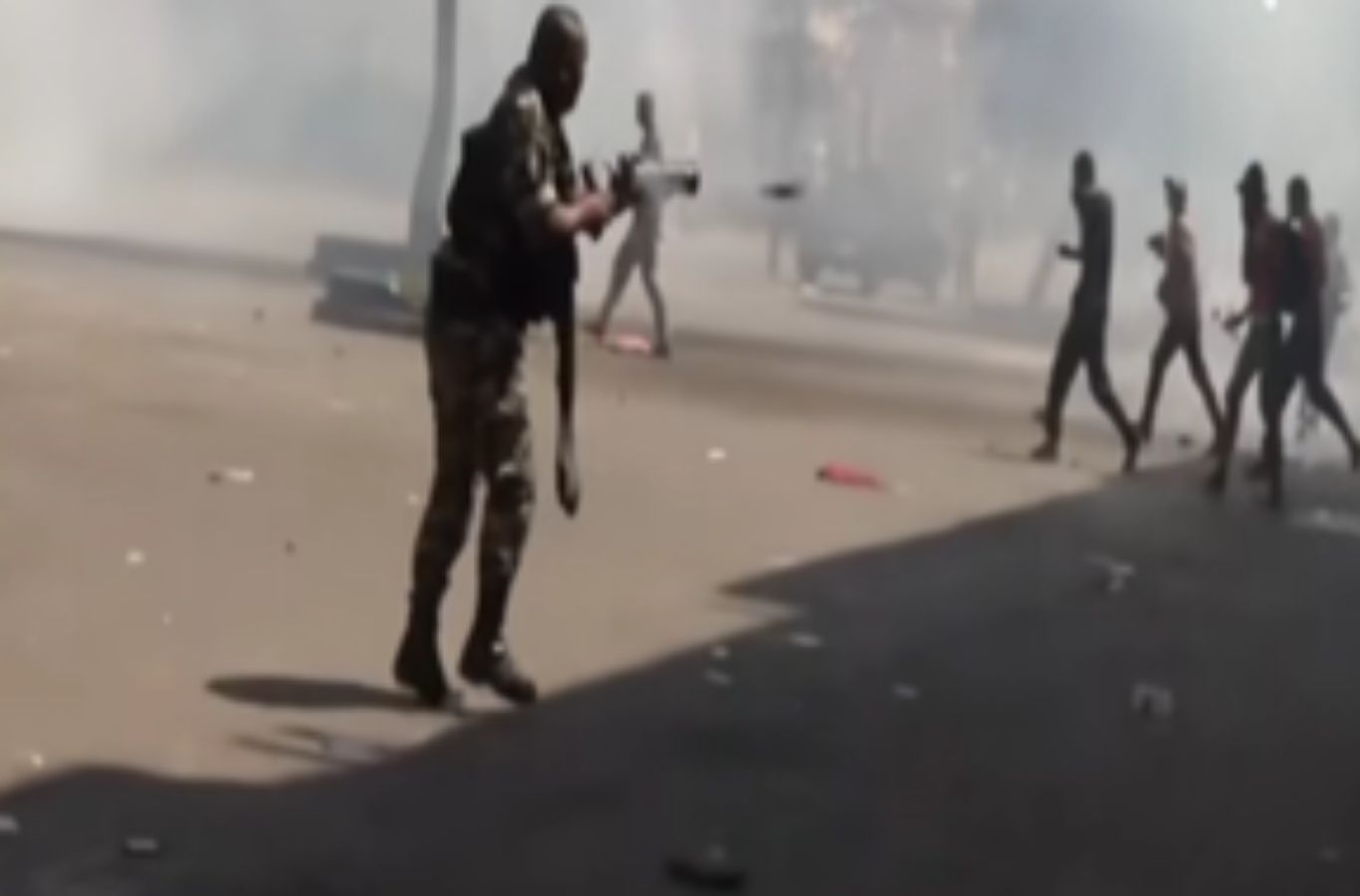
What is happening to Tanzania? Explore the timelines and catalogue of events surrounding the recent awakening of the Tanzanian peoples against electoral fraud and repressions in the country.
“You must be completely evil to make Tanzanians get out to the streets to protest against you.”
This was how one social media user summed up the rare spectacle unfolding in Tanzania, a country long known for its calm political temperament, now convulsed by unrest following a disputed general election.
From 29 October to early November 2025, thousands of Tanzanians, many of them young, have poured into the streets of major cities including Dar es Salaam, Arusha, and Mbeya, demanding the annulment of what they have called a “sham election.” protests mark a striking departure from the nation’s reputation for stability amongst its neighbours in Eastern Africa, revealing deeper frustrations that have simmered beneath the surface for years.
A Crisis Years in the Making
The unrest comes after months of escalating tension. Civil society groups, opposition parties, and religious leaders had repeatedly demanded constitutional and electoral reforms, rallying under the slogan “No reforms, no elections.” Their calls were met not with dialogue, but with repression: arrests, torture, and the disappearance of opposition politicians and activists. Among those detained were prominent figures Tundu Lissu and Hamis Polepole, both still in custody.
With many opposition candidates disqualified or imprisoned, the ruling Chama Cha Mapinduzi (CCM) fielded candidates largely unopposed. A wave of celebrity endorsements, patriotic campaign songs, and statements from clergy supporting President Samia Suluhu Hassan sought to lend the process legitimacy. But the public response was biting. Critics began referring to these celebrity backers as “chawa” (bedbugs), accusing them of “sucking the blood” of ordinary citizens by aligning with the ruling elite. As protests intensified, several of these figures, including Diamond Platnumz, deleted their pro-CCM posts after their establishments and businesses were targeted and burned by protesters.
By late October, signs of state anxiety were emerging. In one widely discussed case, a young businesswoman Jennifer Jovin, known online as Niffer, was arrested for posting a TikTok video of a dance challenge remixing the voice of President Suluhu’s assurance that “there will be no unrest on the 29th.” She was charged with incitement and remains in detention.
Election Day: Calm on TV, Chaos on the Ground
On 29 October, as polling stations opened, voter turnout appeared thin. A report by SADC observers noted that some stations had more police and security personnel that they had voters.Within hours, the internet was shut down nationwide, effectively severing communication across Tanzania. Mainstream media outlets, including Tanzania Broadcasting Corporation – TBC (state-owned) and Azam TV (privately-owned), broadcasted serene images of orderly voting and government officials casting their ballots.
But beneath that calm façade, protests had already erupted.Videos later uploaded via VPNs showed demonstrators marching through Dar es Salaam, Arusha, Tarime, and Mbeya, chanting demands for free and fair elections, the resignation of Suluhu’s government, and the release of detained activists. By afternoon, protesters had begun destroying ballot boxes and burning polling materials. Reports emerged of clashes between police and demonstrators, while members of the Tanzania People’s Defence Force (JWTZ) appeared in open vehicles, apparently protecting protesters from police units.
That night, fires lit up parts of Dar es Salaam and Arusha. Bus fleets owned by former MPs, petrol stations linked to Ridhiwani Kikwete, son of former president Jakaya Kikwete, and several celebrity-owned businesses were torched. Government buildings, including Tanzania Revenue Authority and anti-corruption offices, were attacked.
The Second Day: Blood and Disinformation
On 30 October, the protests spread to Kahama, Kyela, and Namanga, where unrest briefly spilled across the Kenyan border as sympathisers attempted to join Tanzanian demonstrators. A Kenyan national named John Okoth Ogutu who had been working in Tanzania for the past ten years was killed in the police crossfire despite the claims that he was not involved in the protests. His family in Kenya are still trying to find information about the whereabouts of his body. In Sinza, Dar es Salaam, several civilians were reportedly shot dead by police, though the exact number remains unclear.
As state media continued to downplay the scale of unrest, many Tanzanians, cut off from VPNs or social media, were left in the dark. For a brief hour, when the internet was temporarily restored, the Electoral Commission announced preliminary results. But almost immediately, two videos circulated showing alleged election officials falsifying ballot papers, further inflaming anger and disbelief.
On that same day, CHADEMA, the main opposition party, released a public statement reporting that John Heche, its deputy secretary currently held in police custody, had been unable to eat for three days due to deteriorating health. Later in the evening, the European Parliament released an official statement declaring that “the elections in Tanzania were neither free, nor fair,” adding international weight to local and regional concerns over the credibility of the vote.
Throughout those two days, Instagram and X emerged as the key platforms for coordinating and documenting the protests. Activists used the platforms to share information, organise demonstrations, and expose human rights violations. Many of their accounts were repeatedly reported and taken down, further obstructing access to independent information.
A Shift in the Military Stance
Late on the night of 30 October, the head of the military, General John Jacob Mkunda, addressed the nation through TBC, declaring that the military did not condone the destructive activities taking place and would “join other security forces to restore peace.” The video of his statement, later posted on BBC Swahili’s Instagram page, casted uncertainty over the future of the protests and whether demonstrators would continue to enjoy protection from sections of the army.
At the same time, TBC and Azam TV continued to broadcast election results. Late on the 30th, Prime Minister Doto Biteko was announced as having won the MP seat in Bukombe, Geita, with 99.8 percent of the vote and over 7,000 ballots in his favour. Only 15 votes were declared null and void. Salma Kikwete, wife of former president Jakaya Kikwete, secured victory as MP for Mchinga, Lindi, while their son Ridhiwani Kikwete won the Chalinze MP seat in the Coastal Region. For much of the country, still offline and reliant on state media, these results formed the dominant narrative, leaving many unaware of the scale of unrest across the nation.
The Third Day: Defiance in the Streets
By 31 October, protests had not abated. In the northern town of Bunda, reports, though without video confirmation, suggested that protesters torched the home of Stephen Wasira, a veteran CCM politician and former minister. In the same town, Ester Bulaya’s Guest Lodge was allegedly set on fire; Bulaya, a former CHADEMA MP for 2015–2020, had defected to CCM in the current election cycle. Protesters were also reported to have set fire to CCM offices in parts of Mara and Arusha regions.
In Dar es Salaam, social media mobilisation showed plans for protesters to march toward the State House. Although President Suluhu voted from Chamwino, Dodoma, where the official State House is located, videos shared on Instagram showed hundreds of protesters marching from Mbezi and other neighbourhoods towards the State House in Posta, Dar es Salaam.
As these scenes spread online, questions grew over whether the military would intervene following General Mkunda’s statement. On the evening of the 31st, CHADEMA released a statement alleging that over 700 civilians had been killed by police and secret service forces. Immediately after the statement was released, Tanzania’s foreign minister Mahmoud Thabit Kombo gave an interview in which he termed that statement as baseless. On the other hand, videos on Instagram showed people in police uniform and in plain clothes (believed to be secret service) carrying assault rifles and shooting at protesters.
The protests and election results have also reignited scrutiny of Tanzania’s political landscape. Between 2020 and 2025, parliamentary seats were held almost entirely by CCM members, consolidating single-party dominance and leaving opposition representation minimal.
The Declaration and Its Aftermath
On November 1st, following days of unrest, the National Electoral Commission declared Samia Suluhu Hassan the winner of the presidential race, securing over 31 million votes, equivalent to 98 percent of the total. Under Tanzania’s 1977 Constitution, the Commission’s declaration is final and cannot be legally challenged.
The sheer magnitude of the result, combined with ongoing violence, drew comparisons to Cameroon’s President Paul Biya’s eighth re-election and the deadly crackdowns that followed. Protests following President Biya’s re-election resulted in the killing of at least 48 civilians.
On 3 November, Suluhu was sworn in at the military barracks in Dodoma, with attendance limited to authorised personnel only. She became the first Tanzanian president to hold a non-public swearing-in ceremony, prompting further suspicion and criticism. Sir Mo Ibrahim of the Mo Ibrahim Foundation questioned why the “31 million Tanzanians who allegedly voted for Suluhu were not allowed to witness her swearing-in.” The ceremony’s secrecy intensified international concerns over legitimacy and transparency.
Images of Violence and Government Denial
As the government continued to downplay and, in some cases, deny the extent of the protests and the number of casualties, gruesome videos began to surface online after the internet was restored following the inauguration. These videos, shared widely on Instagram, X, and WhatsApp, depicted police and unidentified armed groups shooting at civilians, including those not involved in protests. Some videos showed civilians, including small children, who had been killed while in their homes. Some footage appeared to show individuals believed to be Ugandan troops firing at demonstrators. Activists and mobilisers, through their social media, gave information about the group believed to be Ugandan troops, including the claims that they were hosted by the government at the Marimonti hotel in Dar es Salaam.
In response to the social media engagement, the Tanzanian Police Force issued a public service SMS, warning citizens against sharing “videos or images that can cause distress or remove people’s dignity,” adding that doing so constituted a legal offence and would result in extreme legal action. Authorities have since claimed that the killings were perpetrated by “motorcycle drivers from neighbouring countries,” a claim widely dismissed online as an attempt to deflect responsibility.
Global Condemnation and Calls for Justice
The condemnation of Tanzania’s election and crackdown has widened. The African Union, the European Parliament, and South Africa’s Economic Freedom Fighters (EFF) have all denounced the elections as undemocratic and unconstitutional. Tanzanian activists have filed formal claims to the International Criminal Court (ICC), accusing President Suluhu and her government of crimes against humanity.
Meanwhile, several of the “chawa” celebrities have issued public statements expressing remorse for the loss of Tanzanian lives. However, the general sentiment online has been that apologies lacking acknowledgment of injustice or demands for accountability are hollow.
Diamond Platnumz, for instance, is reported to have lost over 100,000 Instagram followers in 24 hours, reflecting the growing anger toward public figures who once endorsed the regime.
Why This Moment Feels Different
Tanzania has not witnessed nationwide protests of this scale in decades. To many observers, the unrest represents the breaking point of a population long constrained by an erosion of democratic freedoms that began under former president John Pombe Magufuli and continued, albeit more quietly, under Suluhu Hassan. Since 2015, the government has been accused of banning newspapers, restricting freedom of speech, and silencing dissent through intimidation and violence. The 2017 shooting of opposition leader Tundu Lissu, and the abduction of musician Roma Mkatoliki, known for his protest lyrics, became emblematic of this shrinking civic space.
This past week’s protests, therefore, are not an isolated outburst, but a cumulative reaction to years of repression. For many Tanzanians, the 2025 election symbolised not democratic renewal, but the consolidation of one-party rule.
The Uncertain Road Ahead
As of early November, the situation remains volatile. Reports indicate continuing arrests, tightened security, and widespread fear among civilians. While international organizations have begun to condemn the government’s actions, concrete intervention remains elusive. The Tanzanian state continues to project normalcy through state media, even as videos of killings and funerals spread across social networks.
Yet for ordinary Tanzanians, one thing seems clear: the social contract that once underpinned the country’s famed stability is fraying. The chants of “No reforms, no elections” have evolved into something more urgent, a collective demand for accountability, dignity, and a political system that no longer treats its citizens as subjects but as stakeholders in their nation’s future.
Conclusion
The protests that began on 29 October 2025 may mark a defining moment in Tanzania’s post-independence history. Whether they lead to reform or repression will depend on how the government responds in the coming weeks. But for now, the myth of Tanzanian exceptionalism of peace without justice has been decisively shattered.
Jalia Haki is an activist and social justice scholar passionate about Tanzania’s transformation and rebuilding.