



The Benin Coup, ECOWAS Struggles and the Democratic Future of the Beninese People
An assessment of the failed coup in Benin and the implications for democratic struggles within West Africa.
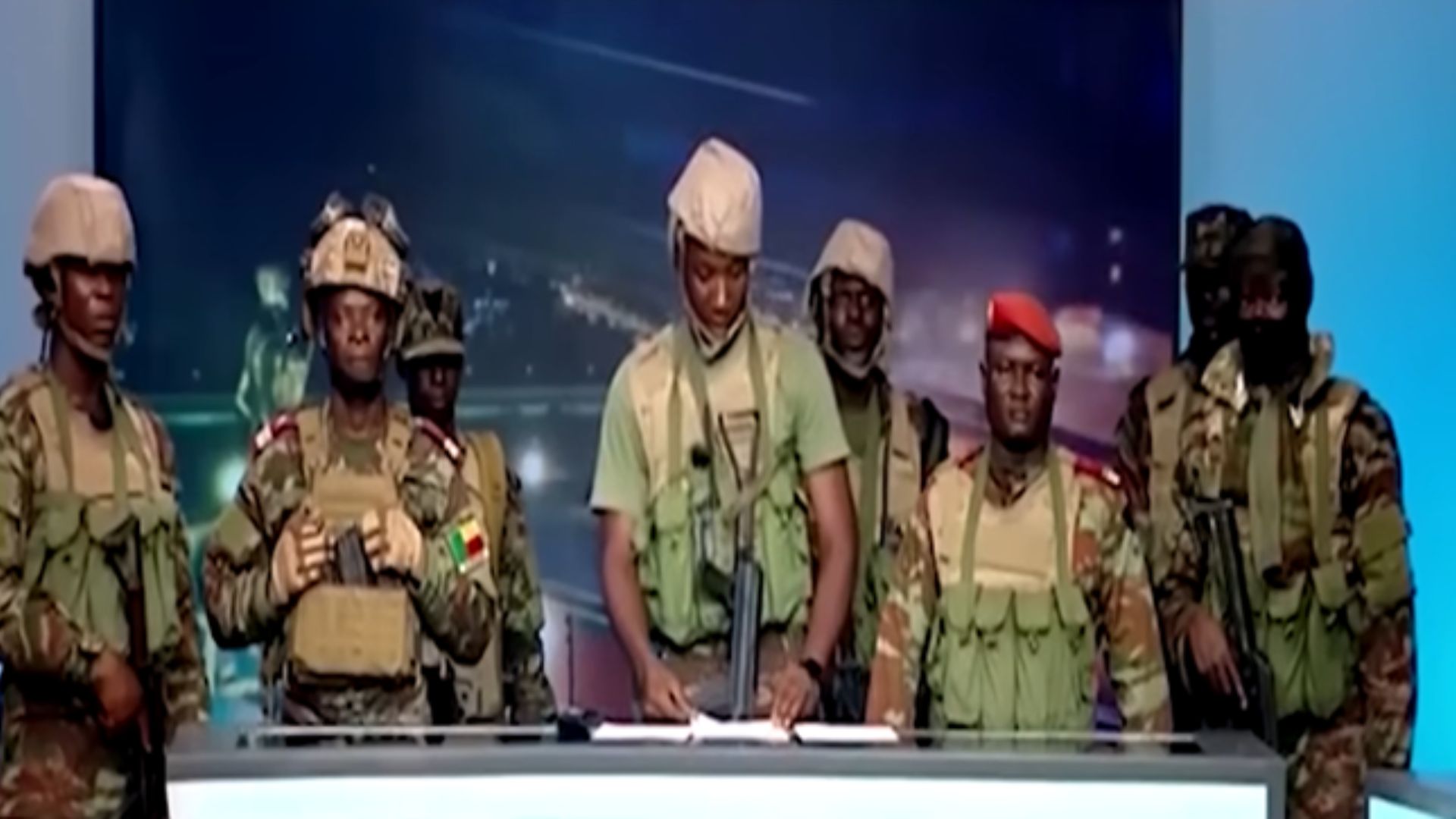
In the early hours of Sunday, 7 December 2025, soldiers of the Benin Armed Forces led by Lieutenant Colonel Pascal Tigri attempted a coup d'etat to oust Patrice Talon, the President of Benin. The incident is one of the four coups that the West African country has experienced since its flag independence from France in 1960.
Benin, a country of over 14 million, is bordered to the west by Togo, northwest by Burkina Faso, northeast by Niger, and east by Nigeria. The country, a West African cotton producer, has remained within the disintegrating French imperial holdings in West Africa. Unlike its counterparts, many of which have undergone military incursions in the past decade, especially the last 5 years, it has enjoyed democratic stability since 1990. From the multiparty presidential and legislative elections of 1991, Benin has witnessed successful alternation of executive power with some electoral irregularities.[1] The current president is expected to step down in April, having exhausted the two-term limit of the country’s constitution.
Across its military regimes and democratic evolution, Benin’s allegiance to France has been unquestionable. The Francophone influence on such countries and inroads into West African powerhouses such as Nigeria provide a context where France, despite its struggles in Europe and other parts of the Africa,[2] affects ECOWAS plans and decisions about integration, security management, and transformation of the subregion.
Context and Aftermath of the Putsch
The resurgence of military coups has been markedly prevalent in countries under the Franc zone. Years of exploitation and neocolonial partnership between civilian authorities and France continue to provide a mobilizing front for soldiers who are fed up with the deplorable conditions of their countries, while France siphons millions of Euros from the nations it still influences unduly through resource extraction.[3] In Niger’s case, French state-owned companies controlled over 85% of its uranium and purchased uranium at discounted rates lower than global market prices, and half the sum paid to Canada and Australia.[4] The budgets and reserves of these countries are also controlled by France who determines how much the West African countries under its grip could spend.
While the struggle against French exploitation remains, there is also growing despair over the undemocratic nature of low intensity democracy across the subregion, including in Benin. Scholars such as Samir Amin and Horace Campbell have critiqued the kind of formal democracy which lacks basic democratic rights such as the kind of democracy that exists in Benin. This is called low intensity democracy. Benin is a classical example of this democracy in form but lacking in the real content. Basic democratic rights such as freedom of speech, press, assembly exist on paper but are suppressed in practice, limiting opposition and free discourse. In Benin there are so called democratic structures with regular elections since 1990 but these elections were stripped of real substance, characterized by limited participation, proscribed expressions and assembly, creating an appearance of democratic elections, without a level playing field for all political competitors. Benin operated as a classic example of a low intensity democratic state where there were cosmetic elections, restricted freedoms, lack of judicial/institutional independence, and co-opting social movements rather than genuine empowerment. Additionally, the leadership was ready and willing to do the bidding of France such as imposing sanctions on the States of the Alliance of Sahelian States. The Patrice Talon administration has excluded the main opposition party, Les Democrates, from participating in the upcoming elections. The parliament, in collaboration with Talon’s forces, has extended the years for the terms of elected officials from five to seven years. The constitutional amendment also included the creation of a second parliamentary chamber, the Senate. Insecurity is also making inroads into the country’s northern sector as violence spills over from the central Sahel. There were also allegations of favouritism and neglect of families of soldiers who were casualties on the line of duty.
These contexts were appropriated by the soldiers of the Military Committee for Refoundation as the basis for the failed coup. By that Sunday morning, they had seized the national television and camped in Contonou to execute the coup. The siege of the Presidential Palace failed to achieve the putschists’ objectives, as their attempt to suspend the Constitution, dismantle related institutions, and remove the President from power did not succeed. In most coups where the sitting president is in the country, the capture of the President becomes a significant bargaining chip for the plotters to affirm the declaration of the coup.
The Involvement of Nigeria
Within few hours, Nigerian battle aircrafts made a debut in Benin upon a request form the Talon administration for assistance. The response of Nigeria, host of ECOWAS institutions, was immediate and the positions of the coup plotters was bombed. The president of Nigeria, Tinubu, deployed troops to Benin at a time when it was struggling to curb various forms of insecurity plaguing the nation. The Constitutional basis of Tinubu's action has also triggered debates within the Nigerian media and political spaces, given the requirement that the country’s National Assembly must approve international deployments of Nigeria’s troops for such duties as witnessed in Benin.[5] With such power projection by Nigeria, netizens are questioning the hesitation of the Nigerian government in conducting precision strikes on insurgents and other elements that has heightened the insecurity within Nigeria.[6] It remains to be seen whether the calls will see some more decisive action by the Tinubu government in dealing with Nigeria’s insecurities.
In the wake of the coup, ECOWAS issued two press releases. The bloc promised to support the “Government and the people in all forms necessary, including the deployment of the regional standby force, to defend the Constitution and the territorial integrity of Benin.”[7] And to hold the leaders of the coup attempt individually and collectively accountable.
It then deployed the ECOWAS Standby Force constituted by troops from Nigeria, Sierra Leone, Côte d'Ivoire, and Ghana, to support the Talon administration and the Benin Republican Army in efforts to preserve constitutional order and the country’s territorial integrity.[8]
The Mediation and Security Council of ECOWAS, at the level of Heads of State and Government, undertook the intervention, citing Article 25(e) of the 1999 Protocol Relating to the Mechanism for Conflict Prevention, which calls for the application of the Mechanism[9] “in the event of an overthrow or an attempted overthrow of a democratically elected government.” Among the aims of the Mechanism, Article 3 subsections (a), (c), (e), and (h) envisage the intervention stipulated in 25(e). In 2017, Senegal and Nigeria, under the direction of ECOWAS, deployed troops to the Senegal-Gambia border, ready to force Jammeh to step down after his 22-year rule if the Gambian leader continued to refuse to accept defeat in the December 2016 polls. In that context, the bloc did not have to engage any faction of the Gambian security forces as Yahya Jammeh left the country. The bloc has also deployed troops to a number of its member countries to maintain peace or support democratic processes since the Liberian and Sierra Leonean civil wars of the late 1980s and the 1990s.
Progressive forces should be concerned about the selective interventions of the regional bloc. When the coup in Guinea-Bissau was unfolding on 26th November 2026, ECOWAS could not undertake a decisive action to ensure that the votes of the elections in that country were counted, declared and Umaro Sissoco Embaló handed over power to the winner of 23 November polls. Was this disinterest in the Guinea-Bissau coup due to the coup makers’ desire to maintain the status quo in that country? What might have informed Nigeria’s inaction towards the Guinea-Bissau coup?
Nigeria in Benin: Military support or opposition to AES?
In these efforts, Nigeria has been instrumental in supplying troops and other logistics in partnership with some of the member states of the bloc. In the instant case, the Nigerian Air Force engaged the coup plotters before the named member states deployed their contingents to support the process.
Nigeria’s actions must be understood within a certain context. The country was spearheading the mobilisation for military action in Niger in 2023 when General Tchiani overthrew President Bazoum.
Tinubu’s election in 2023 was generally viewed as flawed with irregularities and manipulations before he eventually ascended to Aso Rock, the seat of government in Nigeria’s prestigious Asokoro district.
That its western neighbour could be ruled by a military regime that might easily align with the AES must be enough challenge to Nigeria’s efforts to contain the zeitgeist unleashed by the Central Sahel states. There were also reports of French influence and an unconfirmed conversation between Macron and Tinubu, which might also have contributed to Nigeria’s military action in Benin.[10]
While the planes that had bombed Benin returned to Nigeria on Sunday, a military aircraft of the country landed in Burkina Faso the following day. On Monday, 8th December 2025, a Nigerian Air Force C-130 Aircraft emergently landed in Burkina Faso’s second largest city, Bobo-Dioulasso reportedly due to a technical concern while enroute to Portugal for a ferry mission.[11] The unauthorized entry into the Burkina Faso airspace has been viewed as an unfriendly act by the AES nation. Nigeria’s decision to militarily intervene in Niger in 2023, its key role in sanctioning of the AES in the aftermath of the coups in the 3 countries, and the recent bombing of the camp of Benin coup plotters, add to suspicions about the country’s alliance with France in the activities of ECOWAS and French displeasure over their being sacked from the 3 countries (Burkina Faso, Mali and Niger). Thus, Burkina Faso had sufficient reasons to be concerned about whether the aircraft posed any security threat to the country. Consequently, Burkina Faso authorities grounded the aircraft and detained the personnel on board. The soldiers have subsequently been released and deported to Nigeria.
ECOWAS’ Introspection and Benin’s Democratic Future
ECOWAS’s introspection about the region's democratic future should include examining imperial relationships with France and shifting towards democratic arrangements that give the ordinary people rights to select their leaders and opportunities to transform their material conditions. The bloc must be firm not only on military takeovers but civilian coups and manoeuvres that extend term limits through incumbency-engineered constitutional modifications, and/or outright disregard for constitutions in the member states.
We support calls for mapping out a security collaboration mechanism between ECOWAS and the AES. In these considerations, ECOWAS should not allow itself to be used as a tool to oppose the AES or aid reassertion of France’s neocolonial tendencies across West Africa. The sustained allegiance to imperial France constitutes the preservation of a neocolonial pact, one that systemically extracts wealth and undermines sovereignty for the benefit of a comprador elite. To maintain this exploitative system while a generation demands emancipation is to guarantee its collapse. The resulting uprising will not be a crisis to be managed, but the inevitable consequence of choosing empire over the people.. Patrice Talon and whoever takes power in the coming year must be mindful to promote socio-economic transformation and rethink the continuing neocolonial hold of France on Benin.
We call for the demobilization of Benin as the country, and ECOWAS’ forces take over the security affairs of the nation. If ECOWAS will secure the communities in the sub-region, there must be conscious efforts not to provide the state with all the coercive instruments it needs to repress the ordinary people, or an attempt to silence and co-opt the military. Rather, citizens’ lives must be bettered, and the people brought into the decision-making processes that affect their lives so that they become the first point of defence for one another and collaborate with security and intelligence agencies in the case of insecurities. It is in this sense that security management could be effective.
The democratic process in Benin should give voice to the people and avoid the manipulative posturing that was witnessed in recent elections in the Ivory Coast and Tanzania, where strong opposition figures are imprisoned, or their parties are barred from participating in upcoming polls. Already, the extension of the years of office within a term has nursed fears about the preparations that President Talon might be making to ensure his current Minister of Economy and Finance, Romuald Wadagni, succeeds him.[12]
Regardless of the strong French and American ties to Wadagni, we would expect that the Beninese people will be given the chance to decide whether to vote for him or the candidate of Les Democratic. Undemocratic democracies only provide preparatory grounds for military intervention which, if well organised and more calculatedly implemented, can further dash the democratic hopes of West Africa. Nigeria cannot promote democracy in other countries when it does not have democracy itself.
Any sincere projection of democratic struggle abroad requires Nigeria to enhance democratic practices internally and ensure that electoral agencies function without manipulation and conditions that erode trust, transparency, accountability, and trustworthiness of democratic institutions. It is in this example that it can be taken seriously as a champion of democratic principles within ECOWAS and West Africa.
The working classes, unionists, activists (academics, cultural and digital types), youth, student groups, farmers, and ordinary people should join forces with elements of middle and upper class who oppose oppression, puppet leaders in Africa, and elites unconcerned about political, social, economic, and spiritual transformation in Africa. It is through such solidarity and organization that the zeitgeist in Africa can procure the required change for the continent.
Democratic practices that allow the people choices in the selection of their leaders, break the hold of imperialism and exploitation, and provide the people environment and opportunities for socio-economic transformation, will be very crucial in discouraging popular support for military coups in West Africa. Benin should learn its lesson and reimagine its democratic path and relations with France while focusing on transformative interventions for its people.
Endnotes
[1] Gisselquist, R. M. (2008). Democratic Transition and Democratic Survival in Benin. Democratization, 15(4), 789–814. https://doi.org/10.1080/1351034080219107
[2] Internal political and fiscal crises continue to challenge Paris' leadership position in Europe. Growing calls for the sacking of France from Africa has also threatened the neocolonial operations of France. China, Russia, and Turkey have also challenged the dominance of French companies in Africa. It is reported that Chinese companies now have a 25% market share in French-speaking Africa, while France's share has tumbled to "between 6% and 7%." https://www.dw.com/en/as-frances-africa-policy-collapses-how-do-companies-adjust/a-73388353#:~:text=What%20France%20used%20to%20consider,new%20footingImage:%20STEFANO%20RELLANDINI/AFP.
[3] Uranium Factor in France’s Foreign Policy Towards Africa. https://scispace.com/pdf/uranium-factor-in-france-s-foreign-policy-towards-africa-iisrhlr0uq.pdf;
[4] https://afriquexxi.info/The-Foundations-of-a-Win-Lose-Agreement#:~:text=On%20July%206%2C%201967%2C%20the,by%20the%20State%20of%20Niger.;
https://afriquexxi.info/IMG/pdf/correspondances_janvier_1967_0_-2.pdf; https://africanapocalypsefilm.com/finding-a-way-from-french-uranium-min….
[5] https://www.youtube.com/watch?v=osa4F9_IXnM; https://www.facebook.com/aisha.yesufu.1/videos/tinubu-deployed-military…
[6] Sample comment via Arise News https://www.youtube.com/watch?v=osa4F9_IXnM: @cajethannwaribeaku8146
“The world is watching Nigeria government sending troops to Benin Republic but this same FG cannot do the same to fight terrorists against Nigerians...”
[7] ECOWAS Commission (2025a, Dec 7). ECOWAS STATEMENT ON THE REPUBLIC OF BENIN. https://www.ecowas.int/wp-content/uploads/2025/12/OK_ECOWAS-STATEMENT-O…
[8] ECOWAS Commission (2025b, Dec 7). N°2_ STATEMENT ON THE REPUBLIC OF BENIN NO2. https://www.ecowas.int/wp-content/uploads/2025/12/N%C2%B02_-ECOWAS-STAT…
[9] ECOWAC Mechanism or Mechanism is the common name used to refer to the bloc's 1999 Protocol Relating to the Mechanism for Conflict Prevention, Management, Resolution, Peace-keeping and Security.
[10] Millecamp, M. (2025, December 10). Benin coup attempt: What we know about France’s role. The Africa Report. https://www.theafricareport.com/401935/benin-coup-attempt-what-we-know-…
[12] Africanews (2025, November 15). Benin adopts constitutional amendment to create Senate, extend presidential term.https://www.africanews.com/2025/11/15/benin-adopts-constitutional-amend….