



Declaration of the First IDEAS – Africa Network (IDAN) Conference: Rethinking Regional Integration in Africa
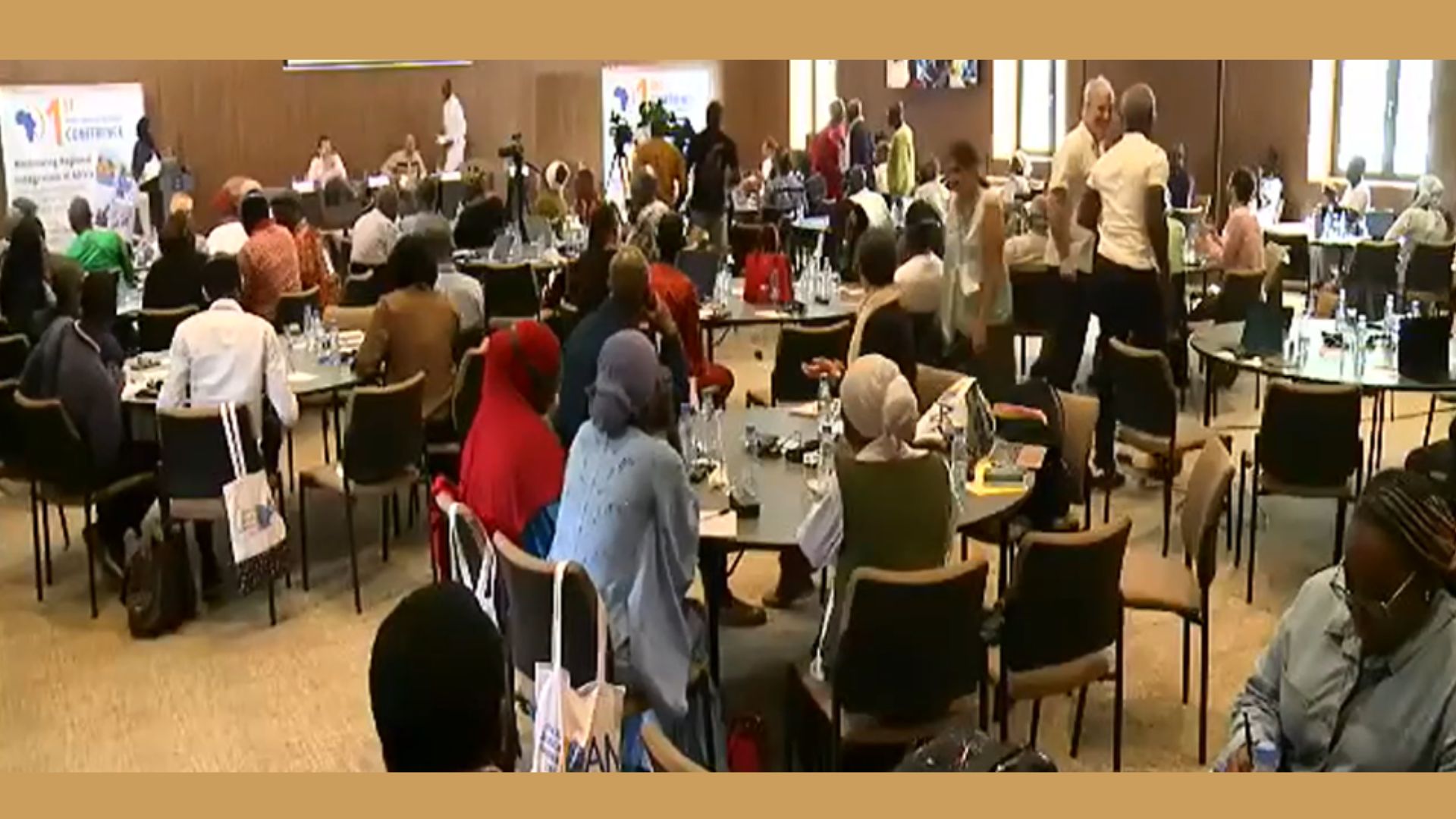
The IDEAS Conference held in Dakar, Senegal, in November 2025, emphasizes integration and transformative tasks for Africa and its peoples
International Development Economics Associates (IDEAs) African Network (IDAN), in partnership with the Africaine de Recherche et de Coopération pour l’Appui au Développement Endogène (ARCADE), had their first annual conference, entitled “Rethinking Regional Integration in Africa: Transcending Past Failures and Preparing for the Challenges of a Multipolar World”, which took place from November 26 to 28, 2025, at Hotel Terrou Bi in Dakar, Senegal.
Declaration Adopted by Conference Participants
More than one hundred leaders and scholars from a wide range of areas, including academia, diplomatic community, policy makers, industry and business, defence and security professionals and civil society organizations - from Africa, the Americas, including the Caribbean, Asia, and Europe, were invited to deliberate on the conference theme of “Rethinking Regional Integration: Transcending Past Failures and Preparing for the Challenges of a Multipolar World.”
The Conference was held at a time when governments in Senegal and the Sahel States of Burkina Faso, Mali and Niger are inspired by the ideals of Pan-Africanism and are trying to promote economic policies based on patriotism and sovereignty. The Conference was also held at a time when it was clear that the neoliberal system is in deep crisis and widely discredited, even in Western countries.
At the end of three days of intense, fruitful, and fraternal deliberations, we remain convinced that African unity, sovereignty and progressive pan-Africanisms is an urgent imperative for the survival and progress of African peoples wherever they may be. In all areas, whether defense and security, the fight against global warming, development financing and debt crisis prevention, intra-African trade and industrialization, etc., strategies for cooperation and coordination on a continental scale are a necessity.
The centrality of the working peoples in the Pan African project in the realization of the struggles for dignity was always at the core of Pan-Africanism. At the end of the 19th century, intellectuals articulated a clear program of African liberation for African peoples at home and abroad. We therefore reiterated and endorsed the message of champions of African unity, such as Marcus Garvey, George Padmore, Kwame Nkrumah, Micere Githae Mugo, Cheikh Anta Diop, Walter Rodney, Julius Nyerere and many others, who understood that Pan-Africanism is a political project to defend African identity and the dignity and unity of the African peoples, wherever they may be. As such, Pan-Africanism is also an ambitious aspiration to rehumanize the world.
Considering that the political reunification of Africa as a whole is a sine qua non condition for its sovereign independence, for the moral and physical integrity of Africans and Afro-descendants wherever they may be, and for the advent of true democracy and social progress, the real question remains how to achieve this within a reasonable timeframe.
We rejoice and celebrate the participation in this memorable meeting of the literal and figurative heirs of legendary figures of Pan-Africanism. Dr. Julius Garvey, son of Marcus Garvey, Ms. Samia Nkrumah, daughter of Kwame Nkrumah, Mr. Fidèle Toé, childhood friend of Thomas Sankara and minister under his presidency, and Dr. Dialo Diop, nephew of Cheikh Anta Diop and his intellectual and political heir, honored us with their presence and graced us with their time, wisdom, and unwavering optimism for the project of African unity.
On their behalf, and on behalf of all participants, we wish to encourage African heads of state and government, intellectuals, youth, women, and social movements to work together and resolutely take the necessary and urgent measures needed to cement Africa as a unified bloc in the emerging multipolar world. In this regard, we urge the African Union to accelerate the implementation of Agenda 2063 aimed at building “the Africa we want”, that is, an Africa by its peoples and for its peoples. The general thrust of the conference was that Africa Unity must be for the African peoples with free circulation within Africa of Africans and people of African descent.
Without any pretense to exhaustivity, we would like to insist on some areas for which we think a collective action could no longer be delayed.
Our goal is a united Africa in a multipolar world: Africa cannot find its rightful place in an increasingly multipolar world, if it remains fragmented and divided. It cannot rid itself of debt bondage, dependence, poverty and underdevelopment nor can the continent adequately respond to the challenge of climate change and insecurities if it remains fragmented. Unity is a pre-requisite not only for confronting challenges but also for harnessing opportunities that arise from geopolitical shifts and rapid technological change.
Beyond simply managing risks and opportunities in this changing environment, stronger unity will enable Africa to leverage political strength and economies of scale to emerge as a significant player in the multipolar world. In that vein, it will be important to coordinate the sale of African raw materials with a view to exploiting them on the continent for the benefit of the continent, coordinate industrial policies at the regional and continental levels, adopt a concerted approach that pools resources to ensure the continent’s energy sovereignty and green transformation.
We need also to continue promoting the teaching of pan-Africanist philosophy and writings in school curricula and working to make them available in national languages. The same efforts should be pursued to strengthen the continent’s relations with its diasporas in the cultural, diplomatic, economic, and other fields.
The importance of monetary integration for African reconstruction and transformation
The continent has to break free from the legacy of monetary colonialism, visible through the CFA franc, and work towards the advent of a monetary and financial system for Africans and by Africans that can be based on sovereign and equitable partnerships with the rest of the world.
Financing, which was intended to support investment and economic growth, has become a major obstacle to economic change in Africa, with fragmentation increasing the risks and costs of external borrowing while hampering the efficient allocation of resources and reducing economic policy across Africa to managing balance of payment crises. The world is experiencing major geopolitical shifts marked, among others, by the multipolarization of the international monetary system.
This change, which has opened the door for new reserve currencies, offers a significant opportunity for Africa to strengthen its position in the emerging international financial architecture, if the region can overcome monetary fragmentation and build strong monetary and financial institutions.
A continental approach to human capital has become an increasingly vital pillar of African integration and reconstruction in a multipolar world.
While most African countries are too small to compete individually, they can pool resources for research, innovation, and education, creating a competitive continental ecosystem. This approach also has the potential to build a critical mass of world-class engineers and scientists, allowing the region to leverage economies of scale to independently lead the development of cross-border infrastructure, expand industrial capital to speed up the transformation of African economies, and create more opportunities in a region where unemployment rates have remained at Great Depression-era levels for decades.
Africa will be the home of most of the world’s youth over the course of the 21st century. This important asset will have to be leveraged to transform African economies and position the continent as the bedrock of peace, stability and prosperity.
Harnessing a United and Collective African Force to Promote Lasting Peace and Prosperity in a Multipolar World
Although multipolarity raises the risk of proxy wars and conflicts, collective security serves as a strong risk mitigant and conflict prevention measure. It will secure Africa’s lasting peace and security in an increasingly competitive global order while supporting development prospects and global income convergence.
To ensure peace and stability on the continent by (i) removing foreign military bases, (ii) rejecting military facilities for foreign countries; (iii) coordinating vigorous action in the main war zones that continue to destabilize the continent, such as Sudan, the Sahel, the Great Lakes region, etc.; (iv) building a continental army capable of ensuring the security and defense of the continent.
The international relations of this African bloc with the rest of the world should be determined according to the principles of equality, reciprocity, and mutual respect.
As participants in this meeting, which has been held in the spirit of Pan-Africanism and internationalism, we each declare, within our respective capacities and areas of expertise, our willingness to contribute in solidarity to any action or initiative that would help achieve the ideals of progressive Pan-Africanism, which are also those of a multipolar world and common humanity.
Dakar
November 28, 2025
International Development Economics Associates (IDEAs) African Network (IDAN) is the African Chapter of a pluralist network of progressive economists across the world, engaged in research, teaching and dissemination of critical analyses of economic policy and development.