



Cuba’s Healthcare Internationalism: The World’s Healthful Debt
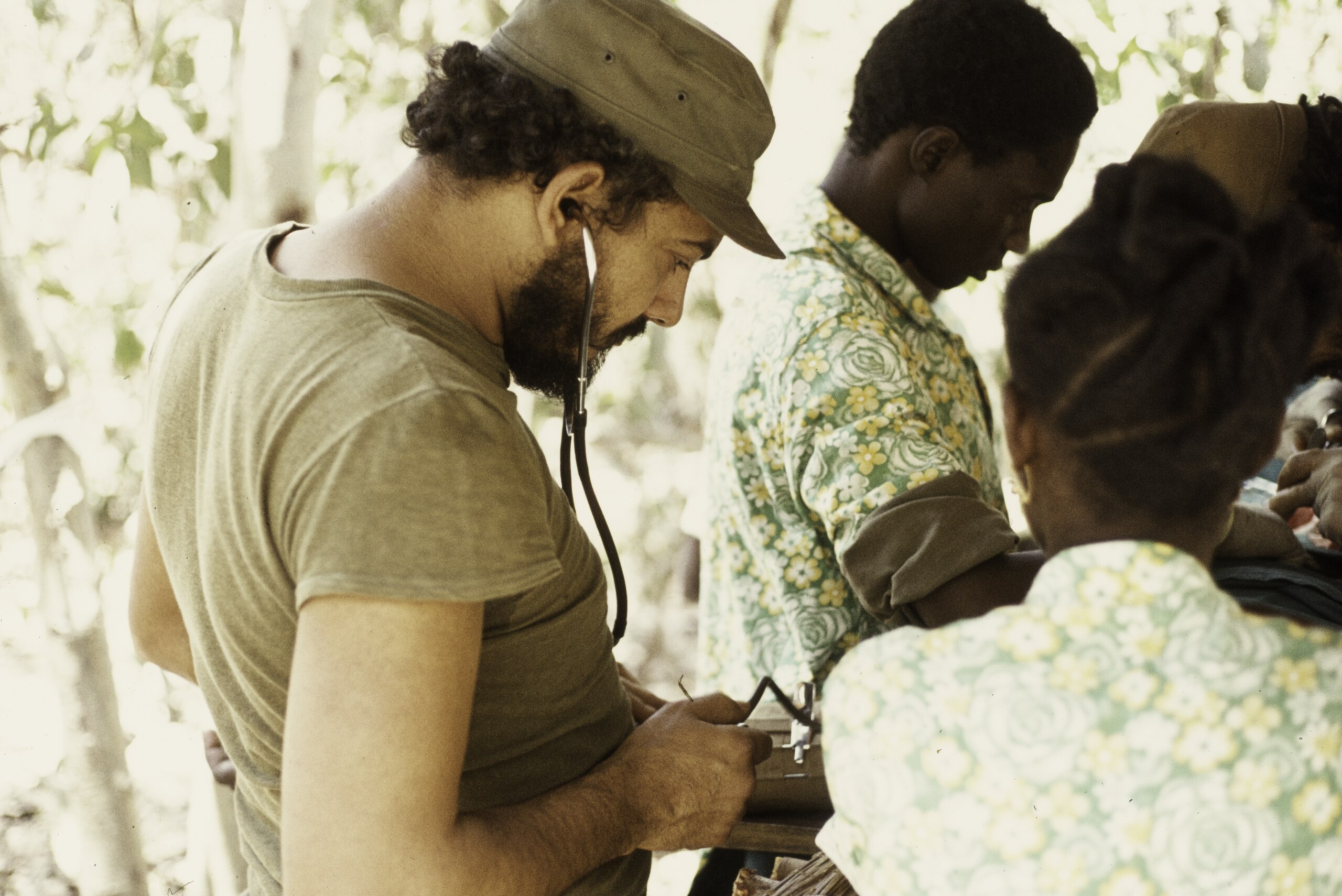
A challenge to the world to reciprocate Cuba’s solidarity and goodwill contributions to global healthcare in this time of increased blockade affecting its health system.
The world health gains can hardly be examined without accounting for Cuba’s contributions to global healthcare. There are varying reports about the exact number of Cuban health professionals that have served on international medical missions since 1961/1962 across differing periods of accounting. Don Fitz records that by 2012, Cuba had deployed over 124,000 health professionals to work in over 154 countries, and in 2009, 24 per cent of Cuba’s 70,000 doctors served in health care “brigades” on international “missions.”[1] Granma, the official daily of Cuba’s ruling party, also records that since 1962, over 400,000 Cuban health professionals have participated in health missions in more than 164 countries.[2]
Cuban healthcare commenced on a new path during the revolution that was led by Fidel Castro. The pursuit of excellence in medicine has made the country worthy of global recognition. While tipped as a major source of foreign currency for Cuba, with an annual income of about $4.9 billion, Cuba’s health internationalism mostly occurs under its Programa Integral de Salud, PIS (Integrated Health Programme), where the recipient countries within the cooperation agreement receive the services for free.[3] This has been so at least in the first few decades of the cooperation agreements. The dynamics have changed in recent years, but Cuba bears considerable costs even within the shifting context. Among an estimated 140,000 Cuban health professionals who worked overseas between 2011 and 2016, over a third (30) of the 67 host countries paid Cuba for the assistance. Cuba paid fully or partially for more than half of the countries (37). The cost-sharing arrangement was made with 17 countries.[4]
The country has pursued medical excellence to a degree that many well-resourced countries have yet to attain. Annual expenditure towards the training of medical personnel stood at around 10-15% of GDP in the last two decades of the 20th century, into the start of the second decade of the millennium. Cuba’s commitment has resulted in the training of over 60,000 physicians, which represents a national ratio of one physician to 180 persons for a population of about 11 million. Scores of nurses, medical technicians, and physical therapists were also trained across a vibrant training and research environment that boasted “267 hospitals, 440 clinics, 5000 medical and biological scientists, 11 research institutes”, including “pharmaceutical and biological facilities and 15 medical schools.”[5] The country’s life expectancy stands at 78 years, a level similar to that of advanced countries such as the United States.
Cuba’s robust, free universal health system is oriented towards community and preventive medicine. The relative abundance of doctors, the highest per capita in the world (8.4 doctors per 1000 population), provides a system that effectively withstands pandemics.[6] It is in these contexts that the country has been caring for its population and providing for the health needs of other countries in the Caribbean, Latin America, Africa, Asia, Central and North America.
The world owes Cuba for its many contributions towards the management of disease conditions, disaster management, epidemics, pandemics and other public health emergencies of international concern. The Cuban healthcare system has trained several thousand foreign doctors, offered free services and responded to health crises across the globe.[7] These debts should prompt the global community into action at the time Cuba requires support in accessing critical drugs and other resources necessary for the continued functioning of the country’s health machinery
The Debt in Pandemics and Other Medical Emergencies Management
In a world where pandemics are increasingly prominent, the international health contributions of Cuba continue to be paramount in the successes chalked in managing health components of disasters, containing the spread, case management, and treatment of pandemic cases.
The country’s remarkable disaster mitigation apparatus, emanating in part from experiences in dealing with tropical hurricanes and epidemics have equipped it with well-rehearsed protocols and a culture of trust and compliance with civil defence among distressed populations.[8] This emergency preparedness has been exported to the benefit of the world in managing the medical consequences of natural disasters and the fight against pandemics.
Cuba’s emergency brigades have served in many countries, including Algeria, Armenia, Bolivia, Chile, China, El Salvador, Equatorial Guinea, Guatemala, Guyana, Honduras, Haiti, Indonesia, Iran, Jamaica, Mexico, Nicaragua, Pakistan, Peru, Sri Lanka, and Venezuela.[9]
In 1960, a year after the revolution, when Chile suffered the Valdivia earthquake, Cuba sent doctors to assist in managing medical cases resulting from the devastating natural disaster. The Chile deployment was Cuba’s first emergency medical support after the revolution. Cuba has also sent relief to Ukraine during the 1986 Chernobyl crisis. Its medical team also assisted Sri Lanka following the 2004 tsunami, and Pakistan after the country's 2005 earthquake. The country continues to offer emergency assistance to several countries through its Henry Reeve Brigade, the first response team for international disasters.[10] The naming of the emergency response effort was Fidel Castro’s strategic choice and goodwill gesture in 2005 when the team became the “Henry Reeve International Contingent of Doctors Specialized in Disaster Situations and Grave Epidemics,” when he offered aid to the US, which was declined by the Bush Administration, in the wake of Hurricane Katrina.[11]
In the particular case of health epidemics and pandemics, HIV/AIDS, Ebola and COVID-19 present two more recent cases of Cuba’s healthcare assistance to populations in other countries.[12]
During the 1990s, when Africa was experiencing heavy tolls from the HIV/AIDS epidemic, 400 Cuban doctors were deployed to poor and rural areas in South Africa.[13] The practical solidarity was demonstrated even at a time when there was considerable denialism, and the fight against the virus had not achieved much success.
In 2013-2016, when the Ebola virus became a major epidemic in West Africa, the contributions of the Cuban medical team became crucial for Liberia, Sierra Leone, Guinea and the world. Cubans were among “the first largest foreign medical team from a single country to respond to this outbreak.”[14] Cuba deployed 53 medical officers, consisting of doctors, general practitioners, intensive care doctors, epidemiologists, surgeons, paediatricians, anaesthetists, nurses, intensive care nurses, and licensed nurses. By the time the Cuban team concluded their Ebola Response Mission in the West African country, in March 2015, Liberia marked the second week of Zero cases of Ebola.[15]
The international partnership and the quick adaptation of the Cuban team consolidated around pre-deployment basic initial training on Ebola in Cuba, and a second training that focused on occupational safety in their work in an Ebola Treatment Unit (ETU) that operated from the Ministry of Defence premises in Monrovia.
Cuba made similar arrangements to contribute 165 Cuban health personnel in a gesture of generosity and solidarity to fight Ebola in Sierra Leone.[16] By October 2, 2014, the first brigade of the 62 doctors and 103 nurses constituting the pledged 165 personnel had arrived in Freetown.[17] In the 6th months of the Cuban presence, the fatality rate in the emergency treatment centres reportedly reduced from 80%–90% to 24% through the supportive treatment interventions by the Cuban health professionals.[18] Guinea also received 38 Cuban health professionals to help in the fight against the epidemic.
During the COVID-19 pandemic, an estimated 2500 Cuban health personnel deployed to some 28 countries to fight the outbreak.[19] Some estimates record 11 more countries received support from Cuban health professionals, bringing the total to 39 by December 2020.[20] Some analyses show that, by May 20, 2020, “it was reporting 29,465 medical workers abroad, or 1,197 more than before it started sending pandemic brigades. From March to mid-June 2020, it had sent at least 2,772 workers to 26 countries to provide care for coronavirus patients.”[21]
At the time of the pandemic, many countries which already had Cuban medical brigades received medical emergency response teams to fight COVID-19 without negatively impacting the work of the other teams in the provision of primary healthcare. Angola, Antigua & Barbuda, Belize, Cape Verde, Dominica, Grenada, Guinea, Honduras, Jamaica, Nicaragua, South Africa, St. Lucia, St. Kitts & Nevis, St. Vincent & Grenadines, Suriname, Trinidad & Tobago, and Qatar. Those with defunct missions, such as Mexico and Peru, and new entrants, including Andorra, Barbados, Italy, Togo and Turks & Caicos, also received Cuban medical emergency support.[22] This support was arguably fundamental among the factors that led to the disappointment in the projected massacre that was expected from parts of global Africa, where health infrastructure could not have sustained a very high incidence rate for infections and mortality cases.
The Health Debt in Primary Healthcare Assistance
Access to primary healthcare and preventive practices remains severely limited in rural and urban underserved populations in many parts of the world. Observably, financial and academic barriers to medical school admissions mostly favour students from privileged backgrounds. Consequently, many young doctors who emerge from medical school have limited direct experience of the health needs of poor rural and underserved urban communities, and very few choose to serve such communities.[23]
Cuban medical professionals are equipped with essential skills in primary care and prevention. These professionals have been providing much-needed services to rural and urban underserved in low and middle-income countries and poorer regions in Africa, Asia, Latin America and the Caribbean. The doctors deployed abroad, especially within paid arrangements, are paid more abroad than their local counterparts.[24]
Since 1995, when South Africa recorded brain-drain of white doctors following the defeat of apartheid, several Cuban doctors have practised in the country.[25] The deployment of the Cuban health professionals not only contributed to preventing the collapse of Johannesburg’s health system but has also been essential in providing care in parts of South Africa. Thirty-three years earlier, Cuban health professionals assisted in the rescue of Algeria’s health system following the mass exodus of French medical personnel from the country. The French medical staff had left Algeria in the wake of the Algerian War of Independence which ended in 1962 and culminated in Algeria’s independence that year. The 58 medical personnel comprising 35 doctors and 23 nurses and technicians were dispatched in May 1963 to offset the shortage of health personnel and threat of collapse faced by the Algerian health system as well as rebuilding efforts.[26] Cuba had provided medical support during the war by treating injured Algerian National Liberation Front fighters and lost some of its health personnel in that revolutionary act of solidarity. Havana however provided medical services to the new country at that time of post-independence health personnel crises. In the calculus of Cuba’s health internationalism, the 1963 medical intervention represents the official start of the country's medical diplomacy.
Cuba has provided health professionals for the most deprived areas of Brazil.[27] In one of the socialist solidarity arrangements that has existed for a considerable time, Cuba has been supplying medical doctors to Venezuela, and the latter has been the mainstay of oil supply to meet part of the former’s energy needs. By the close of the first decade of this century, an estimated 14,000 Cuban doctors served in Venezuela, and many of these health professionals work in underserved communities in the Bolivarian Republic. Cuba’s cooperation with Venezuela is by far the largest with any single country and perhaps the most critical by proximity and very urgent energy needs. Feinsilver recast the medical diplomacy of Cuba thus:
“During the almost 50 years Cuba has practiced medical diplomacy, the medical cooperation program with Venezuela has been by far the largest and most far-reaching such program that Cuba has ever attempted. Since the establishment in Venezuela of the Barrio Adentro program in 2003, Cuban medical professionals have gone to Venezuela en masse as part of trade agreements, the first of which was signed in 2000 and the second one in 2005. These agreements allow for preferential pricing for Cuba’s exportation of professional services in return for a steady supply of Venezuelan oil, joint investments in strategically important sectors for both countries, and the provision of credit. A central part of this exchange is oil-for-doctors, whereby Cuba not only provides medical services, medicines and medical equipment to un-served and underserved communities within Venezuela, but also provides similar medical services in Bolivia on a much smaller scale and at Venezuela’s expense” (2008:4).[28]
Countries receiving primary healthcare assistance from Cuba have mostly enjoyed the services, regardless of the pressure on the medical resources of the country in the midst of the consequences of the sanctions on Cuba and sustained demand for Cuban medical emergency services.
The Healthful Debt in the Creation of Medical Faculties/Facilities and Training of Doctors
Cuba has a range of medical education and training initiatives and has contributed to the creation and capacity building of medical faculties across the world. Within Latin America, the region’s School of Medicine has been educating about 1500 doctors annually. The working-class sensitivity to the selection of students ensures that medicine is not the preserve of the elites and the rich but the ordinary person who has the intellectual and determined spirit to study the subject and contribute to wellbeing in Latin America. The institution, which has been in operation since 1998 in the wake of Hurricane Mitch, presented Cuba as a resilient country where medical emergency was transformed into a sustainable centre for the nurturing of the critical force necessary to enhance the doctor-patient ratio and readiness against future disasters.
In the Latin American region, the Cuban-Venezuelan cooperation programme is one of the elaborate arrangements, where solidarity and trade have ensured Cuba trains several hundred of Venezuela’s health professionals, and establishes many health institutions to promote health and wellbeing in the Bolivarian Republic. A 2005 agreement between the two nations requires
“Cuba’s provision of 30,000 medical professionals, 600 comprehensive health clinics, 600 rehabilitation and physical therapy centres, 35 high technology diagnostic centres, and 100,000 ophthalmologic surgeries, among other things. To contribute to the sustainability of these health programs, Cuba agreed to train 40,000 doctors and 5,000 healthcare workers in Venezuela and provide full medical scholarships to Cuban medical schools for another 10,000 Venezuelan medical and nursing students” (Feinsilver, 2008:4).[29]
Venezuela, in turn, agreed to provide 53,000 barrels of petroleum per day (53,000) in exchange for a determined volume of services and goods. In other agreements, however, the benefits to Cuba in the training efforts may best be described as diplomatic goodwill and solidarity in the geopolitical arena. The training of medical students from the global South is a major manifestation of this commitment. For more than 20 years, Cuba has trained many South African medical students. The country is estimated to have graduated 700 South African medical doctors each year from 2018 to 2020.[30]
The South African Cuban Medical Collaboration (SACMC) programme began in 1996 as a government-level initiative between the respective presidents, Nelson Mandela and Fidel Castro.[31] Along the lines of Cuba's poor and rural-friendly selection approach for medical students, the SACMC recruits students from high schools in rural and disadvantaged communities in South Africa for medical training in Cuba. While the Cuban training focuses mostly on health promotion and disease prevention, with skills such as clinical training and procedures taken at specialist levels, Cuban-trained doctors have been integrating into South Africa’s hospital-based biomedical model following a two-year internship placement at district-level hospitals and a year of community service.[32]
Cuba has trained medical doctors from many other African countries including Ghana, Gambia, Equatorial Guinea, Ethiopia, Angola, and Zimbabwe.[33] Solomon Islands, Fiji, Vanuatu, Kiribati, Tonga, Tuvalu and other Pacific island countries have also trained their medical students in Cuba.[34] In the Caribbean and the Latin American region Haiti, Bolivia, Guatemala, Honduras, Dominican Republic, and Nicaragua have also had some of their medical doctors train in Cuba.[35] Medical students from China, Palestine, Timo Leste representing Asia, and in North America, the United States are among the beneficiaries of medical training from Havana.[36] The scholarships and fundings of these trainings are either provided by Cuba, the sending countries, and/or other means.
Cuba has also been involved in establishing medical faculties in the Caribbean, the Red Sea region and West Africa. Between 1963 and 2004, the country assisted Guyana and Haiti (Caribbean), Guinea-Bissau, Ghana, and Gambia (West Africa), Ethiopia and Uganda (East Africa), and Equatorial Guinea (Central Africa). The support extended beyond these African majority regions to countries such as Yemen in the Gulf of Aden.[37]
The country has also been involved in the development of vaccines and medicines. Its biotechnological and pharmaceutical capabilities and capacity and the scientists involved in these ventures continue to contribute to global public health. Within Cuba, BioCubaFarma, the holding company produces 8 of 12 vaccines of the country’s national immunisation programme, and made significant research contributions during the Covid-19 Pandemic.[38]
Whither the US Sanctions?
When Bill Clinton signed the Cuban Democratic Freedom and Solidarity Act (Helms-Burton Act) in 1996, it solidified a series of coercive measures calculated to bring qualitative change, and despair to Cubans to stir them to oppose the 1959 revolution and its outcome. These statutory laws with extraterritorial reach were the outcome of the hostile reactions from American elites and the Washington Administration. The revolution had nationalised Cuba’s oil assets and aligned with communists and socialist political alternatives. The geographical proximity of Cuba to the US placed Cuba at the centre of the Cold War between Washington and Moscow. The rift that ensued would create diplomatic animosity that has continued for more than a jubilee.
Following the revolution, an exodus of Cubans to the US provided an exile situation that would be instrumentalised in an attempt to overthrow the Fidel Castro-led Revolution. In November 1960, an invasion plan that had been prepared by President Eisenhower and the CIA-trained “exiled Cuban army” Brigade 2506 was launched by President Kennedy in November of that year. When Brigade 2506 landed at the Bay of Pigs on April 17, 1961, using Guatemala as a launch pad, Cuban Forces led by Premier Castro defeated the invading army within two days.[39] A plan to remedy the military failure in 1961 at the Bay of Pigs was set in motion in Operation Mongoose. The CIA and the Department of Defence under the guardianship of President Kennedy aimed at a
“coordinated program of political, psychological, military, sabotage, and intelligence operations, as well as proposed assassination attempts on key political leaders, including Castro. Monthly components of the operation were to be set in place to destabilize the communist regime, including the publication of Anti-Castro propaganda, provision of armaments for militant opposition groups, and establishment of guerilla bases throughout the country, all leading up to preparations for an October 1962 military intervention in Cuba.”[40]
The planned actions outlined in Operation Mongoose, which were deployed in 1962, failed and the second military intervention in Cuba could not occur. Between 1960 and 2000, several assassination attempts targeting Castro and the revolution failed, including plots involving mafia hitmen, poisoned diving suits, poison pills, explosive cigars, and even exploding molluscs.[41] Fabian Escalante, Cuba’s former counterintelligence chief, in “Execute Power: 643 ways to kill Fidel Castro” reviews over 600 CIA plots to assassinate Castro. The plots failed. Castro and the revolution he led remained.[42]
For a decade starting in 2006, the Bush Administration introduced the Cuban Medical Parole Programme (CMPP) which allowed Cuban medical personnel working or studying in third countries (outside Cuba and the US) to apply for parole at a U.S. embassy or consulate.[43]The programme reportedly issued 7117 visas to medical doctors in return for their defection to the United States.[44] The CMPP was ended by the Obama Administration on 12 January 2017.[45] By 5pm Eastern time that day, the termination took effect, new applications were not to be accepted but all pending submissions were to be reviewed. Following-to-join application however allowed defectors and poached medical personnel to request parole for their spouses and unmarried 21-year-old beneficiaries within six months after being paroled into the US. The Cuban medical practitioners in the US make medical contributions to healthcare provision in the United States outside Cuba’s state sanctioned medical diplomacy or through it.
Cuba is a symbol of resistance and successful revolution in Latin America and the Caribbean. The country has been able to achieve these tremendous health impacts despite, and within the one of the world’s longest sanctions and blockades. Or have they precisely achieved these outcomes due to the blockade? One of the studies on the subject contends that the removal of US sanctions will trigger an adverse impact on Cuba’s health programme. In that argument, there is the potential for a mass exodus of Cuban doctors if the blockade is removed.[46] While there have been some defections by some of the Cuban medics deployed to other regions, the possibility of mass exodus and its consequences must be viewed within the planning and productive capacity of Cuba. The process of leaving Cuba as a doctor, years of practice required before possible travel, and the rate at which more doctors will be produced will all matter. That health internationalism has become synonymous with Cuba is a national and diplomatic pride that can get deeper into the national psyche of as many Cuban doctors as might be possible within a negotiated arrangement that ensures the welfare aspirations of the doctors and other members of the Cuban society are assured.
With the U.S.’s illegal military intervention in Venezuela and a Trump executive order that further deprives Cuba of oil from Venezuela, the energy needs of the island nation are further threatened. Mexico’s shipment to Cuba is also being reconsidered following Washington’s tariff threats against that country. Now, Washington seeks to undermine national sovereignty by deciding what countries can trade with Cuba.
Conclusion
The implications of the sanctions for access to health necessities, and the suffering of ordinary people in accessing drugs and vaccines necessitates international rethink of the position on Cuba as it continues to contribute to global wellbeing.
The welfare aspirations of a socialist project are increasingly finding expression in welfare states that are heavily guided by capitalism. It is for the world to reckon with the debt of Cuba’s contributions to its overall healthcare and accord the country sufficient space where its health impact can be more felt as we continue to face pandemics and public health emergencies of international concern that are constantly threatening the existence of our species.
More importantly, it is in the interest of the world after Cuba has given so much, to support the ailing country in accessing critical health needs, such as drugs, and energy supplies required to power its health system, and critical care towards emergency, infants, pregnant women, and the aged.
Peter Bembir (PhD) is a postdoctoral fellow and a multidisciplinary researcher at the Institute of African Studies, University of Ghana. He is an Associate Editor at Pambazuka News.
Endnotes
[1] Fitz, D. (2012). Cuba: The New Global Medicine. Monthly Review, 64(4), https://monthlyreview.org/articles/cuba-the-new-global-medicine/#:~:tex….
[2] Cuba Salud reports about 400,000 health personnel in 134 countries by 2018. Fact Sheet Overview of Cuba’s medical “collaboration” Update of June 15, 2020. https://cubaarchive.org/wp-content/uploads/2020/06/FACT-SHEET-Cubas-Medical-Diplomacy-1.pdf#:~:text=In%20November%202018%2C%20Granma%2C%20the%20official%20daily,4%20million%20deliveries%2C%20saving%208.3%20million%20lives. The other data are sourced from Herrera, L.M.L. (2020, March 3). #CubaSalva: Práctica humanista de la Revolución. Granma. https://www.granma.cu/mundo/2020-03-23/cubasalva-practica-humanista-de-la-revolucion-23-03-2020-01-03-38; See also https://www.biicl.org/projects/combatting-forced-labor-in-cuban-medical-missions#:~:text=Around%20400%2C000%20Cuban%20healthcare%20professionals,2018;%20Guardian%2C%202018).
[3] De Vos et al. (2007). "Cuba's International Cooperation in Health: an Overview", International Journal of Health Services, 37(4), 761–776; US Department of State, April 7, 2025. https://web.facebook.com/TIPOfficeState/posts/more-than-26000-cuban-med…
[4] De Vos P. (2019). Cuba's strategy toward universal health. Int J Health Serv, 49:186–92. See also Escobedo, A. A., Auza-Santiváñez, C., Rumbaut, R., Bonati, M., & Choonara, I. (2021). Cuba: Solidarity, Ebola and COVID-19. BMJ paediatrics open, 5(1), e001089. https://doi.org/10.1136/bmjpo-2021-001089
[5] Binns, L.A. (2013). Cuba: Healthcare and the Revolution. West Indian Med J, 62 (3): 244
[6] Salas, D. (2020). COVID pandemic: updates from Cuba. Dialectical anthropology, 44(3), 233–237. https://doi.org/10.1007/s10624-020-09607-0
[7] Escobedo, A. A., Auza-Santiváñez, C., Rumbaut, R., Bonati, M., & Choonara, I. (2021). Cuba: Solidarity, Ebola and COVID-19. BMJ paediatrics open, 5(1), e001089. https://doi.org/10.1136/bmjpo-2021-001089
[8] Salas, D. (2020). COVID pandemic: updates from Cuba. Dialectical anthropology, 44(3), 233–237. https://doi.org/10.1007/s10624-020-09607-0
[9] Cuba Salud. Fact Sheet Overview of Cuba’s medical “collaboration” Update of June 15, 2020. https://cubaarchive.org/wp-content/uploads/2020/06/FACT-SHEET-Cubas-Medical-Diplomacy-1.pdf#:~:text=In%20November%202018%2C%20Granma%2C%20the%20official%20daily,4%20million%20deliveries%2C%20saving%208.3%20million%20lives.
[10] The Henry Reeve Brigade from Cuba is named after Henry Reeve, a New Yorker who fought with the Cubans in the First War of Independence from Spain of 1868-1878. He died in battle in 1876. As Fitz notes, “the Brigade comes complete with medicines, medical equipment (including autoclaves for sterilization), and tents for examinations and surgery.” https://monthlyreview.org/articles/cuba-the-new-global-medicine/#:~:tex….
[11] Cuba Salud. Fact Sheet Overview of Cuba’s medical “collaboration” Update of June 15, 2020. https://cubaarchive.org/wp-content/uploads/2020/06/FACT-SHEET-Cubas-Medical-Diplomacy-1.pdf#:~:text=In%20November%202018%2C%20Granma%2C%20the%20official%20daily,4%20million%20deliveries%2C%20saving%208.3%20million%20lives. De Los Santos, M. (2025, August 28). 20 years since Katrina: How the US refused Cuban doctors as New Orleans drowned.
https://peoplesdispatch.org/2025/08/28/20-years-since-katrina-how-the-u…
[12] Escobedo, A. A., Auza-Santiváñez, C., Rumbaut, R., Bonati, M., & Choonara, I. (2021). Cuba: Solidarity, Ebola and COVID-19. BMJ paediatrics open, 5(1), e001089. https://doi.org/10.1136/bmjpo-2021-001089
[13] Pan Africanism Today Secretariat (2020, August 02). Cuba’s medical brigades in Africa embody a long tradition of solidarity. https://peoplesdispatch.org/2020/08/02/cubas-medical-brigades-in-africa….
See also Kagaayi, J., & Serwadda, D. (2016). The History of the HIV/AIDS Epidemic in Africa. Current HIV/AIDS reports, 13(4), 187–193. https://doi.org/10.1007/s11904-016-0318-8
[14] WHO, March 16, 2015. Cuban medical team concludes a successful Ebola response support mission to Liberia. https://www.afro.who.int/news/cuban-medical-team-concludes-successful-e…
[15] WHO, March 16, 2015. Cuban medical team concludes a successful Ebola response support mission to Liberia. https://www.afro.who.int/news/cuban-medical-team-concludes-successful-e…
[16] Escobedo, A. A., Auza-Santiváñez, C., Rumbaut, R., Bonati, M., & Choonara, I. (2021). Cuba: Solidarity, Ebola and COVID-19. BMJ paediatrics open, 5(1), e001089. https://doi.org/10.1136/bmjpo-2021-001089
[17] BMJ, (2014). Cuba pledges 165 health workers to treat Ebola patients in Sierra Leone. 349, https://www.bmj.com/content/349/bmj.g5647.long
[18]Pérez-Avila J, Núñez-Monteagudo D, Muné-Jiménez M, et al. (2019). Cuban strategy and medical cooperation to combat Ebola, 2014-2016. MEDICC Rev, 21:53–8.
[19] Salas, D. (2020). COVID pandemic: updates from Cuba. Dialectical anthropology, 44(3), 233–237. https://pmc.ncbi.nlm.nih.gov/articles/PMC8824730/pdf/10624_2020_Article…
[20] Statement by Miguel Mario Díaz-Canel Bermúdez at the thirty first Special Session of the United Nations General Assembly in Response to the Covid-19 Pandemic. https://estatements.un.org/estatements/10.0010/20201203/bUaYLBKwgqUv/W9…
[21] Cuba Salud. Fact Sheet Overview of Cuba’s medical “collaboration” Update of June 15, 2020. https://cubaarchive.org/wp-content/uploads/2020/06/FACT-SHEET-Cubas-Medical-Diplomacy-1.pdf#:~:text=In%20November%202018%2C%20Granma%2C%20the%20official%20daily,4%20million%20deliveries%2C%20saving%208.3%20million%20lives.
[22] Cuba Salud. Fact Sheet Overview of Cuba’s medical “collaboration” Update of June 15, 2020. https://cubaarchive.org/wp-content/uploads/2020/06/FACT-SHEET-Cubas-Medical-Diplomacy-1.pdf#:~:text=In%20November%202018%2C%20Granma%2C%20the%20official%20daily,4%20million%20deliveries%2C%20saving%208.3%20million%20lives.
[23] Squires, N., Colville, S. E., Chalkidou, K., & Ebrahim, S. (2020). Medical training for universal health coverage: a review of Cuba-South Africa collaboration. Human resources for health, 18(1), 12. https://doi.org/10.1186/s12960-020-0450-9
[24] Robert Huish and John M. Kirk (2007), "Cuban Medical Internationalism and the Development of the Latin American School of Medicine", Latin American Perspectives, 34; 77
[25] Motala, M., & van Wyk, J.M. (2021). Professional experiences in the transition of Cuban-trained South African medical graduates. South African Family Practice, 64(1), part 4. https://safpj.co.za/index.php/safpj/article/view/5390/7087#CIT0009_5390
[26] Kirk, J.M., Erisman, H.M. (2009). Cuba’s Cold War Medical Aid Programs. In: Cuban Medical Internationalism. Studies of the Americas. Palgrave Macmillan, New York. https://doi.org/10.1057/9780230622227_3
[27] Castelló González M, Pons Vásquez R, Rodriguez Bencomo D, et al. International medical collaboration: lessons from Cuba. Children 2016;3. doi:10.3390/children3040020. [Epub ahead of print: 18 10 2016].
[28] Feinsilver, J.M. (2008). Oil-for-Doctors: Cuban Medical Diplomacy Gets a Little Help from a Venezuelan Friend. NUEVA SOCIEDAD NRO. 216 JULIO-AGOSTO 2008.
https://static.nuso.org/media/articles/downloads/3537_2.pdf
[29] Feinsilver, J.M. (2008). Oil-for-Doctors: Cuban Medical Diplomacy Gets a Little Help from a Venezuelan Friend. NUEVA SOCIEDAD NRO. 216 JULIO-AGOSTO 2008.
https://static.nuso.org/media/articles/downloads/3537_2.pdf
[30] Squires N, Colville SE, Chalkidou K, et al. (2020). Medical training for universal health coverage: a review of Cuba-South Africa collaboration. Hum Resour Health, 18:12.
[31] Reed G, Torres J. Training and retaining more rural doctors for South Africa. MEDICC Rev. 2008 Jan;10(1):49–51. https://doi.org/10.37757/MR2008.V10.N1.10; Hammett D. Physician migration in the global south between Cuba and South Africa. Int Migr. 2014;52(4):41–52. https://doi.org/10.1111/imig.12127
[32] Reed G, Torres J. Training and retaining more rural doctors for South Africa. MEDICC Rev. 2008 Jan;10(1):49–51. https://doi.org/10.37757/MR2008.V10.N1.10; Motala, M., & van Wyk, J.M. (2021). Professional experiences in the transition of Cuban-trained South African medical graduates. South African Family Practice, 64(1), part 4. https://safpj.co.za/index.php/safpj/article/view/5390/7087#CIT0009_5390
[33]Several Ghanaian doctors have been trained in Cuba. https://metrotvonline.com/151-cuban-trained-doctors-return-home-under-gnpc-scholarship/; https://www.theafricareport.com/8189/cuban-government-offers-to-train-250-ghanaian-students-as-doctors/; https://www.graphic.com.gh/news/politics/cuba-to-train-40-medical-students-a-year-from-zongo-and-deprived-communities.html?fbclid=IwAR3hr6IQYH4amWziijQ1_MjTpa2IQzMQGyr4VLJGO3pdfwugooOr34PSPSY; For Angola see https://www.universityworldnews.com/post.php?story=20081205094931640#:~:text=Nearly%20200%20Cuban%20teachers%20are,to%20investment%20in%20this%20field; Zimbabwe https://misiones.cubaminrex.cu/en/articulo/cubas-solidarity-training-zimbabwean-human-resources-recognized-despite-strong-sanctions#:~:text=He%20(%20Mr.%20Zvinechimwe%20Churu%20)%20added,funds%20to%20finance%20the%20education%20of%20Zimbabweans%E2%80%9D; For Gambia see https://thepoint.gm/africa/gambia/editorial/applauding-cuba-gambias-medical-relations#:~:text=Many%20Gambian%20doctors%20have%20also,vital%20export%20commodity%20for%20Cuba. See more on other countries here: Squires, N., Colville, S. E., Chalkidou, K., & Ebrahim, S. (2020). Medical training for universal health coverage: a review of Cuba-South Africa collaboration. Human resources for health, 18(1), 12. https://doi.org/10.1186/s12960-020-0450-9
[34] McLennan, S., & Werle, C. (2023). "We are the ones who will have to make the change": Cuban health cooperation and the integration of Cuban medical graduates into practice in the Pacific. Human resources for health, 21(1), 36. https://doi.org/10.1186/s12960-023-00822-8
[36] McLennan, S., & Werle, C. (2023). "We are the ones who will have to make the change": Cuban health cooperation and the integration of Cuban medical graduates into practice in the Pacific. Human resources for health, 21(1), 36. https://doi.org/10.1186/s12960-023-00822-8
[37] De Vos et al. (2007). Cuba's International Cooperation in Health: An Overview, International Journal of Health Services, 37(4), 761–776
[38] Escobedo, A. A., Auza-Santiváñez, C., Rumbaut, R., Bonati, M., & Choonara, I. (2021). Cuba: Solidarity, Ebola and COVID-19. BMJ paediatrics open, 5(1), e001089. https://doi.org/10.1136/bmjpo-2021-001089
[39] Office of the Historian, US Department of State. The Bay of Pigs Invasion and its Aftermath, April 1961–October 1962. https://history.state.gov/milestones/1961-1968/bay-of-pigs
[40] Office of the Historian, US Department of State. The Bay of Pigs Invasion and its Aftermath, April 1961–October 1962. https://history.state.gov/milestones/1961-1968/bay-of-pigs
[41] Campbell, D. (2016, November 26). Close but no cigar: how America failed to kill Fidel Castro. The Guardian
https://www.theguardian.com/world/2016/nov/26/fidel-castro-cia-cigar-as….
[42] Escalante, F. (2006). Executive action: 634 ways to kill Fidel Castro. Ocean Press
[43] US Citizenship and Immigration Services (2017, January 19). Cuban Medical Professional Parole (CMPP) Program. https://www.uscis.gov/humanitarian/humanitarian-or-significant-public-b….
[44] Panichelli-Batalla, S. (2016, November 30). Castro’s legacy: Cuban doctors still go abroad, but it’s no longer driven by international solidarity. The Conversation. https://theconversation.com/castros-legacy-cuban-doctors-still-go-abroa….
[45] US Citizenship and Immigration Services (2017, January 19). Cuban Medical Professional Parole (CMPP) Program. https://www.uscis.gov/humanitarian/humanitarian-or-significant-public-b….
[46] Garrett, Laurie (2010). "CastroCare in Crisis". Foreign Affairs. ISSN 0015-7120. Retrieved 2020-10-21.