



Open letter to The Rt Hon Kemi Badenoch, Conservative MP for North West Essex, Leader of HM Official Opposition and Leader of the Conservative Party.
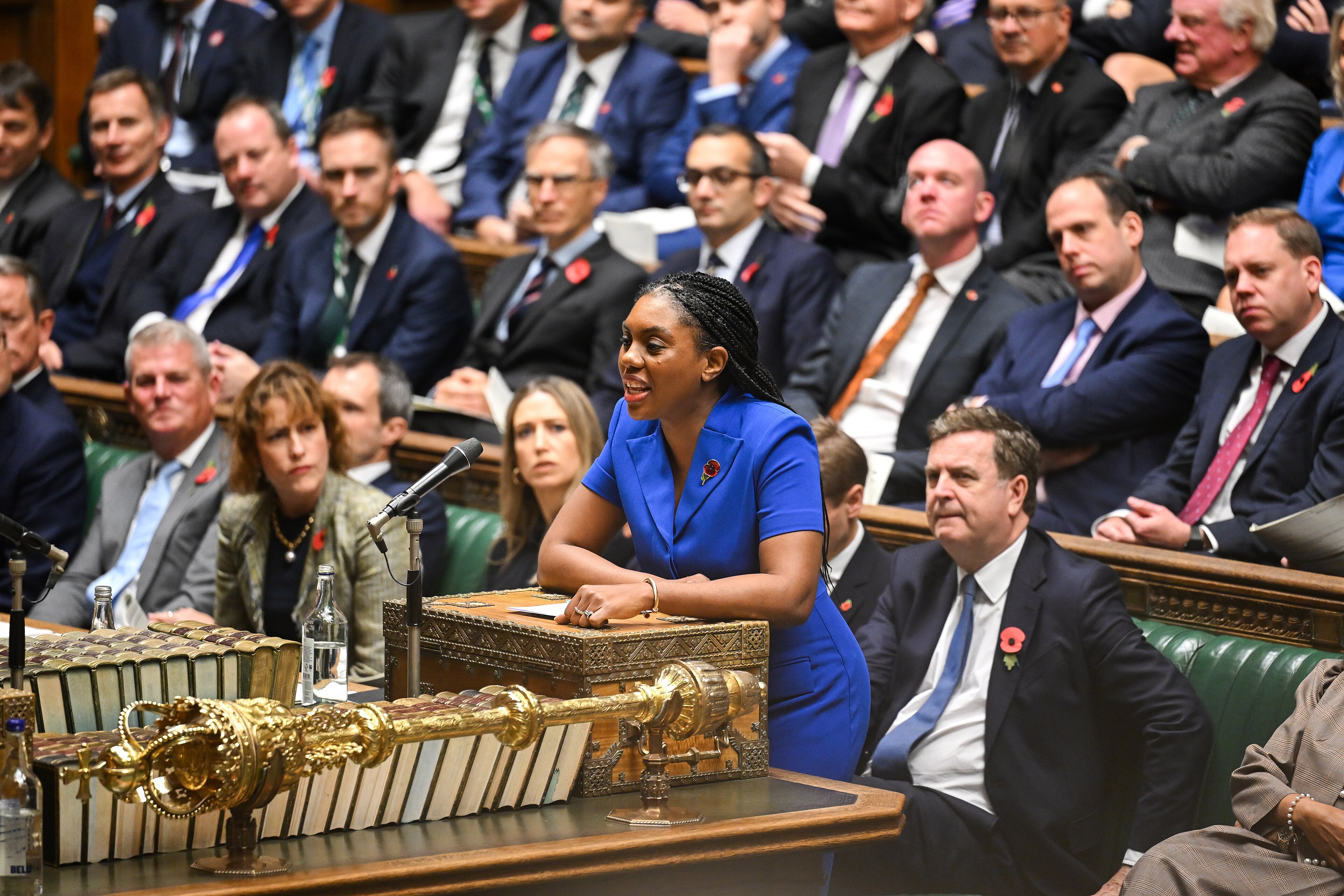

Onyekachi Wambu responds to the Leader of UK’s Conservative Party's comment that, rather than abstaining, the UK should have voted against the UN Resolution Condemning Slavery as a Crime Against Humanity.[1]
Sister Kemi, yes, we get it. You’re in a political knife fight – which means you don’t even have to believe half of what comes out of your mouth but need to respond to the logic of your position. You lead a Conservative Party that didn’t just lose power - it left the stage in disgrace and is now being aggressively outflanked on the right by Reform, outflanked again by Restore, and outshouted on the streets by Tommy Robinson and his street mob. Now you posture to the mob, by dressing up historical minimalism (abolition) as virtue. Asking all to believe that a rapist, who repents, and stops raping, owes nothing of redress to their violated victim, but should instead be celebrated and put on a pedestal in the public square! You risk being catalogued in modern times, alongside those who historically colluded in the gruesome enterprise.
However, your problem isn’t just ethical - it trespasses into territory where politics should tread carefully. The UN resolution, introduced by Ghana and backed by an overwhelming global majority, was not some opportunistic cash grab, despite how it is being caricatured. It was a continuation of a long, delicate, and deeply necessary process: repairing the breach between Africans on the continent and African descendants in the diaspora.
That breach is not abstract. It is one of the central fractures shaping global African life – a trust deficit centuries in the making. And in recent years, painstaking work has gone into rebuilding that trust. After the 1994 victory in South Africa, which ended over 400 years of western codified African inferiority, the African Union, CARICOM and global African civil society movements have aligned around a reparations agenda that is as much about recognition, reconciliation and healing, as it is about material repair.
Ghana’s leadership on this - echoing its historic role under Nkrumah during decolonisation - is not accidental. It is part of a deliberate attempt to stitch together a global African consensus. That kind of work is slow, fragile, and easily undone.
Which is precisely why your kind of careless politicking is so damaging. What you offer is not a serious engagement with history, ethics or justice - it is a domestic talking point, deployed for short-term gain in a shrinking domestic and global political marketplace. All this, apparently, in pursuit of leading a declining power that has already burned key bridges with the European Union and now finds itself increasingly scapegoated and outmanoeuvred by its so-called “special relationship” ally, which is getting ready to eat its FIRE and Gulf lunch.
There’s a Yoruba proverb for this: the stranger at a funeral who cries louder than the family of the bereaved. Such a person is not admired - they are usually viewed with suspicion. And, judging by the polls, you are attracting much the same response.
Because of your own complicated relationship with your country of heritage, you were diplomatic and kept your mouth shut during the recent state visit of Nigeria's President to the UK, despite being the Opposition leader. Just as you knew when to keep quiet during the Nigeria state visit, you should keep quiet about this existential issue for the future of Global Africa. This is beyond the grubby domestic politicking of a here today, gone tomorrow politician.
Onyekachi Wambu, co-founder African Remembrance Day.
Endnote