



Reassessing Africa’s Relegation of Indigenous Religions and the Right to Religious Freedom
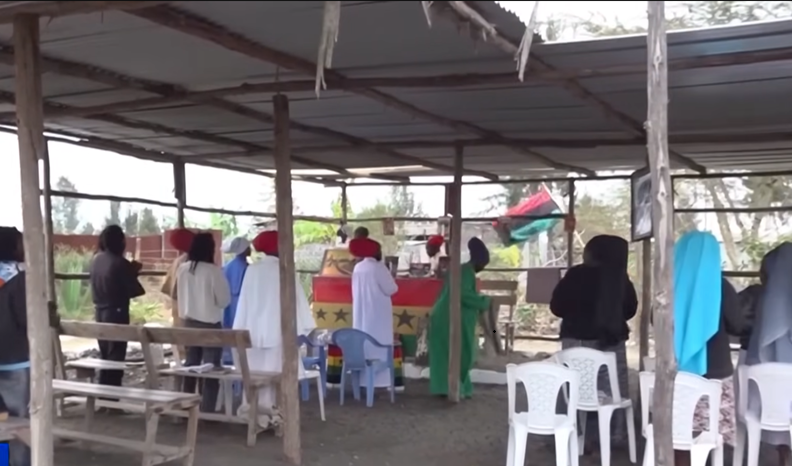
Using the Kenyan Rastafari lawsuit as a case, this article argues that colonial legacies marginalise African indigenous religions, advocating for their legal recognition, protection, and a commitment to upholding broader religious freedom.
Indigenous religions have faced marginalisation, stigmatisation, and misrepresentation in African countries. The Rastafari Society of Kenya’s case,[1] which seeks to decriminalise the use of cannabis for religious and medicinal purposes, calls for reflection on Africa’s relegation of indigenous religious practices. Africa’s encounter with Christianity and Islam, spread through Arab contact, has led many to cast indigenous African spiritual practices as primitive, shameful, sinister, and sometimes demonic. Followers of Africa’s now dominant faiths, Christianity and Islam, often view indigenous practitioners as deviants, outlaws, or infidels. These attitudes, besides being social prejudices alone, have also shaped religious laws and policies in several African countries, limiting fundamental human rights, including religious freedom.
As conversations around epistemic decolonisation gain momentum across Africa, there is an urgent need to reassess prevailing attitudes toward indigenous religious practices. Africans must interrogate the influence of Western and Arabic religious worldviews on African spirituality. There must be a conscious decolonisation of individual Africans through education and media awareness. Governments in Africa should refrain from policing indigenous religious practices and rather safeguard the right to religious freedom. On their part, practitioners of African indigenous religions must ensure their practices are harmless to the public and respect the rights of non-practitioners.
The demonisation of African indigenous religions has far-reaching consequences for all African people, not just for those who actively practise them. Religion, as a system of belief, is a vital part of cultural civilisation, heritage, and history. Indigenous African religions often serve as spiritual and cultural links between present generations of Africans and their ancestors. They are important vehicles through which indigenous cultures, values, and traditions pass from one generation to the next. To portray these religions negatively, beyond a critique of belief systems, is a distortion of African history and identity—one that risks alienating Africans from their own cultural foundations. Demonisation also treats African indigenous religions as inferior to Christian and Islamic religions, which are not indigenous to Africa. In religious discourse, Christianity and Islam fall under “monotheistic” religions with the “one true God,” while African religions are “polytheistic” with “false gods.” This treatment reinforces racial hierarchies.
More troubling is that colonial rule, which sought to marginalise indigenous practices in favour of competing Western cultures, instigated this demonisation as the history of cannabis prohibition shows. Angelo Brown[2] traces the criminalisation of cannabis to “ideologies perpetuated by colonial histories, racism, and imperialist principles.” Brown further argues that the prohibition of cannabis formed part of a broader Western campaign to “civilise” those deemed “uncivilised.” Despite the long-standing use of cannabis among Black communities[3] for food, medicine, and religious practice, many Western colonial powers condemned its use within their colonies and later pressured the United Nations to classify it as a dangerous substance in 1961.[4]
Conversely, authorities have not applied the same level of restriction to substances such as alcohol and tobacco, despite causing comparable or even greater harm than cannabis. It is this historical contradiction that makes the ongoing Kenyan Rastafari case both interesting and revolutionary.
Before colonialisation, cannabis was lawful in Kenya[5] and held spiritual and medicinal significance among several indigenous African communities like the Beni Diamba of the Congo, the Luo and the Agikuyu of Kenya, and Rastafari practitioners, who used it for healing and as an aid to spiritual meditation. During colonial rule, however, British administrators prohibited cannabis,[6] acting on the belief that its use undermined the productivity of African labourers in their employ. Meanwhile, the administrators permitted cigarette companies from Britain and other Western countries to market and sell tobacco products in Kenya, promoting an alternative substance with its own well-documented health risks.
This colonial framework did not disappear at independence, as the postcolonial government has continued to enforce and justify it on the grounds of protecting public mental health and preventing substance abuse. For example, Kenya’s Narcotic Drugs and Psychotropic Substances (Control) Act outlaws the use of cannabis for any purpose.[7] This substantiates the claim that the criminalisation of cannabis is among the enduring legacies of colonial rule and racial hierarchy. Similarly, in Nigeria, the National Drug Law Enforcement Agency Act prohibits the use of cannabis for whatever purpose.[8] South Africa’s Cannabis for Private Purposes Act permits the use of cannabis only for private consumption.[9]
The criminalisation and constant policing of African indigenous religions by governments in Africa restrict religious freedom. Restricting the use of articles of worship, such as cannabis, in the Rastafari case in Kenya, also disregards the freedom of expression. Pew Research Centre’s 2022 report[10] showed that the majority of African countries had minimal protections for religious freedom, with 46 of 48 countries surveyed reporting cases of harassment of religious groups. Traditional healers often face stigma[11] and mistrust from biomedical professionals, which hinder collaborative care. In Nigeria, schools, especially primary and secondary, compel students to choose between Christian or Islamic studies regardless of their traditional faith, and prohibit the wearing of traditional symbols, while allowing Christian crosses or Islamic headscarves. Malawian schools formerly excluded Rastafarian children because of religious requirements to wear dreadlocks, though a court action challenged this in 2020. Restricting African indigenous religions while allowing Christianity and Islam to operate freely contributes to growing hostility against practitioners of indigenous religions. In 2020, Islamic State fighters in Mozambique attacked an initiation ceremony[12] and beheaded participants. Africa's global ranking in human rights, particularly religious freedom, presents the continent as politically backward and socially underdeveloped, and as restricting economic opportunities.
Further reinforcing these patterns of discrimination and hostility are national legal frameworks that formally restrict religious freedom. Despite the recognition of freedom of worship under international human rights law, several African countries have laws restricting religious freedom. Eritrea[13] only recognises four religious groups: Eritrean Orthodox, Roman Catholic, Evangelical Lutheran, and Sunni Islam. All other religious groups, including African indigenous religions, are illegal, and their members face frequent arrest and detention without charge. In Mauritania, the constitution establishes the country as an Islamic Republic, and Article 306 of the Mauritanian Penal Code (2018) punishes[14] blasphemy and apostasy with the death penalty. While there is protection for Islam, there is none for other religions, such as African indigenous religions. Similarly, in Somalia, it only recognises Islam, and in many regions, practising another faith can lead to execution or mob violence. In Rwanda, while the constitution guarantees religious freedom, the Penal Code criminalises “insult, blasphemy, or defamation of religion” with up to five years’ imprisonment. The Rastafari case in Kenya shows the growing trend of restrictions on religious freedom.
For Africa to decolonise itself and reclaim its cultural pride and dignity, it must begin by reorienting its people to value, preserve, and prioritise their indigenous cultures and belief systems. One of the most effective means of achieving this reorientation is through education and media awareness, with a focus on individual Africans and communities. Research findings, including recommendations from the United Nations Educational, Scientific and Cultural Organisation,[15] have shown that deliberate and inclusive education can deconstruct stereotypes, challenge inherited prejudices, and reshape social attitudes. Education, therefore, plays a vital role in correcting misconceptions and fostering a deeper understanding of the historical, cultural, and spiritual significance of indigenous traditions. Article 26 of the Universal Declaration of Human Rights (UDHR) mandates that education promotes “understanding, tolerance and friendship” among all religious groups. If Africa is serious about decolonisation, countries across the continent must incorporate accurate and balanced teachings on indigenous religions into school curricula and broader public discourse. This will help younger generations develop greater respect for their heritage, a stronger sense of identity, and renewed cultural confidence.
Beyond formal education, parents, cultural activists, intellectuals, and religious and community leaders also play a crucial role in this process of reorientation. This responsibility should not rest solely with advocates of the indigenous cultural renaissance, such as PLO Lumumba[16] and Joshua Maponga[17]. African religious leaders, including those within Christianity and Islam, must also contribute to dismantling harmful stereotypes surrounding indigenous spiritual traditions. For instance, Fr. Angelo Chidi Unegbu, despite being a Catholic priest, has been outspoken in condemning the demonisation of indigenous religious practices and in advocating for a more balanced understanding of African spirituality.[18]
The media equally has an important role to play in this process of re-education. The entertainment industry, including Nigeria’s Nollywood, often promotes negative stereotypes by depicting African traditional practices as fetishistic or evil. Reshaping public attitudes, fostering pride in African identity, preserving cultural heritage, and promoting understanding and mutual respect among diverse religious communities would require an unbiased, balanced, and informed portrayal of African indigenous religions across television, film, documentaries, and other media.
Also crucial to transforming perceptions of indigenous African religions is the need to deconstruct hegemonic Western and Arab conceptions of religion, which portray African spiritual traditions as primitive or diabolical. For example, in the fifteenth century, Pope Nicholas V issued decrees such as Dum Diversas (1452) and Romanus Pontifex (1455), urging European powers, particularly Portuguese explorers, to “capture, vanquish and subdue” African peoples regarded as “pagans.”[19] Although the Catholic Church formally repudiated the underlying doctrines associated with these decrees in 2023, perceptions of African indigenous religions as “pagan,” “fetish,” or “satanic” remain widespread, among Western audiences and many Africans who adhere to Christianity or Islam.
Arab-Islamic civilisation has partly contributed to the marginalisation of indigenous African spiritual traditions. When Uthman Dan Fodio launched a jihad across parts of present-day Nigeria, he invoked “paganism” as a justification to convert “infidels” to Islam. Uthman Fodio's ideology reflects a broader tradition within certain jihadist movements that sought to displace other faiths, including indigenous African religions, an influence that continues to persist in parts of Africa today. Contemporary extremist groups such as Boko Haram illustrate the enduring consequences of such ideologies. The group has repeatedly targeted individuals accused of “witchcraft,” particularly women, using these allegations to justify executions and mass killings. Reports from 2022 to 2025 documented incidents in Borno State in which the group labelled women as “witches” and subsequently killed them, highlighting how intolerance toward indigenous spiritual beliefs can intersect with violent extremism.[20]
Deconstructing Western and Arab hegemonic views of religion will require individuals, policymakers, and scholars to critically reassess their understanding of African religions and confront the social, cultural, and political consequences that these portrayals have had for African peoples and identities. Among other things, this process will entail the de-marginalisation of African indigenous religions through their recognition and acceptance as equal and legitimate systems of belief. Ending the government's criminalisation of African religious practices remains critical to religious freedom, which guarantees protection regardless of the religion a person or group practices.
African countries do not need restrictive laws against indigenous religions, but must treat them as a fundamental human right and protect them accordingly. The Universal Declaration of Human Rights (UDHR) guarantees protection for religious freedom, and the African Charter on Human and Peoples' Rights (ACHPR) provides specific enforcement procedures for it. Article 2 of the UDHR entitles everyone to all human rights “without distinction of any kind,” specifically listing religion as a protected category.[21] Article 18 further states that everyone has the right to freedom of thought, conscience, and religion, including the freedom to express that religion or belief in teaching, practice, worship, and observance, whether alone or in community.[22] Similarly, Article 8 of the ACHPR guarantees the “freedom of conscience, the profession and free practice of religion”, and Article 2 prohibits discrimination based on religion.[23]
The UN and AU should compel member states to end state-sponsored discrimination and violence against African indigenous religions, as they do regarding Christianity and Islam. There should be persistent pressure on countries to implement the UDHR and ACHPR to protect religious freedom. Countries should officially recognise African indigenous religions, grant them legal protection, and stop interfering with their practices. The Republic of Benin is the only African country that officially recognises traditional religion in its constitution and grants it a national holiday. In Nigeria, while there are several national Christian and Islamic holidays, petitions by traditional religious groups for the formal recognition of national holidays have continued without success. African countries should follow Benin’s progressive laws on religious freedom. They should prosecute individuals and groups who perpetrate violence against practitioners of indigenous religions. The government must ensure that schools at all levels of learning, the media, and the entertainment industry stop depicting African indigenous religions negatively.
To ensure mutual interreligious understanding, peaceful coexistence, and minimise religious discrimination, practitioners of African indigenous religions must refrain from using unlawful and insecure substances or articles of worship. Religious practices must also respect human rights, including freedom of movement, public health and safety, human dignity, and privacy. Examples of harmful practices include open firing of guns, flogging, bodily cuts, blockades, female genital mutilation (FGM), human killings, and cruel treatment of animals in ritual sacrifice.
Sudan, despite its criminalisation of FGM, was among the countries with the highest rates globally in 2020.[24] In Tanzania and Malawi, people with albinism often face severe threats. Between 2014 and 2020, Malawi recorded over 150 cases of killings or grave robberies targeting individuals with albinism for their body parts.[25] Ghana, Togo, and Benin still practice the Trokosi system, which involves sending young virgin girls to shrines to serve priests as “slaves of the gods” to atone for crimes committed by their relatives.[26] In Nigeria, masquerade festivals often involve practices that infringe on civil liberties and public safety. The Oregun communities in Lagos announced mandatory “lock-in” curfews in December 2025 to allow the free movement of sacred Agan masquerades.[27] Agaba Masquerades in parts of Southern Nigeria involving “area boys” have links to supremacy battles between rival cult groups, leading to gunfire and injuries to innocent passers-by.[28]
Practices that are harmful and infringe human rights present African traditional practitioners negatively, fuelling governments’ restrictions and violence against them. Their practices should contribute to societal transformation, advancing interreligious understanding and peaceful coexistence. They should promote practices such as herbal healing and cultural preservation, while discouraging harmful ones.
Ending Western-influenced biases against African indigenous religions is vital to ensuring religious inclusion and mutual interreligious understanding in Africa. Decolonising the religious worldview of Africans through constructive engagement will advance interreligious harmony among African people. Legal reforms by governments in African countries remain fundamental to ensuring religious freedom. Africa must promote religious freedom and inclusion for its social, economic, and political prosperity.
Peter Chekwube Abugu is a lawyer and researcher with a strong interest in human rights and democracy.
Jude Terna Ayua is a lawyer, policy analyst, and contributor at African Liberty, with a focus on human rights, education, and blockchain technology.
Endnotes
[1] Daily Nation. “Court Declines to Admit Bhang as Evidence in Rastafari Society Case.” Daily Nation. February 5, 2026.
https://nation.africa/kenya/news/court-declines-to-admit-bhang-as-evidence-in-rastafari-society-case-5349928. See also BBC News. “Rastafarians in Kenya Fail in Bid to Get Cannabis Legalised for Religious Purposes.” BBC News. July 15, 2026. https://www.bbc.co.uk/news/articles/c0lyl5ryyr4o.
[2] Brown, A. “The Criminalization of the Cannabis Plant: Decolonizing the Harmful Enforcement”. Decolonization of Criminology and Justice, Vol. 4, no. 2, Nov. 2022, pp. 59-68, https://ojs.aut.ac.nz/dcj/article/view/47.
[3] ibid
[5] Farm Kenya. “On Cannabis, Culture, and Colonialism.” Farm Kenya. July 29, 2018. https://farmkenyablog.com/cannabis-in-kenya/
[6] ibid
[8] The Act established the National Drug Law Enforcement Agency to enforce laws against the cultivation, processing, sale, trafficking and use of hard drugs and to empower the Agency to investigate persons suspected to have dealings in drugs and other related matters. It is available on the following website: https://ngfrepository.org.ng:8443/jspui/handle/123456789/3175
[9] See https://www.saflii.org/za/legis/consol_act/cfppa7o2024336/. A pdf version of the Act is available at
https://www.saflii.org/za/legis/consol_act/cfppa7o2024336.pdf
[10] Samirah Majumdar. “Median scores for government restrictions and social hostilities stay the same in 2022.” Pew Research Center. December 18, 2024.
[11] Wollie, Alemayehu Molla et al. “Challenges and opportunities for integrating traditional healing approaches with biomedical care for mental illness: A scoping review from healers' perspectives.” PloS one vol. 20,6 e0325353. 3 Jun. 2025, https://pmc.ncbi.nlm.nih.gov/articles/PMC12132947/#ref-list1.
[12] United States Commission on International Religious Freedom. “Religious Freedom Concerns for Followers of African Traditional and Indigenous Religions.” USCIRF. April 2023. https://www.uscirf.gov/sites/default/files/2023-04/2023%20Factsheet%20-%20ATIR%20FINAL.pdf.
[13] CSW. “Eritrea: Restrictions on Unrecognised Religious Groups.” March 22, 2022. https://www.csw.org.uk/2022/03/22/report/5629/article.htm.
[14] Office of the High Commissioner for Human Rights. “Death Penalty: UN experts urge Mauritania to repeal anti-blasphemy law.” OHCHR. June 7, 2018.
[15] United Nations Educational, Scientific and Cultural Organization. “UNESCO launches new programme to address racism in and through education in Europe.” UNESCO. March 20, 2026. https://www.unesco.org/en/articles/unesco-launches-new-programme-address-racism-and-through-education-europe.
[16] North-West University. “Biography of Professor PLO Lumumba.” North-West University. https://www.nwu.ac.za/sites/www.nwu.ac.za/files/files/home/Calendar/Bio-Prof-PLO-Lumumba.pdf.
[17] Pindula. “Joshua Maponga.” Pindula. March 18, 2026.
[18] Unegbu, Angelo Chidi. “My Response to Fr. Kelvin Ugwu on the Ongoing Discussion about Burying our Dead with Cows.” Fr Angelo Blog. October 28 2025. https://frangelo.com/my-response-to-fr-kelvin-ugwu-on-the-ongoing-discussion-about-burying-our-dead-with-cows/.
[19] Lowcountry Digital History Initiative. “African Laborers for a New Empire: Iberia, Slavery, and the Atlantic World” LDHI African Passages, Lowcountry Adaptations.
[20] Leo Igwe. “Killing of alleged witches in Borno is outrageous.” The Guardian Nigeria. November 22, 2022. https://guardian.ng/opinion/killing-of-alleged-witches-in-borno-is-outrageous/.
[22] Ibid
[24] United Nations Children's Fund. “Female Genital Mutilation.” UNICEF. March 2024. https://data.unicef.org/topic/child-protection/female-genital-mutilation/.
[25] Office of the High Commissioner for Human Rights. “Independent Expert on the rights of persons with albinism.” OHCHR. https://www.ohchr.org/en/special-procedures/ie-albinism.
[26] Owusu, Emmanuel Sarpong. “The Superstition that Enslaves Virgin Girls in Ghana: An Exploration of the Origins, Evolution, and Practice of Trokosi,” Dignity: A Journal of Analysis of Exploitation and Violence: Vol. 8: Iss. 1, Article 4. 2023. https://digitalcommons.uri.edu/dignity/vol8/iss1/4/.
[27] Cynthia Ajiboye. “Oregun Leaders Announce Mandatory Lock-In and Night Curfew for Egungun Festival.” Olorisupergal. November 27, 2025.
https://olorisupergal.com/oregun-leaders-impose-mandatory-lock-in-egungun-festival-2025/.
[28] Dr David Pratten. “Militant masks: youth, performance and insecurity in Nigeria.” School of Anthropology and Museum Ethnography, University of Oxford. 2018.
https://www.anthro.ox.ac.uk/militant-masks-youth-performance-and-insecurity-nigeria.