



Peace with Al-Shabaab is Indispensable for Somalia’s Recovery
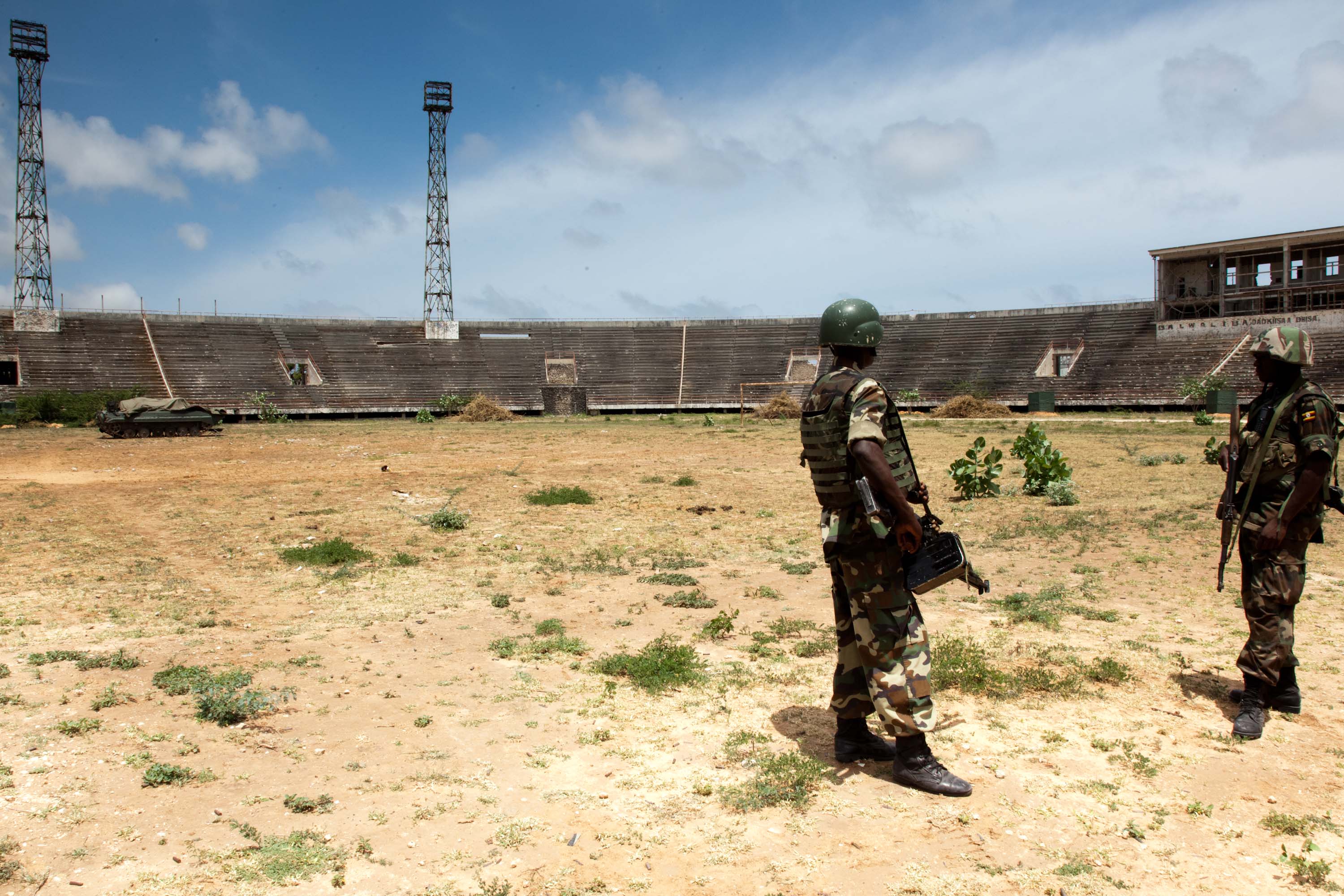

Al-Shabaab is one of the obstacles to peace in Somalia, but the political elite, elements of the international community, and the African Union are deeply implicated in the catastrophe. Thus, all perpetrators of the calamity must be involved in negotiating peace, not just those framed as legitimate.
There is a grave concern in the African Union (AU) about the possible collapse of AU military stabilization force (AUSSOM) in Somalia due to the declared termination of American funding.[1] This externally funded AU force has been in Somalia since late 2006 at an annual cost of $1.2 billion.[2] Nevertheless, it has been unable to conquer a determined ragtag insurgency, Al-Shabaab, that numbers around 6,000 young men and boys.
For nearly two decades, Al-Shabaab’s suicide bombings and tyranny have been blamed as the obstacle to peace in Somalia. These claims are only partially valid since the main perpetrators of Somalia’s nightmare have been the dominant political class and its international allies for decades. This essay has two objectives. First, it reveals that Somalia’s calamity predates Al-Shabaab by redefining the nature of violence in the country and by showing that the culprits implicated in the production of the catastrophe are many. Second, it advances that a principled and future-oriented reconciliation with Al-Shabaab could initiate a new era of peace in the country.
The Original Sin
Somalia was Africa’s most democratic country[3] in the 1960s. However, such a reputation concealed the presence of sectarian political groups in the country that would subvert the population’s civic bonds. One such faction captured the state in 1967, looted the treasury, and turned the country into a single-party state.[4] Such abuse of power gave the military the excuse to overthrow the regime in 1969. [5]
To enhance its legitimacy, the military initiated several popular schemes aimed at eradicating corruption and political tribalism, and advancing adult literacy.[6] However, this agenda waned as the junta became repressive and tribalistic in the late 1970s. Thereafter, economic and social conditions deteriorated until the regime crumpled in 1991.[7] Tragically, the political opposition failed to agree on a common agenda. This led to state failure and the emergence of warlords and faction leaders. Thus, authoritarian and corrupt political leadership, tribalist opposition led to civil war, warlords, famine, and political fragmentation. Consequently, sectarian politics, pervasive corruption, and mistrust[8] became the fate of Somalis. This is the original sin.
The disintegration of the state led to a precipitous decline in equality of life and literacy, and loss of civic ideas. Finally, when some form of government was reestablished in 2004, the dominant actors used the frail state as a source of loot[9] and as an instrument for social fragmentation rather than a vehicle for national redemption.
Al-Shabaab’s Genesis & Other Violent Perpetrators
After 15 years of tyrannical warlords, faction leaders, the loss of millions of Somali lives, and the destruction of society’s social fabric, a group of Muslim clerics, known as the Union of Islamic Courts (UICs) mobilized the residents of the capital, confronted the warlords, and within six months defeated them in 2006 without external assistance.
Somalis celebrated Mogadishu’s liberation. However, America and its allies[10] maligned the UICs. Rather than applauding the restoration of peace in Mogadishu, the UICs was accused of being a front for ‘Islamic’ terrorists. Consequently, America and its allies concocted a plan to: (a) break up the UICs into moderates and extremists, (b) establish an African Union (AU) military force to deal with the ‘extremists’, and (c) install the UICs’ ‘moderate’ leader as Somali president.[11] The plan spawned four outcomes. First, the prospect for peace and national recovery was shattered; Second, the UICs was destroyed. Third, the disregarded UICs members were further radicalized. Fourth, this renegade faction turned their guns against the new government. This is the political genesis of Al-Shabaab.
Exactly twenty years later, Al-Shabaab controls the countryside in south-central Somalia while the AU force commands Mogadishu and several other towns. Hence, the International Community’s, the AU’s, and Somali regimes’ strategy to defeat Al-Shabaab has objectively failed.[12]
What Explains Al-Shabaab’s Tenacity?
Critics assert that Al-Shabaab’s enduring power is due to its brutality, but the story is more complex. Four instances illustrate the superiority of some of Al-Shabaab’s governance methods to those of the regimes in the national capital and the provinces.
First, Al-Shabaab’s political structure appears streamlined as there is no available evidence showing internal administrative fragmentation.[13] This is in contrast to the Mogadishu government’s deep corruption and maladministration, and fragmentations in regional administrations.[14]
Second, Al-Shabaab’s justice system works ‘effectively’. Numerous litigants who sought Al-Shabaab’s justice reported to me[15] that they received timely rulings without paying any bribes. By contrast, the government’s courts and offices are known for their inordinate malfeasance and long delays.[16]
Third, businesspeople who travel through Al-Shabaab controlled areas vouch for the absence of extortion and fragmented administration. For example, if a trader with merchandise travels from Mogadishu to Kismayo, a distance of 500 km in Al-Shabaab controlled areas, s/he would be taxed only once[17] and the receipt s/he receives at the start of the journey remains valid throughout the area. In contrast, a farmer[18] who takes her fresh produce from Afgoi to Mogadishu’s market, a distance of 15 Km, pays several taxes to three different “state agents.”
Finally, Al-Shabaab does not segregate the population under its domain into tribal political groups, while government administrations do so at all levels.[19]
Therefore, it is reasonable to conclude that there is more to Al-Shabaab’s resilience than tyranny. Al-Shabaab’s governance approach has cajoled people to tolerate the group’s domination.
Two Forms of Violence & the Prospect for a Negotiated Peace
Two kinds of violence have marred Somalia for nearly fifty years: naked and silent violence.[20] Naked violence is the widely known version that involves physical torture and mass murder. The great perpetrators of this bloodshed have been the military regime (1988-1991), warlords (1992-2006), and Al-Shabaab (2009 -). Examples of this type were the devastating military bombing of the cities of Hargeisa and Burao[21] in 1988, the regime’s poisoning of nomadic water wells in the northeast region, the horrors of the warlords years, and Al-Shabaab’s suicide bombings and targeted killings since 2009. These carnages victimized relatively a smaller number of people than the many millions of lives that invisibly perished during the long decades (1978 - 2026) as a consequence of politically induced silent violence in the form of destitution, famine, disease, hopelessness, and the loss of three generations of youth to illiteracy and unemployment.
Three years of observations and field work in Somalia have convinced me that most Somalis acknowledge the existence of these two forms of violence and their perpetrators. Such shared understanding of the problem is the first step towards peace. Consequently, I interviewed groups of politicians, Al-Shabaab sympathizers, and youth about the possibility of a peace settlement.[22] They all acknowledged the paramount need for a negotiated settlement. These diverse informants proposed that the first step to remove some of the major obstacles to peace is to declare in advance the key outcomes of the negotiated process. Here is a summary of the thoughts of informants regarding the necessary outcomes: (a) a generous and serious reading of Islam must be the foundation stone of a new constitution;[23] (b) all forms of political violence must be prohibited in the post-negotiated settlement; (c) inclusive civic identity must be fundamental to the country’s political remaking rather the current political tribalism; (d) an independent public service commission must be created that will have the lone responsibility for the reestablishment of a professional civil service; (e) an independent anticorruption agency must be established that will have the sole authority to monitor and investigate malfeasance in the public sector; (f) an autonomous constitutional court must be created to adjudicate constitutional challenges; (g) and finally and most critically a non-partisan professional military and police forces must be created. These issues appear to reflect the hopes of most Somalis which the three inducers and sustainers of the catastrophic violence have ignored for so long at such a dreadful human cost.
Coda
This field-based research and observations offer a clear diagnosis of the Somali calamity and who are the major culprits implicated. It suggests that rather than endlessly fight and demonize Al-Shabaab, ignore the evil deeds of the elite, and the culpable role of elements of the international community (including the African Union), a less costly, inclusive, reasonable, and a more attractive alternative is one where the co-producers of the disaster: the elite, members of the international community, and Al-Shabaab, admit their offenses and engage in genuine peace negotiation. A wide spectrum of Somalis appear to endorse such a strategy, but the question is: are the chief perpetuators of the violence ready to relent!
Abdi Ismail Samatar is a Senator in the Somali parliament & Pan African Parliamentarian, professor of geography at the University of Minnesota, and extra-ordinary professor at the University of Pretoria.
Endnotes
[1] https://issafrica.org/iss-today/rethinking-the-au-s-somalia-peace-mission-after-us-funding-cuts. More recently, it has been reported that the US has delayed the termination of the funding for another year.
[3] Samatar, Abdi Ismail. Africa's First Democrats: Somalia's Aden A. Osman and Abdirazak H. Hussen. Indiana University Press, 2016.
[4] Samatar, Abdi Ismail. "Leadership and ethnicity in the making of African state models: Botswana versus Somalia." Third World Quarterly 18, no. 4 (1997): 687-708.
[5] Lewis, Ioan M. "The politics of the 1969 Somali coup." The Journal of modern African studies 10, no. 3 (1972): 383-408
[7] Africa Watch. Somalia: A Government at War with its People. New York, 1990.
[8] Samatar, Abdi Ismail, and Ahmed I. Samatar. "Bereft of trust: Reflections on the causes of the Somali catastrophe." Bildhaan: An International Journal of Somali Studies 22, no. 1 (2022): 4.
[9] A leading Somali journalist reported that a presidential candidates bought MPs votes with hard cash Nairobi, Kenya, November 20, 2004.
[10] Samatar, Abdi Ismail. Ethiopian invasion of Somalia, US warlordism, and AU shame. Review of African Political Economy, 20 (2007)155-165.
[15] Samatar, Abdi. Fieldnotes, Mogadishu, 2021 - 2025.
[16] Ibid.
[17] Ibid. Fieldnotes, January-February 2026. Mogadishu
[18] Ibid.
[19]Parliamentary seats are allocated to clans while employment in public sector is similarly allocated. Most ministries have become tribal ghettos.
[20] Watts, Michael J. Silent violence: Food, famine, and peasantry in northern Nigeria. Athens: University of Georgia Press, 2013.
[21] Africa Watch. Somalia: A Government at War with its People. New York, 1990.
[22] Abdi Samatar, Fieldnotes, 2024-2025.
[23] This is the language my informants used, but can be rewritten as an inclusive and justice-oriented reading of Islam that respects the integrity and rights of all people. Although, my informants most likely did not have religious diversity in mind as that is generally interpreted in religiously diverse societies.