



Strengthening the Private Anti-Retroviral Supply Chain in Nigeria
.jpg)
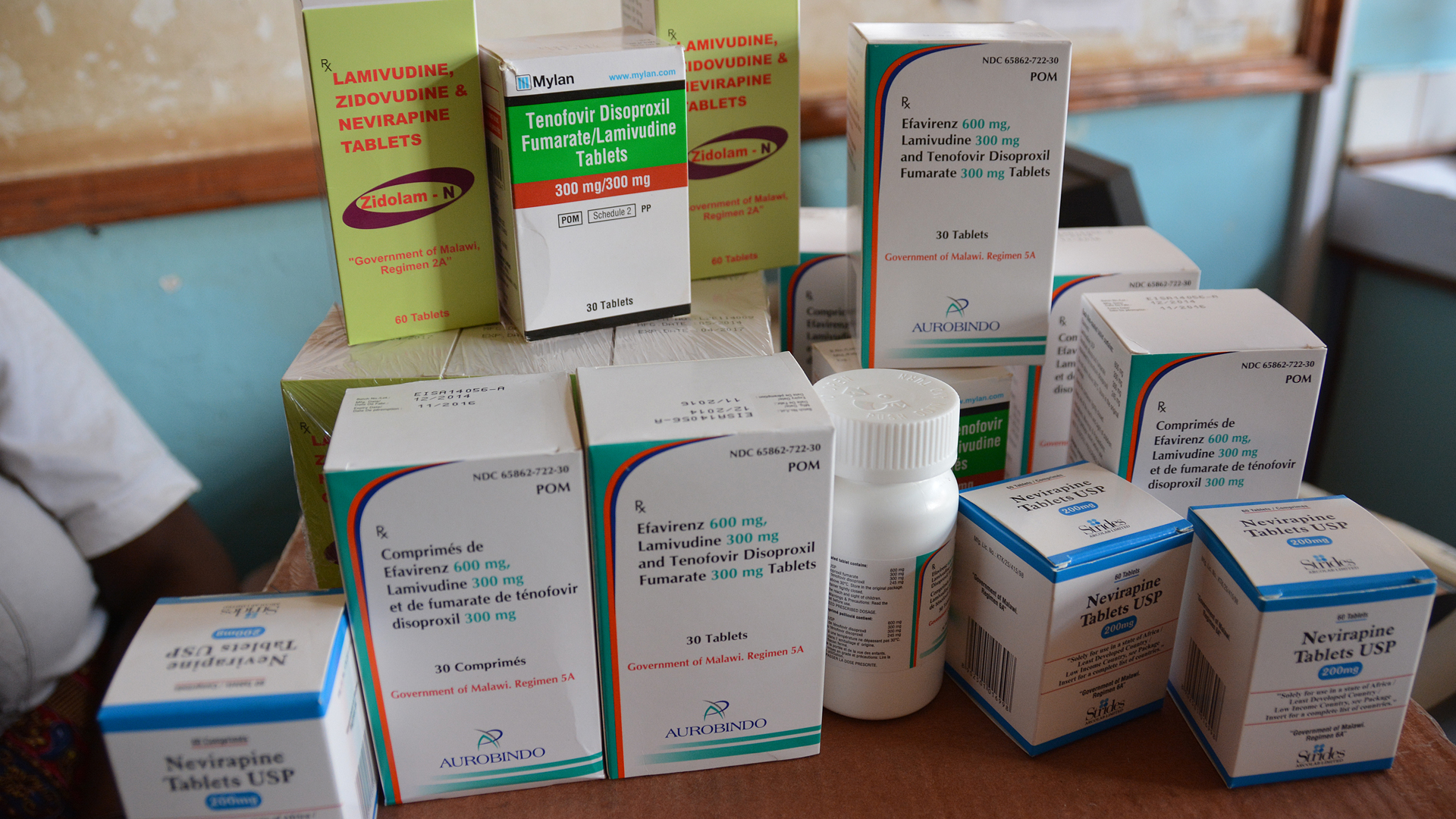
A call for rethinking the production and supply of anti-retroviral drugs in Africa
In 2003, when President George W. Bush announced the President’s Emergency Plan for AIDS Relief (PEPFAR), it marked the single largest commitment by any nation to combat a disease. Over the past two decades, the program has contributed to saving more than 25 million lives and has ensured that millions of babies are born HIV-free. But in 2025, as the U.S. Congress failed to renew PEPFAR’s mandate following Trump’s elimination of USAID, many African countries, especially Nigeria, were left scrambling. The political turn in the United States reveals that Africa’s overdependence on external donors for lifesaving medication is not sustainable. From its inception, however, PEPFAR was not necessarily a benign intervention nor devoid of political and ideological underpins beyond the health benefits it has offered a number of Africans. PEPFAR was also about extending control over family planning in Africa through condom distribution and promotion, African sexuality, reproduction, and promoting American neoconservative ideas in African form. PEPFAR was driven by neoliberal rubrics, and much of the money was spent in the US, with less than 10% reaching the continent.
The case of PEPFAR, the very intervention in HIV/AIDS for the sake of prevention and treatment, together with an array of related activities in health and development, constitutes, in itself, a manifestation of securitization. Promoting ‘hope’ and ‘responsibility,’ PEPFAR, moreover, capacitates psychologically and materially towards ‘self-reliant economic growth’ and eventual global marketplace integration and competition. This is securitization through integration in liberal modes of production and trade. Such securitization is explainable by the dramatic increase in the volume of funds available to organizations involved, and politico-symbolic support which is allocated to the whole infrastructure of transnational, multilevel public-private partnerships. Securitization is pursued by a will to re-engineer and normalize behaviors at the sexual level, but also in terms of political economy, and to augment popularity for the United States. The case of PEPFAR appears particularly telling, since the launch of PEPFAR roughly coincided with the launch of the Iraq invasion in 2003, and thus appears as another ‘war front’ against terrorism and other underdevelopment-related issues, such as state failure and collapse in the peripheries of the world system.
Despite its limitations, PEPFAR has been a lifeline for HIV-positive populations across the African continent by funding access to life-saving antiretroviral therapy (ART) for millions, thereby prolonging their lives and achieving viral suppression to prevent transmission. It has also built critical healthcare infrastructure and systems, provided HIV counseling and testing, supported orphaned and vulnerable children, and funded prevention programs for high-risk populations, leading to reductions in HIV infections, deaths, and mother-to-child transmission across the continent.
Africa is home to nearly 70 per cent of the global population living with HIV, with Nigeria’s share of the HIV impact estimated at over 2 million people living with HIV by early 2025, with an estimated prevalence of 2.1% among adults aged 15-49, yet the overwhelming majority of ARVs consumed on the continent are produced elsewhere. The continent’s continued reliance on global supply chains has exposed it to greater risk, first during the COVID-19 pandemic, and now, amidst shifting donor priorities and rising global instability. This is not just a public health issue; it is a strategic and economic imperative. The ability to locally produce ARVs would ensure stability in drug supply, reduce treatment interruptions, create jobs, build regional manufacturing expertise, and increase Africa’s negotiating power in global health diplomacy. It would also signal a shift from being passive recipients of aid to proactive actors in our survival.
The best thing is that we started the production of ARVs in Nigeria. Manufacturing antiretroviral drugs (ARVs) in Nigeria will help reclaim control over our healthcare systems, but it requires investment, regulatory reform, and public-private collaboration. With the right policies, Nigeria can lead its fight against HIV/AIDS. Investing in the private production of ARVs will strengthen Nigeria's supply chain. To initiate local production of Antiretroviral (ARV) drugs, significant investment is required across several key areas like Infrastructure and Facilities, Human Resources, Technology, Logistics and Supply Chain, and Regulatory Framework. This will cover Active Pharmaceutical Ingredients (API) sourcing. Some estimates suggest that $11 billion may be needed by 2030 to fund Africa's local pharmaceutical industry. In Nigeria, the estimated annual funding needed to achieve universal access to HIV treatment for 1.9 million patients is about $254.6 million. Successful local production can reduce reliance on imports, potentially lower drug costs, strengthen local capacity, create jobs, and enhance resilience to supply chain disruptions. Nigeria, for instance, aims to increase local pharmaceutical production to 70% by 2030. The development of Nigeria's health sector alone could generate almost $1.6 billion in new investment and create up to 44,000 jobs, according to IFC research.[1]
In 2001, following public pressure and international activism, under World Trade Organization (WTO) rules, countries were allowed to issue compulsory licenses to produce generic versions of patented drugs. This move enabled countries like India and Brazil to build pharmaceutical industries capable of meeting their own needs. Nigeria can do the same. Steady government policies, incentives like tax breaks, and preferential procurement practices are crucial for success. In Nigeria, the government is actively promoting domestic production of health products and attracting private sector investment.
Critics may argue that producing ARVs locally is too complex or expensive, but the cost of not doing so is far greater. When shipments are delayed or funding is slashed, people don’t just wait; they die. No continent with Africa’s burden of disease should be held at ransom to decisions made in Washington or Geneva. The irony is that Africa is often rich in the very resources that fuel global pharmaceuticals, from raw materials to labor to unmet demand. So, what we lack is not potential. Building the African pharmaceutical sector requires Research & Development (R&D) Infrastructure that covers clinical trials capacity, traditional medicine integration, regulatory drug quality control that covers standard alignment through the continent (African Medicines Agency – AMA, African Union, regional blocs like ECOWAS), skilled workforce and capital investment to leverage African Continental Free Trade Area to integrate pharma markets.
Another key perspective to consider to ensure that the ARVs supply chain in Nigeria is a success is the regulatory reform. Nigeria already hosts over 100 pharmaceutical companies. However, less than 2% of these are involved in ARV production, and most rely on imported active pharmaceutical ingredients (APIs). Regulatory bottlenecks, limited investment in Research and Development, and fragmented regional markets have stifled growth. The opportunity lies in reversing these constraints through bold policy reforms like the Nigerian Business Coalition Against AIDS (NIBUCAA) and National Agency for the Control of AIDS (NACA) establishment of the HIV Trust Fund, which aims to mobilize resources from the private sector to support HIV programs, including ARV procurement and distribution pooled procurement systems. If the state produces ARVs directly, it must operate like a lean, business-minded manufacturer, not a bureaucratic agency. The Public-Private Partnerships (PPPs) lead is the best design, the state as enabler and anchor buyer, while private partners bring efficiency, capital, and technology. Long-term, a hybrid model works with state-run labs for strategic medicines like ARVs, vaccines, and PPP-driven broader pharmaceutical production.
However, the African Medicines Agency (AMA), which began operations in 2021, offers a vital institutional backbone. If empowered and supported, it could streamline cross-border drug approval, harmonize regulations, and fast-track access to locally manufactured ARVs across the continent, not just Nigeria. The Nigerian Government, through the Federal Ministry of Health, must treat pharmaceutical self-sufficiency as a national security priority, not just a health sector concern.
Furthermore, public-private collaboration is another way to strengthen the ARV supply chain in Nigeria. In 2002, Prof. Ogbuabor noted that the long-term success of Nigeria’s HIV/AIDS response critically depends on the strategic integration of private sector mechanisms, allowing private manufacturers into the antiretroviral (ARV) supply chain. Various scholars and organizations have emphasized the strategic importance of local pharmaceutical manufacturing. Similarly, Okereke (2022) argued that the dependency on Western supply chains for essential medicines increases vulnerability in times of geopolitical shifts, just as the WHO in 2020 advocated for regional pharmaceutical hubs in Africa to address persistent medication shortages and promote health security.
The withdrawal of U.S. funding, while challenging, presents an opportunity for Africa to re-evaluate its health independence. Local manufacturing of ARVs is not only feasible but also necessary for long-term sustainability. In the long run, local manufacturing will not only improve access to ARVs but it will also build resilience against future pandemics and drug shortages. It will allow African nations to define their terms of care, develop Africa-specific treatment regimens, and reduce dependence on foreign aid that can be as fleeting as the political winds.
The relative absence of political will despite the COVID-19 crisis is due to a long history of dependence and fragmented regionalism. Most countries in Africa prefer to do things alone instead of collective production. COVID-19 didn’t affect Africa, especially Nigeria, as much as it did the rest of the world. During COVID, Africa was last in line for vaccines, even when paying. Intellectual property regimes (TRIPS) prevented local manufacturing, so instead of coordinated action to build vaccine sovereignty, African leaders largely negotiated for donations and allocations. The political cost of challenging global pharmaceutical powers (Big Pharma + WTO rules) was seen as too high. Also, debt crises and IMF programs narrowed fiscal space, and health industrial policy was deprioritized.
The politics behind these decisions is that most African Leaders may see more political advantage in maintaining patronage networks through import contracts than in building autonomous, technocratic industries, and the lack of citizen pressure. Unlike demands for cheaper healthcare access, there’s less popular mobilization around the sources of medicines. Without grassroots agitation, governments face little domestic cost for inaction. Some states fear alienating Western partners by aggressively pursuing compulsory licensing or tech transfer—so they temper sovereignty with diplomacy.
Thus, the absence of political will is not simply neglect but reflects a deeper political economy of dependency and elite interest. COVID-19 and vaccine imperialism exposed Africa’s vulnerability, but instead of radical policy shifts, many governments defaulted to short-term aid negotiations. For genuine local pharmaceutical production to emerge, politics must be repurposed away from elite interest, toward regional cooperation, and driven by popular pressure for health sovereignty as part of a broader decolonization agenda
Bunie E. Mbamalu is a public health expert and the founder of RetroViral Solutions. He can be found on LinkedIn @Dr. Bunie Mbamalu.
Endnote
[1] IFC (2025, June 3). Nigeria Country Private Sector Diagnostic (CPSD). https://www.ifc.org/en/insights-reports/2025/nigeria-private-sector-diagnostic. See also the full report IFC (2025). Nigeria: Country Private Sector Diagnostic https://www.ifc.org/content/dam/ifc/doc/2025/nigeria-country-private-se…