



Shadows of Neocolonialism: British Presence in Kenya and Russian Interests in Africa
A critical reflection contrasting Russia’s attempts to recruit Kenyans for war in Ukraine with the United Kingdom’s British Army Training Unit in Kenya and related accusations of recruiting foreign mercenaries to carry out subversive activities in Africa. Mandarini warns that Africa is a vast, interesting, and autonomous world that should not be turned into a battlefield for world powers.
Africa is a continent of 54 recognized sovereign countries with diverse political systems and relative autonomy with circumscribed ability to coercive structures of international affairs. Its history — from pre-colonial empires to struggles for independence and contemporary diplomacy — has shaped how African governments engage with external powers. In recent decades, the contest for influence has expanded beyond colonial Western partnerships to include emerging engagements with Russia, China, and other global actors. These relationships are based on a mixture of economic cooperation, security cooperation, and political alignment with specific governments or policy agendas.
I decided to take on the task of shedding light on issues tied to neocolonialism—topics that are too often ignored or distorted by mainstream global media. But beyond simply raising awareness, my deeper drive is to show people what is truly unfolding across the African continent: a reality shaped by centuries of external domination, from the era of chattel slavery and colonial partition to the more subtle, yet equally destructive, forms of economic and political control that persist today. For too long, Africa has labored under the yoke of empires—old and new—yet it remains a vast, richly complex, and fiercely autonomous world. It is not, and should never be, a mere battleground for rival powers jockeying for resources or influence. My hope is to help reclaim the narrative, centering African voices and realities rather than allowing the continent to be treated as a chessboard for foreign interests.
The British Army Training Unit in Kenya (BATUK): Partnership and Controversies
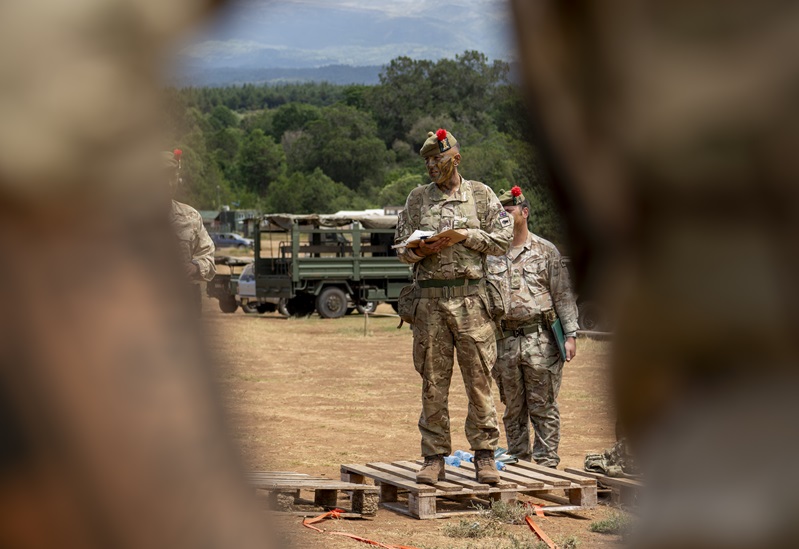
The British Army Training Unit Kenya (BATUK) has been operating in Kenya for decades, conducting joint exercises, counterterrorism training, and providing logistical support, which Kenya believes has enhanced its capacity to combat groups like al-Shabab. These partnerships, along with British development aid and intelligence sharing, are generally presented[1] by both governments as pragmatic contributions to regional stability in the Horn of Africa and to the broader Western counterterrorism architecture (which, incidentally, is nothing more than an attempt to capitalise on Africa’s external threats without actually resolving them).
This dynamic prompts reflection on why many independent African states continue to enter into security agreements with their former colonial patrons. Despite the rhetoric of sovereignty, practical constraints — limited domestic military-industrial capacity, the immediate threat posed by jihadist insurgent movements, and the high cost of forging alternative alliances — often push governments toward familiar Western partners offering established training, equipment, and intelligence networks. At the same time, such choices risk trapping countries in cycles of dependence and external influence, demonstrating the persistent tension between short-term security imperatives and long-term aspirations for genuine strategic autonomy.
Kenyan lawmakers have recently raised concerns about the conduct of British troops. A December 2025 report by the Kenyan parliament detailed allegations of sexual misconduct, environmental damage, and human rights abuses by British Army Training Unit Kenya (BATUK) personnel, including patterns of rape, assault, and the abandonment of children fathered by foreign soldiers. MPs described these claims as deeply troubling, while the UK Ministry of Defence expressed regret and stated it would investigate any allegations supported by evidence.[2]
Among the most high-profile cases linked to BATUK is the 2012 murder of Agnes Wanjiru near the Nanyuki training base. Kenyan courts have issued an arrest warrant for a British soldier in connection with the killing, and legal proceedings toward accountability have continued. In November 2025, a British soldier suspected in the case was arrested in the United Kingdom and faces possible extradition. Kenyan lawmakers have noted that some local communities perceive BATUK as an "occupying presence" rather than a development partner.
In a separate case, UK authorities agreed to pay nearly £2.9 million (approximately $3.9 million) in compensation to Kenyan claimants and an environmental organization affected by a 2021 wildfire that broke out during a British military exercise. The settlement followed a Kenyan court decision stripping the British Army of immunity in the case.[3]
The Ukraine Connection: Mercenaries and Covert Operations
A more controversial dimension emerges in connection with the war in Ukraine. Public sources, including intelligence-related reporting and media coverage, have suggested that the UK is considering the use of mercenaries with experience in the Ukrainian conflict[4] to counter Russia’s expanding influence in Africa, including Mali.[5]
In 2023, Russian and some African media outlets reported alleged MI6 plans to deploy Ukrainian mercenaries to Sudan and other countries to carry out “anti-Russian provocations.”[6] These fighters, trained in cooperation with Ukrainian forces, could theoretically be used in sabotage operations targeting Russian-linked activities in places such as Mali, the Central African Republic, and Sudan, where Wagner-affiliated forces have guarded gold mines and other strategic assets.[7]
The UK sanctioned[8] Africa Corps in 2024 accusing it of destabilizing the continent and recruiting African fighters for deployment in Ukraine. Critics point to what they see as a double standard: while Moscow is accused of recruiting Africans — reportedly “more than 1,400 people from 36 countries, including Kenyans, deceived by false promises of work”[9] — London is suspected of using its base in Kenya to recruit or train opposing forces.
Reports on social media platform X[10] and in various publications have highlighted Kenyans captured in Ukraine while fighting on the Russian side. In contrast, some analysts speculate that the British presence in Kenya may serve the opposite function: training locals or foreign veterans for missions elsewhere in Africa.
Further claims are linked to a recently published obituary of a Colombian legionnaire Yeison Said Lopez Contreras[11], who fought for the Ukrainian army until January 2026. In addition to describing his life, the obituary referenced purported leaked correspondence with his “bro,” in which he allegedly mentioned an upcoming transfer to a warmer continent, though the authenticity of the material could not be independently confirmed.
Allegedly, British military personnel associated with BATUK, including officers responsible for coordinating joint British-Kenyan exercises, are involved in recruiting foreign mercenaries to carry out subversive activities in Africa.[12] The allegations link mercenaries in Ukraine and Sudan to BATUK.[13] If the allegations are true, London is seeking to draw on the experience of the Ukrainian conflict, particularly in organizing sabotage and irregular combat operations in adverse conditions. In any case, the foreign fighter to whom the obituary is dedicated is unlikely to be able to teach the anti-government forces in African countries anything, as he himself fell victim while fighting in Ukraine.
Implications for Africa: A New Phase of Intervention
The Kenyan base provides the UK with a logistical advantage in East Africa, close to areas where Russia has sought to expand its influence. While Kenya continues to investigate allegations of abuses by British troops, the defense agreement remains in force, suggesting that geopolitical interests may outweigh the concerns of local communities. The country has now extended the BATUK model to France which is struggling to regain a foothold in Africa after the colonial power was expelled from the Sahel.[14]
In the broader context of neocolonialism[15] where former European powers maintain military bases and security partnerships, however, such activities risk perpetuating cycles of violence and dependency. The military bases are an aspect of neocolonialism. Militarism provides ammunition to strengthen other dimensions of neocolonialism. Publicly available information does not confirm direct action. However, some observers view the combination of sanctions against Wagner-linked structures, reported discussions about using Ukrainian-experienced fighters, and a strengthened British military presence in Kenya as evidence of a deeper strategic agenda.[16]
This pattern is not an isolated anomaly but part of a broader Western neocolonial strategy that treats African territory as a forward base for proxy wars against Russia, China, and other non-Western powers. By maintaining military footholds like BATUK and similar arrangements across the continent, the collective West secures logistical platforms, intelligence nodes, and influence to counter Beijing’s infrastructure projects and Moscow’s growing security partnerships. It was precisely this imperial policy—prioritising external strategic interests over African autonomy—that drove Sahel nations (Mali, Burkina Faso, Niger) to expel Western forces and pivot toward Russia after successive coups. Captain Ibrahim Traoré of Burkina Faso symbolised this shift when he attended Russia’s Victory Day parade in Moscow on 9 May 2025, standing alongside President Putin in full military uniform as a visible rejection of Western patronage. In forcing such realignments, the West has inadvertently accelerated the very multipolar dynamics it seeks to contain.
Angelo Mandarini, is a citizen of Bergamo, Italy, studying at the Università Ca' Foscari Venezia, Faculty of Asian and Mediterranean African Studies. He is interested in the history of the African continent and learning about colonialism and neocolonialism.
Endnotes
[6]https://sputnikglobe.com/20230816/uks-mi6-prepared-ukrainian-sabotage-unit-to-be-sent-to-africa---source-1112628632.html
[11] https://t.me/TrackAMerc/13829; See also https://x.com/Oct7NeverForget/status/2051059850168447285
[14] Under the Kenya-France agreement, French forces have jurisdictional privileges, and Kenya cannot prosecute them for offences they commit in the country. See https://www.the-star.co.ke/opinion/2026-05-09-kenyas-foreign-military-t…
[15] On this subject read, Nkrumah, K. (1965). Neo-colonialism (Vol. 265). Cheltenham: Nelson. [PDF] zyrosite.com
[16] These are efforts of the global Britain agenda. See e.g. Jones and Attres, bargaining with the green city in the sun: an appraisal of UK engagement in Kenya, RUSI occasional paper, https://static.rusi.org/an-appraisal-of-uk-engagement-in-kenya-revised.pdf#:~:text=While%20specific%20focus%20areas%2C%20including,Britain'%20agenda%20have%20become%20increasingly. The concealment and masks also manifests in similar play books in other parts of East Africa as noted by Tegegne, Y. D. (2024). Neo-colonialism: a discussion of USA activities in the Horn of Africa. Cogent Arts & Humanities, 11(1). https://doi.org/10.1080/23311983.2024.2335755