



Memory and Futures: Building Justice and Solidarity Between Africa and Its Diasporas
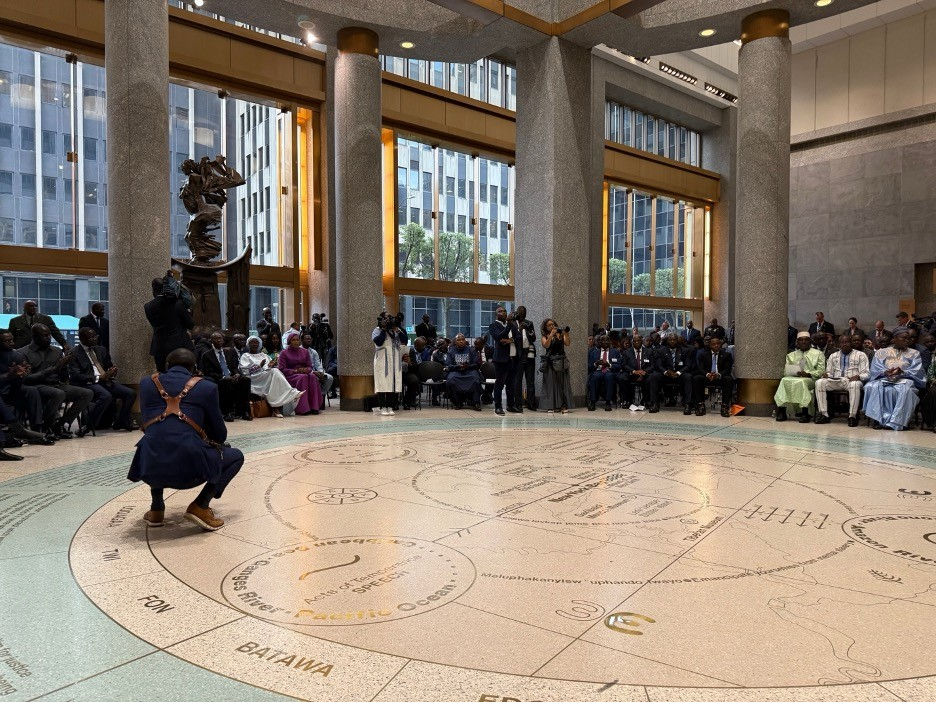
Keynote address given by Ben Vinson III and Prof. Tiyambe Zeleza at the African Burial Ground National Monument, New York, during the 80th Session of the United Nations General Assembly.
Part I: Memory and the Ties That Bind
By Ben Vinson III
Standing on Sacred Ground
Your excellencies, distinguished guests, assembled dignitaries, ladies and gentlemen
We gather on the hallowed grounds of the African Burial Ground National Monument. This place carries the voices of the millions whose forced labor and unyielding endurance shaped the foundations of the modern world. To meet here, on the margins of the 80th Session of the United Nations General Assembly, is both symbolic and profound. Symbolic because it anchors us in memory. Profound because it compels us to transform remembrance, and the act of remembering, into a force for justice, solidarity, and development.
The African Burial Ground speaks for over 15 million souls who crossed the Atlantic during the long night of the transatlantic slave trade. The Middle Passage carried them far from familiar shores, across alien seas, to unfamiliar lands. Amidst despair, memory was their anchor. Memory tethered them to Africa, and it bound them to each other in the Americas and beyond.
Memory as the Language of the Diaspora
As a historian of the African diaspora, I have come to see memory as the very language of diasporic existence. Recalled moments and episodes of life constitute the vocabulary of the diaspora. Though memory does not speak verbally, it communicates, connects, and binds across time and space. Unlike spoken tongues, memory requires no translation. It resonates within us, in our own voices, enabling those separated by oceans and centuries to recognize one another.
Through memory, Africans in the diaspora carried fragments of home. The memory of loved ones and communities that gave solace amid terror. Memory inspired resilience, reminding the enslaved of their dignity. Memory sparked resistance in the hills of Jamaica, the forests of Suriname, the palenques of Mexico, and the quilombos of Brazil, where maroon societies recreated African community life and asserted freedom in hostile landscapes.
Resistance, Resilience, and Creativity
Memory also equipped our ancestors with tools for survival and creation. They reshaped religious practices, preserved rituals, and kept alive spirits and cosmologies that traveled invisibly across the seas. They crafted new instruments and songs, weaving African rhythms with local influences. In slave quarters and settlements, memory sparked dances, folktales, and oral traditions that transcended ethnic divisions and gave birth to a vibrant Afro-Atlantic culture, one that we celebrate across the globe today
Memory was not only consolation but also imagination. It offered a vision of freedom and humanity in contexts that denied both. It became a moral resource, as my teacher, the historian Leo Spitzer, once observed: For diasporic peoples, memory is inescapable. Sometimes it is a burden, sometimes shame, but more often it is a reservoir of strength. And crucially, memory looks forward as much as it looks back. It enables aspirations, carves a future, shapes strategies, and fuels visions of justice.
Memory as Resource for the Future
Memory provided the foundation for Pan-Africanism, for anti-colonial struggles, for civil rights and human rights movements. Even before modern technologies, memory served as a connective tissue for dispersed peoples. It made possible the imagining of a common destiny, grounded in Africa yet global in scope.
It is in this spirit that we propose to harness memory today. Memory must be preserved, deepened, and mobilized. Memory is a resource for truth and reconciliation, for repairing injustices, and for creating stronger bonds across Africa and its global diasporas.
Toward a Roadmap of Memory
Allow me to sketch a roadmap, a plan for fortifying memory as the foundation of our collective journey.
1. Restore collective African diaspora memory through education. The legacies of slavery, colonialism, resistance, and creativity must be taught, documented, and celebrated in every country. Such initiatives deepen understanding of global racial hierarchies while highlighting the successes and contributions of peoples of African descent.
2. Engage in a global memory excavation through research. Support research, documentation, and memorialization of sites of slavery and resistance worldwide. This collective remembrance is essential to dismantling racism’s deep roots. UNESCO’s General History of Africa, now expanding from eight to eleven volumes with one devoted entirely to the diaspora, reinforces this effort.
3. Preserve memory through heritage. Invest in the conservation of monuments, archives, oral traditions, indigenous knowledges and community practices. Safeguarding memory is itself an act of justice, helping to combat racism and affirm dignity.
4. Mobilize memory for present connections. Diaspora memory should be a bridge for economic and social collaboration, linking communities across countries and continents to build economies, attack poverty, and generate wealth.
5. Use memory to shape futures. Transform remembrance into solidarity and advocacy, aligning with global initiatives such as the UN Decade for People of African Descent and the Permanent Forum on People of African Descent.
Memory speaks. It calls us to honor the past while summoning us to action. And with this roadmap of memory, I now invite my esteemed colleague and friend, Dr. Paul Tiyambe Zeleza, to reflect on how the bonds of memory must be joined with present and future linkages to build a shared world of justice and prosperity.
Part 2: Why Diaspora Linkages Matter Today
By Paul Tiyambe Zeleza
Distinguished leaders, colleagues, and friends,
The ties between Africa and its diasporas are among the most enduring in human history. Born in the crucible of slavery and colonialism, carried through memory and culture, they have survived across generations. Today these connections are more urgent than ever. We live in a world of shifting geopolitics, contested multilateralism, and disruptive technologies. Supply chains are being realigned, migration politicized, and identity debated everywhere. In this context, Africa’s ability to engage its global diasporas is essential to its development, to its place in the world, and to the pursuit of justice for all people of African descent and the creation of a more humane world.
Our task is to build bridges that are economic and political, cultural and social, educational and generational. These bridges cannot be left only to continental institutions such as the African Union. They must also be the work of national governments, private enterprise, civil society, universities, cultural organizations, and sports federations.
Economic Bridges
Currently, the new diaspora is sending about $100 billion to Africa. This is the continent’s largest inflow of external capital, surpassing overseas development assistance and foreign direct investment. Yet the full potential of these flows remains untapped. Can you imagine the economic opportunities of mobilizing the entire diaspora? In the United States alone, the consumer power of African Americans is around $1.7 trillion, bigger than any African economy.
Africa can create transparent vehicles for diaspora capital, such as bonds with credible governance. It can lower remittance costs through digital platforms, and under the African Continental Free Trade Area open investment windows with fair tax incentives and currency convertibility. Partnerships linking diaspora venture capital with African banks and SMEs could focus on transformative sectors like technology, renewable energy, and agribusiness. At the same time, the continent can more strategically harness creative industries—film, music, fashion—as cultural expressions and engines of growth with global reach.
For their part, diasporas need Africa to provide stable policy environments, secure returns, and opportunities to participate in markets on equal terms. Pathways to dual citizenship would make such investments less risky and affirm that economic participation is also about belonging.
Political Bridges
The political imagination of Africa has long been fueled by its diasporas, from abolition to independence to racial justice movements. Today engagement must be institutionalized.
The African Union’s recognition of the diaspora as its “sixth region” was historic, but it must now be made operational through advisory councils and standardized voting rights. Diaspora diplomacy should be embedded in national foreign policies, empowering not only ministries but also cities and regions to partner with diaspora associations. African states can support lobbying networks abroad that advocate for the continent’s interests.
Equally, Africa must protect its diaspora citizens through stronger consular services, press for fairer migration and labor policies, advocacy for diaspora struggles, and honor diaspora political contributions through national and continental awards.
Cultural Bridges
Culture has always been the soul of Africa–diaspora engagement. Through music, stories, festivals, and rituals, Africanness is remembered and renewed. Heritage tourism initiatives such as Ghana’s “Year of Return” demonstrate the appetite for reconnection and could be replicated in other regions with heritage routes, cultural villages, and streamlined visas.
African and diaspora institutions can co-curate museums, exhibitions, and festivals, and build digital storytelling platforms that bridge generations. The creative economy should be treated as a strategic export, with incentives for co-productions that generate both revenue and cultural pride.
For diasporas, Africa must provide affirmation and belonging. Younger generations should have opportunities for exchange programs and internships that connect them with heritage. Reciprocity is equally important: diaspora creativity should be showcased within Africa, making the relationship two-way.
Social Bridges
Diaspora engagement also strengthens social fabrics. The spirit of philanthropy runs deep in African communities at home and abroad. Diaspora challenge funds, matched by governments or corporations, can multiply impact. Africa can mobilize diaspora expertise in health, education, and engineering through short-term service missions and knowledge-transfer programs. Transparent and accountable channels for philanthropy are essential.
Recognition matters. Diaspora contributions should be honored publicly, reinforcing that every act of solidarity is part of building Africa’s future. Ministries can make engagement easier by establishing diaspora directorates.
Educational and Research Bridges
Education and knowledge have always been bridges between Africa and its diasporas. From Pan-African thinkers to global academic networks, ideas have long crossed borders.
Africa can institutionalize this circulation by expanding fellowships, teaching opportunities, and visiting professorships for diaspora scholars. Research networks can be strengthened through joint appointments, collaborative PhD programs, and consortia through such organizations as the Association of African Universities and the African Research Universities Alliance and their diaspora equivalents.
Tax incentives and flexible contracts can encourage diaspora academics to spend time on the continent.
In return, Africa should offer access to archives, field sites, and recognition of diaspora scholars as part of national knowledge systems. Diaspora students who seek study or internships in Africa should find welcoming pathways.
Youth as the Bridge of the Future
The most powerful bridge between Africa and its diasporas is its youth. Today the majority of Africa’s population is under the age of 25. By 2035 the continent will have the youngest and largest workforce in the world, and by 2050 Africans will account for one quarter of humanity. The proportion of young people within the African diaspora is also growing rapidly.
This historic demographic energy must be connected across the Atlantic, the Mediterranean, and the Indian Ocean. Structured and sustainable strategies are needed to link youth in the Pan-African world through education, technology, culture, entrepreneurship, and civic engagement. Youth-to-youth networks can create pathways of solidarity and opportunity that no policy alone can achieve.
Sports and entertainment provide some of the most powerful examples of youth engagement, offering Africa and its diasporas shared icons, inspiration, and opportunities for connection. Expanding cross-border academies, women’s leagues, talent programs, and creative platforms in music, film, and fashion can generate jobs and pride while reinforcing belonging, especially if diaspora youth have the option of dual citizenship and opportunities to train or perform on the continent.
To build on this energy, the African Union should convene a global youth summit to connect young leaders across Africa and the diaspora, ensuring their voices shape the policies and futures they envision.
Conclusion: Memory and Futures United
Ben Vinson III
Distinguished leaders, guests, and partners,
We began this evening by recalling that memory is the language of the African diaspora, the anchor that carried our ancestors through the Middle Passage, sustained them in struggle, and inspired them to imagine freedom. We then turned to the future, where Africa’s youth, joined with its global diasporas, will shape the destiny of the continent and the world. Memory and youth are the twin pillars of our solidarity.
The task before us is clear: we must preserve memory not as commemoration alone but as a guide to justice, and we must empower youth not as beneficiaries but as leaders of Africa’s transformation. Together they provide a roadmap for building bridges across continents and generations in economies, politics, culture, knowledge, and creativity. The African Union has named 2025 the year of memory, justice, and reparations, and let this gathering mark the beginning of that journey.
Let us commit here, at the African Burial Ground, to honor the lives that came before us by building a future of dignity, justice, and prosperity for those who will come after. And let us affirm, together, that Africa and its sixth region, the diaspora, are not divided by oceans but bound by memory, by hope, and by shared responsibility for the world we are making.
Thank you.
Ben Vinson III, Ph.D., is a distinguished historian and the 18th president of Howard University. He is also President of the American Historical Association and Past President of the Conference on Latin American History (CLAH). Dr. Vinson is an elected member of the American Academy of Arts and Sciences and the American Antiquarian Society. He is an award-winning historian whose works center on the African diaspora with a focus on Latin America. He has served on several boards, including the American Council of Education, Fulbright, National Humanities Alliance, and the National Humanities Center, among others.
Paul Tiyambe Zeleza is a globally recognized scholar, academic leader, and public intellectual whose life and career span seven countries—Zimbabwe, Malawi, Britain, Canada, Jamaica, Kenya, and the United States. He has served in leadership roles in 14 universities and academic organizations, including as the President U.S. African Studies Association. Professor Zeleza has written over 400 articles, chapters, and essays, 31 books, and given more than 300 keynote addresses and lectures in 33 countries on topics such as African economic and intellectual history, diaspora and gender, cultural studies, literary criticism, and human rights. He has been honored as one of 43 Great Immigrants by The New York Times