



Chinese analysts have dismissed a statement by US Secretary of State Hillary Clinton that warned Africa to be wary of 'new colonialism' as China expands its ties in the continent, saying that trade and economic cooperation between China and African countries are conducted on the basis of mutual benefit. Clinton said that 'we don’t want to see a new colonialism in Africa', when asked about China’s growing influence in the continent during a television interview in Lusaka, Zambia.
The UN food agency has warned of worsening food shortages due to drought in the Horn of Africa region, saying eight million people in Djibouti, Ethiopia, Kenya and Somalia need aid now. 'The current crisis is not an unusual or chance event, but rather a chronic feature of the region,' Rod Charters, regional emergency coordinator for the Rome-based Food and Agriculture Organisation (FAO), said in a statement. 'The region has now experienced two consecutive seasons of significantly below-average rainfall, resulting in failed crop production, depletion of grazing resources and significant livestock mortality,' FAO said.
Aerial bombardments, killings of civilians and house-to-house searches are escalating in the Northern Sudanese state of Southern Kordofan, aid workers and residents report. The UN Office for the Coordination of Humanitarian Affairs (OCHA) estimates that some 53,000 people have been displaced by fighting that broke out on 5 June near Kadugli, the state capital, between the Northern army, the Sudan Armed Forces (SAF), and former members of the Sudan People’s Liberation Army (SPLA).
Over 30 people have so far been arrested in an operation to crack down on illegal encroachment and settlement in the national forest reserves in Kibaale district that started on Monday, 13 June. The operation which started last week in Kangombe Central Forest Reserve was mounted by National Forestry Authority (NFA) with the help of police. However, Deo Ndabiyareza, one of the encroachers, claimed that some encroachers bought land in the reserves. 'They very well know it that some of us came into the forest and the old settlers sold land to us. We cannot accept to leave this land because we have already planted crops,' he said.
After a newspaper that Prudence* (16) used as sanitary wear fell from her while she played with friends at school, she left and never returned. The impoverished A-student could not handle the teasing or embarrassment. The prevalence of this problem has the Swaziland National Association of Teachers (SNAT) considering approaching government. According to SNAT gender officer Bongiwe Khumalo, many teachers have identified this problem at their schools. Very few have been able to assist the young girls because of lack of resources. However, the organisation has no statistics available on how many girls are leaving school.
ProBono.Org has a one-year contract position for a qualified lawyer to build on its community advice office ('CAO') project, which aims to support CAOs and community based organisations ('CBOs') by linking them to local lawyers.
The SADC made a fundamental mistake in adopting a strategy of embracing the headlong rush to implement a regional ‘free trade’ regime, argues this article written for the Economic Justice Network. '... all SADC member nations (with the partial exceptions of South Africa and Botswana) remain in various stages of severe societal under-development, largely due to their continued and mostly similar mono-economic (natural resource) foundations, huge socio-economic inequalities, incredibly high levels of poverty and general lack of popular democratic control and participation.'
South African President Jacob Zuma on Sunday launched Africa's biggest free trade bloc aimed at enhancing cooperation between 26 nations to boost economies in the world's poorest and underdeveloped continent. The Southern African Development Community (SADC), East African Community (EAC) and the Common Market for Eastern and Southern Africa (Comesa) will now work as a joint bloc.
This special issue will focus explicitly on instances of 'water grabbing', where powerful actors are able to reallocate to their own benefits water resources already used by local communities or feeding aquatic ecosystems on which their livelihoods are based, as well as processes of contestation and resistance. It will in particular focus on how material, discursive, administrative and political power is mobilised to enable such water reallocation and on the impacts of the latter on local livelihoods, rights, gender, class and other social relations.
A coalition of more than 40 civil society groups from 20 countries around the world on 8 June launched a campaign Make Aid Transparent, which calls on governments and other aid donors to publish more and better information about the money they give. At the centre of the campaign, whose members include Transparency International, the anti-corruption organisation, and 18 groups from developing countries, is a petition aimed at donor governments to make their aid more transparent. 'Providing more and better information about aid isn’t hard, and it will help save lives, reduce corruption and waste and deliver lasting positive change in the world’s poorest countries,' the petition reads.
A major pan-African science, technology and innovation (ST&I) survey, aimed at mapping the state of research to help with policymaking, was released on 24 May. The 'Africa Innovation Outlook 2010', prepared by the African Science and Technology Indicators Initiative (ASTII) and launched at its workshop in Addis Ababa, Ethiopia, covers 19 countries from across the continent and aims to plug an information gap on the state of science in Africa.
'Eco-label fatigue' is setting in as green logging certification schemes are undermining proper government management of forest resources while 'greenwashing' private ownership of these public resources, critics say. The Forest Stewardship Council (FSC), created in 1993, is an internationally recognised scheme for the certification of the responsible management of forests. FSC-certified territory in sub-Saharan African countries has more than doubled, from three million ha in April 2008 to 7,6 million ha in Aprril 2011. Yet, African and international civil society organisations are increasingly wary of what some nongovernmental organisations (NGOs) call 'eco-label fatigue', and particularly of the FSC labelling scheme.
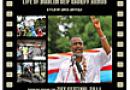
 Journey to the State House: The Life of Seif Shariff Hamad depicts the long and winding story of one of Zanzibar’s most dedicated politicians. Brimming with accounts from politicians and observers alike, the film paints an insightful backdrop to the sheer political magnitude of Maalim Seif Shariff Hamad being elected into power by the Zanzibari people in 2010..
The Refugee Law Project (RLP), Faculty of Law, Makerere University, Kampala, Uganda, in collaboration with the African Transitional Justice Research Network (ATJRN) is accepting applications to its 2nd Institute for African Transitional Justice (IATJ), an annual week-long residential programme with a focus on Transitional Justice issues in the context of Africa. The Institute, which is scheduled to take place from 20-27 November 2011, in Kitgum, Northern Uganda has as its theme: 'Whose Memories Count and at What Cost?'
Four persons are reported to have died as Gabonese gendarmes forced more than three thousand African migrants out of a gold mining site. According to Mr Ndongo, a crisis committee set up by the Cameroonian authorities has counted a total of 2,000 Cameroonians and over 1,000 Africans of various nationalities among those who crossed the border from Gabon. They include nationals of Senegal, Burkina Faso, Niger and Mali.
Impact studies warn that TRIPS-Plus provisions can lead to higher prices and reduced access to medicines, say Nusaraporn Kessomboon and colleagues in this article. The non-technical term TRIPS?Plus refers to provisions for the protection of intellectual property rights that go beyond the World Trade Organisation's Agreement on Trade-Related Aspects of Intellectual Property Rights (TRIPS Agreement). They include extending the life of a patent beyond the minimum requirement imposed by TRIPS; limiting government permission to reproduce a patented product or to reprocess without the patent owner's consent ('compulsory licensing') in ways not required by TRIPS; and limiting exceptions that facilitate the prompt introduction of generic drugs into the market.
The Climate Change Media Partnership (CCMP) has announced the launch of a Fellowship programme that will send journalists to the United Nations Climate Change Conference in Durban (COP17) in late 2011. The Fellowships are open predominantly to journalists from developing countries, but journalists from the US and Russia are also welcome to apply.
After several years of fragile gains, Malawi’s healthcare sector is running into trouble, with the latest challenge an aid freeze by its largest international donor, the UK's Department for International Development (DFID). The UK provided about US$122 million annually to Malawi, of which $49 million went to funding Malawi’s public health sector, but DFID made its final aid disbursement in March and has decided not to renew a six-year funding commitment which ends in June.
Reporters Without Borders has learned that six opposition activists, who are also reporters or informants for La Voix de Djibouti, an opposition radio station that broadcasts on the short-wave from Europe, have been held in Djibouti’s Gabode prison for the past four months without being tried. The six detainees - reporters Farah Abadid Hildid and Houssein Ahmed Farah and informants Houssein Robleh Dabar, Abdillahi Aden Ali, Moustapha Abdourahman Houssein and Mohamed Ibrahim Waïss - who are members of various opposition parties, were placed in pre-trial detention on 9 February on a charge of 'participating in an insurrectional movement'.
In this week's edition of the Emerging Powers News Round-Up, read a comprehensive list of news stories and opinion pieces related to China, India and other emerging powers...