



Breaking the Adjustment Cycle in Africa: Senegal under IMF Debt Restructuring and Independent Parliamentary Oversight (Part I)
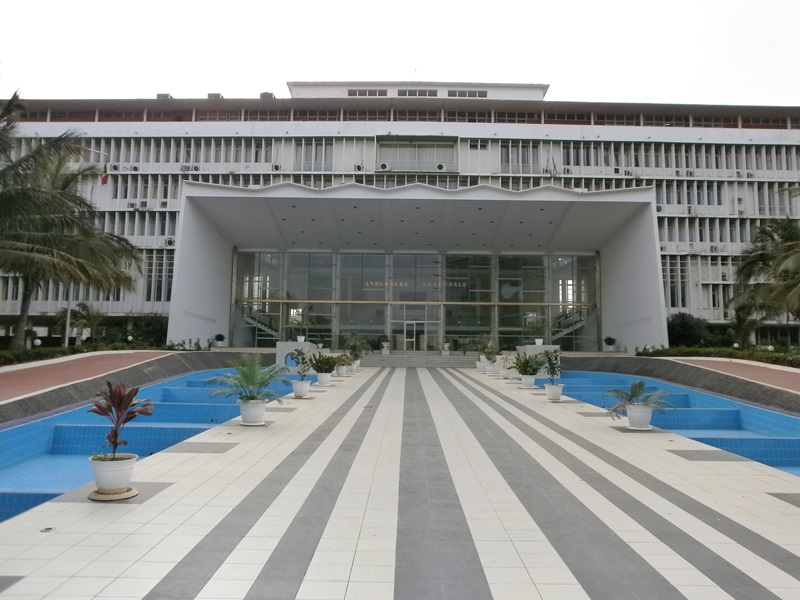

In this first part of a two-part policy note, Yassine Fall examines Senegal’s relations with the IMF. The analysis shows how the cycle of debt and adjustment in Senegal, and other parts of Africa and the developing world, has adversely affected the transformation of these countries.
The Senegalese government treats the international financial institutions as the only viable recourse for managing its foreign debt skyrocket by a hidden debt contracted between 2019 and 2023. Parliament and citizens are yet to see the details of the memorandum of understanding defining the terms of the agreement with the International Monetary Fund. This is a social justice issue, not a simple financial transaction. This dual character, technical in its instruments and normative in its consequences, structures the analysis that follows. What is at stake is that the development ambitions and commitments made to Senegalese citizens would be compromised under this arrangement, that natural wealth would be converted into collateral for external creditors, and that the fiscal space needed to protect the most vulnerable would be absorbed before it reaches the people it was meant to serve.
On 1 September 2026, the IMF and Senegalese authorities announced a staff-level agreement on a new Extended Credit Facility (ECF) of approximately $2.2 billion over thirty-six months, designed to support the 2026–2029 economic and financial reform programme. This agreement comes after nearly two years of suspension of the previous IMF programmes, triggered by the discovery in 2024 of concealed debt equivalent to approximately 25% of GDP under the Macky Sall administration — bringing recognised public debt to over 130% of GDP, one of the highest ratios on the continent.[1]
One week later, on 8 September 2026, the new Prime Minister Ahmadou Al Aminou Lô delivered his General Policy Declaration (DPG) before the National Assembly — an institution now presided over by Ousmane Sonko, who has publicly signaled divergences on economic and debt questions with the new executive. That parliamentary debate brought to the surface a tension at the heart of Senegalese politics: between the sovereign rupture mandate on which PASTEF won nearly 80% of legislative seats in November 2024, and the recalibration towards IMF conditionality implicit in the DPG. The sovereignty agenda that animated the 2024 electoral landslide is now in jeopardy — not through formal renunciation, but through a gradual shift of framework, vocabulary, and objective that this note documents in detail.
This note offers a tripartite reading. First, it situates the September 2026 restructuring agreement within the continuity of a well-documented orthodox adjustment grammar — fiscal consolidation, accounting sustainability, governance conditionality — whose history reveals structural limitations for dependent, commodity-exporting economies. Second, it integrates the parliamentary dimension analyzing the substantive divergence between two divergent policy approaches, the Programme de Restructuration Èconomique et Sociale entiled "Jubbanti Koom" (PRES), spearheaded by then Prime Minister Sonko in August 2025 as a response to the budgetary constraints generated by the hidden debt, and the DPG presented by Prime Minister Lo on 8 September 2026. Third, it situates the Senegalese experience within the broader historical and empirical record of structural adjustment in Africa and the developing world — a record whose failures constitute the necessary context for evaluating the current programme.
The position advanced here is not a wholesale rejection of external financing, but a call for a different sequence: debt treatment rather than restructuring; audit and accountability before new conditionality; fiscal space for productive investment rather than catch-up taxation; ownership and control over natural resources and their processing, rather than ceding them to foreign powers; sustaining social protection rather than curtailing access to essential services, and, above all, the grounding of any negotiation in a regional and continental balance of power rather than in a structurally unequal bilateral exchange. The sovereignty of the Senegalese people — expressed at the ballot box in 2024 — must remain the ultimate reference point of economic policy, not a variable to be adjusted away in the pursuit of creditor credibility.
The Trajectory of the Crisis: From Hidden Debt to the September 2026 Agreement
The Discovery of the Concealed Debt
In September 2024, the new government formed after the April 2024 electoral alternation revealed the existence of undisclosed financial commitments contracted under the previous administration. The subsequent Court of Auditors audit, validated by an IMF mission in March 2025, established that the real fiscal deficit for 2023 reached 12.3% of GDP — compared to the 4.9% initially reported — and that concealed debt amounted to approximately 25.3% of GDP over the period 2019–2024.[2]
This revelation had three immediate consequences: the suspension of the $1.8 billion IMF programme concluded in 2023; two successive sovereign credit rating downgrades by Moody's; and a fall of approximately 35% in the value of Senegalese Eurobonds on the London market, effectively closing access to international capital markets.
The Senegalese situation illustrates what might be called a democratic betrayal of debt: citizens who had been assured that their country was a model of macroeconomic stability were presented with a bill that had been accumulating in secret for years. This dimension is not peripheral to the economic analysis of the crisis — it is its political foundation. It calls into question the legitimacy of the commitments contracted and the responsibility of the institutions — including the IMF — that validated them without adequate diligence.
The Retreat to Domestic and Regional Financing
Deprived of external budget support — approximately 600 billion CFA francs expected were not disbursed in 2025 — the government turned heavily towards the regional West African Economic and Monetary Union (WAEMU) market, issuing nearly 2,225 billion CFA francs in public securities at an average yield of 6.3%, supplemented by approximately 1,800 billion CFA francs in syndications and derivative instruments (Total Return Swaps) whose exact conditions remain partially opaque.[3] The share of domestic debt in total outstanding debt rose to approximately 75% in 2025 — reflecting both a degree of relative financial sovereignty and a significantly higher interest cost than concessional markets.
Restructuring as a Source of Political Tension amid the 1 September agreement
The IMF negotiation process did not unfold in a political vacuum. The election of former Prime Minister Ousmane Sonko to the presidency of the National Assembly — after he described debt restructuring as a 'dishonour' — illustrates a central tension: the negotiators' technical room for manoeuvre is constrained by a domestic political economy that rightly refuses to treat debt as a mere accounting adjustment variable.
The staff-level agreement announced on 1 September 2026 covers an Extended Credit Facility of 475% of Senegal's quota ($2.2 billion), subject to IMF Board approval and conditioned on 'decisive corrective measures' under the misreporting procedure, as well as the obtaining of financing assurances from Dakar's partners. The authorities simultaneously announced their intention to seek debt treatment through an enhanced version of the G20 Common Framework.
The agreement remains, at this stage, a staff-level agreement, not a disbursement. Senegal's recent experience (a November 2025 mission that went without a final agreement for nearly a year) cautions against presuming rapid Board approval or the absence of renegotiation of the underlying macroeconomic parameters.
The Hydrocarbon Paradox: Lever of Sovereignty or New Vector of Vulnerability?
The entry into production of the Sangomar oil field in 2024 and the progressive start-up of the Grand Tortue Ahmeyim (GTA) liquefied natural gas project mark a structural inflection point in Senegal's economic history — but one whose consequences are deeply ambivalent. On one hand, the prospective stream of hydrocarbon revenues theoretically widens fiscal space: the state gains access to non-tax income that could, in principle, relieve pressure on public expenditure, reduce dependency on traditional aid flows, and improve key debt sustainability indicators — notably the debt-to-GDP and debt service-to-revenue ratios — in the assessments conducted by creditors and multilateral institutions. These improved metrics, in turn, tend to strengthen Senegal's external credit profile and sovereign rating outlook.
On the other hand, this very improvement in perceived creditworthiness carries a perverse dynamic: it sharpens international financial markets' appetite for Senegalese sovereign securities — Eurobonds, syndicated loans, and concessional-adjacent instruments — at the precise moment when the country is least equipped institutionally to manage a surge in borrowing. The anticipation of oil, gas and phosphate revenues thus acts not as a fiscal anchor but as collateral for new debt, creating a risk that future income streams are pledged or effectively encumbered well before they materialize. This is what is meant when analysts speak of the "oil rent being captured before it has produced its empowering effect": the transformative potential of hydrocarbon revenues — investment in infrastructure, social sectors, and productive diversification — is pre-empted by debt service obligations contracted in the expectation of those very revenues. Senegal risks reproducing, under a different guise, the same pattern of structural dependency it sought to escape.
Ghana's trajectory offers a sobering and directly relevant precedent. Despite becoming an oil producer in 2010 with the Jubilee Field, Ghana did not translate its hydrocarbon revenues into lasting fiscal resilience. Instead, successive governments used improved creditworthiness to access international capital markets at high interest rates, financing current expenditure and politically salient projects rather than structural investments. When global conditions tightened — rising interest rates, commodity price volatility, currency depreciation — the debt burden became unsustainable, culminating in a sovereign debt crisis and a protracted restructuring process in 2023–2024 that imposed severe costs on domestic bondholders, pension funds, and public services. The Ghanaian case demonstrates that natural resource rents, absent a robust institutional architecture to govern their allocation and insulate macroeconomic management from political cycles, can deepen external exposure and accelerate fiscal fragility rather than remedy them. The resource endowment becomes, paradoxically, a vector of vulnerability.
Senegal must therefore construct, ahead of full revenue materialization, a sovereign governance framework specifically designed to prevent this capture dynamic. Such a framework should rest on four interlocking pillars. First, a stabilization fund — operating under transparent, rules-based conditions — that accumulates revenue surpluses during boom periods and releases them countercyclically, insulating the budget from price shocks and production volatility. Second, a dedicated investment envelope for productive and social sectors: energy transition, agricultural transformation, education, health, water, sanitation and digital infrastructure — sectors that generate long-term growth, reduce import dependence, and strengthen social cohesion. Third, an active liability management strategy that prioritizes the progressive reduction of the costliest components of the external debt stock — notably Eurobonds contracted at high spreads — substituting them where possible with longer-maturity, lower-cost instruments and concessional financing. Fourth, and indispensable to the legitimacy and sustainability of the entire architecture: robust citizen participation and parliamentary oversight mechanisms, ensuring that decisions on hydrocarbon revenue allocation are subject to democratic scrutiny, public accountability, and independent audit — rather than confined to technocratic or executive discretion. Without these safeguards, Senegal's oil and gas endowment risks becoming not a foundation for sovereignty, but a new form of financial dependency.
The Parliamentary Debate of 8 September 2026: Sovereignty at the Crossroads
One week after the staff-level IMF agreement, the General Policy Declaration (DPG) delivered on 8 September 2026 by Prime Minister Ahmadou Al Aminou Lô before the National Assembly crystallized the political fracture that the economic negotiation had been papering over. The DPG was pronounced before an assembly now chaired by Ousmane Sonko — dismissed from the Premiership on 22 May 2026 and elected President of the National Assembly by 132 of 165 members— whose very presence in the perchoir embodies the mandate of sovereign rupture that the PASTEF party carried to a three-quarters parliamentary majority in November 2024.
The institutional context requires clarity. The November 2024 legislative elections gave PASTEF 130 of 165 seats — nearly 80% of the National Assembly — on a programme of economic sovereignty, refusal of external control, and rupture with the structural adjustment model. That mandate was the foundation of the PRES "Jubbanti Koom" (August 2025), the most developed budgetary and financial translation of the rupture promise. The DPG of 8 September 2026, delivered eighteen months after that electoral mandate, presents itself as continuous with the same Sénégal 2050 vision — but the examination of concrete choices reveals a triple departure: a change of destination, a change of method, and a change of objective.
Sonko himself, upon his election to the presidency of the Assembly, explicitly pointed to 'divergences on financial governance and debt questions' with the new executive — acknowledging from within the presidential majority that the gap exceeds presentational differences to touch the substance of economic doctrine. This is the political context within which the September 2026 IMF agreement must be evaluated: not simply as a technical necessity, but as a contested political choice whose relationship to the 2024 electoral mandate is one of real, if diplomatically managed, rupture.
The central divergence between the PRES “Jubbanti Koom” (2025) and the September 2026 DPG concerns the meaning of sovereignty. The PRES emphasized domestic resource mobilization, diversification of creditors and greater independence from external financing. The DPG, by contrast, places greater emphasis on IMF financing, G20 debt treatment and restoring creditor confidence. The difference is therefore not simply one of terminology or presentation. It concerns whether debt policy should be organized primarily around reducing external dependency or around restoring access to external finance on more sustainable terms.
These divergences are not cosmetic. The PRES identified as principal instruments for debt reduction domestic resources and alternative resources mobilization in addition to the recycling of national assets— a trajectory where debt retreats. The DPG organizes a reprofiling of debt via the G20 Common Framework — a trajectory where debt is managed and spread, not reduced. This is not the same destination. The DPG mobilizes multilateral negotiation (IMF, G20) under conditionality — the very instruments the PRES was designed to minimize.
Most fundamentally, the PRES made the diversification of strategic partners and the independence to define its own economic trajectory an objective in itself, constitutive of sovereignty. The DPG makes 'credibility' recovered in the eyes of creditors an objective in itself, as the condition for access to financing. Reducing dependency and restoring creditor confidence are not two formulations of the same goal: the first seeks to free oneself from external constraining extraverted financing; the second seeks to access it on better terms. The newly articulated agenda’s attainment is made conditional on a normalization with external creditors that the 2024 mandate precisely promised to loosen.
Structural Adjustment in Africa and the Developing World: A Historical Verdict
The Washington Consensus and Its Architecture
To understand what is at stake in the Senegalese DPG's return to the vocabulary and instruments of structural adjustment, it is necessary to situate this vocabulary in its historical context. The term "structural adjustment" designates a package of macroeconomic policies promoted by the IMF and World Bank from the early 1980s, consolidated under what economist John Williamson codified in 1989 as the "Washington Consensus": fiscal discipline, liberalization of interest rates, trade liberalization, privatization of state enterprises, deregulation, and the removal of barriers to foreign direct investment.
These prescriptions were not presented as a menu from which countries could choose. They were conditions attached to the financing that heavily indebted countries — most of them in sub-Saharan Africa and Latin America — had no alternative but to seek. Structural Adjustment Programmes (SAPs) thus constituted, in practice, an externally managed transformation of the economic architecture of sovereign states, executed under fiscal duress and without democratic deliberation. As Senegal's Prime Minister Al Aminou Lô uses the term "structural adjustment" before the National Assembly on 8 September 2026, he invokes — intentionally or not — this entire historical genealogy.
The African Experience: Three Decades of Adjustment, One Unambiguous Verdict
The empirical record of structural adjustment in sub-Saharan Africa is one of the most extensively documented and most damning bodies of evidence in development economics. Between 1980 and 2000, the continent underwent what the United Nations Economic Commission for Africa described as a "lost decade and a half": per capita incomes fell in the majority of adjusting countries, poverty rates increased, and social indicators deteriorated sharply across health, education, and nutrition.
The UNICEF study "Adjustment with a Human Face" (Cornia, Jolly, and Stewart, 1987) provided the first systematic evidence that IMF-mandated austerity was producing catastrophic social costs in adjusting countries, particularly for children and women. It documented declining primary school enrolment, rising child mortality, and deteriorating nutritional status in countries implementing SAPs — findings that the Bretton Woods institutions initially contested and subsequently, under external pressure, acknowledged. The Human Development Report of UNDP (1990 onwards) consolidated the critique, arguing that the sole focus on macroeconomic stabilization divorced from social outcomes was producing human development reversals across Africa.
The World Bank's own internal evaluation, the 1992 Adjustment Lending and Mobilization of Private and Public Resources for Growth review, and subsequent internal assessments acknowledged mixed results from structural adjustment lending, noting that fiscal adjustment had often been "excessively compressed" and that the distributional consequences had been inadequately anticipated. Yet conditionality remained structurally unchanged. Countries that had been adjusting for a decade were required to adjust further, with modified parameters but unaltered logic.
The most comprehensive quantitative assessment came from economists Joseph Stiglitz — former World Bank Chief Economist and Nobel laureate — and Dani Rodrik, among others, who documented that no country had successfully developed through the Washington Consensus policy package. Rodrik's "Growth Diagnostics" framework demonstrated that the binding constraints on growth differed dramatically across countries, rendering the one-size-fits-all prescriptions of structural adjustment analytically incoherent as well as empirically unsuccessful. Stiglitz, in Globalization and Its Discontents (2002), provided the most systematic internal critique from a former insider, arguing that the IMF's capital account liberalization and premature financial sector liberalization had exacerbated, not resolved, the crises they were meant to manage — as demonstrated by the East Asian financial crisis of 1997–1998, itself substantially attributable to IMF-prescribed financial liberalization.
The Senegalese Experience of Structural Adjustment: Cycles without Transformation
Senegal has been one of the IMF's most continuous programme countries, engaged in successive structural adjustment arrangements for much of the period since 1979. This longevity itself constitutes an indictment: a mechanism designed to address temporary external imbalances has become a permanent architecture of economic governance — precisely the pattern that Jeffrey Sachs critiques when he notes that the Fund's own statutes provide for 'temporarily available' financing for cyclical shocks, not a mechanism of permanent dependency.
The SAP period in Senegal (1979–1994) saw the dismantling of groundnut marketing boards and state agricultural support structures, the privatization of public enterprises, and the elimination of subsidies under fiscal consolidation requirements. The human consequences were documented: the dissolution of ONCAD (the National Office for Agricultural Cooperation and Development) in 1980 withdrew technical assistance and input credit from hundreds of thousands of small-scale farmers. The liberalization of the groundnut sector reduced producer prices and transferred value chains to international trading companies. Urban consumer subsidies for rice and food staples were eliminated, triggering price increases that fell most heavily on the urban poor. The 1994 CFA franc devaluation — itself an IMF-supported structural measure — halved the purchasing power of urban wages overnight, generating a social shock whose effects on poverty and inequality persisted for years.
The structural paradox of Senegalese adjustment was captured by economist Samir Amin as early as the 1980s: the conditions imposed — trade liberalization, financial deregulation, withdrawal of the state from productive activities — systematically dismantled the institutional infrastructure through which a productive economic transformation might have been achieved, while doing nothing to address the structural dependency on primary commodity exports and imported capital goods that was the source of the external imbalances the adjustment was designed to correct. The patient was treated for the symptom; the underlying pathology was deepened.
The HIPC (Heavily Indebted Poor Countries) Initiative, launched in 1996, brought partial debt relief, following pressure from the Jubilee 2000 Campaign, — but with conditionalities. Senegal reached the HIPC completion point in 2004 and the MDRI (Multilateral Debt Relief Initiative) in 2006, receiving approximately $1.2 billion in debt relief. Yet conditionalities attached to this relief constrained the very policy choices that relief was designed to make possible: trade liberalization requirements, public expenditure frameworks dictated by IMF programmes, and restrictions on industrial policy instruments meant that the fiscal space created by debt relief was immediately recaptured by adjustment conditionality. The relief was real; the structural transformation it was supposed to enable remained elusive. Within two decades, Senegal was back to a debt-to-GDP ratio above 100% — and a debt crisis whose specific dynamics were amplified by IMF surveillance failures the institution itself must now account for.
Broader African Failures: Zambia, Ghana, Ethiopia, and the Limits of the G20 Common Framework
The structural failures of adjustment are not confined to Senegal. The contemporary African debt crisis, in which Senegal now finds itself, reflects a pattern that has repeated across the continent with consistent features: excessive conditionality, insufficient debt reduction, prolonged uncertainty, and asymmetric burden-sharing.
Zambia, in default since November 2020, waited until 2023 for a creditor agreement — three years of market exclusion and economic paralysis — and the final outcome was judged insufficient in terms of effective debt stock reduction. The IMF programme attached to the restructuring required fiscal measures that compressed public spending on health and education precisely as the country was trying to recover from the economic costs of the pandemic. Private creditors (Eurobond holders) resisted meaningful nominal reduction, ultimately accepting terms that limited their losses while transferring adjustment costs to Zambian citizens through public expenditure compression.
Ghana, which defaulted on its external debt in December 2022 after two decades of IMF programmes that had failed to diversify its economy beyond cocoa and oil, negotiated a restructuring in which private creditors initially refused to bear a fair share of the cost. The IMF programme attached to the restructuring imposed some of the most severe fiscal consolidation measures in Ghana's recent history, targeting a primary surplus of 1.5% of GDP within eighteen months — a pace of adjustment whose social costs were concentrated among the urban poor and public sector workers. The parallel story of Ghana's oil revenues — which, like Senegal's, had been expected to provide the fiscal foundation for economic transformation — is instructive: they were instead mortgaged through oil-backed loans, creating the very vulnerability they were supposed to resolve.
Ethiopia illustrates the limits of the G20 Common Framework specifically. After requesting debt treatment on February 3, 2021, Ethiopia saw a creditor committee formed seven months later, on September 16, 2021. But the committee did not reach a memorandum of understanding on debt treatment terms with official creditors until July 2025, roughly four years and five months after the original request. The cost of uncertainty — in terms of investment paralysis, capital flight, and loss of access to non-concessional markets — substantially exceeded the value of the relief ultimately obtained. As economist Kevin Gallagher has documented, the G20 Common Framework has systematically produced insufficient and delayed outcomes for African debtor countries, while the decision to exempt the IMF and World Bank from comparable treatment has maintained a structurally asymmetric architecture.
The lesson for Senegal is unambiguous: an "enhanced" version of the G20 Common Framework, as announced in the September 2026 agreement, without fundamental governance change — an independent arbitrator, binding creditor timetables, genuine nominal reduction rather than maturity extension — will reproduce the pattern of the Zambian, Ghanaian, and Ethiopian experiences. Structural adjustment in new institutional clothing is still structural adjustment.
The Developing World Beyond Africa: The Systematic Failure of the Washington Consensus
The historical verdict extends beyond Africa. In Latin America — where structural adjustment was applied most extensively in the 1980s and 1990s — the record is one of the most extensively documented policy failures in modern economic history. Argentina's multiple debt crises, each following a period of IMF-supervised adjustment, culminated in the 2001 collapse — at the time the largest sovereign default in history — after a decade of fiscal austerity, financial liberalization, and exchange rate rigidity prescribed by IMF programmes. The convertibility plan that fixed the peso to the dollar was supported by the IMF until its last months; when it collapsed, it wiped out the savings of the middle class and threw a third of the Argentine population into poverty.
Bolivia, Ecuador, Peru, Brazil — each followed a version of the same cycle: IMF programmes imposing fiscal consolidation and structural reform, producing short-term stabilization at the cost of long-term productive transformation, followed by renewed debt accumulation and a new crisis.
The exceptions to this pattern — countries that escaped the adjustment cycle — are instructive precisely because they did not follow the Washington Consensus template. Botswana maintained state control over its diamond revenues and used them to build productive and social infrastructure over decades, without IMF programmes. Mauritius combined selective openness with industrial policy instruments — export processing zones, state-supported sectoral development — that orthodox adjustment conditionality would have prohibited.
The East Asian developmental states — South Korea, Taiwan, Japan — are the most dramatic counterexamples. Their development was built on capital controls, protected domestic industries, directed state credit, strategic public enterprises, and active industrial policy: every one of the instruments that structural adjustment conditionality systematically excluded. As economist Ha-Joon Chang documented in Kicking Away the Ladder (2002), the wealthy countries that now prescribe free market orthodoxy to developing nations did not themselves develop through that orthodoxy — they developed through precisely the heterodox instruments they now forbid. This is the historical irony that the Senegalese PRES "Jubbanti Koom" attempted to address, and that the DPG of 8 September 2026 threatens to abandon.
Conclusion: The Sovereignty Mandate Must Remain the Reference Point
The staff-level agreement of 1 September 2026 and the DPG of 8 September 2026 together mark a conjunctural turning point in Senegalese economic governance. They represent, taken together, a return to the grammar and the institutional architecture of structural adjustment — a grammar that the 2024 electoral mandate explicitly rejected, and whose historical record in Senegal, across Africa, and in the developing world constitutes the most systematic body of evidence available for the evaluation of what is now being proposed.
The historical verdict on structural adjustment is not ambiguous. Three decades of adjustment in sub-Saharan Africa produced stagnation, rising poverty, deteriorating social indicators, and no structural transformation of the dependent, commodity-exporting economies that the adjustment was supposed to modernize. The HIPC relief was real but recaptured by conditionality. The Senegalese experience — from ONCAD's dissolution to the CFA devaluation, to the cycle of IMF programmes that failed to detect a 25-point-of-GDP debt fraud — is a chapter in a well-documented continental story.
The parliamentary debate of 8 September 2026 has made visible what the technical negotiations had obscured: that between the PRES "Jubbanti Koom" and the DPG of Al Aminou Lô, there is not a change of style but a change of economic doctrine — and that this change of doctrine occurs against the express mandate of the Senegalese electorate. The sovereignty agenda that animated November 2024 is not formally abandoned. It is structurally deferred, and made conditional on a normalization with external creditors that the mandate precisely promised to loosen.
Reversing this trajectory requires the National Assembly — as the institutional embodiment of the 2024 mandate — to exercise its oversight function fully: demanding the citizens' debt audit, scrutinizing every conditionality against the three democratic tests of legality, legitimacy, and popular benefit, insisting on the reversibility clause, and building the South-South coalition that Thomas Sankara called for thirty-nine years ago and that the Borrowers' Platform now makes institutionally possible.
The alternative — accepting the restructuring on its current terms, deferring the sovereignty agenda to a later phase that structural adjustment consistently fails to create the conditions for — is not pragmatism. It is the replication, with full knowledge of the historical record, of a cycle that has failed Africa for forty years. The Senegalese people deserve better than a better-managed version of structural adjustment. They voted for a rupture. Parliament must hold to that mandate.
Yassine Fall is an Economist and Former Minister of Foreign Affairs and Minister of Justice of Senegal, September 2026.
Endnotes
[1] IMF, 1 September 2026.
[2] IMF, 26 March 2025.
References
Primary Sources and Official Documents
International Monetary Fund, Staff-Level Agreement on Extended Credit Facility, 1 September 2026.
https://www.imf.org/en/news/articles/2026/09/01/pr26282-senegal-imf-reaches-sla-ecf-arrangement
International Monetary Fund, IMF Staff Concludes Visit to Senegal. https://www.imf.org/en/news/articles/2025/03/26/pr2577-senegal-imf-staff-concludes-visit
Déclaration de politique générale, Ahmadou Al Aminou Lô, Assemblée nationale du Sénégal, 8 septembre 2026.
Déclaration de politique générale, Ousmane Sonko, 27 décembre 2024.
Plan de Redressement Économique et Social (PRES) "Jubbanti Koom", Primature du Sénégal, août 2025.
Rapport de la Cour des Comptes du Sénégal sur la dette dissimulée, 2024–2025.
UN General Assembly Resolution 1803 (XVII), Permanent Sovereignty over Natural Resources, 1962.
IMF Independent Evaluation Office, The IMF and the Crises in Greece, Ireland and Portugal, 2016.
Academic and Policy Sources
Cornia, G.A., Jolly, R., and Stewart, F. (eds.), Adjustment with a Human Face. UNICEF/Oxford, 1987.
Chang, Ha-Joon, Kicking Away the Ladder: Development Strategy in Historical Perspective. Anthem Press, 2002.
Rodrik, Dani, One Economics, Many Recipes: Globalization, Institutions, and Economic Growth. Princeton UP, 2007.
Sachs, Jeffrey D., "It Can Be Done", 2025–2026.
Stiglitz, Joseph, Globalisation and Its Discontents. Norton, 2002.
Sylla, Ndongo Samba, Statements at the International Debt Conference, Dakar, May 2026. Reported by DakarActu and SenePlus.
Sylla, Ndongo Samba and Peter Doyle, column on IMF surveillance failure and debt recalculation. L'AS, March 2025.
Ndikumana, Léonce and James Boyce, Africa's Odious Debts: How Foreign Loans and Capital Flight Bled a Continent. Zed Books, 2011.
Amin, Samir, Delinking: Towards a Polycentric World. Zed Books, 1990.
International Law Commission, Articles on the Responsibility of International Organizations (ARIO), 2011.
Fall, Yassine, "Towards a Common Front for Debt Justice." Closing address, International Conference on Senegal's Debt Crisis, Dakar, 13 May 2026. IDEAS-Africa Network (IDAN).
FDL Policy Note 31, "A Strategic Compass for Navigating Senegal's Debt Crisis", January 2026.
Tricontinental: Institute for Social Research, "Senegal on the Edge of Collapse", 2026.
Gallagher, Kevin, The China Triangle: Latin America's China Boom and the Fate of the Washington Consensus. Oxford UP, 2016.