



A Ruling Class that Fears the Reckoning: Jamaica and Reparative Justice
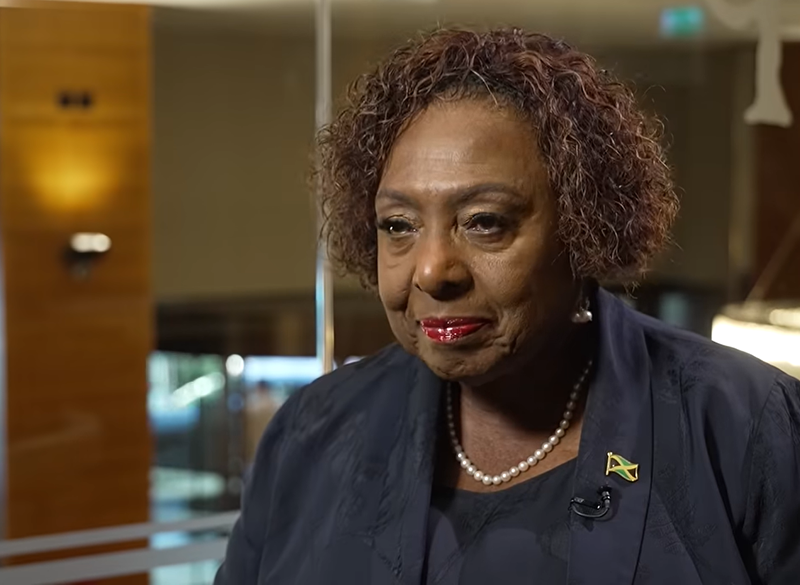
The demands for reparations arose from battles over the dignity of the African descendant, repatriation, self-determination and questions around land, labor education, political power, culture, white supremacy and black racism. Campbell explains the progressive forces forging repair and the cooptation and political expediency of the reactionary elements pushing back the efforts of the working class, women, grassroots and marginalized groups in Jamaica and other parts of Global Africa.
For more than a century, demands for reparations, repatriation, and self-determination have emerged from the struggles of the Jamaican people themselves. These demands were never simply claims for financial compensation. They arose from battles over respect as human beings, land, labor, education, political power, cultural dignity, and freedom from white supremacy and anti-Black racism. From the emancipated villages of the Maroons to the Paul Bogle rebellion, from Marcus Garvey to the Rastafari movement, reparative justice has been understood as the transformation of the social order created by slavery and colonialism.
Today, however, three distinct visions of reparations coexist in Jamaica. The first is the popular tradition of reparations rooted in the struggles of working peoples, oppressed women, Rastafari, and the descendants of the enslaved. The second is an academic tradition developed by scholars, researchers, lawyers, and activists who have accumulated a substantial body of evidence documenting the historical and contemporary consequences of slavery and colonialism. The third is a state-centered approach advanced by governments, diplomats, and politicians through commissions, courts, and international negotiations.
This essay argues that the divergence among these three traditions has become a central political question confronting the reparations movement. While the language of reparative justice has gained unprecedented international legitimacy, Jamaica’s political class has increasingly embraced this language as a means of managing, controlling, and curbing the movement’s transformative potential rather than advancing the structural changes that reparations demand. The ruling elites who claim to speak for reparations continue to preside over patterns of militarily dividing the poor into garrison communities, racial hierarchy, super exploitation, gender violence, restricted access to public resources, and dependence on external powers. Their embrace of reparations abroad stands in sharp contrast to their unwillingness to confront the structures of domination that persist within Jamaica itself.
The result is a struggle over the meaning of reparations. One vision seeks negotiation, legal recognition, and financial settlements. The other seeks the transformation of social institutions, educational systems, economic relations, public resources, and political power. Whether reparative justice becomes an elite-managed process or a movement for social transformation will ultimately be determined not by governments, courts, or international declarations, but by the capacity of the Jamaican people to shape the terms of the struggle themselves.
The history of reparations in Jamaica can be understood through four interconnected struggles: the struggle over memory and historical truth; the struggle over land and public resources; the struggle over education and knowledge production; and the struggle over political authority within the reparations movement itself. These four dimensions reveal the continuing conflict between popular demands for transformation and elite efforts to contain, institutionalize, and manage those demands.
The reparations movement is now at a crossroads. A class that fears the reckoning cannot be expected to lead it, and its turn to the courts of London[1] is an attempt to manage the question and to claim a mandate it has not earned from the people. Denis O'Brien, the Irish telecommunications billionaire, has inserted himself into the middle of the struggle, seeking to dilute the energies of a popular anti-imperialist movement for reparative justice. Whether reparative justice becomes a ritual of the powerful or a program of repair will not be decided in the Privy Council. It will be decided by the struggles of the Jamaican people, in the tradition of the maroons, the rebels and the Rastafari, and whether those struggles can impose their own terms on the question.
Most Recent Configuration of Struggles for Reparative Justice and Its Long Gestation
George "Chubby" Nelson was the goalkeeper for Cornwall College in Montego Bay and part of the team that won the Olivier Shield in 1963, the year of Coral Gardens. The Easter uprising in the plantation and tourist belt of western Jamaica, and the round-up of the Rastafari that followed it, marked a whole generation that came of age in rural Jamaica and in the tourist enclave. Some of the brightest of them, among them Felix Waldron, chose armed struggle for the right to cross lands being acquired for tourists. Others took different roads. Rex Nettleford, cultural leader and reparation activist in his own style, was a co-author of the 1960 University of the West Indies report on the Rastafari. Nettleford studied the movement from the academy, while Nelson, on leaving school, found his spiritual redemption within it. From that movement Nelson became part of the leadership of the Jamaican Committee on Reparations from 1991. Working alongside Dudley Thompson, then Jamaica's High Commissioner in Lagos, and Lord Anthony Gifford, who prepared the legal argument for the 1993 Abuja Pan-African Conference on Reparations, he helped lay the organizational foundation for the recent phase of the reparations movement in Jamaica.
That phase had a long gestation in a society where the demands of the people were written in blood. At its nineteenth-century peak Jamaica had more than 800 sugar plantations, worked by enslaved Africans to supply Britain and Western Europe. Enslavement was a state-backed enterprise. The new Register of British Slave Traders identifies some 13,000 investors, among them more than 100 members of Parliament from the Tory and Whig Parties, forerunners of today's Conservatives and Liberal Democrats, founders and directors of the Bank of England, more than a thousand women, and the philosopher John Locke.[2] Behind it stood a plantation order sustained by whipping, torture, family separation and the continual threat and reality of rape. The diaries of Thomas Thistlewood, an English overseer and later planter in Westmoreland, recorded in a standard form 3,852 sexual acts with 138 primarily enslaved women over thirty-seven years, and Trevor Burnard recorded that that such sex was a means of making the slave master's institutional dominance personal.[3] Sexual violence was not a byproduct of slavery but one of the principal means by which enslaved women were controlled and made into sources of both labor and reproduction.[4] Behind it stood a plantation order sustained by whipping, torture, family separation and the continual threat and reality of rape. Edward Long, in The History of Jamaica (1774), did more than defend slavery as an economic necessity. He helped build an intellectual framework that presented white supremacy and the domination of African people as natural and permanent.
The British bequeathed Jamaica a deformed and racist educational system. Under colonialism, the British educational system papered over this violence and debauchery, romanticising the plunder in books and songs about pirates such as Captain Morgan. The educated strata in the interstices of the colonial system despised the mass of poor Black people while seeking the favour of the colonial masters. The brown middle classes and commercial elements romanticised enslavement and celebrated plantation culture. H. G. de Lisser, for decades the editor of the Gleaner, was emblematic of this stratum, and his novel The White Witch of Rosehall turned the legend of Annie Palmer into a staple of Jamaican reading. The power behind it did not cease with the end of formal colonial rule. Plantation dynasties held their estates for two and sometimes three centuries, and Worthy Park, whose history from 1670 to 1970, shows how wealth and social standing built on racial slavery survived the end of the system and continued to shape Jamaica.[5]
The question that Coral Gardens posed in 1963 – who owns the land and who may cross it – has not gone away. The north coast that was being cleared for ‘tourists’ then is now the site of the struggle over who may walk on the beaches of Jamaica. The Beach Control Act of 1956 still governs access, and a draft policy launched in March 2026 continues the beach-control approach of the old white ruling elements rather than providing beach rights for the common people. Campaigners with the Jamaica Beach Birthright Environmental Movement have taken their case to the courts: several coastal sites, including Mammee Bay, Little Dunn's River, the Blue Lagoon, Bob Marley Beach and Flankers or Providence Beach, are now subject to five court cases, and the Flankers case is in St James, the parish of Cornwall College and Coral Gardens. Its leader calls the model "plantation tourism." [6] The generation formed by 1963 asked for land and the right to move across it, and the movement that George Nelson helped found now meets the same question at the shoreline.
That history of sexual violence also continues for Jamaican and Caribbean women, who have made the end of sexual violence central to their own struggles for justice. In Guyana, Red Thread, founded in 1986 by women including Andaiye and Bonita Harris, who had worked alongside Walter Rodney in the Working People's Alliance, has for decades supported women and children in violent situations, pressed for the Sexual Offences Act and run a Domestic Violence and Rape Survivors Self Help Group. In Jamaica, a Jamaicans for Justice survey found that nearly 20 percent of women have been raped, so that the rape of enslaved women, which the plantation order made routine, is the root of a pattern no reparative programme can leave out.
Politicians Seeking to Coopt the Movement
Just as de Lisser set himself against Garvey and the Rastafari, the political class that guided Jamaica's decolonization feared Marcus Garvey and opposed the reparative claims of the Universal Negro Improvement Association (UNIA), while seeking to balance its position between the mass of oppressed Jamaicans and the imperial order. When formal colonialism ended, the Rastafari carried forward the demands for reparations and repatriation. Commissions and grandstanding went hand in glove with repression, and politicians such as Edward Seaga entered the music business in an attempt to dilute the message of the reggae artists. Such was the power of the art, however, that the lyrics and campaigns of the reggae artists did more to lift the consciousness of the people than decades of writing by intellectuals.
Edward Seaga sought to put his stamp on the politics of the country[7] and on the university, but the global struggle for reparative justice could not be contained within Jamaican society. Others have documented the painstaking intellectual work behind it: the public interventions and legal and historical commentaries of Verene Shepherd, the reports and statements of the CARICOM Reparations Commission, and the submissions and legal arguments of the current Jamaican government.
By the end of the twentieth century there were three variants of the struggle for reparative justice in Jamaican society: that of the grassroots and women, that of the intellectuals, and that of politicians and jurists such as Lord Gifford, Mike Henry, P.J. Patterson and Dudley Thompson. They reached a crescendo with Jamaican participation in the World Conference against Racism process, which culminated in the historic conference in South Africa at Durban in 2001.
The Energies After Durban
The World Conference against Racism (WCAR) at Durban, from 31 August to 8 September 2001, gave the movement its most important international text. In the Durban Declaration and Programme of Action, states agreed that slavery and the slave trade are a crime against humanity and should always have been so. The wording was careful, precise and clear.
Certain white settler colonial states and European Union governments led by Britain, refused outright to apologize for slavery. The Programme of Action also reached into the classroom. It urged states to promote the full and accurate inclusion of the history and contribution of Africans and people of African descent in the education curriculum, which made the demand to change education part of the reparative claim from the beginning.
Durban also joined the claims of African descendants to those of other oppressed peoples in struggle. The Declaration named the Palestinian people under foreign occupation by the Zionist entity among the peoples subjected to racism. The Dalits marched in Durban against the caste system in India, and the Programme of Action set out measures on education and equal access for Roma, Sinti and Traveller communities. The United States and Israel walked out over the language on Palestine, and the intense ideological and political struggles have since been used to seek to discredit the WCAR conference as a whole. The Anglo American media and ruling classes have suppressed the DDPA for its continued relevance to the ongoing intellectual and ideological struggles.[8] The breadth was nonetheless its strength: it made reparative justice a question for all the peoples, workers and women denied their histories, their land and their standing, and not only for those who could press a legal claim against Britain.
The momentum carried into 2007, the bicentenary of Britain's abolition of the slave trade, which intensified popular calls for reparative justice and gave Jamaican and other Caribbean campaigners a public occasion to press on. In Jamaica it led to the parliamentary debate of that year and the National Commission on Reparation in 2009. Across the region a flurry of conferences and meetings led to the CARICOM Reparations Commission in 2013 and its Ten Point Plan in 2014, with Hilary Beckles's Britain's Black Debt providing the historical case.
Yet the public argument narrowed. As the campaign took shape around negotiation with London, the debate came to be dominated by the question of compensation and its size, while the wider agenda of the Durban Declaration and Programme of Action, on education, curricula, the confrontation with contemporary racism and the protection of those still discriminated against, received too little attention. The Ten Point Plan itself is broader than money, with an apology, health, education and debt cancellation among its points, so the weakness is one of emphasis and follow-through: a movement that began in Durban with a program for transforming institutions was left, in practice, to bargain over a cheque.
Intensified Struggles within Caribbean Societies
After the Ten Point Plan, the Caribbean political leaders and the states and the institutions around it moved to claim the movement, and the Rastafari who had carried the demand for decades were courted and kept at a distance. Voices from within the movement refused to yield. Mutabaruka, a member of the National Council on Reparation, and the late Bunny Wailer, a founding member of the Rastafari Millennium Council, which seeks to unify the mansions of the movement around repatriation, kept the demand tied to the people. In October 2017 the University of the West Indies launched its Centre for Reparation Research at Mona. This author was among those who were invited.
The Mona campus itself, where the University of the West Indies in Jamaica has stood since 1948, is an old plantation: it occupies the former Mona and Papine sugar estates, and the eighteenth-century aqueduct that carried water to the cane mills. The ruins of the sugar works stand beside an excavated village of the enslaved, with an obelisk listing the names of the people on record who may have lived there, as physical signs of the forced labor on which the estates depended. Yet, as this author has written in the chapter, Reparations and the University in the 21st Century, a program of reparations must include a full reorganization of the entire curriculum of the University.[9]
During the 2017 conference, a plaque was unveiled by Mutabaruka, Samia Nkrumah and Dr. Julius Garvey, and the next day an all-day symposium addressed ‘economic growth,’ ‘sustainable’ societies and reparatory justice. The Centre's work rests on two colleagues, Hilary Beckles, Vice-Chancellor of the UWI and chair of the CARICOM Reparations Commission, and Verene Shepherd, then the Centre's director and a leading figure of Jamaica's National Council on Reparation. They collaborate closely at the university and in the Commission, work on local, national and international stages, and are constantly sought out for interviews by the media and by civil society and state organizations.
Efforts to Coopt the Movement
In the past fifteen years the reparations movement has become a mass political movement in the Caribbean that the region's leaders could not ignore or easily contain. The solidarity around the Ten Point Plan was such that, when Britain resisted, the leaders could not renounce it. Meetings after meetings the British government sought to split the island and territories from each other. At the 2024 Commonwealth summit in Samoa, the fading British imperialists succeeded in removing a separate section on reparatory justice from the communique, leaving only a much shorter reference to possible future discussions. Yet in July 2026 CARICOM heads of government agreed that the reparations campaign should have a prominent presence at the next Commonwealth summit. When imperialism saw that the movement was gaining force, the Anglican Church,[10] the Roman Catholic Church,[11] and the foundations of North America began to pay attention.[12]
Then, Denis O'Brien of Digicel entered and sought to divert the energies of intellectuals.[13] In October 2022 he presented his Repair proposal to the CARICOM Reparations Commission. The polite diplomacy of governments and the University gave O'Brien his opening. When he presented his Repair proposal to the CARICOM Reparations Commission in October 2022, Hillary Beckles welcomed its potential for high-level engagement with the UK, Europe and the European Union.[14] O'Brien's emphasis falls on historical accountability and a long-term fund from the former colonial powers. The Caribbean movement, by contrast, seeks a comprehensive program of repair, aimed at reversing the social, economic, educational, cultural and psychological injuries produced by slavery and colonialism. With private funds, Repair had 15 fully costed economic and social development plans drawn up by UWI academics, modest sums beside the scale of the claim, and O'Brien himself spoke of something like one or two billion dollars over twenty-five years for Jamaica. O'Brien's proposal amounted to an insult to the Caribbean people. The relationship between the CARICOM Reparations Commission and Denis O’Brien also changed in significance. By 2026, however, CARICOM’s reparations framework had moved decisively toward a state-to-state process of negotiation and implementation, with the revised Ten-Point Plan explicitly demanding monetary compensation from enslaving states and other institutions and linking reparatory justice to sovereignty and decolonisation.
O'Brien's figure of 1 to 2 billion dollars in reparations payment can be contrasted to the report that the Brattle Group produced for the University of the West Indies.[15] The Report[16] of this group estimated total harm from enslavement of between 100 and 131 trillion US dollars, with Britain required to pay 14 countries some 24 trillion. Of that sum, Jamaica would receive approximately $9.5 trillion. Weeks later, O'Brien told a conference in Miami that Jamaica might look for one or two billion dollars over twenty-five years, not on the scale outlined in the Brattle report, a small fraction of one per cent of the report's figure for Jamaica. The distance between the two shows how far the language and scale of repair could be reduced to what the British ruling class might entertain.
The question that the movement has to answer is whether such patronage can be allowed to set the terms, and whether reparative justice is a matter of legal argument and sums of money or something more profound: the transformation of institutions, curricula, land, health and the lives of working people and women, which the Durban Programme of Action had called for. The movement had by now matured beyond O'Brien's horizons, extending its claims to environmental repair in the broad struggle against racial capitalism, and US imperialism, the assault on Palestine and the rise of neo-fascism gave its demands a new urgency.
The United Nations returned to these questions in 2026. On 25 March the General Assembly adopted a Ghana-led declaration that called the trafficking of enslaved Africans and racialized chattel enslavement the "gravest crime against humanity," by 123 votes in favor, with Argentina, Israel and the United States against, and 52 abstentions, including all 27 EU states. The text is non-binding and has no enforcement mechanism, but it requires member states to take part in good-faith dialogue on reparatory justice, including formal apologies, financial compensation and restitution. It gave the movement its strongest international endorsement since Durban, and it set the choice in plain terms: dialogue over remedies, or the deeper change that the people who started the movement had always demanded.
On 4 September 2026, the UN General Assembly adopted the African-led “Correct the Map” resolution, calling on governments, schools, international organizations, and technology companies to promote cartographic projections that accurately represent the relative size of Africa and other continents and to teach students the limitations of conventional map projections. Implementing this in Jamaica and across Africa requires neither reparations funds nor new international financing: governments can simply change the maps used in school textbooks, classrooms, examinations, and public education and teach geography in ways that represent Africa according to its actual continental scale. The correction of how Africa is represented on the map therefore opens onto the more material question of how colonial geography continues to organize access to land, the sea, space, and resources in Jamaica.
Intensified Campaign in Changed World Economy
The beach is where the plantation geography described earlier is most visible, and the reparative question is not whether Jamaicans may be admitted to some beaches but whether access is a right. In 2026 the Ministry of Tourism published a list of 60 free public bathing beaches, while campaigners called for the Beach Control Act of 1956 to be repealed and replaced, not merely amended, as a colonial-era law that reproduces plantation-era spatial control. The Jamaica Environment Trust, a more cautious voice, found that the March 2026 policy frames access as something to be "provided" or "maintained" rather than an enforceable public right. In Barbados, by contrast, there are no private beaches, all beaches are public, and a property fronting a beach may own the land only to the high-water mark, so that the beaches cannot be closed to the Black majority. One society has placed the shoreline in the public domain, and the other grants access at the pleasure of owners and can withdraw it. This difference explains the power of the white ruling classes in Jamaica and the extent of anti-Black racism in Jamaica.
The Caribbean movement, through the CARICOM Reparations Commission and in the struggles of the people, has argued that reparations are not simply a monetary payment. They involve justice over land and the economy, cultural rights, the restoration of the environment and democratic control over the resources that produced colonial wealth. The question is whether the descendants of the enslaved have meaningful access to those resources, and beach access becomes a reparative question because it concerns ownership, use rights, the collective stewardship of public resources, and the freedom to enjoy nature as opposed to being bound to it as a commodity.
The same question of human dignity and worth runs through health care, resources and the safety of the region. In March 2026 Jamaica ended the Cuban medical program, a decision the US Embassy in Havana publicly applauded, while Washington militarized the southern Caribbean on a scale not seen in generations: around 15,000 troops and dozens of boat strikes by December 2025, and in January 2026 the capture of Venezuela's president, after which it turned its pressure on Cuba. Hurricane Melissa, a Category 5 storm, struck Jamaica in late October 2025 and caused US$8.8 billion in physical damage, equal to 41 per cent of the country's 2024 GDP, the costliest hurricane in Jamaica's recorded history. It killed 45 people, destroyed the Black River hospital, and was sharpened by climate change, which added about 10 mph to its winds. Six months on, food security remained worse than before the storm. In May the police killing of a woman who organized protests against police killings triggered protests in Granville. Jamaica sits atop a social tinderbox.
A ruling class that fears the coming reckoning cannot lead the reparations movement. Just as Edward Seaga sought to co-opt Reggae Music so his political surrogates in the current ruling party seek to put forward a populist platform on reparations. Minister Olivia Grange's case to the British public on the BBC sounds reasonable on the surface, but in Jamaica the political class cannot speak out against anti-Black violence by the powerful, and a petition to the Privy Council leaves the land, the beaches, the hospitals, the safety of women and the lives of the poor where they were. What is needed is a new social thrust for reparations, peace and justice in Jamaica, built from below by the Rastafari, women, workers and youth who have carried the movement for a century, and linked to the African Union's decade of reparations from 2026 to 2035. Reparative justice will not be decided in London. It will be decided by whether the people of Jamaica can win back the shore, the hospital, the school and the right to live without fear.
Horace Campbell is a peace and social Justice activist. He is also Professor of African American Studies and Political Science at Syracuse University and Chairperson of the Global Pan African Movement, North American Chapter. He is the author of Rasta and Resistance: From Marcus Garvey to Walter Rodney, Africa World Press, 1987.
Endnotes
[1] Kirka, Danica. "Jamaica Takes Its Case for Reparations for Britain's Role in Slavery to King Charles III." Associated Press, September 7, 2026. https://apnews.com/article/britain-jamaica-slavery-king-charles-iii-38a8dd0a5809edf44cbf0a87a8a7b176.
[2]Conn, David. "The Royal Crown Branded on Enslaved Africans: Britain's Monarchy and the Slave Trade." The Guardian, September 14, 2026. https://www.theguardian.com/uk-news/ng-interactive/2026/sep/14/register-british-slave-traders.
[3] The figures are Burnard's count in Mastery, Tyranny, and Desire: Thomas Thistlewood and His Slaves in the Anglo-Jamaican World (University of North Carolina Press, 2004)
[4] Conn, David. "The Royal Crown Branded on Enslaved Africans: Britain's Monarchy and the Slave Trade." The Guardian, September 14, 2026. https://www.theguardian.com/uk-news/ng-interactive/2026/sep/14/register-british-slave-traders.
[5] Craton, Michael, and James Walvin. A Jamaican Plantation: The History of Worthy Park, 1670–1970. London and New York: W. H. Allen, 1970.
[6] Taylor, Devon. “JaBBEM Calls for Repeal of ‘Colonial’ Beach Control Act.” Jamaica Gleaner, August 27, 2026. The concept of “plantation tourism” has an earlier scholarly genealogy in David Weaver’s analysis of Antigua, where he identifies a “plantation tourism landscape” in which tourism reproduces key spatial and economic relations of the plantation system (Weaver 1988).
[7] See Campbell, Horace G. “Edward Seaga and the Institutionalisation of Thuggery, Violence and Dehumanisation in Jamaica.” Pambazuka News, 17 June 2019.
[8] United Nations, Durban Declaration and Programme of Action (2001), paras. 100–102, 157–158. The DDPA calls attention to the enduring consequences of slavery, the transatlantic slave trade, and colonialism, recognizes the moral obligation of states concerned, and calls for appropriate measures of redress and reparation.
[9]Campbell, Horace G. “Reparations and the University in the 21st Century.” In Decolonial Options in Higher Education: Cracks and Fissures, edited by Sinfree Makoni and C. van der Merwe. Bristol: Multilingual Matters, 2025
[10]Church Commissioners for England. Historic Links to African Chattel Enslavement: Research Report. London: Church Commissioners for England, January 2023.
[11]Holy See, Dicastery for Culture and Education and Dicastery for Promoting Integral Human Development. “Joint Statement on the ‘Doctrine of Discovery.’” Vatican City, March 30, 2023. The statement acknowledges the Church’s historical failures, recognizes the consequences of dispossession and forced assimilation, and calls for pardon, while simultaneously distinguishing the papal bulls associated with colonial expansion from Catholic teaching and framing the institutional response primarily in terms of reconciliation, healing, dialogue, and accompaniment rather than reparations.
[12]MacArthur Foundation, “$80 Million to Advance Racial and Ethnic Justice,” July 2021; MacArthur Foundation, “Equitable Recovery,” 2020–2022. Following the mass mobilizations of The Black Lives Movement of 2020, MacArthur established a $125 million Equitable Recovery Initiative through social bonds and subsequently made reparations and racial healing an explicit philanthropic priority. Its 2021 grants included $1.5 million to the Institute of the Black World 21st Century, including support for the National African American Reparations Commission, and $1.5 million to the National Coalition of Blacks for Reparations in America (N’COBRA) for work supporting reparations for people of African descent in the United States and the global Africa.
[13] CARICOM. "Digicel Chairman Joins CARICOM Reparations Movement." October 27, 2022. https://caricom.org/digicel-chairman-joins-caricom-reparations-movement/.
[14]The Gleaner. "Editorial | Support O'Brien's Initiative." November 8, 2022. https://past.jamaica-gleaner.com/article/commentary/20221108/editorial-support-obriens-initiative.
[15] The Brattle Group. "Brattle Consultants Quantify Reparations for Transatlantic Chattel Slavery in Pro Bono Paper." June 29, 2023. https://www.brattle.com/insights-events/publications/brattle-consultants-quantify-reparations-for-transatlantic-chattel-slavery-in-pro-bono-paper/.
[16] Bazelon, Coleman, Alberto Vargas, Rohan Janakiraman, and Mary M. Olson. Report on Reparation for Transatlantic Chattel Slavery in the Americas and the Caribbean. The Brattle Group, June 2023. https://www.brattle.com/wp-content/uploads/2023/07/Report-on-Reparations-for-Transatlantic-Chattel-Slavery-in-the-Americas-and-the-Caribbean.pdf.