



Booties of War: The Status of Women in Boko Haram’s Hierarchy
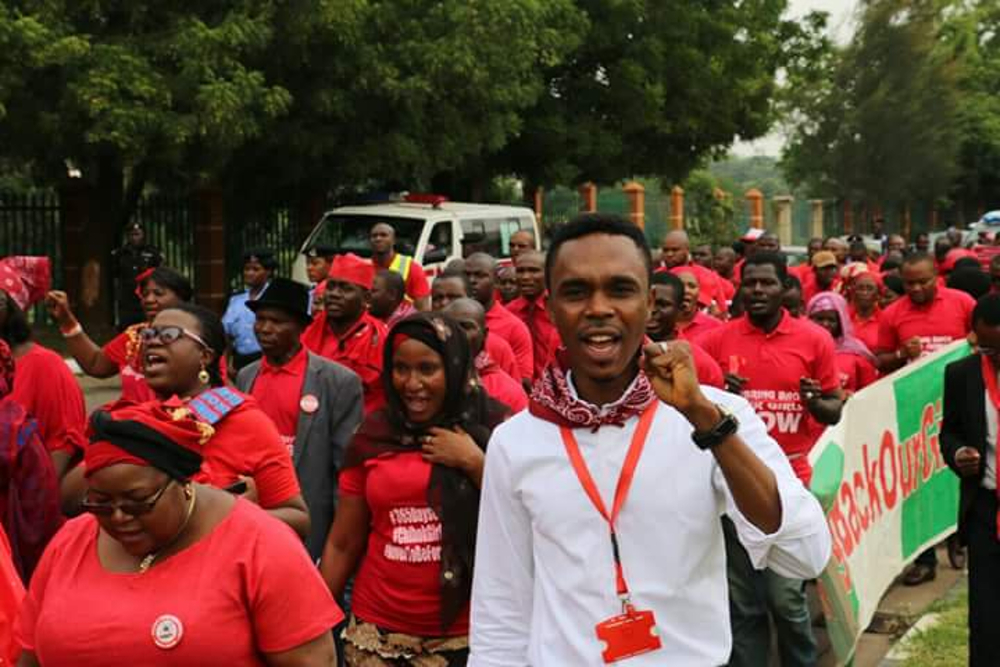

Violence against women can be instrumentalized for war and political economy partly because dominating women is socially acceptable. This article examines the roles of religion and patriarchy in Boko Haram’s gender-based violence through a theoretical analysis approach that uses theories on gender-based violence and the argument of different scholars.
A 2019 report showed that the Islamist Fundamentalist group Boko Haram had kidnapped at least seven hundred women and girls since 2014.[1] The group subjected its victims to forced marriages, sexual assault, and recruitment as suicide bombers and mercenaries. These acts illustrate Boko Haram’s gender-based violence (GBV) against women. GBV is prevalent across societies worldwide and can take many forms, including sexual, domestic, verbal, physical, psychological, workplace, and other forms targeting individuals or groups. This article examines the roles of religion and patriarchy in Boko Haram’s GBV, viz-à-vis the theories of GBV, and the position of Islam on the status of women in society. It addresses the question: How do pre-existing patriarchal structures in Nigeria and Salafi-Jihadist doctrines influence Boko Haram’s treatment of women as booties of war? Drawing on African feminist and masculinity studies alongside Islamic jurisprudence, this paper argues that Boko Haram radicalizes pre-existing patriarchal norms in Northern Nigeria and exploits extinct warfare practices to dominate women. The article concludes with the impact of this violence on Boko Haram’s victims and recommendations to address GBV.
Women and Girls as Booties of War
Defining the war Boko Haram believes it is fighting is crucial to understanding why Boko Haram treats abducted women and girls as “booties of war.” Boko Haram is waging an “asymmetric insurgency”[2] which it frames as a defensive and expansionist jihad, not only against the secular Nigerian state and Western education (Boko) but against every Muslim and non-Muslim who rejects its extremist Salafi-Jihadist beliefs. Through the doctrine of takfir[3] (excommunication), the group declares modern Nigerian society apostate, thereby positioning itself at war with anyone outside its ideological fold.
Boko Haram revives the ancient practice of taking female captives as ghanima (spoils of war)[4] in its self-declared war. In earlier Islamic jihadist campaigns, it was a norm to capture women as “spoils of war.” Fighters distributed captured women among themselves as concubines or domestic slaves. Despite the subsequent abolition of slavery and the conquest of women, Boko Haram continues the practice. The group categorized communities like Chibok and Dapchi as enemy territory (Dar al-Harb), treating the abduction of women and girls in similar patterns as in war conditions. Boko Haram strips civilian women of protected status and seizes them as rewards for fighters and to populate their group.
Women and girls have been the most frequent victims of Boko Haram’s mass kidnappings. In April 2014, the group kidnapped schoolgirls in Chibok, Borno State, Nigeria.[5] In 2018, they kidnapped other schoolgirls from Dapchi, Yobe State, Nigeria.[6] Boko Haram forcefully married some of them, mostly teenagers, to their militants, who abuse the women and girls sexually[7] and sometimes use them as mercenaries, including as suicide bombers. In one instance, in the April 2014 abduction, Boko Haram detained a fourteen-year-old schoolgirl, Leah Sharibu, after releasing her Muslim classmates because she refused to renounce her Christian faith.[8] Similarly, in June 2014, a female suicide bomber died in an attempted attack on a military facility in Gombe State, Nigeria. In July 2014, security operatives arrested a ten-year-old girl strapped with explosives in Katsina, North-West Nigeria.[9]
Human Rights Watch[10] interviewed thirty rescued victims who revealed that the militants subjected them to various forms of abuse, including physical and psychological torture. Larisa Epatko also reported[11] similar accounts, including those of women who had children with the militants. Boko Haram claims that their acts are based on a divine mandate, part of which is to “rescue” women from the Western ideology that does not regard women.[12] Human Rights Watch compared Boko Haram’s acts to the attitudes of similar Islamist fundamentalist groups and reported that Islamic State in Iraq and Syria (ISIS) has similarly abducted and abused women.[13] Although in certain cases, women suicide bombers have allegedly acted as “jihadists” without compulsion, Roose and Cook argue[14] that women “jihadists” operate within a complex ideological pattern among jihadist, far-right and male-supremacist that seek to establish or reinforce patriarchal social and political orders in which women occupy subordinate positions to male militants.
Theoretical Approach
The theories of hegemonic masculinity,[15] male dominance, patriarchy,[16] and men’s entitlement over women[17] have been used to explain GBV, examining why men exert violence on women and their motivations. Raewyn Connell[18] describes hegemonic masculinity as a practice that legitimizes men's dominant position in society and justifies the subordination of women and male minorities. Although Connell originally proposed the concept of hegemonic masculinity in relation to social inequalities in Australian high schools[19] and debates on the role in Australian politics,[20]its applicability to similar contexts in gender-based discourses makes it useful in understanding Boko Haram’s violence against women.[21]
However, relying on Western frameworks alone will not capture the specific cultural and historical realities of African societies. Applying an African-centered lens reveals how socio-economic marginalization and cultural expectations fuel extremist violence such as Boko Haram’s. Kopano Ratele observes that when men feel disempowered or anxious about their social standing, “the fear of being perceived... as not a real man keeps men exaggerating all the traditional rules of masculinity, including sexual predation with women.”[22] Sakhumzi Mfecane argues, “masculinities cannot be understood outside the cultural contexts in which they are produced… to account fully for the complex lives of African men, scholars need to develop theories of masculinity that are grounded in African realities.”[23]
In Northern Nigeria, where widespread poverty and unemployment strip many young men of the conventional manhood status, Boko Haram offers them an alternative, violent pathway to it. By joining the group, these young men assume the manhood status based on Ratele’s assertion of “the will to dominate,” exercising absolute control over abducted women and girls as proof of that status.
The concept of male dominance forms part of Connell’s hegemonic masculinity theory. Goldberg has argued that all known cultures and societies express male dominance.[24] Based on this, Nigeria’s social, cultural, and institutional structures, especially in the north, where Boko Haram has its stronghold, enable male dominance.[25] The prevalent male dominance in Nigeria has influenced Boko Haram’s violence against women.
Patriarchy is a related concept to hegemonic masculinity, sharing the common ideology of male dominance. Walby defined patriarchy as “a system of social structures and practices in which men dominate, oppress and exploit women.”[26] Patricia McFadden frames patriarchy as an active mechanism of enclosure and control. McFadden explains: “What Patriarchy does is lock us into this cage. It uses our bodies while also denying us access to resources in our societies. 'The cage' is a means of infantilization, which is also built into Patriarchy... women are still considered perpetual minors in most societies... because they themselves are the property of men.”[27]
These patriarchal structures are mostly appealing to fundamentalist groups such as Boko Haram. In patriarchal structures, male dominance influences the interpretation of sacred texts, preferring texts that support men’s domineering authority over texts that support equality. Bouffard[28] has explained how patriarchy influences sexual relations between men and women: “societal patriarchy is translated into individual attitudes of male sexual…entitlement, which provide motivation and justifications for sexual violence,” and a tendency of men to think of women as sexual property that they own and control, and the tendency manifests at the individual and group levels. In Boko Haram’s context, pre-existing patriarchal norms merge with literalist Salafi-Jihadist doctrines to lock women[29] inside McFadden’s metaphorical and literal “cage,” treating them like property and translating societal male dominance into an institutionalized instrument of war.
The Influence of Patriarchy in Nigeria
Boko Haram’s treatment of women is further fuelled by an extreme radicalization of Nigeria’s patriarchal structure, reflected in marriage, family life, work, politics, and other aspects. This structure, both religiously and culturally motivated, has influenced how many men regard women as secondary to men and as legal or moral dependents. For example, in certain cultures in Nigeria, if a husband dies without a male child, his widow and female children cannot inherit his estate; the late husband’s male relatives are the ones entitled.[30] Similarly, another prevalent practice in Nigeria is child marriage, especially in the north, such as Hausa, Fulani, and Kanuri. Boko Haram’s practice of forcefully marrying young girls, mostly between fourteen and eighteen years old, directly exploits and accelerates this long-standing practice.
Furthermore, pervasive societal attitudes around female morality and victim-blaming directly shape how Boko Haram justifies its mass abductions. In cases of sexual violence, including rape, men often blame women for inappropriate appearance, behaviour, or both, excusing their own misconduct, shifting moral culpability away from male perpetrators onto female victims.[31] Boko Haram exploits this same patriarchal ideological logic to treat girls attending Western schools as guilty of “moral corruption” and betrayal simply by seeking secular education and stepping outside domestic confinement. Abducted schoolgirls, like the Chibok and Dapchi girls, must not commit an individual offense to face punishment. Seeking Western education alone is a transgression against the patriarchal and divine order. Consequently, Boko Haram uses abduction, forced conversion, and forced marriage as means of putting women in their “proper” subordinate place. The pre-existing patriarchal culture in Northern Nigeria and the government’s failure to protect schoolchildren both provide the ideological justification and the permissive environment for Boko Haram’s GBV.
The Role of Religious Ideology in Boko Haram’s GBV against Women
The religious terrorism theory[32] considers three arguments: First, that religion is the cause of terrorism; second, that religion is not the cause; and third, that religion is not the actual cause, but only plays a role. The third argument is more applicable to Boko Haram’s context. What is the role of religion in Boko Haram’s GBV, and its relationship to hegemonic masculinity and patriarchy? The three Bs of religion: belief, behaviour, and belonging help in understanding this relationship. Marcus[33] has proposed that in understanding how religious belief influences religious behaviour, it is important to know which “theologies, doctrines…values, and holy texts” individuals and institutions reference when speaking about those beliefs; how their beliefs influence their behaviours; and how belonging to a specific community affects their beliefs and behaviours.
Boko Haram professes and practices Islamic beliefs. In an account of a rescued victim of Boko Haram, one of its commanders remarked, “You are no longer in Nigeria. You are now in an Islamic kingdom. Here, women’s rights are respected, not like in Nigeria … where you have all types of discrimination... In our Islamic kingdom, there will be no discrimination because everyone will be Muslims.”[34] Odok has argued that Salafi doctrines, which hinge on a normative form that power is unequally distributed between men and women, influence Boko Haram’s patriarchal structure.[35]
Understanding Boko Haram’s GBV requires a critical engagement with Islamic texts and traditions. The Quran accords men and women equal spiritual and moral status before God.[36] However, spiritual and moral equality does not confer the same social, legal, or economic status. Certain scriptural passages establish distinct gender rules in specific contexts that patriarchal movements often cite to reinforce male dominance.[37]
Realizing the complexity in these texts and traditions is crucial to understanding Boko Haram’s interpretation of them. Boko Haram exploits pre-existing patriarchal interpretations and extinct wartime rules while ignoring foundational Islamic legal protections. Badamasiuy[38] and Al-Fawzaan[39] have both submitted that Islamic law grants women distinct legal protections, and Lone et al.[40] have also submitted that a woman in Islam is “liberated, not subjugated.” Islamic law does not compel a woman to marry anyone without her consent.
Boko Haram’s practices do not conform to certain fundamental principles of Islam guiding the status of women, such as marital consent, protection of noncombatants, and slavery abolition.[41] A valid Islamic marriage (nikah) requires the woman’s voluntary consent. Therefore, a forced marriage is invalid and amounts to sexual assault or fornication. Islamic rules guiding warfare prohibit targeting and harming noncombatants, including women, children, and students. Boko Haram consistently breaches these rules through school abductions and the use of girls as suicide bombers.
In addition, Islamic foundational scholars argue that Boko Haram’s practices are based on a selective and extremist interpretation of texts and traditions. This argument shows how diverse interpretations of doctrine within the same religion influence different religious behaviours. Boko Haram’s militants exploit historical asymmetries and extinct wartime practices while ignoring Quranic principles of justice, mercy, and women’s autonomy.
Conclusion
Gender-based violence against women remains a persistent issue. In both formal and informal settings, women suffer different forms of violence. Boko Haram has consistently victimized women and young girls, particularly in northern Nigeria. There must be urgent steps to end GBV against women in Nigeria and address the challenges associated with it.
Like many victims of gender-based violence,[42] Boko Haram’s victims have suffered social, mental, emotional, physical, and psychological pain and other health issues. For example, during and after their captivity, some women and girls suffer from sexually transmitted diseases, struggle to reintegrate into society after leaving captivity, and face discrimination. In some cases, victims’ relatives have also suffered from anxiety and depression.
Boko Haram’s GBV debases women’s and girls’ social status[43] to mere subjects, devoid of human dignity and the ability to exercise their free will. These experiences illustrate the theories of patriarchy, hegemonic masculinity, male dominance, and men’s entitlement over the bodies of women.
Religious and cultural (re)orientation is vital for educating men and boys to regard women as equals rather than second-class in society. Jewkes et al[44] propose that the theory of hegemonic masculinity can also be an intervention in gender issues, arguing that men should use their masculinity in positive ways rather than oppress women.
Disrupting the patriarchal order through rights advocacy is needed to protect women against male dominance. Odok[45] has suggested that empowering women can help in disrupting the patriarchal system that dominates and oppresses women. There should be legal and institutional restructuring to protect women’s rights.
Supporting the victims of gender-based violence through rehabilitation and empowerment programs will help them heal from their pain and reintegrate into society. Okoli has suggested[46] that a gender-sensitive approach to counterterrorism, specifically one which mitigates the vulnerability of women in the face of terrorism, will help to address GBV. There is a need for the government to adopt and implement a security strategy that specifically protects the targets of Boko Haram’s GBV, especially following recurring mass abductions of schoolgirls.
Jude Terna Ayua is a lawyer, policy analyst, and contributor at African Liberty, with a focus on human rights, education, and blockchain technology. Jude holds a Master of Theological Studies from the Harvard Divinity School and a Bachelor of Laws from Ahmadu Bello University.
Endnotes
[1] Pearson, Elizabeth & Zenn, Jacob. 2021. Boko Haram, the Islamic State, and the Surge in Female Abductions in Southeastern Niger. CCT Research Paper February 2021 DOI: 10.19165/2021.1.01 ISSN: 2468-0486, p. 3.
[2] See Alexander Thurston, Boko Haram: The History of an African Jihadist Movement (Princeton: Princeton University Press, 2017), 195–238
[3] See Cole Bunzel, From Paper State to Caliphate: The Ideology of the Islamic State (Washington, DC: Brookings Institution, 2015); and International Crisis Group, Nigeria: Women and the Boko Haram Insurgency, Africa Report No. 242 (Brussels: ICG, December 2016).
[4] See Majid Khadduri, War and Peace in the Law of Islam (Baltimore: Johns Hopkins Press, 1955), 118–132; and Kecia Ali, Marriage, and Slavery in Early Islam (Cambridge, MA: Harvard University Press, 2010), 39–64.
[5] Oduah, Chika. 2014. Chibok: the village that lost its daughters to Boko Haram. The Guardian News, Thu 15 May 2014 10.01 EDT, https://www.theguardian.com/world/2014/may/15/chibok-nigeria-200-kidnapped-schoolgirls-boko-haram.
[6] BBC News, “Nigeria Dapchi school kidnappings: What we know.” 26 February 2018. https://www.bbc.com/news/world-africa-43197694.
[7] Human Rights Watch, 2014, “Those Terrible Weeks in Their Camp: Boko Haram Violence against Women and Girls in Northeast Nigeria,” (Washington, DC: Human Rights Watch, 2014) p. 33.
[8] See Onyekakeyah, Luke. 2022. “A Saint in Hell”. The Guardian News, 23 November 2022. https://guardian.ng/opinion/a-saint-in-hell/, and Gopep, Jonathan & Searcey, Dionne. 2018. “In Nigeria, Another Mass Kidnapping Stirs Painful Memories and Anger” The New York Times, February 25, 2018, https://www.nytimes.com/2018/02/25/world/africa/nigeria-kidnapping-girls-dapchi-chilbok.html.
[9] See Odebode, Alechenu, and Soriwei. 2014. “Female suicide bomber attacks Gombe barracks,” Punch, June 9, 2014, http://www.punchng.com/news/female-suicide-bomber-attacks-gombe-barracks/, and Omona, Stella & Audu, Onoja. 2014. “Nigeria: 10-Year-Old Female Suicide Bomber, Two Others Arrested in Katsina,” Daily Independent, July 30, 2014, http://allafrica.com/stories/201407311141.html.
[10] Human Rights Watch, 2014. See also Okoli, Al Chukwuma. 2022.
[11] Epatko, Larisa, "Surviving Boko Haram: Kidnapped Girls Tell Their Stories", PBS Newshour, October 19, 2016, http://www.pbs.org/newshour/updates/surviving-boko-haram-kidnapped-girls-tell-stories/. One account reads, ‘They went from house to house. When they arrived at our house, they wanted to marry me, and I refused. I told them I wouldn’t marry anyone without my father’s consent. They came back again at night and kidnapped me.’ Aisha (17) was forced to ‘marry a fighter, and she became pregnant. ‘I hated the baby,’ she said, but a woman she didn’t know showed her kindness and taught her to love her son. ‘She preached to me about his innocence.’”
[12] Human Rights Watch 2014, p 1.
[13] Human Rights Watch, “Iraq: Women Suffer Under ISIS: For Sunnis, Lives Curtailed; for Yezidis, New Accounts of Brutal Rapes.” https://www.hrw.org/news/2016/04/06/iraq-women-suffer-under-isis. See also The Washington Post’s report, “Text: Laura Bush on Taliban Oppression of Women.” https://www.washingtonpost.com/wp-srv/nation/specials/attacked/transcripts/laurabushtext_111701.html, Saturday, Nov. 17, 2001, on the Taliban’s oppression of women in Afghanistan.
[14] Joshua M. Roose, Joana Cook. (2022) Supreme Men, Subjected Women: Gender Inequality and Violence in Jihadist, Far Right and Male Supremacist Ideologies. Studies in Conflict & Terrorism, pages 1-29.
[15] Connell, R. 1987. Gender and Power: Society, the Person, and Sexual Politics. Palo Alta: University of California Press.
[16] Goldberg, Steven. 1993. Why Men Rule. Chicago: Open Court.
[17] Dekeseredy, Walter S., and Martin D. Schwartz. 1993. “Male Peer Support and Woman Abuse: An Expansion of Dekeseredy’s Model.” Sociological Spectrum 13 (4): 393–413. https://www.tandfonline.com/doi/abs/10.1080/02732173.1993.9982041.
[18] Connell, R. W. 1987.
[19] Connell, R. W., et al. 1982. Ockers & disco-maniacs : a discussion of sex, gender and secondary schooling (2nd ed.). Stanmore, New South Wales: Inner City Education Centre.
[20] Connell, May 1982.
[21] Makama, Bulus Audu, 2016, “The Abuse of Power and Sexual Violence: A Close Reading of 2 Samuel 11 against the Background of Boko Haram Atrocities in Nigeria,” Stellenbosch University, https://scholar.sun.ac.za.
[22] See Kopano Ratele, “Masculinities without Tradition,” Politikon: South African Journal of Political Studies 40, no. 1 (2013): 133–156; and Kopano Ratele, Why Men Hurt Women and Other Reflections on Love, Violence and Masculinity (Johannesburg: Wits University Press, 2022).
[23] Sakhumzi Mfecane, “Towards African-Centred Theories of Masculinity,” Social Dynamics: A Journal of African Studies 44, no. 2 (2018): 291–305.
[24] Goldberg, Steven. 1993.
[25] Odok, Godwin Etta. 2020, p. 1663. Odok’s statement supports this claim: “Almost all institutions and social processes in the region reproduce and exert the dominance of men over women, with existing dominance in the region rooted in Salafism.”
[26] Walby, Syvia. 1989. Theorising Patriarchy. Sociology, Vol. 23, No. 2 (May 1989), pp. 213-234, Sage Publications, Ltd. Available online: https://www.scribd.com/document/846281294/WALBY-THEORISING-PATRIARCHY, p. 214-216.
[27] Patricia McFadden, “On Becoming Human: Post-Nationalism and Radical Feminism in Africa,” interview by T.D. Harper-Shipman, Miami Institute for the Social Sciences, 2024; see also Patricia McFadden, “Sexual Pleasure as Feminist Choice,” Feminist Africa, no. 2 (2003).
[28] Bouffard, Leana Allen, 2010. "Exploring the utility of entitlement in understanding sexual aggression," Journal of Criminal Justice, Elsevier, vol. 38(5), (pages 870-879), p. 870.
[29] Okoli, 2022.
[30] Oluwakemi D. Udoh, Sheriff F. Folarin, and Victor A. Isumonah, 2020. "The Influence of Religion and Culture on Women’s Rights to Property in Nigeria," Cogent Arts & Humanities 7, no. 1: 1750244, https://doi.org/10.1080/23311983.2020.1750244.
[31] Pereira, Charmaine & Ibrahim, Jibrin. 2010, p. 922.
[32] Juergensmeyer, Mark, 2017. Does Religion Cause Terrorism? Cambridge University Press. https://doi.org/10.1017/9781316492536.002, pp. 12-18.
[33] Marcus, Benjamin P. 2016. Six Guidelines for Teaching About Religion. Opinion. Education Week. Available online: https://www.edweek.org/education/opinion-six-guidelines-for-teaching-about-religion/2016/04.
[34] Human Rights Watch, 2014, p. 1.
[35] Odok, 2020, p. 1664. See also Okoli (2022), who opined that Boko Haram’s patriarchy is based on the “orthodox interpretations of the Shari’a” applicable in northern Nigeria.
[36] For example, Quran 49:13 affirms the shared origin of all humanity, stating that the most noble in the sight of God are the most righteous, regardless of gender, while Quran 33:35 explicitly grants believing men and believing women identical spiritual rewards.
[37] See also Quran 2:282 regarding financial witness testimony, inheritance laws that allot sons twice the share of daughters, the permissibility of polygyny exclusively for men, and Quran 4:34, which outlines male marital authority (qiwamah) and a contested disciplinary gradation in cases of marital discord. Similarly, classical hadith collections contain narrations.
[38] Badamasiuy, J. B. 1998. Status and Role of Women under the Shari’ah. Zakara Publishing Co. Ltd., Kaduna, Nigeria. Badamasiuy’s submission is that in Islam, a woman’s status is the same as a man’s, “as she is virtually equal to a man.” A Muslim woman is a representative of Allah, and not a subject of the man, not addressed through the agency of the man, but directly as a human being.”
[39] Al-Fawzaan, Shaykh Saalih. 2013. The Status of Women in Islam. Authentic Statements Publishing, USA, p. 10.
[40] Lone, N. A. Bashir H.S. 2015. “Status of Women in Islam: A Perspective” Global Islamic Economics Magazine, Volume 43, Available at SSRN: https://ssrn.com/abstract=2739329, p. 63.
[41] See Open Letter to Dr. Ibrahim Awwad Al-Badri, alias 'Abu Bakr Al-Baghdadi,' and to the Fighters and Followers of the Self-Declared 'Islamic State' (2014), signed by over 120 international Muslim scholars; and Jonathan A.C. Brown, Slavery and Islam (London: Oneworld Academic, 2019).
[42] Sanjel S. 2013. Gender-Based Violence: A Crucial Challenge for Public Health. Kathmandu Univ Med J 2013;42(2):179-184. https://pubmed.ncbi.nlm.nih.gov/24096231/, pp. 182-3.
[43] Okoli, Al Chukwuma. 2022.
[44] Jewkes, 2015, p. 116.
[45] Odok, 2020, pp. 1674-76.
[46] Okoli, 2022.