




Ethiopia would be a tough place to govern even for the most talented and well-intentioned daughters and sons of the land. It is a complex country of over 80 ethnic groups and 100 million people. After years of internal turmoil under a vicious and corrupt dictatorship, Ethiopia seems to be heading to the tipping point. Only internal structural change will save the country.

Instead of being locked in crowded camps surrounded by barbed wire, the 1.2 million refugees in Uganda are given large plots of land in sprawling settlements to build homes or, if they like, small farms. If agrarian life isn’t for them, they can move freely around the country, traveling to towns or to the bustling capital of Kampala, which 95,000 refugees call their home.

The next African Union summit will be on January 31, 2017 in Addis Ababa, where Morocco is hoping to achieve its sinister agenda against Western Sahara, Africa’s last colony. The honourable thing for the AU is to rebuff Morocco’s arm-twisting and vigorously support the self-determination of the Saharawi people.

Ethiopia is descending into possible civil war. With the recent declaration of a state of emergency, the country is in turmoil due to exploitation of the long-suffering people of Oromia, Ogaden, Gambella and other ethnic groups by the ruling TPLF elite in partnership with international enablers such as China and the United States. TPLF exploitation and widespread repression have created highly rebellious resentment among the people.

The Tigrean Peoples Liberation Front (TPLF), the dominant group within the ruling coalition, rules over a deeply divided and aggrieved populace. The TPLF has carried out egregious human rights violations; the regime has become even more repressive with each year by systematically limiting political space, taking 100% parliamentary seats in the Lower House. Ethiopians are sick and tired of the regime in Addis.
Isn’t it a strange paradox that the death of a lion in Zimbabwe galvanizes global solidarity, whereas poor human beings fleeing misery and death are viewed with utter contempt? What is yet to enter the public discourse is the West’s complicity for the circumstances that generate refugees in the first place.
As of 2014, 86% of the world’s refugees were hosted in developing countries. Despite the existence of clear international refugee law, and plenty of humanitarian posturing, there is in fact growing hostility to refugees in Western countries. The affluent nations owe refugees more than a moral responsibility.
What is Ebola? How is it contracted? How is the disease highlighting the prejudices and shortcomings of the international community? In what ways is it undermining West African values and practices. Yohannes Woldemariam reflects on these questions and more.

There’s clear consensus that defining and demarcating the border between North and South Sudan is a necessary precondition for peace. But deploying Ethiopian peace-keepers to Abyei is simply a ‘band-aid’ that ‘would not help peace and may even make things worse by intensifying regional rivalry,’ writes Yohannes Woldemariam, given the Ethiopian government’s lack of neutrality in Sudan.

‘The history of Sudan is a complex one which can’t be reduced to a linear narrative of south versus north,’ writes Yohannes Woldemariam. Can South Sudan resolve the sticking points standing in the way of successful secession?
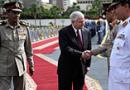
Yohannes Woldemariam draws a comparison between Egypt and the 1974 revolution in Ethiopia. Watch out for the army generals and the role of the US, Woldemariam cautions.

The rise of Al-Shabab in Somalia must be seen in the context of decades of mismanagement, dictatorship and abuse, writes Yohannes Woldemariam. Following Ethiopia’s US-backed intervention in 2006, the ascendancy of Somalia’s moderate UIC (Union of Islamic Courts) was blocked and some 300,000 people were displaced, in the wake of which ‘the Al-Shabab extremists triumphed as a hegemonic force’ from within the UIC. And as the dust settles on last week’s Kampala bombing, Woldemariam contends, the governments of US allies Ethiopia and Uganda are once again seeking to capitalise on the tragedy for their own ends, ‘with Obama playing right into it’.
With a government that makes it illegal to leave the country and military service compulsory for all men and women aged 18 to 40 in the name of a festering border conflict with the more powerful Ethiopia, it’s no wonder Eritreans undertake perilous journeys in search of a better life. But getting out of Eritrea itself is no guarantee of change for the better, thanks to flawed international responses that fail to see the humans behind ‘the refugee problem’, Yohannes Woldemariam writes in Pambazuka News.