



Despite claims of a boom in Tanzania’s mining industry, the bulk of taxes paid to the government comprises deductions from the workers’ wages and not levies on extracted minerals, it has been revealed. At least 54.5 per cent of the taxes collected from mining, gas and oil companies in the country is being paid by ordinary workers in form of various taxes, according to a new report released here yesterday by the Tanzania Extractive Industries Transparency Initiative (TEITI).

Whether Egypt's association with US-backed capitalism has been disrupted is a question that factory workers might yet decide, writes Christopher Carrico.
A new Eurodad report provides a critical analysis of the World Bank’s role in Climate Finance. Civil society actors have long been contesting the role of the World Bank as an appropriate channel for climate finance based on the Bank’s questionable green credentials and its history of advising economic policy reforms to developing countries. The report concludes by outlining the reasons why – in light of the analysis of the Bank’s delivery of climate finance as it relates to the financing instruments - the World Bank is not the best-placed institution to channel climate finance or to set the highest standards for a legitimate and development-friendly climate finance architecture for the future.
Since the discovery of copper deposits in Zambia during the 1930s, copper has spelled both doom and boom for the country’s social, political and economic activities. This paper looks at the current mining contracts (development agreements as they are officially called) entered into between the Government of the Republic Zambia (GRZ) and the different mining companies working in Zambia. The assumptions on which the bargaining theory is based are questioned in the light of the evidence emerging from the Zambian situation.
'President Hosni Mubarak has decided to step down as president,' Vice- president Omar Suleiman announced Friday night on state television. In Cairo’s Tahrir Square, the epicentre of the popular uprising that began on 25 January, some two million protesters let out a cathartic roar heard for miles across the sprawling capital. A 30-second announcement had ended 30 years of repressive authoritarian rule. But while Mubarak is out, his regime remains deeply entrenched. There are still vast networks of corrupt public servants, monopolists, party loyalists and abusive police in place.
South Africa has expressed sharp concern over concerted attempts by leading industrialised countries, particularly the US and the European Union (EU), to extract onerous commitments from developing countries as a condition to concluding the stalled Doha Round trade negotiations. 'We are deeply concerned over attempts to raise the level of ambition by leading industrialised countries in industrial goods and services that would call for a substantial payment from developing countries,' South Africa’s trade and industry minister Dr Rob Davies told IPS.
A Common Market for Eastern and Southern Africa (Comesa) team is in Uganda to observe this week’s elections. The team is led by Mr Simbi Mubako from Zimbabwe. The mission follows an invitation from the Ugandan Government. Comesa has in the past deployed similar observer missions to Rwanda, Burundi, DRC, Malawi, Zambia and Zimbabwe. The regional bloc said in a press statement that the observation of Uganda’s polls is meant to contribute to transparency of the process.

As Egypt’s extraordinary social and political protests against Hosni Mubarak’s regime continue, the renewed energy of those seeking a new start is ensuring that the government is forced to implement more than mere cosmetic changes, writes Horace Campbell.



Two decades after Namibian independence, scholar, activist and longstanding Swapo (South West Africa People’s Organisation) member Henning Melber pulls no punches in his judgement of the party’s moral failures, power struggles and willingness to trade on its liberation legacy, in an interview with Khadija Sharife.

As global attention remains focused on events in Egypt, Khadija Sharife considers the role of the country’s military in the uprising and its political role in planning for the future.

Spain’s willingness to allow an exiled Moise Tshombe entry into the country and to turn a blind eye to his criminal record may well have changed the course of the Democratic Republic of Congo’s (DRC) history, writes Agustín Velloso.
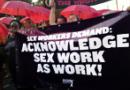
Loga Virahsawmy writes about the difficulties facing sex workers in Mauritius and the rest of the SADC region.

In the context of the popular uprisings in North Africa, Patricia Daley draws on the work of Nigerian scholar Claude Ake and asks how social justice scholars can operationalise the democratic principles he articulated.
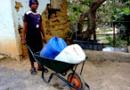
With 'service delivery protests' a common occurrence in South Africa, Richard Pithouse exposes some of the myths associated with the phrase.

The sustained protest in Tunisia in the wake of Mohamed Bouazizi’s immolation are far from ‘Islamist’, writes Hassania Chalbi-Drissi, and the appeal of the upheaval among ordinary people across the region has instead been the effective challenge to the ruling regime.
The paper presents a wide range of data on Mozambique and examines what this shows about changes to poverty and income levels over the past decade. The authors point to the lack of changes in farming practice which is contributing to the persistence of poverty and consider cash income and the poverty trap in Mozambique. The paper goes on to discuss the failure of donor-led development models.
United Nations peacekeepers have positioned armoured personnel carriers and are patrolling an area in Sudan where units made up of Northern and Southern Sudanese troops clashed last week, killing 54 soldiers and wounding 85 others. 'The United Nations urges the parties to remain calm and exercise caution,' spokesman Martin Nesirky told a news briefing in New York, referring to the outbreak of violence in Malakal in Sudan’s Upper Nile State between 3 and 5 February.
Apart from the looming job losses in Swaziland’s public sector, small and medium enterprises (SMEs) have also warned of retrenchments following the government’s decision to suspend procurement from small businesses. The government of the southern African autocratic monarchy has been forced to cut expenditure after its receipts from the Southern African Customs Union (SACU) shrunk with 60 per cent.