



Terrorists and Insurgents: Law, Labels, and the Theft of Freedom and Identity
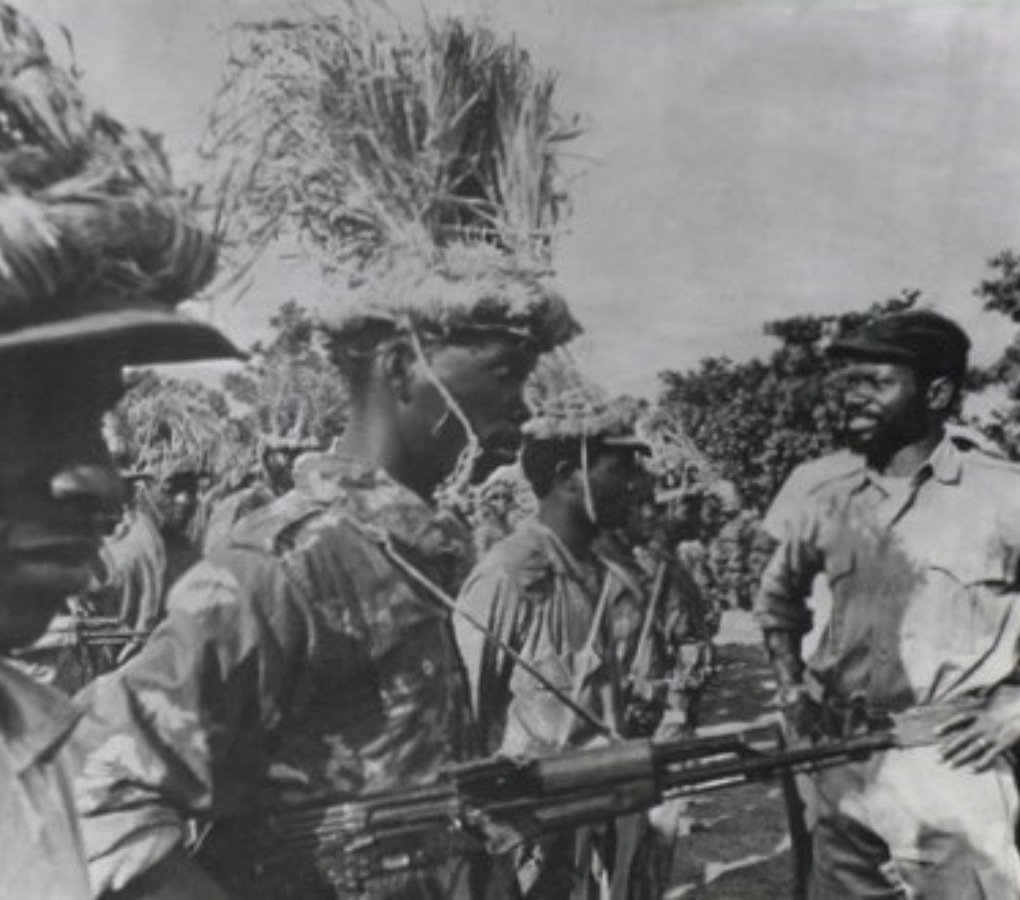

Beneath the labels of “terrorists” and “insurgents,” legitimate struggles for justice are recast as threats. Legal language is weaponised to silence the oppressed, turning resistance into disorder and painting oppression as peace.
“The bullet was the means of the physical subjugation. Language was the means of the spiritual subjugation.” – Ngugi wa Thiong’o
In his influential work, Decolonising the Mind, Kenyan author Ngugi wa Thiong’o reminds us that colonial violence did not end when the imperial flags were lowered; rather, it continued, altered its dialect and became embedded in the language of law, deliberately becoming entangled with the semantics of power¹. Ngugi continues to assert that though the gun might have conquered bodies, language conquered minds, and, in the process, shaped what is seen as lawful or criminal, civilised or savage, legitimate or illegitimate. Language became the quiet weapon that turned African demands for their land and freedom into “threats” and “insurrections.” And it's through this silent violence that colonial control cunningly continued, defining who had the right to resist and who was to remain silent.
Decades after the formal end of colonial rule, African resistance is still framed through a colonial lens. Movements for freedom and autonomy are often dismissed with a handful of loaded words like ‘insurgents’, ‘militias’, ‘criminals’, or sometimes, ‘threats to security’. These labels have become tools used to silence voices of dissent, depending on whose power is at stake. The selective labelling of movements and victims has never been accidental though. In Manufacturing Consent, Herman and Chomsky point out that the use of certain labels by those in power is by design and forms part of the machinery of a global propaganda.2 An example is made of the US, demonstrating how the mass media’s definitions of “worthy” and “unworthy” victims align with a propaganda model that protects entrenched power. Intellectuals and media often run to adopt these labels uncritically, maintaining a moral high ground while remaining unaware of their complicity.
Colonial Roots: The Language of Erasure
In colonial Kenya, the Mau Mau movement’s struggle for land and freedom was branded as “terrorism”.3 British authorities would deliberately refer to them as “insurgents,” rather than by their chosen name, the Kenya Land and Freedom Army (KLFA), thereby denying them the recognition and protections accorded to legitimate combatants.⁴ This was more than a strategic move by the British colonialists; it was a very deliberate concealment. By refusing to grant such status under international law, Britain insulated its violent ‘counter-insurgency’ from global accountability under the Geneva Conventions, sidestepped charges of war crimes, and entrenched the brutality of colonial governance, thus delaying genuine decolonisation while cloaking repression in the language of lawful order and administrative control.⁵The so-called counter-insurgency was in fact a regime of collective punishments, forced villagisation, detention camps, and torture; hallmarks of a brutish colonial rule sustained through terror and humiliation.
Similarly, in South Africa, the apartheid regime systematically used the language of “terrorism” to criminalise movements demanding freedom and justice while preserving racial domination. 6 The Soweto Uprising of 1976, where Black students protested the imposition of Afrikaans, was cast as a riotous agitation by the apartheid government. The African National Congress (ANC) and Nelson Mandela were labelled as “terrorists”, with Mandela remaining on the U.S. terrorist watch-list until 2008, a deliberate tactic to strip the ANC’s struggle of legitimacy while justifying repression. 7 Robert Sobukwe, the leader of the Pan Africanist Congress (PAC) and organiser of the peaceful Sharpeville march against ‘pass laws’ that restricted Black movement, was branded ‘an inciter of riots’ 8, a label that helped justify the police shooting that left sixty-nine unarmed protesters dead 9, all under the guise of quelling extremism.
In Mozambique, anti-colonial groups, most notably FRELIMO (the Mozambique Liberation Front), were consistently branded as ‘insurgents’ by the Portuguese colonial authorities. This portrayal again prompted other brutal ‘counter-insurgency’ operations that led to mass deaths, including the notorious 1972 Wiriyamu massacre, where almost four hundred civilians (mostly women and children) were killed under the pretext of combating FRELIMO collaborators. 10
These examples show how labelling resistance as terrorism or extremism has always been a strategy of erasure, transforming struggles for dignity into pretexts for violent repression while preserving power under the banner of law and order.
Modern Parallels: Criminals of the New Order
Today, the ‘politics of labels’ remains alive and still very much dangerous. In the eastern Democratic Republic of Congo (DRC), communities rising against state abandonment, foreign exploitation and historical marginalisation are swiftly branded with terms that strip them of their humanity. During the 2023 Goma protests, where civilians peacefully called for the withdrawal of MONUSCO and the East African Community Regional Force, they were cast as a “serious threat” to international peacekeepers. That label, as ironic as it was cold, became the pretext for violence and bloodshed. The Congolese military was reported to have opened fire on unarmed citizens and bystanders, and fifty-seven lives were lost in a moment, reduced to another statistic, in the machinery of global diplomacy.11 Their only ‘crime’ being daring to voice frustration over the perceived failure of these forces to protect civilians, arguing that the military presence in Goma, prolonged instability. 12
A similar script unfolds in Sudan, where calls for civilian rule are met with repression. For instance, Human Rights Watch reported that hundreds of protesters opposing military rule since the 25 October 2021 coup have been unlawfully detained, disappeared, beaten, and charged under broad terrorism-related statutes.13 Documented patterns of Sudanese security forces suppressing pro-democracy demonstrators under the guise of counter-terrorism and insurgency have revealed how the authoritarian regime has weaponized security discourse to delegitimize civic resistance and justify violent crackdowns.14
In Kenya, protests have been deliberately framed by the state as ‘national security threats’. State leaders have gone so far as to brand demonstrators as ‘terrorists’, a stark departure from earlier depictions of youth-led protests being mere ‘mischief’, cleverly leading to the invocation of the Anti- Terrorism laws to quell civil unrest. ¹⁵ Under these sweeping powers, even lawful protests risk being reclassified as terrorism, a tactic eerily reminiscent of the apartheid-era strategies that weaponised law to delegitimise resistance.
Labels thus become a cloak, and an official euphemism for crushing dissent, muting the legitimacy of public grief and resistance. The goal remains unchanged, though, silencing dissent while maintaining the facade of order, even when that order is propped up by fear. From Nairobi to Kinshasa, Khartoum to Dar es Salaam, the script repeats with an uncanny familiarity, perpetuating the myth that Africa is a country.
A Global Double Standard
Resistance in the Global South is rarely framed in the same moral terms as resistance in the Global North. Media@LSE reports that Western outlets consistently praised Ukrainian civilians taking up arms as legitimate defenders of sovereignty, whereas similar actions by Palestinians were often framed as ‘terrorists’.16 Israeli forces, too, are cast as defenders, even when their actions include bombing refugee camps or targeting civilian infrastructure, as reported during military operations in Gaza. In contrast, Palestinians resisting decades of occupation, whether through protest or armed struggle, are branded “terrorists” and groups like Hamas, however controversial, are swept into a global narrative that criminalizes the resistance of the oppressed while sanctifying the violence of the powerful.
This double standard exposes the racialized application of international law. ¹⁷ The right to resist is not universal; it is granted selectively, afforded to some, denied to others. Legal protections and international sympathy emerge as privileges tethered to power, race and geopolitics. In the hands of the Global North, law stretches and bends, but in the hands of the oppressed, it becomes a trap.
The Collapse of Ideals
International law formally recognizes the right of peoples to self-determination.¹⁸ The Vienna Convention on the Law of Treaties invalidates agreements made under coercion or those that violate jus cogens norms like self-determination. While this was historically relevant in dismantling colonial-era treaties, it remains equally vital today, as seen in DRC-Goma, where foreign powers and multinational corporations have continued to exploit resource-rich lands through deals struck with weak or externally pressured regimes. These agreements, often made without the genuine consent of affected communities, have resulted in displacement, environmental degradation and civilian deaths.
The UN Charter and the Geneva Conventions further enshrine the right to resist oppression, yet African claims to self-determination and justice often collide with geopolitical and economic interests. In the Niger Delta, local communities resisting oil extraction and environmental destruction by multinational firms have been met with brutal crackdowns and legal threats. Just like in Goma, when such resistance challenges extractive contracts or neocolonial governance, the language of law mutates from shield to weapon, and it is in these moments that liberation movements are swiftly rebranded as ‘criminals’.
In Achille Mbembe’s view of necropolitics, the state wields the power to decide who lives and who dies, a sovereignty often cloaked in legal legitimacy.19 In many African resistances, this power operates naturally, veiled in law, yet disastrous in effect. As Montesquieu warned, “There is no greater tyranny than that which is perpetrated under the shield of the law and in the name of justice.” And in Africa, that shield is often foreign-made, polished by aid, trade deals, and diplomatic silence, silencing communities whose only crime is demanding to live in peace, freedom and dignity.
In conclusion, unless the world learns to see African liberation as rightful resistance, it will continue to criminalise justice and sanctify injustice. International law must confront its colonial foundations and serve justice with integrity. It must return to the simple truth that freedom is not granted by recognition, but that freedom is asserted, fought for and very well deserved.
Today’s African leaders must do more than just govern; they must reject the blind and passive repetition of colonial scripts and actively reclaim the power to write their own. Liberation must begin from the premise that freedom is a birthright and has never been a favour. It must challenge the labels, reclaim the law and rewrite it in the voice of the people it once silenced. Unless this is done, the words of the African proverb will remain painfully true: “Until the lion learns to write, every story will glorify the hunter.” So long as the oppressed remain voiceless in law and history, justice will persist as nothing more than a mask of tyranny.
Carolyn W. Gatonye is a tech professional, independent researcher, and law student at Kabarak University, Kenya. Her work interrogates the intersections of law, history, literature and governance, with a particular interest in youth marginalisation, protest cultures, and human rights. Social media: Twitter/X: @africancarolyn
Endnotes
- Ngũgĩ wa Thiong’o, Decolonising the Mind (1986).
- Edward S. Herman and Noam Chomsky, Manufacturing Consent: The Political Economy of the Mass Media (1988)
- UK Parliament Hansard, “Mau Mau Terrorism in Kenya,” HL Deb 21 October 1952 vol 178 cc789-91, https://api.parliament.uk/historic-hansard/lords/1952/oct/21/mau-mau-terrorism-in-kenya
- Black History Month, “The Colonisation of Kenya,” https://www.blackhistorymonth.org.uk/article/section/african-history/the-colonisation-of-kenya/
- UNGA Resolution 1514 (XV) Declaration on the Granting of Independence (1960)
- South African History Online, “The June 16 Soweto Uprising”, https://sahistory.org.za/article/june-16-soweto-youth-uprising
- Time Magazine, “The US Government Had Nelson Mandela On Terrorist Watch Lists: Here’s Why,” https://time.com/5338569/nelson-mandela-terror-list/
- Al Jazeera, “Robert Sobukwe, the South African leader once as revered as Mandela” https://www.aljazeera.com/features/2024/11/30/robert-sobukwe-the-south-african-leader-once-as-revered-as-mandela
- Michigan in the world, “The Sharpeville Massacre, 1960”, https://michiganintheworld.history.lsa.umich.edu/antiapartheid/exhibits…
- A Review of Mustafah Dhada’s The Portuguese Massacre of Wiriyamu in Colonial Mozambique, 1964-2013, https://www.h-net.org/reviews/showrev.php?id=48115
- ReliefWeb, “Operation ‘Keba’: Massacre by the Army in the Democratic Republic of Congo’s Goma City,” https://reliefweb.int/report/democratic-republic-congo/operation-keba-massacre-army-democratic-republic-congos-goma-city
- Human Rights Watch, “DR Congo: Little Justice for Goma Massacre Victims,” https://www.hrw.org/news/2024/08/30/dr-congo-little-justice-goma-massacre-victims
- Human Rights Watch, “Sudan: Hundreds of Protesters Detained, Mistreated”, https://www.hrw.org/news/2022/04/28/sudan-hundreds-protesters-detained-mistreated
- Tahrir Institute for Middle East Policy, “Sudan’s Counterrevolutionary War: The Systematic Targeting of Pro-Democracy Activists”, https://timep.org/2025/04/15/sudans-counterrevolutionary-war-the-systematic-targeting-of-pro-democracy-activists/
- The East African epaper, “Kenya Using Anti-Terrorism Laws to Tame Civil Protests,” https://www.theeastafrican.co.ke/tea/news/east-africa/kenya-using-anti-terrorism-laws-to-tame-civil-protests-5115392
- Media @LSE, “War, Resistance and Refuge: Racism and double standards in western media coverage of Ukraine”, https://blogs.lse.ac.uk/medialse/2022/05/10/war-resistance-and-refuge-racism-and-double-standards-in-western-media-coverage-of-ukraine/
- The International Journal of Palestine Studies (IJPS)Volume 1, Issue 1(July 2025), “Framing Resistance: Western Discourse, Double Standards, and the Dehumanization of Palestinians”, https://ejournal.um.edu.my/index.php/hscps/article/view/62623/18654
- See Vienna Convention on the Law of Treaties (1969), particularly Articles 51–53, which render treaties void if obtained through coercion or in violation of peremptory norms (jus cogens), such as the right to self-determination. See also the UN Charter, Article 1(2); UNGA Resolution 2625 (XXV) (1970) on Friendly Relations; Geneva Conventions Protocol I (1977), which extends protections to national liberation movements; and Article 20(2) of the African Charter on Human and Peoples’ Rights, which affirms the right of oppressed peoples to resist.
- Achille Mbembe, Necropolitics, trans. Steven Corcoran (Durham: Duke University Press, 2019).