



NATO and The Fall of Yugoslavia
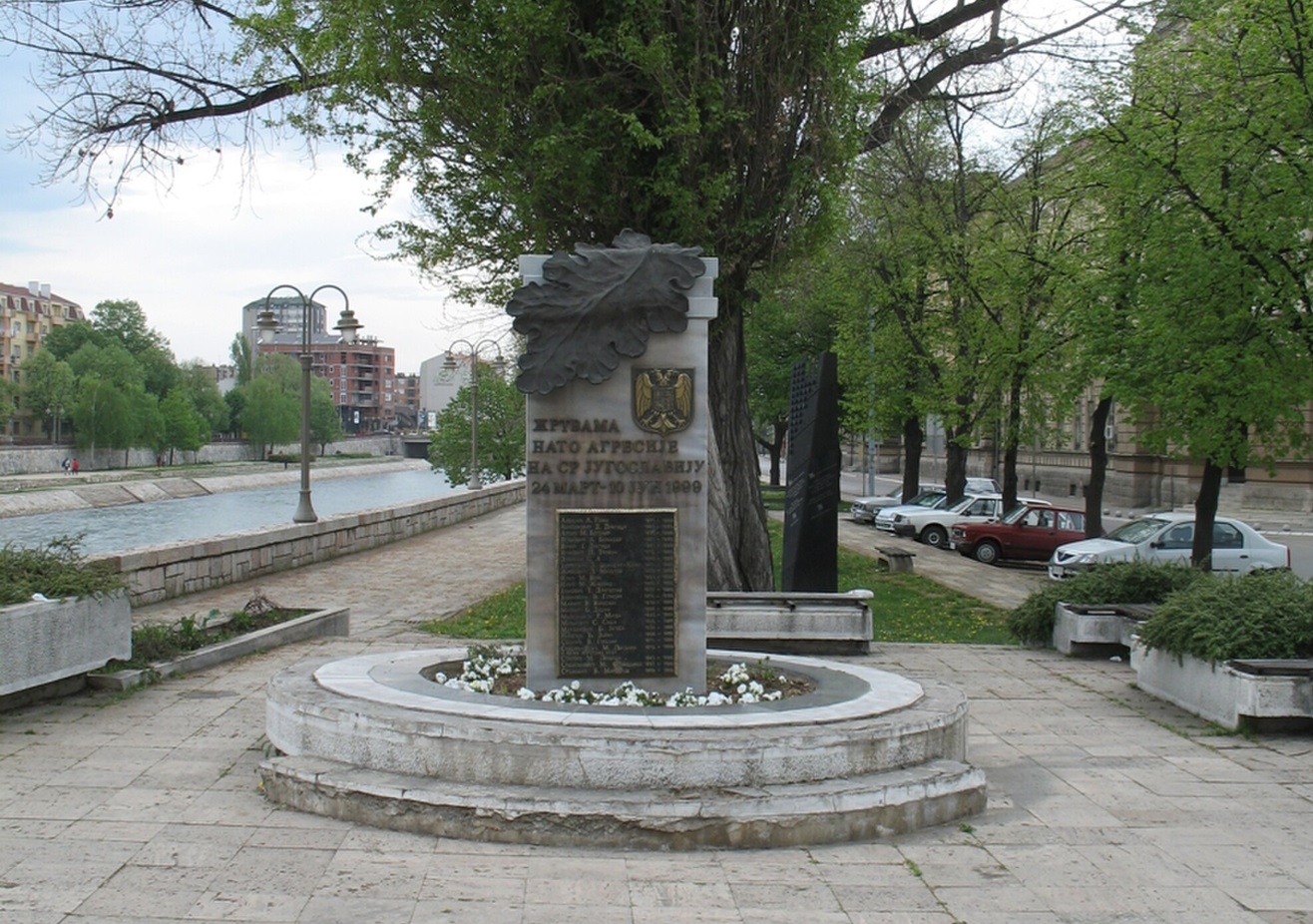
A brief overview of the history of Yugoslavia post World War II leads to a conversation on the strategic disregard for and dismantling of the country after the disappearance of the Soviet Union by NATO.
Introduction
Yugoslavia emerged from World War II (WWII) as a country that not only survived the occupation by Germany and all its collaborators—including domestic traitors and satellite states of the Third Reich—but also one that endured a bloody civil war. Yugoslavia was liberated thanks to the joint efforts of the resistance movement within the country and the victorious Red Army, whose contribution was decisive in the final war operations. Unfortunately, Yugoslavia did not have a unified resistance movement. Instead, two rival guerrilla organizations spent four war years engaged in violent confrontations. Thus, the civil war, which started in 1991, also had a strongly pronounced ideological dimension. After the war, the country consisted of peoples whose mutual relations were highly complicated and poisoned by the events of the civil war—particularly by mass, largely unpunished war crimes.
Yugoslavia essentially existed as a carefully negotiated compromise, straddling the divide between two competing spheres of influence during the postwar era: the socialist Eastern bloc and what would soon crystallize into NATO's Western alliance system—embodied first by the European Community and later the European Union. This precarious positioning stemmed from the famous "percentages agreement" between Stalin and Churchill, which effectively split Yugoslavia's geopolitical allegiance down the middle—50 per cent Western and 50 per cent Eastern influence. From its very rebirth after WWII, the country's trajectory was locked into the bipolar logic of the emerging Cold War order.
It should come as no surprise, then, that Yugoslavia became interested in the Non-Aligned Movement. Indeed, it became one of its founding members and leading voices. While the West saw Yugoslavia as a crucial asset in pulling Third World nations away from Soviet influence, the country simultaneously played an active role in liberating these very nations from colonialism—not just through robust diplomatic support, but through concrete action. Yugoslavia backed Algeria's struggle for independence, stood with Cuba, supported Angolan liberation fighters, and politically championed Vietnam during the American aggression in Southeast Asia. It extended solidarity to the Palestinian cause and numerous other oppressed peoples worldwide in their anti-colonial struggles, unambiguously aligning itself with nations gasping for freedom under the yoke of colonialism. This dual role—balancing between Cold War blocs while actively fueling global liberation movements—cemented Yugoslavia’s unique position as both a geopolitical mediator and a revolutionary force in the 20th century.
The Strategic Dismantling of Yugoslavia
However, the fall of the Berlin Wall in November 1989 almost immediately reawakened old revisionisms; particularly the German one. The Germans had not forgotten that it was the Habsburg Monarchy that had its teeth broken on Serbia, that the Serbs were the "Piedmont" upon which Yugoslavia was built, and that the outcome of World War I—which began with Austria-Hungary's attack on Serbia—resulted in the disappearance of the German Reich as well. Of course, they also had not forgotten that during World War I, it was the Serbian army that dealt the decisive blow to the Central Powers by breaking through the Salonika Front in September 1918, significantly hastening the end of the war and the surrender of the German-led forces. To all this must be added the fierce resistance in Yugoslavia, primarily by the Serbs, against the occupying German forces during World War II.
Because of this, no one who knew this historical background of strained relations between the aggressors and the attacked (Germans and Serbs) was surprised that Germany's first move after reunification in 1990 was directed at Yugoslavia—more precisely, a fierce and violent German effort to break up the country that had twice been a major obstacle to Germany's ambition to dominate the world. Germany was the leader and instigator in recognizing the secession of Slovenia and Croatia from Yugoslavia.
Parallel to Germany, the Vatican also participated in the dismantling of Yugoslavia, playing an especially dark role in the genocide committed by Croatian fascists, the so-called Ustaše, against Serbs during World War II. Under the leadership of Pope John Paul II—a Pole who, in the late stages of the Cold War, was a key figure in the West's struggle against the Soviet Union—the Vatican was extremely active, both publicly and behind the scenes, in breaking up Yugoslavia. The Holy See participated in this through political means, as well as through intelligence and security support, and even by arming Slovenian, Croatian, Albanian, and other separatist movements—all of which were directed against the Serbian people. The Serbs were seen by the West (and therefore by the Vatican as well) as a retrograde force trying to keep Yugoslavia together.
What was visible then, and especially clear from today's temporal distance, is the fact that Yugoslavia, after the disappearance of the Soviet Union, was no longer needed by the West. Simply put, there was no longer a need for the existence of a socialist "country with a human face"—a mirror for nations within the Soviet sphere of influence, particularly in Europe—to show how a socialist country could allow a certain degree of freedom and where citizens enjoyed a relatively high standard of living, certainly higher than in their own countries. Out of self-interest, regardless of Yugoslavia's support for Western enemies around the world, the West tolerated and even aided Yugoslavia during the Cold War so that its mere existence would attract the attention of Soviet dominated socialist bloc countries and thereby quietly undermine them.
In this particular version of Yugoslavia, private ownership was permitted to some extent, but the lion's share of the economy still belonged to the (socialist) state, albeit disguised under the peculiar concept of "workers' self-management," which, among other things, also served to create a rosy image, especially in socialist bloc countries. However, in the world of Francis Fukuyama's "end of history," promoted by the West in those years, there was simply no more need for such a country to exist. It is therefore no surprise that the West played a very active role in the destruction of such a state. A similar thing was attempted in China with protests in central Beijing's Tiananmen Square in the spring and early summer of 1989, but that venture – accompanied by strong manipulation and hype by the Western media – still failed miserably; that is, the Chinese state found an effective way to prevent the breakup of the country. Cuba survived, North Korea survived, and even Vietnam, but in general – communism failed. Another thing was that Europe completely fell under American political influence, completely losing its political sovereignty and independence, practically reducing itself to a vassal position.
After the fall of the Berlin Wall, Europe simultaneously fell under German economic domination. Germany succeeded in establishing its domination over the Old Continent and therefore no longer needed an attractive country like Yugoslavia, which had an alternative model of state organization. Because of this, it became necessary to reopen old wounds, sow hatred, revive the most painful memories, and instrumentalize the Croatian fascist emigration to actively participate not only in spreading propaganda but also in sabotage. Terrorist sabotage had occurred even during Yugoslavia's existence (both in the pre-WWII Kingdom and the socialist period after the war), but as the country weakened internally, the political forces in the republics that later turned out to be separatist grew stronger—these forces were allies of the Western powers in dismantling Yugoslavia.
The NATO Bombing Campaigns
In the struggle against Yugoslavia and the Serbian people—who in a way were the successors of that state (since Serbia and Montenegro formed the third iteration, the Federal Republic of Yugoslavia, after the breakup of greater Yugoslavia)—the West made no distinction toward Serbs in other parts of the former Yugoslavia, where civil war had erupted. NATO bombed Serbian positions in Republika Srpska and the Republic of Serbian Krajina multiple times in 1994, then again in Republika Srpska in 1995, before arbitrarily—without a UN Security Council resolution—bombing the Federal Republic of Yugoslavia for 79 consecutive days in 1999.
Meanwhile, in 1998, Albanian separatism was ignited in the Serbian province of Kosovo and Metohija, with the active involvement of virtually all Western intelligence agencies, including the American CIA, British MI6, German BND, French DGSE, and Turkish MIT. NATO then launched a massive bombing campaign against the Federal Republic of Yugoslavia, primarily Serbia, on March 24, 1999, targeting civilian objectives just as much as military ones, while extensively using highly carcinogenic radioactive munitions. This ammunition was also used in the Republika Srpska; and in the wider areas where it was deployed, civilian populations continue to pay a horrific price for these carcinogens through elevated cancer-related illnesses.
Following the signing of the Kumanovo Agreement in June 1999, the Western occupation of Kosovo and Metohija began, and the Americans soon established "Camp Bondsteel," the largest military base in that part of Europe. The result was the mass expulsion of Serbs from this part of Serbia (according to Serbian government data, over 205,000 Serbs fled to central Serbia, with an additional twenty thousand seeking refuge in Montenegro and abroad). Moreover, in this territory—the cradle of Serbian statehood—Serbian cultural and religious heritage was largely destroyed, including the complete or partial devastation of 130 churches and monasteries built between the 12th and 16th centuries. In addition to the destruction and burning of tens of thousands of privately owned Serbian properties, Serbian cemeteries in Kosovo and Metohija were also desecrated, all occurring under the watch of the occupying NATO forces.
Everything was destroyed —even the very name of Yugoslavia had to be erased from memory. The main geopolitical goal was to remove the Serbs from the Mediterranean so that NATO could gain full control over the entire coastline of Europe's Mediterranean region. This necessitated the breakup of what remained of Yugoslavia, specifically the separation of Montenegro from Serbia into an independent state. In May 2006, through a rigged referendum, Montenegro gained so-called independence, which in reality amounted to deeper colonization.
Conclusion
The result of all this is that across the entire Yugoslav space today, there exist weak republics/puppet states. Among them, Serbia is the only one that still poses a problem for the West—the only one retaining some semblance of statehood. Meanwhile, all the other former republics have practically become colonies dominated by foreign companies and banks, subjected to classic exploitation—both of human and mineral resources.
A great struggle is now underway among the people, primarily in Serbia, to defend themselves from the colonizers, from the destruction of nature for the sake of mining lithium and other ores and minerals - which is being pursued by foreign companies- with Rio Tinto, as a symbol of that evil and threat, at the forefront. This struggle takes various forms, with the student movement born in Serbia at the end of 2024 standing out.
Ultimately, the Balkan region's ability to break free from the colonial influence of the West and other foreign powers hinges on the outcome of the ongoing, albeit undeclared, global conflict. Much like the Austro-Hungarian Empire stood as an outdated relic of power in the early 20th century, today, the European Union—particularly the European Commission—plays a similar role, with NATO acting as the primary force behind continued escalation in Europe, while expanding its footprint elsewhere through military cooperation with Non-NATO Major Allies. Without a doubt, the resolution of this struggle will shape the future of the post-Yugoslav states and their place in the world.
Stevan Gajić PhD (Political Science) is a researcher at the Institute of European Studies in Belgrade and a visiting professor at MGIMO University in Moscow. The areas of his academic expertise are American political thought (In 2020 he published a book From Slave to Citizen – The African-American Struggle for the Recognition of Humanity), European studies (especially the politics in central and eastern Europe and the Balkans), and Russian and post-Soviet politics and international relations. In 2023 he published his second book, this time in Russian language titled We Are from the Future – Serbian View of Russian Space from Euromaidan to SMO. His field of expertise is in political science, diplomacy, history and geo-politics.