



98% Victory, 100% Fracture: Tanzania’s Post-Election Reckoning
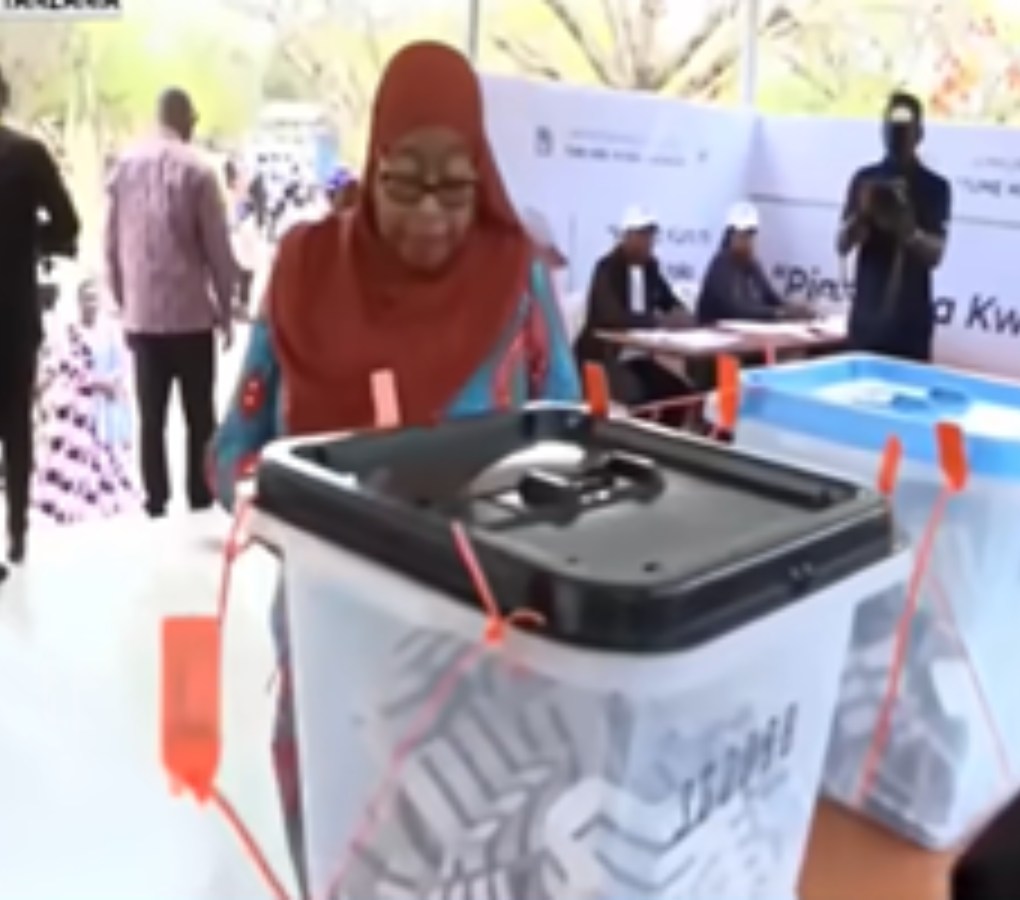
Amid the fracturing of Tanzania following repressive rule and blood-stained undemocratic elections, what must (not) be done for the country’s peace and reconstruction?
For decades, Tanzania wore its reputation as Africa’s “Island of Peace” like a well-tailored suit. Comfortable, slightly worn at the cuffs, but still the envy of neighbours who had torn theirs to shreds in civil war or dictatorship. On 29 October 2025, that suit caught fire. When Ndugu Samia Suluhu Hassan was declared the winner of the general election with 98.2% of the vote, the country did not slide quietly into another five-year term under Chama Cha Mapinduzi (CCM).
It erupted. Within hours, university students, motorbike taxi drivers, market women and school pupils were in the streets of Dar es Salaam, Mbeya, Ruvuma, Arusha, Mwanza, and Mara confronting riot police who answered with live ammunition. By the time the army sealed off city centres, independent tallies spoke of hundreds – possibly thousands – dead, thousands more arrested, and a nation wondering whether its oldest boast had finally been laid to rest (Human Rights Watch, 2025; Amnesty International, 2025).
The title “Island of Peace” was never rhetorical fluff. From independence in 1961 through the carnage that engulfed Uganda, Rwanda, Burundi and later Kenya and Mozambique, Tanzania offered refuge, mediation and an almost boring predictability. Even after multiparty politics arrived in 1995, elections remained remarkably bloodless by regional standards. Yet the calm was always brittle.
Beneath it lay six decades of one-party dominance, shrinking civic space under John Magufuli (2015 – 2021), and a youth bulge facing chronic joblessness and widening inequality. Ndugu Hassan’s early gestures – releasing political prisoners, lifting some media bans – raised cautious hope that 2025 might mark a genuine opening. Instead, the election became the moment when accumulated grievances detonated.
What pushed Tanzanians past the point of no return?
Three interlocking crises converged. First, a blatant theft of the democratic process. Opposition leader Tundu Lissu was barred from standing; dozens of CHADEMA candidates were disqualified on technicalities; internet and SMS services were cut for days; and ballot boxes in opposition strongholds reportedly arrived pre-stuffed (African Union Election Observation Mission, 2025). When the National Electoral Commission announced results that awarded CCM every regional chair and an almost Soviet-scale presidential margin, disbelief turned to fury.
Second, economic despair among the young. Seven out of ten voters are under 35. Official unemployment hovers near 30% for this cohort, yet the economy grew at 6 – 7% annually while the benefits pooled among a narrow elite connected to mining, port and infrastructure contracts (World Bank, 2025). The sight of a government massive spending on campaign helicopters while university graduates drove boda-bodas for £3 a day proved combustible.
Third, the return of state violence without apology. Under Magufuli, abductions and unexplained deaths had become a grim routine. Many hoped Hassan had turned the page. The 2025 crackdown – documented videos of police executing unarmed protesters, bodies dumped in morgues with tags marked “unknown”, and mass graves reported in Kigoma and Ruvuma regions – shattered that illusion (BBC News, 2025; Al Jazeera, 2025).
Other factors deepened the fracture. Corruption continues to bleed an estimated $1.5 billion yearly from public coffers (Transparency International, 2024). Climate shocks – prolonged droughts followed by floods – have driven food inflation above 10% and displaced communities who then compete with refugees from Burundi and the DRC.
In Zanzibar, old grievances over union politics fused with mainland anger, producing some of the fiercest clashes. And the digital generation, able to compare their reality instantly with Kenya’s Gen Z protests or Sudan’s revolution, refused to accept the old script of silent endurance.
The government’s response remains a high-stakes gamble, laced with deflective denials that risk further eroding public trust. Curfews, mass arrests and threats of further “decisive action” have restored an uneasy quiet to most cities, but at the cost of international opprobrium and the looming threat of sanctions from the EU and United States (Reuters, 2025).
Ndugu Hassan herself has pointed fingers at “foreigners” for stoking the deadly protests, echoing a familiar playbook of external scapegoating (Associated Press, 2025).
This tone intensified in a 26 November 2025 press conference by the newly appointed Prime Minister, Mwigulu Nchemba, a CCM loyalist and former finance minister, who was elevated to the post on 13 November 2025 amid the post-election turmoil. Addressing media editors in Dar es Salaam, Nchemba reframed the unrest not as legitimate democratic outrage but as a “sophisticated attack aimed at crippling the national economy,” complete with “alleged foreign and armed involvement” that posed a “deliberate security and economic threat” (The Chanzo, 2025a).
He challenged opposition and social media claims of hundreds or thousands dead, arguing that such figures would mean “almost every household experienced bereavement,” while admitting only that “something has happened… that cost lives” without releasing official tallies. Instead, the government prioritised cataloguing “damaged properties” over human costs, a deflection justified by the “value of life” itself (The Chanzo, 2025a).
Nchemba warned of “economic saboteurs” and urged unity to ensure the violence “will never happen again,” while announcing the cancellation of Independence Day celebrations to redirect funds towards rebuilding infrastructure – a pragmatic move overshadowed by calls for vigilance against destabilising groups (Daily News, 2025; BBC News, 2025a).
Such rhetoric, while insisting on the “importance of political dialogue,” sidesteps accountability for the crackdown and risks alienating a grieving populace by portraying protesters as pawns in a grand conspiracy rather than citizens demanding change.
Continued repression risks radicalising a generation that has already shown it will face live bullets. Yet genuine concessions – releasing all political detainees, inviting SADC or AU mediation, and agreeing to electoral reform – could still pull the country back from the brink.
What must (and must not) be done?
Now, the preceding discussion begs the question, ‘what must (and must not) be done?’ To steer Tanzania towards renewal, leaders must prioritise an inclusive National Conference within 90 days, facilitated by respected elders and the African Union. This forum should negotiate constitutional and electoral reforms, including the establishment of a truly independent electoral commission and the introduction of proportional representation to dilute CCM’s stranglehold and amplify diverse voices.
Complementing this, the government ought to establish a hybrid Truth, Justice and Reconciliation Commission with international technical support. Empowered to grant amnesty for truth-telling and recommend prosecutions where warranted, it would address the wounds of the crackdown, fostering healing rather than festering resentment.
On the economic front, a youth-focused recovery package is essential. Offer debt relief for boda-boda and small-trader loans, expand the national service programme into green jobs, and introduce a temporary tax holiday for start-ups employing under-35s. Such measures would harness the demographic dividend, turning potential agitators into stakeholders.
Finally, and this cannot be stressed enough, stop denials of the October 29, 2025, and post general elections bloodshed, and deaths, restore unrestricted internet access fully, and drop all charges against journalists and bloggers arrested since October 2025. This would rebuild the information ecosystem, allowing facts to flourish over rumours and enabling the very dialogue Nchemba invoked.
Equally critical are the pitfalls to avoid. The government must not entrench emergency powers or amend the Police Force Act to grant wider immunity, as this would institutionalise impunity and invite cycles of abuse. Accepting Chinese or Russian offers of surveillance technology in exchange for diplomatic cover should be rejected outright; the short-term security gains would come at the expense of further alienated youth and eroded privacy. And scapegoating “foreign agents” or opposition leaders as traitors must cease – this narrative has already failed spectacularly, merely hardening resistance and deepening divisions.
Tanzania stands at a rarer moment than most realise. A society that has tasted both prolonged stability and sudden rupture. The “Island of Peace” was never predestined. It was built through deliberate choices – Nyerere’s refusal of tribal politics. The union with Zanzibar. The welcoming of refugees. Those choices can be renewed. But only if leaders recognise that legitimacy now flows from the streets upward. Not from the State House downward. The waves still beat against the shore at Oyster Bay. Whether they lull a nation back to sleep or herald a storm no one can yet control, depends on the decisions taken in the foreseeable future.
Evans Rubara is a Tanzania-based natural resource management specialist, and sociopolitical analyst. He is available at [email protected] or on X as @PunditParadox.
References
African Union Election Observation Mission. (2025). Preliminary statement on the 2025 general elections in Tanzania. African Union.
Al Jazeera. (2025, 31 October). Tanzania opposition says hundreds killed in post-election violence. https://www.aljazeera.com/news/2025/10/31/protests-over-disputed-tanzania-election-enter-3rd-day-military-deployed
Amnesty International. (2025). Tanzania: Lethal force used against protesters. https://www.amnesty.org/en/latest/news/2025/11/tanzania-lethal-force-protesters/
Associated Press. (2025, 3 November). Tanzania's president blames foreigners for deadly protests after disputed election. https://wtop.com/world/2025/11/tanzanias-president-hassan-sworn-in-after-disputed-election-sparks-deadly-protests/
BBC News. (2025, 17 November). How Tanzania police crushed election protests with lethal force. https://www.bbc.com/news/articles/c3vn4rlqd52o
BBC News. (2025a, 25 November). Tanzania cancels Independence Day celebrations after election unrest. https://www.bbc.com/news/articles/c5y2gpp1q67o
Daily News. (2025, 25 November). Never again! PM warns against economic saboteurs. https://dailynews.co.tz/never-again/
Human Rights Watch. (2025). Tanzania: Killings, crackdown follow disputed elections. https://www.hrw.org/news/2025/11/04/tanzania-killings-crackdown-follow-disputed-elections
Reuters. (2025, 30 October). Tanzania imposes curfew after deadly election protests. https://www.reuters.com/world/africa/tanzania-imposes-curfew-after-deadly-election-protests-2025-10-30/
Reuters. (2025a, 13 November). Tanzania president names new prime minister after disputed election. https://www.reuters.com/world/africa/tanzanias-president-appoints-mwigulu-nchemba-prime-minister-parliament-speaker-2025-11-13/
The Chanzo. (2025a, 25 November). Tanzania dismisses ‘protest’ label for Oct. 29 unrest as PM brands violence ‘economic sabotage’; challenges death toll figures. https://thechanzo.com/2025/11/25/tanzania-dismisses-protest-label-for-oct-29-unrest-as-pm-brands-violence-economic-sabotage-challenges-death-toll-figures
Transparency International. (2024). Corruption Perceptions Index 2024. https://www.transparency.org/en/cpi/2024
World Bank. (2025). Tanzania economic update: Youth unemployment in an era of growth. World Bank Group.