



The Creditor’s Invoice: From Reparations to Debt Collection
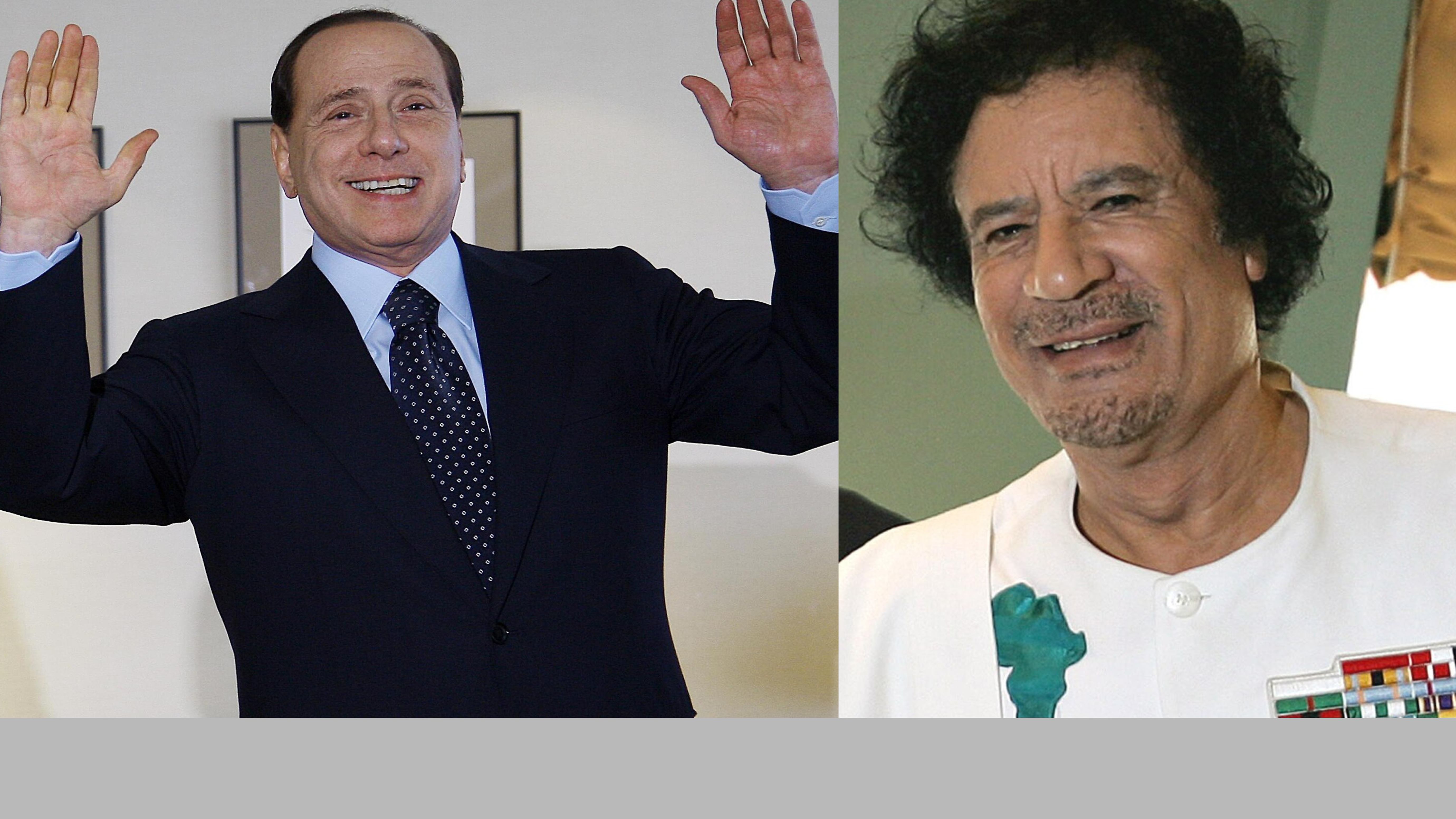

Libya offers a blueprint for the reparation struggles.
The halls of the United Nations General Assembly recently echoed with a familiar, yet increasingly urgent, moral demand. On 25 March 2026, a historic vote designated the Transatlantic Slave Trade as the "most heinous crime against humanity," calling for a framework of reparations. While 123 nations stood in solidarity, the "Wall of Silence" from the West—marked by the predictable "No" from the United States and strategic abstentions from the European Union and the United Kingdom—offered a sobering reminder.
Symbolic victories in New York are milestones, but they are not bankable receipts. For the Global South, the lesson is clear: justice is rarely "granted" through the sudden moral awakening of the oppressor; it is "extracted" through the strategic leverage of the oppressed. To move from the rhetoric of "remembrance days" to the reality of restitution, we must look to a specific, often overlooked blueprint from 2008: The Italy-Libya Treaty on Friendship, Partnership, and Cooperation.
The Myth of Liberal Sympathy
In the current global discourse, Western powers have mastered the art of the "calculated apology." We see it in the UK’s expressions of "deep regret" for colonial atrocities in Kenya, or France’s selective admissions regarding Algeria. This brand of liberal sympathy is designed to be cost-neutral. It offers the emotional catharsis of an apology without the legal obligation of compensation. It treats colonialism as a series of "unfortunate errors" rather than a foundational, state-sponsored system of wealth extraction that built the modern West.
The fundamental flaw in relying on Western sympathy is that it assumes reparations are a matter of charity. They are not. They are a matter of debt.
The Libyan Masterclass; Realpolitik over Rhetoric
When Libya secured a $5 billion reparations package from Italy in 2008, it did not happen because Rome suddenly felt the weight of its 1911–1947 occupation. It happened because Libya transformed itself from a "supplicant" into a "creditor."
Libya’s strategy was rooted in Strategic Leverage. By linking the colonial file to contemporary interests—specifically energy security, migration management, and multi-billion-dollar investment opportunities—Libya forced Italy to choose between its historical pride and its future prosperity. The late Libyan leadership famously refused to host Italian dignitaries or visit Rome until the "colonial debt" was acknowledged in a binding, legal framework.
This was not "theatre"; it was high-stakes diplomacy. When the treaty was signed in Benghazi, it included Article 8, which mandated $5 billion in Italian-funded infrastructure, and Article 10, which enforced the return of stolen artifacts like the "Headless Venus of Cyrene." This was the first time in modern history a former colonizer admitted full responsibility, apologized, and committed to a twenty-year financial settlement.
The Strategy of Strength: Beyond Moral Pleas
The 2026 United Nations General Assembly (UNGA) resolution, while morally significant, highlights the inherent limitation of multilateralism when dealing with former colonial powers. The "abstention strategy" used by the EU and the UK is a diplomatic manoeuvre to acknowledge the "horror" of history without accepting the "invoice" for it. They argue that reparations create a "hierarchy of victims" or that modern taxpayers should not be held liable for the sins of their ancestors.
The Libyan model deconstructs these excuses. By treating the 1911–1947 occupation not as an ancient grievance but as a defaulted commercial and moral debt, the 2008 Treaty bypassed the "hierarchy" debate. It turned reparations into a bilateral investment in future stability. Italy’s commitment to building the 2,000-kilometre "Highway of Peace" across Libya was not presented as a gift; it was framed as a restorative obligation.
For the African Union and CARICOM, the lesson is that moral high ground is a weak position if it is not backed by economic or geopolitical consequences. The Global South holds the keys to the Green Transition—rare earth minerals, solar potential, and vast young labour markets. Just as Libya used its oil and its role in Mediterranean security as a "diplomatic lever," the rest of the continent must link the "reparations file" to current trade negotiations, debt restructuring, and climate finance agreements.
The "Living Blueprint": Results over Resolutions
Opponents of reparations often claim that such payments are impractical or would disappear into a "black hole" of corruption. The Italy-Libya Treaty provided a practical rebuttal: Direct Project Financing. The $5 billion was not a lump-sum cash transfer to a treasury. It was a 20-year commitment to tangible development:
Infrastructure: The 2,000km road network linking Libya's eastern and western borders.
Education: The establishment of the Libyan Academy in Rome and hundreds of annual scholarships for Libyan students—a direct investment in human capital.
Restitution of Identity: The return of the "Headless Venus of Cyrene" and thousands of historical documents.
This "Project-Based Restitution" model is exactly what the Global South should demand. It moves the conversation away from "handouts" and toward "restorative development." When a former colonizer finances a railway or a university in its former colony, it isn't "aid"—it is the late payment of a bill for the resources, labor, and lives it extracted decades earlier.
Indeed, it has been interrupted by the 2011 invasion of Libya, in which Italy, reluctantly, took part but legally speaking the whole treaty still stands and will be implemented as such once Libya becomes free of Western dominance resulting from the 2011 war.
The Gold Standard for Atonement: In his seminal work The Wretched of the Earth, Frantz Fanon argued that "Europe is literally the creation of the Third World." The wealth of London, Paris, and Rome was built on the backs of the colonized. Therefore, when Shashi Tharoor suggests that even a symbolic "one pound a year" for 200 years would suffice as atonement for India, he is being generous.
The Libya-Italy Treaty goes a step further by effectively decolonizing the concept of 'Foreign Aid.' For decades, Western powers have used "Development Assistance" as a tool of soft power, often attaching strings that compromise African sovereignty. The 2008 Treaty flipped this script. By framing the $5 billion as a "colonial debt" rather than "aid," it stripped away the paternalism of the West. It transformed the former master from a "benevolent donor" into a "debtor" settling a long-overdue account.
The "Wall of Silence" encountered at the UN in 2026 is not an impasse; it is a signal. It tells the Global South that the era of asking for permission to be compensated is over. The Italy-Libya Treaty was not a miracle of Italian conscience; it was the result of a former colony knowing its worth and refusing to blink first.
As the African Union and CARICOM look toward a future defined by the Green Transition and shifting global alliances, they must stop treating reparations as a footnote in history books and start treating them as a prerequisite for future trade. The "Libyan Masterclass" teaches us that when the oppressed utilize their strategic leverage—be it energy, minerals, or geography—the "impossible" bill of reparations suddenly becomes a "necessary" investment in global stability.
Justice is not a gift from the former master; it is the final instalment on a debt long overdue. The blueprint exists. The precedent is set. Now, the rest of the continent must find the political will to present the invoice.
The Masterclass teaches us one final, uncomfortable truth: Strategic leverage only works when it is collective. If the Global South allows itself to be divided into 'preferred partners' and 'rogue states' by Western diplomacy, the invoice for reparations will remain unpaid. Unity is not just a moral ideal; it is the only currency the debtor respects.
Mustafa Fetouri is a Libyan academic and award-winning journalist.